(As an amazon affiliate, we earn a commission when purchasing via our links below)

More than 80% of dogs over the age of eight live with some form of chronic pain, and most of them never make a sound about it. 🐾
That’s not a typo. Dogs are hardwired to hide pain. It’s a survival instinct left over from their wild ancestors. Show weakness, and you become a target. So your dog suffers quietly, wagging their tail, greeting you at the door, and giving you zero obvious clues.
That’s exactly why knowing the 19 silent signs of pain in dogs that every owner should know is so important. These are the subtle, easy-to-miss signals your furry family member sends out when something is wrong. Once you know what to look for, you’ll never look at your dog the same way again.
This guide breaks it all down in plain, simple language. No scary medical jargon. Just real, actionable knowledge that could change, or even save, your dog’s life.
The Body Language Clues You’re Probably Missing
Dogs speak with their bodies. Every twitch, tilt, and tension tells a story. The problem is, most of us only notice the big, dramatic stuff, like a dog crying out or holding up a paw. The quiet signals? Those slip right past us.
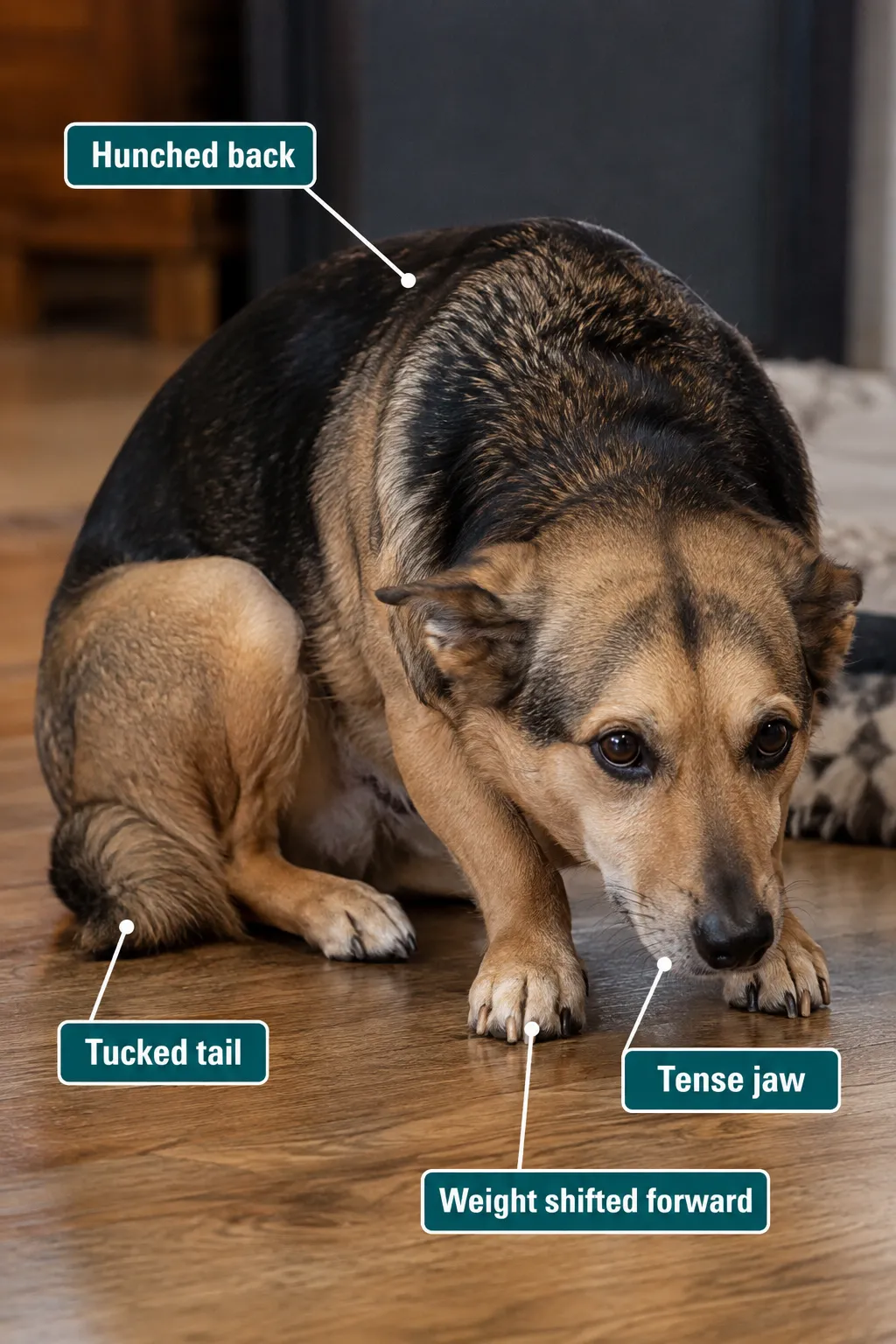
Experts in veterinary pain assessment now agree: posture and movement changes are among the strongest indicators of silent pain [3]. Here’s what to watch for.
1. Hunched Back or Tucked Posture
A dog in pain often stands or moves with a rounded, hunched spine. It looks like they’re bracing for something. Their belly might be tucked up. Their head might hang lower than usual.
This posture is the body’s way of protecting a sore area. It’s especially common with abdominal pain, spinal issues, or internal discomfort [7].
💬 “A dog who suddenly looks ‘smaller’ than usual is often a dog who is hurting.”
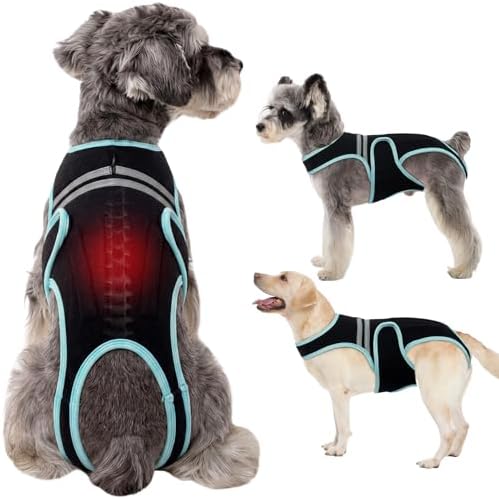
- Multiple Sizes:Our back support dog harness perfect for Dachshund, Corgi, French Bulldog, Pug, Shih Tzu, Poodle, Beagle,…
- Premium Material:Our back brace is made of breathable and light-weight materials,which is friendly to skin.Also,the stre…
- Convenient Design:With the magic tape on both sides of the dog back brace,it’s easy to wear the clothes on and adjust it…
2. Subtle Changes in How They Walk
You don’t always see a full limp. Sometimes it’s just a tiny hitch in their step. A slight hesitation before putting weight on one leg. A barely-there unevenness in their stride.
Watch your dog walk away from you. Watch them trot across the yard. Look for:
Uneven rhythm, one step slightly shorter than the others
Head bobbing, the head dips when a painful leg hits the ground
Toe dragging, a subtle scuff on one paw
These “little hitches” are easy to dismiss. Don’t. They often point to joint or spinal pain that’s been building for a while [8].
3. Weight Shifting
Stand near your dog while they’re standing still. Are they leaning slightly to one side? Shifting their weight off one leg?
This is a classic silent pain signal. Dogs do this to take pressure off a sore limb or joint. It’s subtle. It’s quiet. And it’s one of the most reliable signs that something hurts [4].
Behavioral Shifts That Scream “Something’s Wrong”
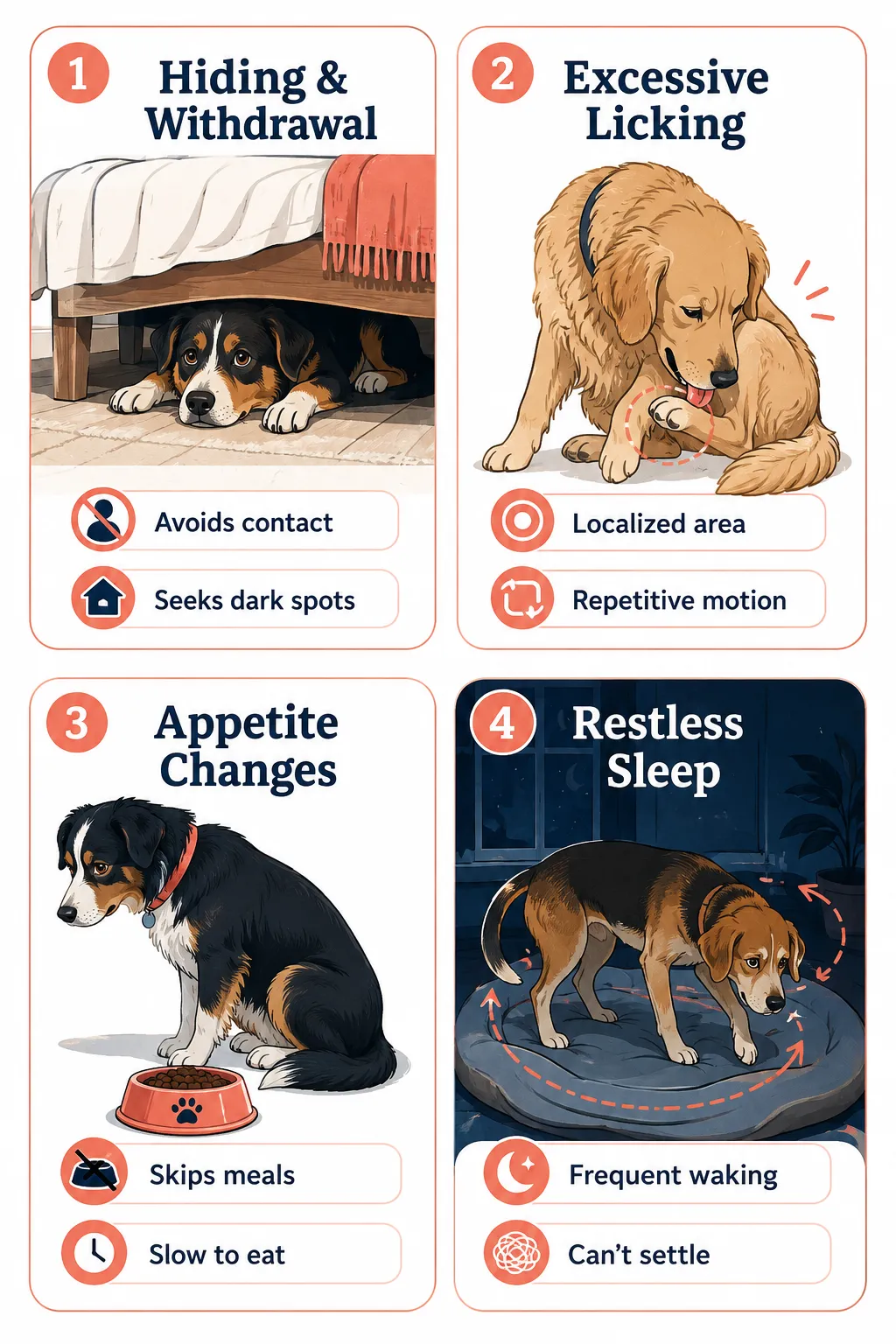
Pain doesn’t just hurt the body. It changes personality. A dog in pain might seem like a different dog entirely, and that shift in behavior is one of the loudest silent signals there is [5].
4. Hiding or Withdrawing
Does your dog suddenly prefer to be alone? Are they tucking themselves under the bed, behind the couch, or in a quiet corner?
Withdrawal is a major pain signal. Dogs instinctively isolate when they’re hurting. It’s protective behavior. They’re not being antisocial. They’re trying to keep themselves safe [10].
Watch for:
Avoiding rooms they used to love
Not greeting you at the door anymore
Turning away from cuddles they used to enjoy
5. Increased Clinginess
On the flip side, some dogs do the opposite, they become velcro dogs. They follow you from room to room. They press against your legs. They can’t seem to get close enough.
This is also a pain response. Your dog is seeking comfort and reassurance. It’s their way of saying, “I don’t feel right, and I need you.” [6]
6. Irritability or Sudden Aggression
A normally sweet dog who snaps, growls, or flinches when touched might be in pain. This is one of the most misunderstood signals.
People often label this as “bad behavior.” But a dog who suddenly reacts badly to being petted in a specific spot is almost certainly protecting a painful area [9].
⚠️ Important: Never punish a dog for growling when touched. That growl is communication. It’s telling you exactly where it hurts.
7. Anxiety and Restlessness
Pain causes anxiety. A dog who paces, circles, can’t settle, or seems generally on edge might not just be “hyper” or “anxious.” They might be in discomfort that they can’t escape [4].
Look for restlessness that seems to come out of nowhere, especially in a dog who is usually calm.
Movement and Mobility Red Flags
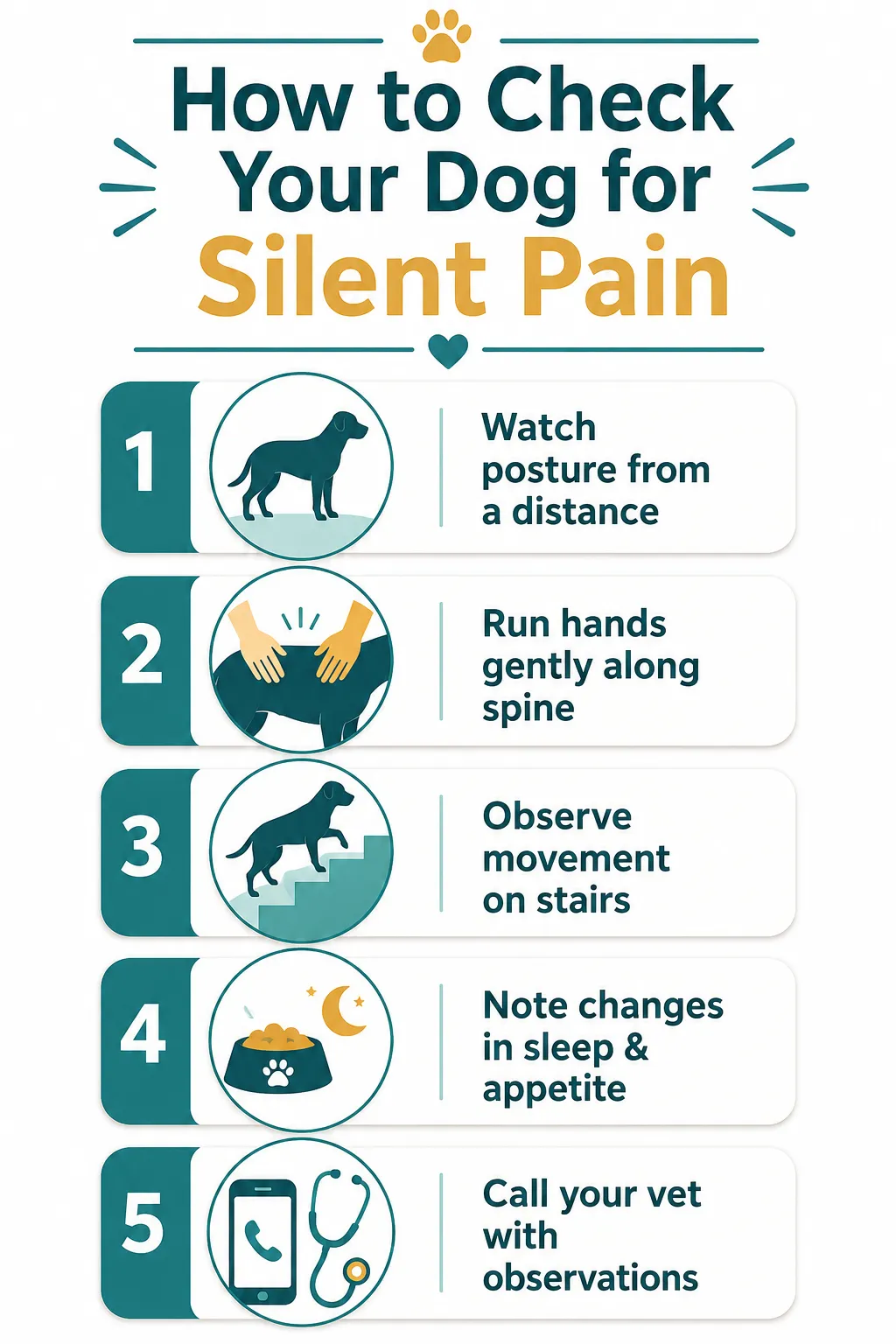
One of the clearest windows into your dog’s pain level is how they move through the world. Not just walking, but every transition, every jump, every morning stretch.
8. Reluctance to Jump or Use Stairs
This is a huge one. And it’s easy to miss because owners often chalk it up to laziness or “just getting older.”
But when a dog who used to leap onto the couch suddenly hesitates, takes the long way around, or needs multiple attempts, that’s not laziness. That’s pain [8].
Watch for:
Pausing at the bottom of stairs
Needing a running start to jump
Choosing not to jump at all
Asking to be lifted when they never needed help before
9. Stiffness When Getting Up or Lying Down
Watch your dog the moment they wake up from a nap. Do they stretch easily and bounce up? Or do they move slowly, take a moment to find their footing, and seem stiff for the first few steps?
That morning stiffness, or post-rest stiffness, is a classic sign of joint pain, arthritis, or spinal discomfort [8].
The same goes for lying down. A dog in pain might circle repeatedly, lower themselves slowly, or seem to “fall” into position because lowering themselves gently hurts too much.

- LARGE BREED HIP & JOINT SUPPLEMENT FOR DOGS, PROVEN IN 4 WEEKS: Vet-formulated soft chews for big breeds (Labs, Goldens,…
- TRIPLE-ACTION SOFT CHEWS FOR BIG BREEDS: Glucosamine (750mg) rebuilds cartilage, ActivEase GLM (450mg) is over 30x more …
- EASES STIFFNESS, VISIBLE IN 4 WEEKS: Hyaluronic Acid reaches the joint in about 2 hours; for structural change, take the…
10. Reduced Activity and Play
This one sneaks up on owners gradually. The dog who used to race to get the ball now trots slowly. The dog who used to beg for walks now seems indifferent.
It’s easy to say, “Oh, they’re just getting older.” And sometimes that’s true. But reduced activity is one of the top signs of chronic pain in dogs, and it deserves a vet conversation, not a shrug [1].
🐾 Wag Daily Tip: Keep a simple weekly log of how much your dog plays, walks, and moves. Even rough notes help your vet spot a downward trend that you might not notice day to day.
The Subtle Physical Signs That Hide in Plain Sight
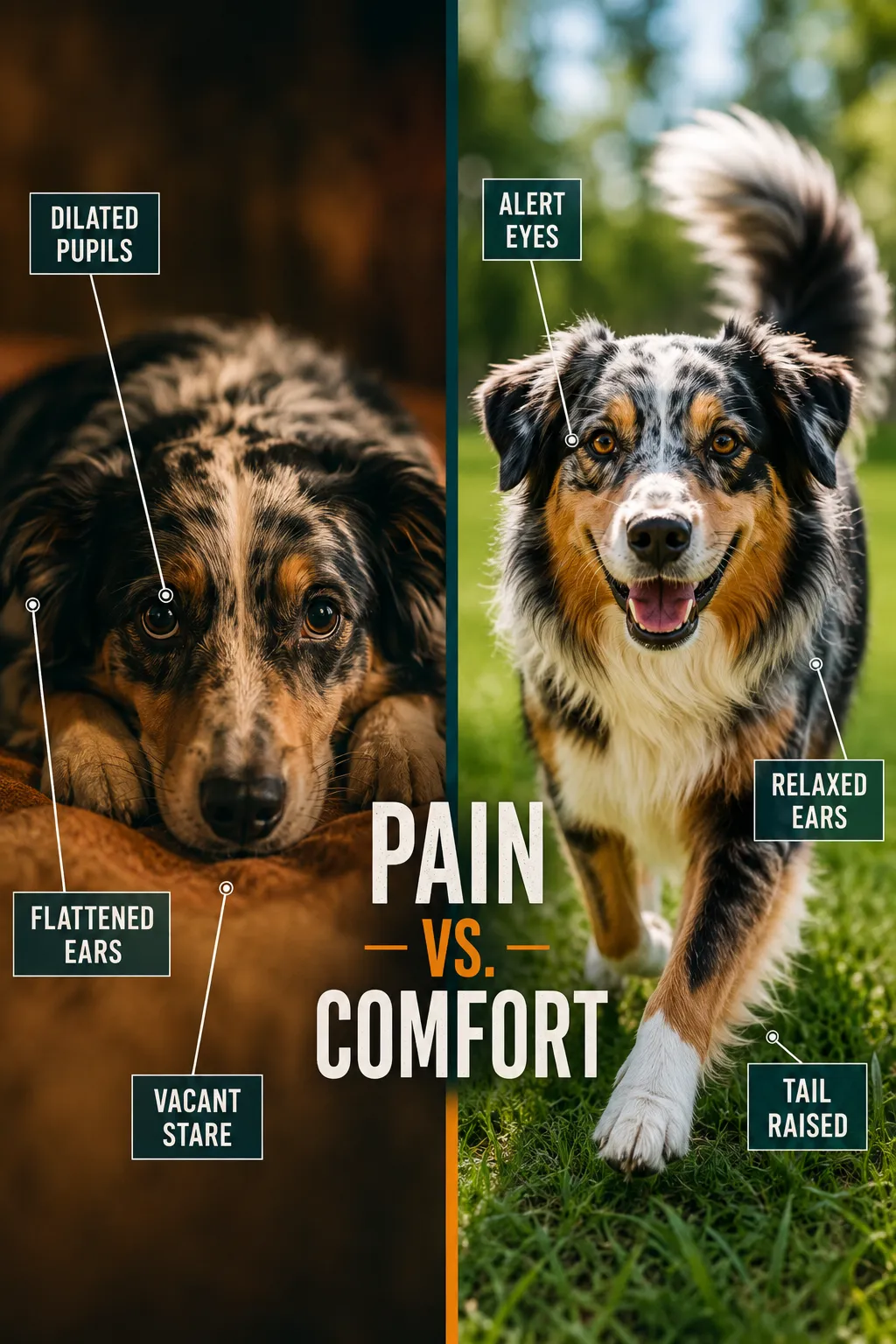
Some pain signals are written all over your dog’s body, literally. You just need to know where to look.
11. Localized Licking, Chewing, or Grooming
Dogs lick things that hurt. It’s instinct. If your dog is obsessively licking one spot, a paw, their belly, a joint, and there’s no obvious wound there, pain is a likely cause [10].
This is especially common with:
Joint pain, licking at the knee or elbow
Abdominal pain, licking at the belly
Spinal pain, chewing at the back or flank
The licking often creates a secondary problem: a hot spot or skin irritation from the moisture. So owners treat the skin issue without ever finding the underlying pain. Don’t let that happen.
12. Flinching or Skin Twitching When Touched
Run your hand gently along your dog’s spine and sides. Do they flinch, twitch their skin, or pull away at any point?
That skin twitch, called a cutaneous trunci reflex, can be a sign of spinal pain or nerve sensitivity [3]. A flinch when you touch a specific spot? That spot probably hurts.
This is one of the most direct ways to locate silent pain. Make gentle full-body touch a regular habit.
13. Facial Expression Changes
Dogs have more facial muscles than most people realize. And pain shows on their face, if you know what to look for [2].
Signs of a pain face in dogs:
ExpressionWhat It Looks Like:
- Vacant stareEyes seem unfocused, glazed over
- Dilated pupilsPupils larger than normal, even in normal light
- Flattened earsEars pressed back or to the sides
- Tight muzzleLips pulled back slightly, jaw tense
- Furrowed browWrinkles above the eyes, worried look
A dog who looks “sad” or “worried” for no obvious reason might not be sad at all. They might be hurting [2].
14. Changes in Tail Position
A dog’s tail is an emotional thermometer. A low, stiff, or barely moving tail, especially in a dog who normally carries it high, can signal pain or discomfort [7].
This is different from a tucked-in-fear tail. A pain tail is often:
Held lower than usual
Moving stiffly or not at all
Carried in a way that seems “off” compared to their normal
15. Unexplained Panting at Rest
Panting when it’s hot? Normal. Panting after exercise? Normal. Panting while lying still in a cool room for no obvious reason? That’s a red flag 🚩 [4].
Unexplained resting panting is one of the clearest signs of internal pain or discomfort. It can also signal anxiety, but pain and anxiety often go hand in hand in dogs who are hurting.
Pair this with any other signs on this list, and it’s time to call the vet.
16. Trembling or Shaking
Shivering in a cold dog is normal. But trembling in a warm, rested dog is not. Unexplained trembling can point to:
Pain, the body’s physical response to discomfort
Nausea, often linked to abdominal pain
Neurological issues, which can also cause pain [6]
Don’t dismiss a shaking dog as “just nervous.” Look at the full picture.
Changes in Appetite, Sleep, and Bathroom Habits
These are the signs that hide in the everyday routine. They’re easy to overlook because they seem so… ordinary. But shifts in these basics are often early warning signals of pain [5].
17. Appetite Changes
A dog who suddenly eats less, eats more slowly, or drops food from their mouth might be in pain. Dental pain makes eating uncomfortable. Abdominal pain makes the idea of food unappealing. Joint pain can make bending down to a bowl difficult.
Watch for:
Leaving food they normally love
Taking much longer to finish a meal
Dropping kibble or treats
Preferring softer foods over hard ones
18. Sleep Pattern Changes
Pain disrupts sleep. A dog in pain might:
Wake up frequently during the night
Reposition constantly, can’t find a comfortable spot
Seem exhausted during the day despite sleeping a lot
Whimper or groan softly when settling [9]
Nighttime restlessness is increasingly recognized by veterinary experts as one of the key indicators of chronic pain, especially in older dogs [3].

- COOLING COMFORT: Designed with breathable cooling silk & mesh fabric that actively draws heat away from your dog’s body,…
- NON SLIP BASE: Equipped with a textured & anti-skid bottom that holds the bed firmly in place on hard floors or tiles so…
- EASY CLEANING: Includes a removable & zippered cover that’s machine washable or easy to hand wash so you can keep the be…
19. Changes in Bathroom Habits
This one surprises people. But pain can absolutely affect how and when a dog goes to the bathroom.
Constipation can signal abdominal or spinal pain
Accidents indoors might mean it hurts to posture for elimination
Straining to urinate or defecate is a clear sign of discomfort [6]
A dog who suddenly stops asking to go out might find the movement painful
If your dog’s bathroom routine changes without an obvious dietary reason, pain should be on your list of possibilities.
Your Gut Feeling Is a Valid Diagnostic Tool
This might be the most important section in the entire article.
Veterinary experts now officially recognize that an owner’s vague sense that “something is just off” is a legitimate and valuable signal in detecting silent pain [2].
You know your dog. You know their normal. When something feels different, even if you can’t name exactly what it is, that instinct deserves respect.
Maybe your dog just seems quieter than usual. Maybe they’re not as excited about their favorite things. Maybe something in their eyes looks different. Maybe they just seem… sad.
Trust that feeling. Write it down. Tell your vet. Because that gut feeling, combined with even one or two of the signs above, is exactly the kind of multi-dimensional picture that helps vets catch pain early [9].
💬 “Owners who say ‘I just know something is wrong’ are usually right. That observation is the starting point for everything.”, Veterinary pain assessment guidelines
Conclusion
Your dog can’t say “I’m hurting.” But they are absolutely telling you, every single day, through the quiet language of their body and behavior.
The 19 silent signs of pain in dogs that every owner should know aren’t dramatic. They’re subtle. They’re easy to miss. And that’s exactly what makes them so important to learn.
Here are your actionable next steps:
✅ Bookmark this article and review the checklist regularly
✅ Start a simple weekly log of your dog’s activity, appetite, and sleep
✅ Make gentle full-body touch a regular part of your routine
✅ Trust your gut, if something feels off, it probably is
✅ Call your vet sooner rather than later, early pain management leads to better outcomes
Your dog gives you everything they’ve got, every single day. Knowing how to read their silent signals is one of the greatest gifts you can give them back. 🐾❤️
References
[1] Signs Your Dog Is In Pain – https://petpace.com/signs-your-dog-is-in-pain/
[2] 2026 04 Dog Pain – https://phys.org/news/2026-04-dog-pain.html
[3] Pain Recognition – https://royalveterinarycenter.com/en/health-library/preventive/pain-recognition
[4] How To Tell If Your Dog Is In Pain – https://www.petmd.com/dog/general-health/how-to-tell-if-your-dog-is-in-pain
[5] Nebraska Humane Society Behavioral Clues That Pets Are Pain – https://www.wowt.com/2026/08/30/nebraska-humane-society-behavioral-clues-that-pets-are-pain/
[6] Whats Wrong Common Pet Pain Signs – https://www.aaha.org/resources/whats-wrong-common-pet-pain-signs/
[7] Recognizing Dog Pain – https://www.wilsonshealth.com/post/recognizing-dog-pain
[8] Mobilitymatters – https://www.aaha.org/wp-content/uploads/globalassets/05-pet-health-resources/mobilitymatters.pdf
[9] Recognizing Pain Dogs – https://www.vet.cornell.edu/departments-centers-and-institutes/riney-canine-health-center/canine-health-topics/recognizing-pain-dogs
[10] Silent Pain In Dogs And How To Recognize It – https://vethealth.hr/en/news/silent-pain-in-dogs-and-how-to-recognize-it