
Only about 5% of all dog breeds can naturally carry the gene responsible for blue eyes — making dogs with this trait genuinely rare and breathtaking. Whether you’re already a devoted dog parent or searching for your next furry companion, the 5 cute dog breeds with striking blue eyes covered in this article are sure to steal your heart. From sled dogs built for Arctic adventures to herding dogs with a supernatural gaze, these breeds combine stunning looks with lovable personalities.

Key Takeaways 🐾
- Blue eyes in dogs are caused by specific genetic mutations, making them relatively rare and special.
- The 5 cute dog breeds with striking blue eyes include the Siberian Husky, Australian Shepherd, Border Collie, Dachshund, and Weimaraner.
- Some breeds can have two different colored eyes (heterochromia), which is completely normal and healthy.
- Blue eyes do not indicate poor health or vision problems in most breeds.
- Each blue-eyed breed has unique care needs, temperaments, and energy levels suited to different lifestyles.
Why Do Some Dogs Have Blue Eyes? 👁️
Before diving into the list, it helps to understand why certain dogs have those mesmerizing blue peepers. Blue eye color in dogs is linked to a few different genetic factors:
| Cause | Description | Common Breeds |
|---|---|---|
| Merle gene | Dilutes pigmentation in eyes and coat | Australian Shepherd, Dachshund |
| ALX4 gene mutation | Linked to blue eyes near white coat areas | Siberian Husky |
| Lack of pigment | White or piebald coat patterns reduce eye pigment | Border Collie, Dachshund |
| Natural breed trait | Blue eyes occur naturally regardless of coat | Weimaraner (puppies) |
💡 Pull Quote: “Blue eyes in dogs are not a flaw — they’re a fascinating genetic gift that makes each dog uniquely beautiful.”
The 5 Cute Dog Breeds with Striking Blue Eyes
Ready to meet these gorgeous, blue-eyed beauties? Here’s a deep dive into each breed’s looks, personality, and care needs.
1. 🐺 Siberian Husky — The Icy-Eyed Arctic Legend

The Siberian Husky is arguably the most iconic of all blue-eyed dog breeds. Bred by the Chukchi people of Siberia to pull sleds across frozen tundra, these dogs are as tough as they are beautiful. Their piercing, glacier-blue eyes are one of the most recognizable features in the canine world.
Key Facts:
- 🏠 Size: Medium (35–60 lbs)
- ⚡ Energy Level: Very High
- 🧠 Temperament: Friendly, mischievous, independent
- 🎨 Eye Colors: Blue, brown, or one of each (heterochromia)
Huskies can have two blue eyes, two brown eyes, or one of each — all perfectly normal. Their thick double coat requires regular brushing, especially during shedding season. They thrive with active families who love outdoor adventures.
Best for: Active owners, families with space, cold-climate households.
⚠️ Note: Huskies are escape artists! A secure yard is a must.
2. 🌈 Australian Shepherd — The Colorful Herding Genius

Don’t let the name fool you — the Australian Shepherd was actually developed in the American West as a herding dog. What makes this breed truly eye-catching is its frequent heterochromia, where one eye is blue and the other is brown, amber, or even marbled.
Key Facts:
- 🏠 Size: Medium (40–65 lbs)
- ⚡ Energy Level: Very High
- 🧠 Temperament: Intelligent, loyal, energetic
- 🎨 Eye Colors: Blue, brown, amber, or marbled combinations
Aussies are working dogs at heart. They need mental stimulation and physical exercise every single day. Without it, they can become bored and destructive. They excel at agility, frisbee, and obedience training.
Best for: Active families, experienced dog owners, those who enjoy dog sports.
💡 Fun Fact: The merle gene responsible for their stunning coat patterns is also what causes their blue or marbled eyes.
3. ⚫⚪ Border Collie — The Hypnotic Stare Champion

Widely regarded as the world’s most intelligent dog breed, the Border Collie is famous for its intense, focused gaze — sometimes called “the eye.” When those eyes happen to be blue, the effect is absolutely mesmerizing. Blue eyes appear most often in Border Collies with merle or dilute coat patterns.
Key Facts:
- 🏠 Size: Medium (30–55 lbs)
- ⚡ Energy Level: Extremely High
- 🧠 Temperament: Highly intelligent, driven, sensitive
- 🎨 Eye Colors: Brown most common; blue in merle/dilute coats
Border Collies are not couch dogs. They were bred to herd sheep for hours on end, and they bring that same relentless energy to family life. They need at least 2 hours of vigorous exercise daily plus mental challenges like puzzle toys and training sessions.
Best for: Experienced dog owners, farms, active households without young children.
4. 🌭 Dachshund (Dapple) — Small Dog, Big Blue Eyes

The Dachshund might not be the first breed that comes to mind when thinking about blue eyes — but the dapple-coated variety can absolutely sport one or two striking blue eyes. The dapple pattern is caused by the merle gene, which can reduce pigmentation in the eyes just as it does in larger breeds.
Key Facts:
- 🏠 Size: Small (8–32 lbs depending on standard/miniature)
- ⚡ Energy Level: Moderate
- 🧠 Temperament: Curious, stubborn, affectionate
- 🎨 Eye Colors: Blue possible in dapple-coated individuals
Dachshunds are big personalities in small packages. They’re loyal to their families but can be stubborn during training. Their long spines make them prone to back problems (IVDD), so jumping on and off furniture should be limited.
Best for: Apartment dwellers, families with older children, first-time dog owners.
⚠️ Important: Breeding two dapple Dachshunds together can cause serious health issues. Always adopt from responsible breeders.
5. 🩶 Weimaraner — The Silver Ghost with Soulful Eyes
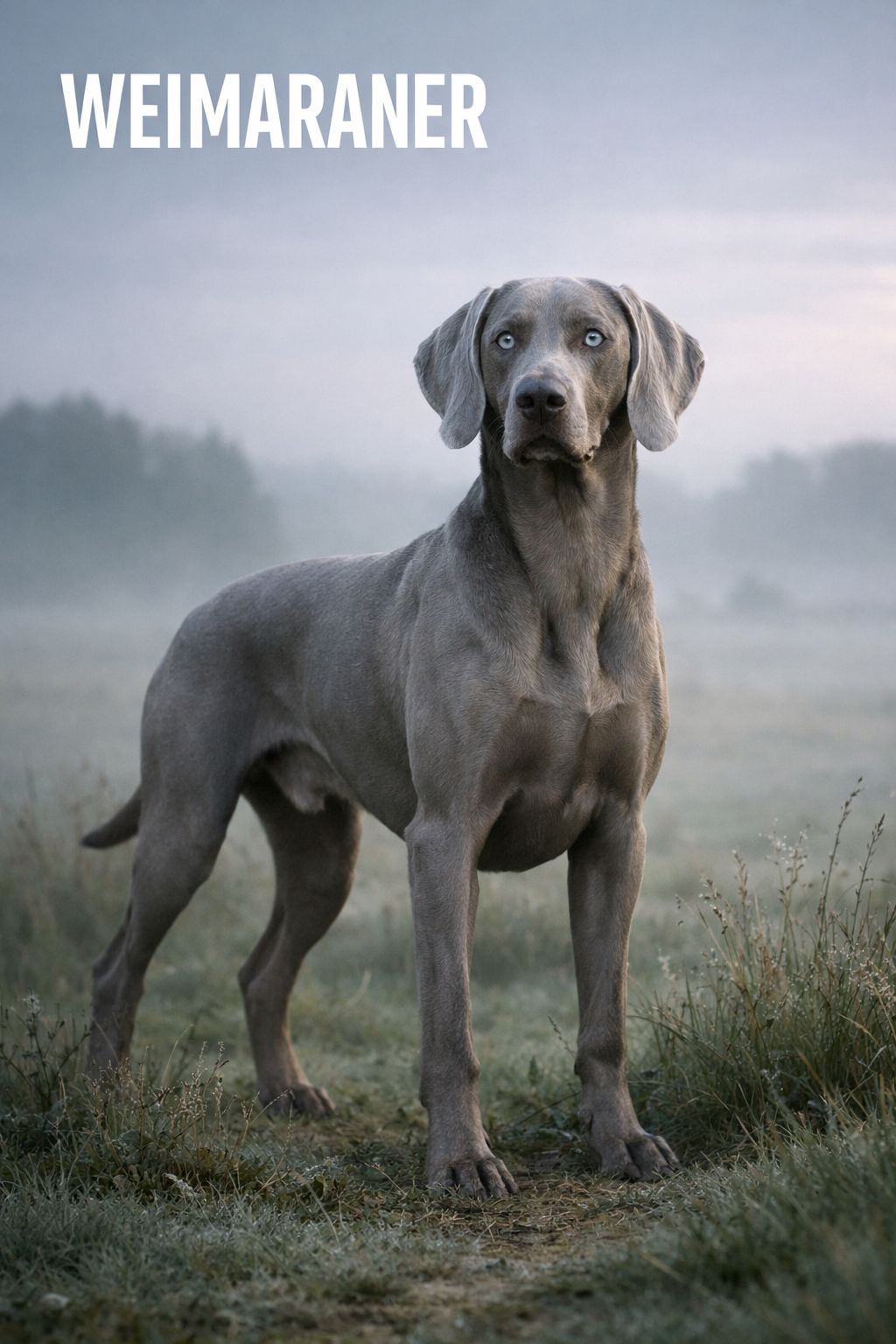
The Weimaraner earns its nickname “the Grey Ghost” thanks to its sleek silver coat and ethereal appearance. While adult Weimaraners typically have light amber or grey-blue eyes, puppies are born with striking pale blue eyes that are truly unforgettable. Some adults retain a blue-grey hue throughout their lives.
Key Facts:
- 🏠 Size: Large (55–90 lbs)
- ⚡ Energy Level: High
- 🧠 Temperament: Loyal, fearless, affectionate
- 🎨 Eye Colors: Pale blue (puppies), light amber to grey-blue (adults)
Weimaraners were originally bred as hunting dogs in Germany. They bond deeply with their families and can suffer from separation anxiety if left alone too long. They need plenty of exercise and do best in homes where someone is around most of the day.
Best for: Active families, hunters, experienced dog owners with time to dedicate.
Quick Comparison: 5 Cute Dog Breeds with Striking Blue Eyes
| Breed | Size | Energy | Blue Eye Frequency | Best For |
|---|---|---|---|---|
| Siberian Husky | Medium | Very High | Common | Active families |
| Australian Shepherd | Medium | Very High | Common (merle) | Dog sports enthusiasts |
| Border Collie | Medium | Extremely High | Less common | Experienced owners |
| Dachshund (Dapple) | Small | Moderate | Rare (dapple only) | Apartment living |
| Weimaraner | Large | High | Puppies/some adults | Dedicated owners |
Caring for Blue-Eyed Dogs: What to Know 🏥
Blue eyes themselves don’t require special care — but a few things are worth keeping in mind:
- ✅ Regular vet check-ups help monitor eye health in all breeds.
- ✅ Double merle dogs (two copies of the merle gene) can sometimes have vision or hearing issues — always ask breeders about genetic testing.
- ✅ Sun sensitivity is slightly higher in dogs with blue eyes — limit prolonged sun exposure on bright days.
- ✅ Eye discharge is normal in small amounts but should be monitored for changes in color or volume.
Conclusion: Finding Your Perfect Blue-Eyed Companion
The 5 cute dog breeds with striking blue eyes — Siberian Husky, Australian Shepherd, Border Collie, Dachshund, and Weimaraner — each bring something uniquely wonderful to the table. Whether it’s the Husky’s icy Arctic gaze, the Aussie’s marbled heterochromia, or the Weimaraner’s ghostly silver-blue stare, these dogs are as captivating in personality as they are in appearance.
Actionable Next Steps:
- 🐾 Research breed-specific rescues — many blue-eyed dogs are waiting for loving homes.
- 📋 Assess your lifestyle — match the breed’s energy level and size to your living situation.
- 🏥 Find a reputable breeder or rescue that provides health testing and genetic screening.
- 📚 Read breed-specific care guides to prepare before bringing your new dog home.
- 🐶 Visit local shelters — mixed-breed dogs can also carry blue-eye genes and need homes too!
Every one of these breeds deserves a dedicated, loving owner. With the right match, a blue-eyed dog will be one of the most rewarding companions of a lifetime. 💙
References
- American Kennel Club. (2021). Siberian Husky Breed Information. https://www.akc.org/dog-breeds/siberian-husky/
- Karlsson, E. K., et al. (2021). “Pigmentation-associated gene variants explain most of blue eye color in Siberian Huskies.” PLOS Genetics. https://doi.org/10.1371/journal.pgen.1009598
- American Kennel Club. (2022). Australian Shepherd Breed Information. https://www.akc.org/dog-breeds/australian-shepherd/
- Strain, G. M. (2012). “Deafness prevalence and pigmentation and gender associations in dog breeds at risk.” The Veterinary Journal, 193(2), 429–435.
- American Kennel Club. (2023). Weimaraner Breed Information. https://www.akc.org/dog-breeds/weimaraner/