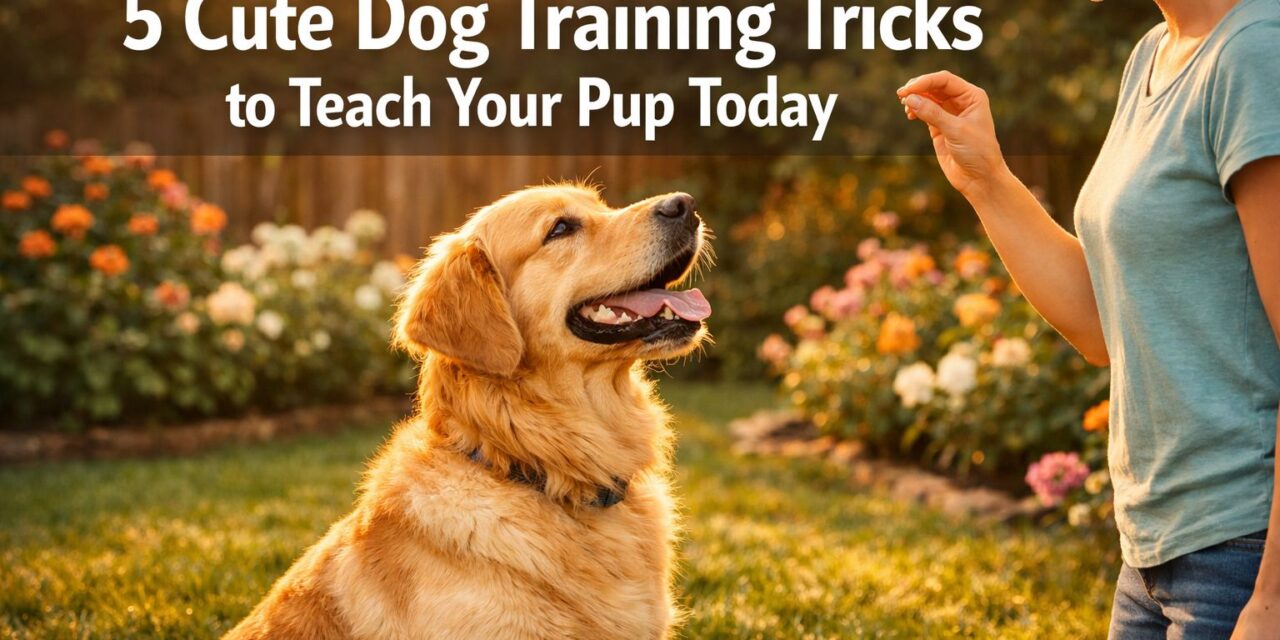
Dogs that know basic tricks are 30% less likely to develop destructive behaviors like chewing furniture or excessive barking, according to the American Kennel Club. That single fact alone makes learning the 5 cute dog training tricks to teach your pup today more than just a fun activity — it’s a genuine investment in your dog’s happiness and your household’s peace. Whether the pup in question is a bouncy 8-week-old or an older dog ready for something new, these five crowd-pleasing tricks are beginner-friendly, bond-building, and downright adorable.

Key Takeaways 🐾
- Positive reinforcement (treats + praise) is the most effective and humane training method for all five tricks.
- Short, 5–10 minute sessions work better than long, exhausting ones — dogs learn faster when they’re not tired.
- Every dog learns at its own pace; patience and consistency are more important than speed.
- These five tricks build on each other, creating a foundation for more advanced training later.
- Training strengthens the human-dog bond just as much as it teaches skills.
Why Teaching Dog Tricks Matters More Than You Think
Before diving into the 5 cute dog training tricks to teach your pup today, it’s worth understanding why trick training is so powerful. Training isn’t just about impressing guests — it’s mental exercise for a dog’s brain.
💡 Pull Quote: “A mentally stimulated dog is a happy dog. Ten minutes of training can tire a pup out more than a 30-minute walk.”
Here’s a quick look at the benefits:
| Benefit | What It Means for Your Dog |
|---|---|
| Mental stimulation | Reduces boredom and anxiety |
| Better communication | Dog learns to understand human cues |
| Stronger bond | Trust builds through positive interaction |
| Improved behavior | Fewer destructive habits at home |
| Confidence boost | Dogs feel proud when they succeed |
Now, let’s get to the fun part. 🐶
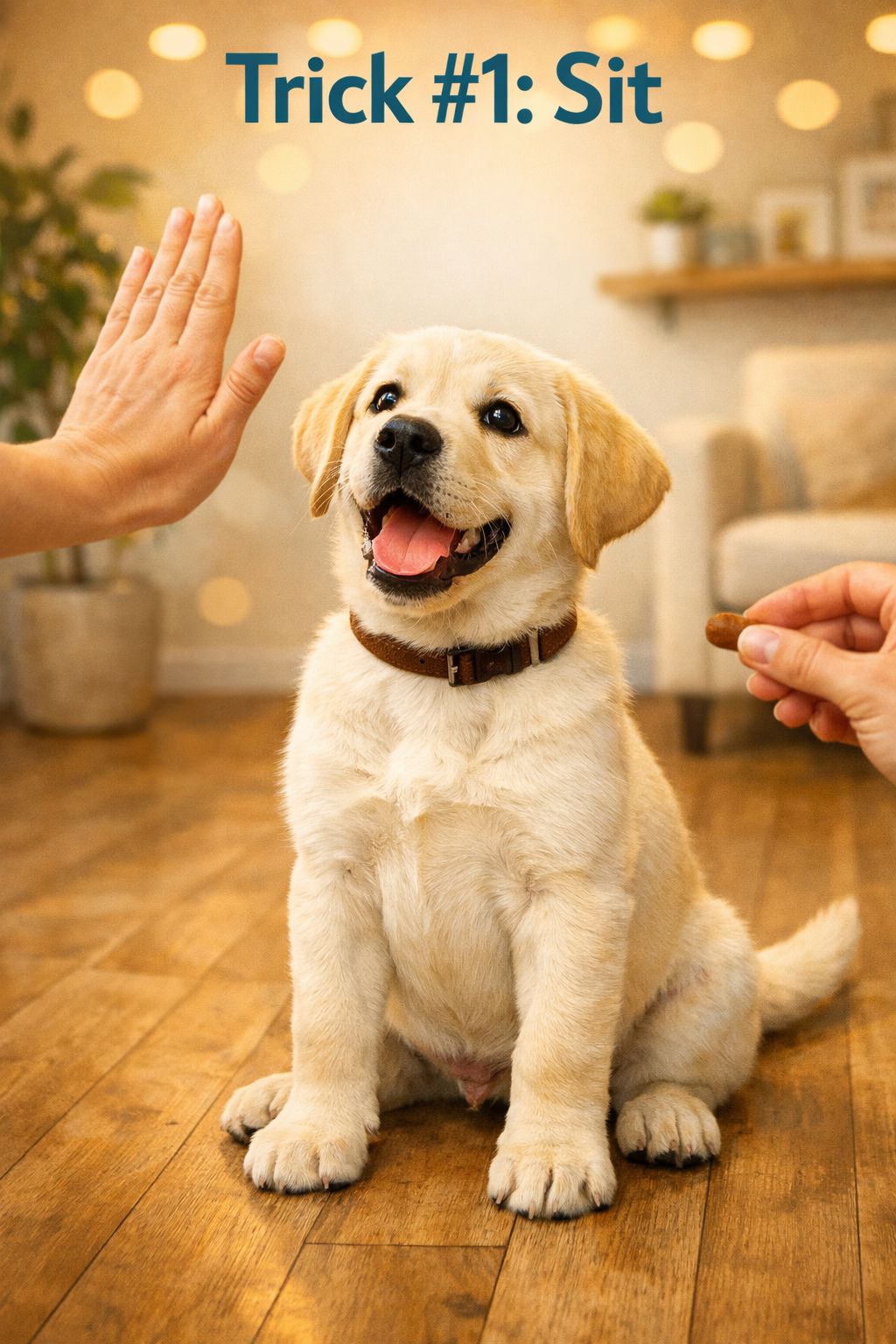
Trick #1: Sit — The Perfect Starting Point
“Sit” is the gateway trick — master this one first, and everything else becomes easier.
How to Teach It
- Hold a treat close to the dog’s nose.
- Slowly move the hand up and back over the dog’s head.
- As the bottom naturally lowers, say “Sit” clearly.
- Once seated, give the treat immediately and offer enthusiastic praise.
- Repeat 5–10 times per session.
Pro tip: Never push the dog’s bottom down. Let the movement happen naturally — it’s faster and kinder.
Most dogs pick up “Sit” within 1–3 training sessions, making it a huge confidence booster for both dog and owner right from the start.
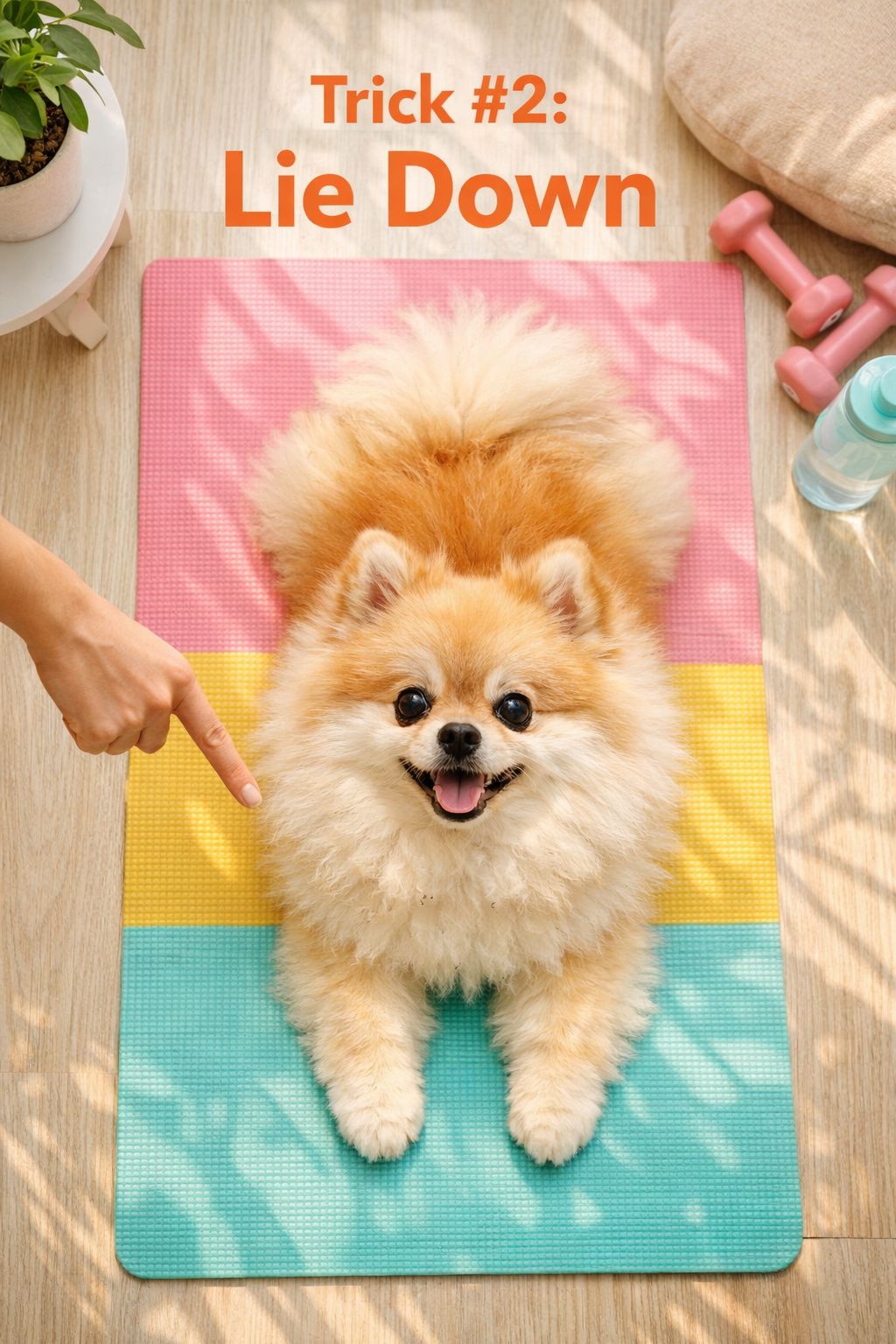
Trick #2: Lie Down — Building on the Basics
Once “Sit” is solid, “Lie Down” is the natural next step in the 5 cute dog training tricks to teach your pup today journey.
How to Teach It
- Ask the dog to Sit first.
- Hold a treat in a closed fist near the dog’s nose.
- Slowly lower the hand straight down to the floor, then slide it forward along the ground.
- As the dog follows the treat into a lying position, say “Down” or “Lie Down.”
- Reward immediately when elbows touch the floor.
⚠️ Common mistake: Moving the hand too fast. Go slow — the dog needs time to follow the motion.
“Lie Down” is especially useful in real life. A dog that lies down on command is calmer at the vet, during dinner, and when guests arrive.
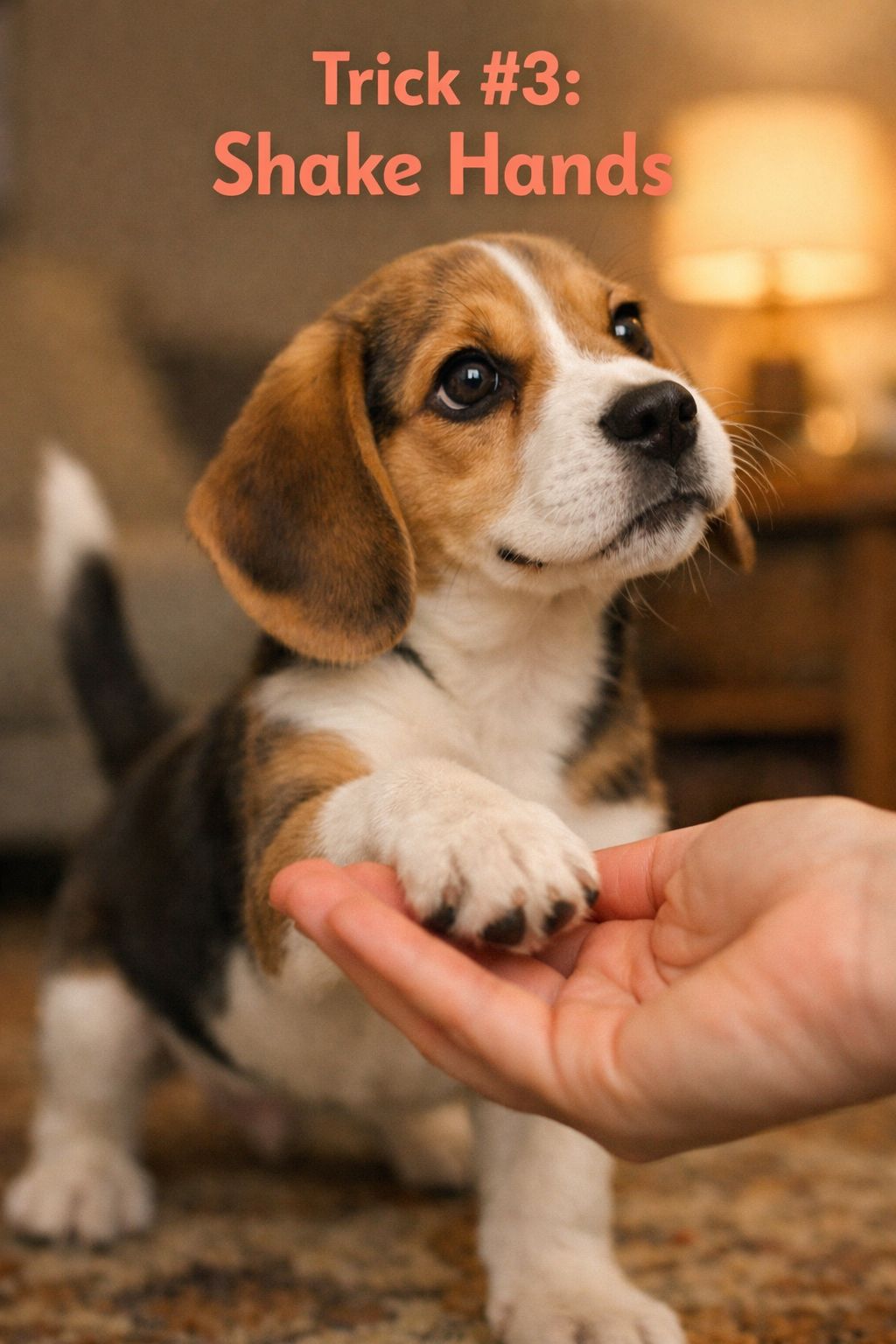
Trick #3: Shake Hands — The Crowd Favorite 🤝
Few things melt hearts faster than a dog offering its paw for a handshake. This is one of the most photogenic and socially impressive tricks in the lineup.
How to Teach It
- Ask the dog to Sit.
- Hold a treat in a closed fist at the dog’s chest level.
- Wait. The dog will likely sniff, then paw at the fist.
- The moment a paw touches the hand, open the fist, say “Shake,” and reward.
- Gradually open the hand flat so the dog learns to place its paw in an open palm.
Patience is key here. Some dogs paw immediately; others take a few sessions. Either way, the payoff is worth it.
| Training Day | Expected Progress |
|---|---|
| Day 1 | Dog sniffs and explores the closed fist |
| Day 2–3 | Dog begins pawing at the hand |
| Day 4–5 | Dog reliably offers paw on the “Shake” cue |
Trick #4: Spin — The Showstopper 🌀
This one always gets a gasp from onlookers. Teaching a dog to spin in a circle on command is pure joy to watch — and surprisingly easy to teach.
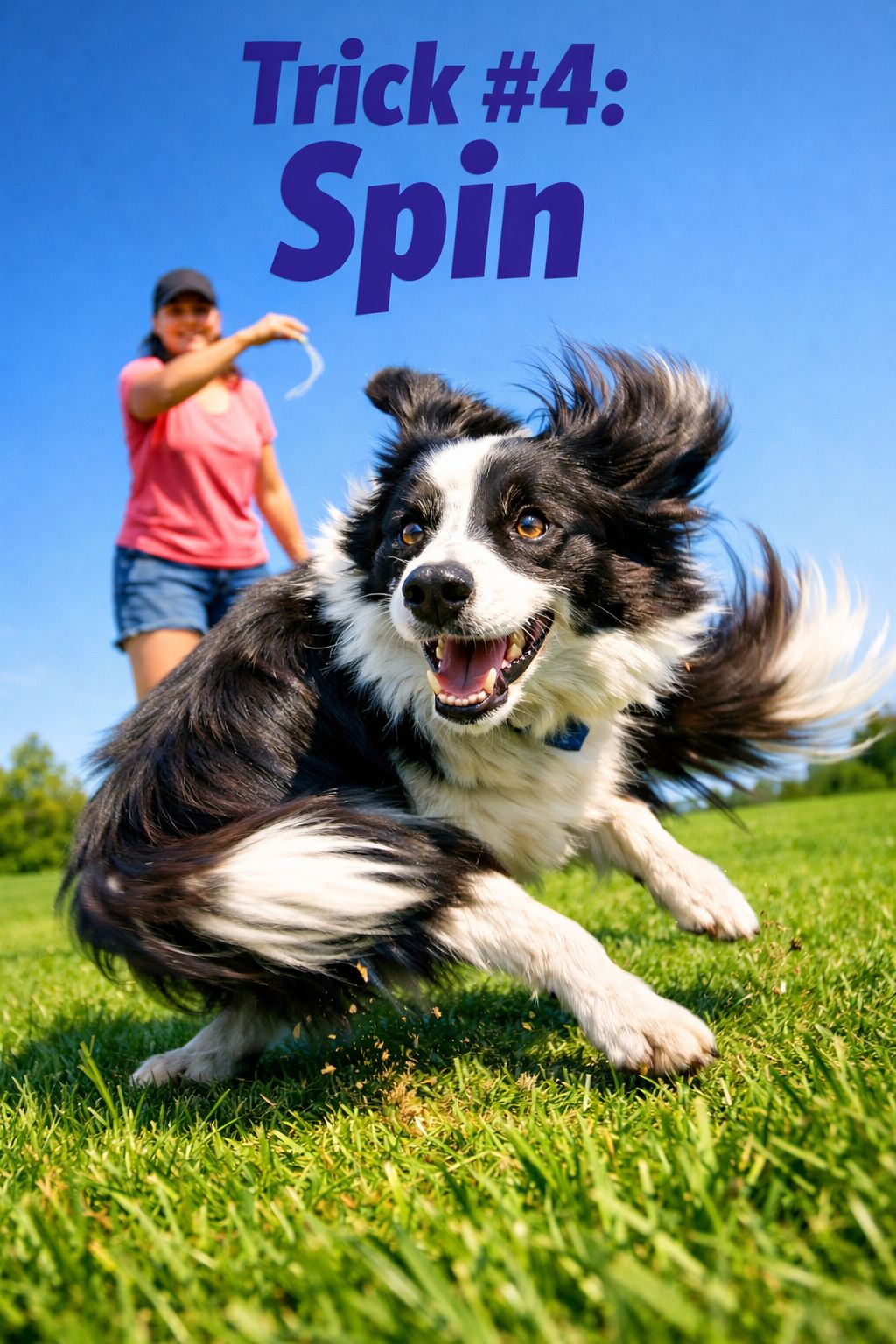
How to Teach It
- Stand in front of the dog with a treat in hand.
- Hold the treat near the dog’s nose and slowly lure it in a full circle — left or right, choose one direction and stay consistent.
- As the dog completes the circle, say “Spin” (or “Twirl” — whatever feels fun!).
- Reward and celebrate enthusiastically. 🎉
- Once the dog understands the motion, begin adding a hand gesture (a circular finger motion works great).
Helpful tip: Teach “Spin Left” and “Spin Right” as separate tricks using different words. It’s impressive, and it keeps the dog’s brain working harder.
Trick #5: Balance a Treat on the Nose — The Ultimate Cute Trick 🐽
Saving the best for last — this trick is Instagram gold and a genuine test of a dog’s self-control. It’s the crown jewel of the 5 cute dog training tricks to teach your pup today collection.
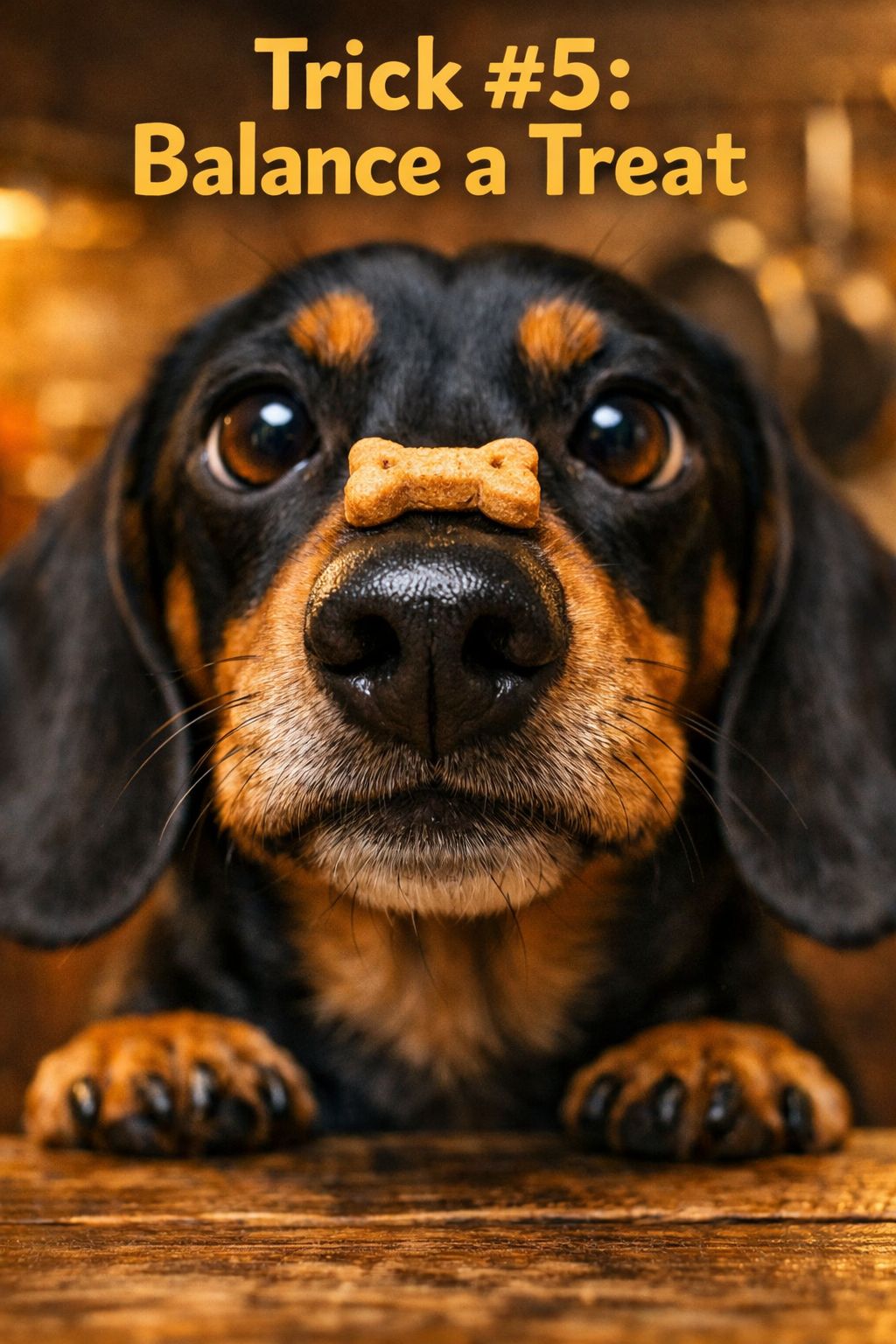
How to Teach It
- First, make sure the dog knows “Stay” or at least “Sit.”
- Gently hold the dog’s muzzle steady with one hand.
- Place a treat on the flat bridge of the nose, near the tip.
- Say “Wait” or “Stay” and hold for just 1–2 seconds at first.
- Release with “Okay!” — the dog will flip and catch the treat (or try to!).
- Gradually increase the wait time as the dog improves.
🌟 Fun fact: This trick also builds impulse control, one of the most valuable skills a dog can have.
Quick Training Tips for All 5 Tricks
- ✅ Keep sessions short: 5–10 minutes max, 2–3 times per day
- ✅ End on a win: Always finish with something the dog already knows
- ✅ Use high-value treats: Small, soft, smelly treats work best
- ✅ Be consistent: Use the same word and gesture every single time
- ✅ Stay positive: Never scold during training — frustration is contagious
Putting It All Together: A Weekly Training Schedule
Here’s a simple plan to teach all five tricks over two weeks:
| Week | Focus Tricks | Daily Session Length |
|---|---|---|
| Week 1, Days 1–3 | Sit | 5–10 minutes |
| Week 1, Days 4–7 | Sit + Lie Down | 5–10 minutes |
| Week 2, Days 1–3 | Shake Hands | 5–10 minutes |
| Week 2, Days 4–5 | Spin | 5–10 minutes |
| Week 2, Days 6–7 | Balance a Treat | 5–10 minutes |
Conclusion: Start Today, Celebrate Every Step 🐕
The 5 cute dog training tricks to teach your pup today — Sit, Lie Down, Shake Hands, Spin, and Balance a Treat — are more than party pieces. They build communication, trust, and a deeper bond between dog and owner. The best time to start is right now, even if it’s just five minutes before dinner.
Actionable next steps:
- Grab a bag of small, soft treats and find a quiet spot with minimal distractions.
- Start with “Sit” — just one trick, one session, today.
- Celebrate every tiny win — enthusiasm from the owner is the best reward a dog can get.
- Track progress with short video clips — it’s motivating, and the footage is adorable.
- Be patient — every dog learns differently, and that’s perfectly okay.
Training a dog is one of the most rewarding things a pet owner can do. The tricks are cute. The memories are priceless. 🐾
References
- American Kennel Club. (2021). Why training your dog is so important. https://www.akc.org/expert-advice/training/why-training-your-dog-is-so-important/
- Hiby, E. F., Rooney, N. J., & Bradshaw, J. W. S. (2004). Dog training methods: Their use, effectiveness and interaction with behaviour and welfare. Animal Welfare, 13(1), 63–69.
- Overall, K. L. (2013). Manual of clinical behavioral medicine for dogs and cats. Elsevier Mosby.
- Ziv, G. (2017). The effects of using aversive training methods in dogs — A review. Journal of Veterinary Behavior, 19, 50–60.