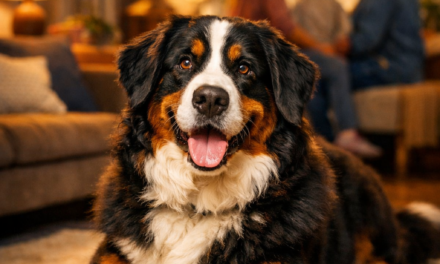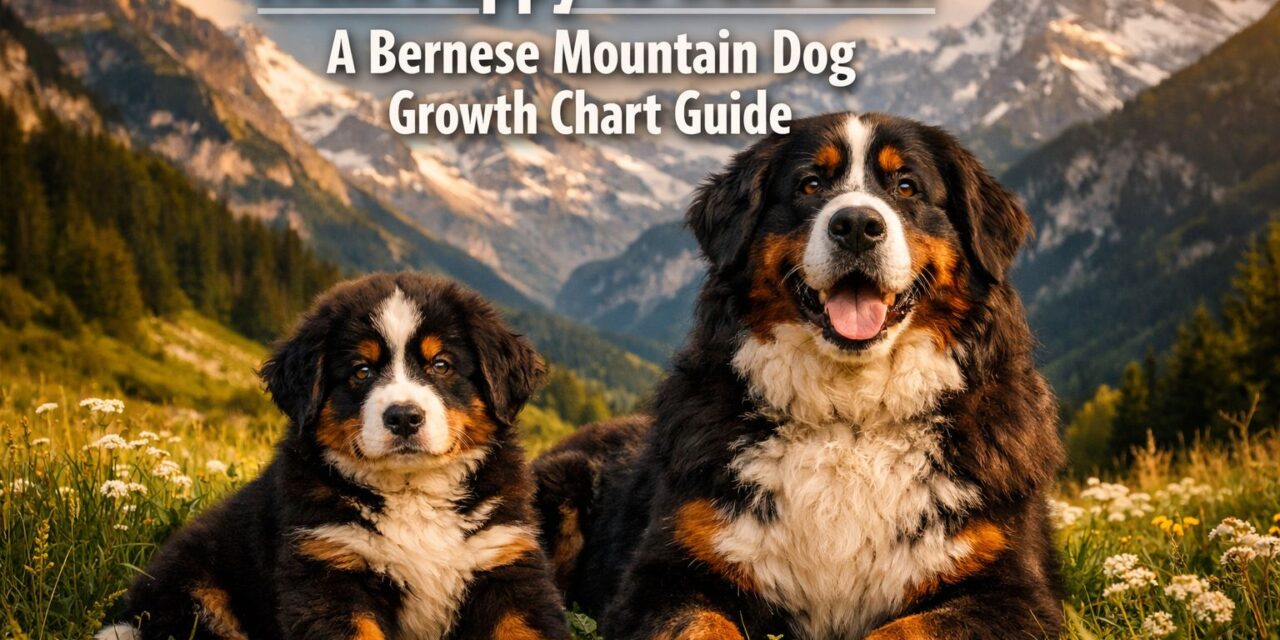
Picture this: you bring home an adorable 15-pound Bernese Mountain Dog puppy, all fluffy coat and clumsy paws. Fast-forward three years, and that same furry family member now weighs over 100 pounds and looks more like a gentle bear than the tiny pup who once fit in your lap! This incredible transformation is exactly what makes understanding the “From Puppy to Bear Cub: A Bernese Mountain Dog Growth Chart Guide” so essential for every Bernese parent.

Watching a Bernese Mountain Dog grow is like witnessing nature’s most paw-some magic trick. These gentle giants undergo one of the most dramatic size transformations in the dog world, and knowing what to expect during each growth phase helps ensure your furry friend develops into the healthy, happy bear-cub they’re meant to become.
Key Takeaways
• Bernese Mountain Dogs experience three distinct growth phases: rapid growth (0-8 months), slowdown period (9-18 months), and filling out stage (18-36 months) [2]
• Size varies significantly by gender: Males reach 80-115 pounds and 25-27.5 inches tall, while females typically weigh 70-95 pounds and stand 23-26 inches [1][8]
• Puppies can gain 2-4 pounds per week during their fastest growth phase, requiring careful nutrition management [2]
• Full maturity takes 2.5-3 years: While they reach adult height by 12-15 months, Bernese dogs don’t finish filling out until nearly three years old [2][7]
• Proper nutrition and exercise management during growth phases prevents developmental issues common in giant breeds [1]
Understanding Bernese Mountain Dog Growth Phases: From Puppy to Bear Cub Journey
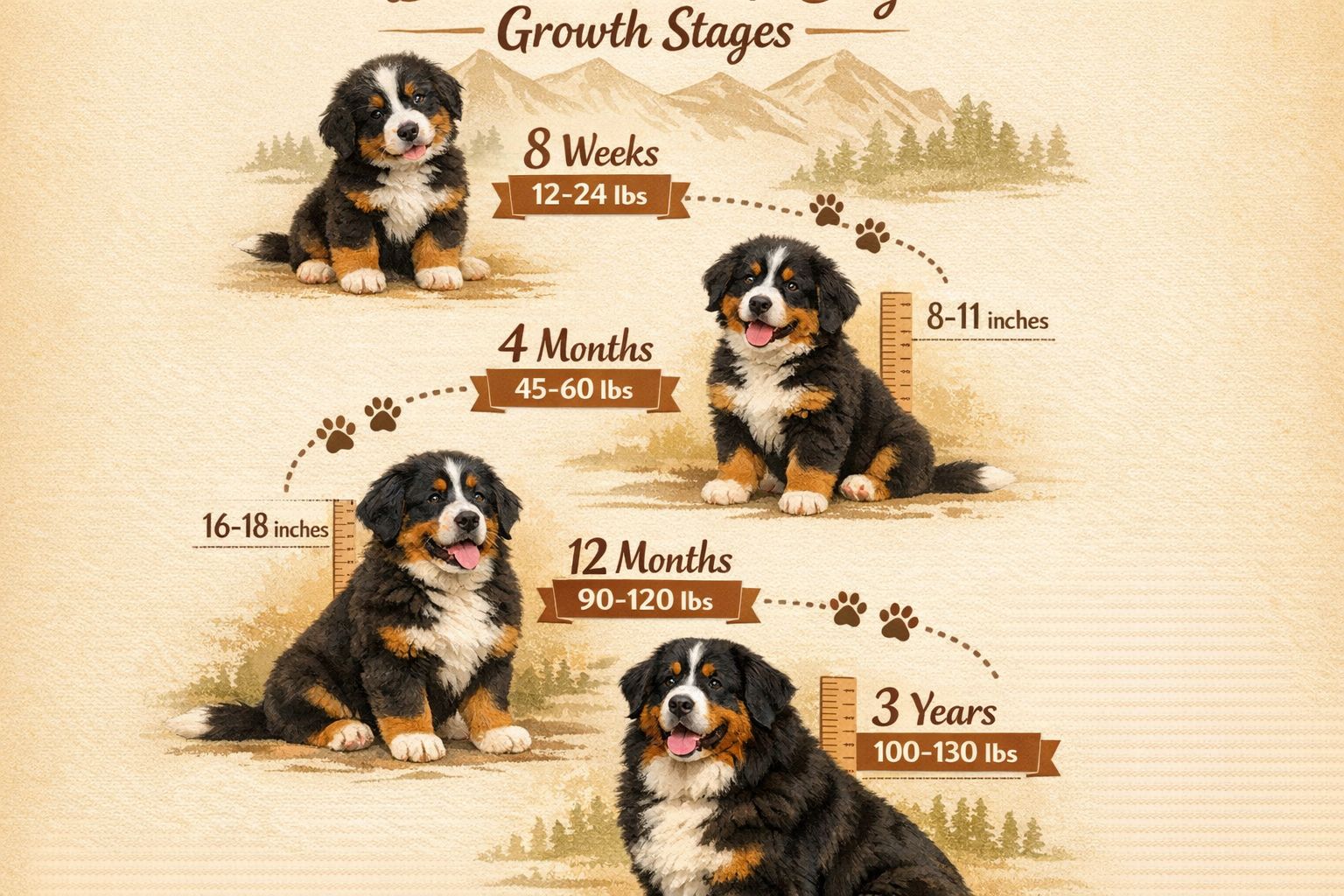
The “From Puppy to Bear Cub: A Bernese Mountain Dog Growth Chart Guide” reveals three fascinating stages that every Bernese experiences. Understanding these phases helps dog parents provide the right care at exactly the right time.
Phase 1: Rapid Growth Explosion (0-8 Months)
During this tail-wagging phase, Bernese puppies grow at an absolutely mind-blowing rate. These little furballs can pack on 2-4 pounds every single week [2]! It’s like watching a furry balloon inflate in slow motion.
What to Expect During Rapid Growth:
- Weekly weight gains that seem almost impossible
- Constant hunger and increased appetite
- Rapid height increases that make them look lanky
- Clumsy coordination as they adjust to their changing body
- Increased sleep needs to fuel all that growing
This phase requires the most attention to nutrition. Large breed puppy food becomes absolutely critical during this time to control calcium intake and prevent bones from growing too quickly [2]. Think of it as giving your growing pup the perfect building blocks for their future bear-like frame.
Phase 2: The Slowdown Period (9-18 Months)
Around nine months, that explosive growth starts to ease up. Your Bernese begins looking more proportional, though they’re still far from their final adult size. This phase brings its own unique characteristics.
Key Changes During the Slowdown:
- Weight gain slows to 1-2 pounds per week
- Height growth continues but at a gentler pace
- Muscle development becomes more noticeable
- Coordination improves dramatically
- Adult teeth fully emerge
Many Bernese parents notice their dog looking “teenage awkward” during this phase. Those long legs and developing chest give them an endearing gangly appearance that’s absolutely adorable.
Phase 3: Filling Out to Full Bear Mode (18-36 Months)
This final phase transforms your lanky teenager into the majestic, bear-like companion Bernese Mountain Dogs are famous for. While they reach full height between 12-15 months, they won’t achieve full mass and muscle development until 2.5 to 3 years old [2][7].
The Final Transformation Includes:
- Chest broadening and deepening
- Muscle mass filling out the frame
- Coat reaching full adult thickness and beauty
- Final weight settling into adult range
- Full emotional and mental maturity
Detailed Bernese Mountain Dog Growth Chart: Tracking Your Pup’s Progress
Understanding the specific milestones in the “From Puppy to Bear Cub: A Bernese Mountain Dog Growth Chart Guide” helps dog parents track healthy development and spot any potential concerns early.
Weight Milestones by Age
8-10 Weeks: The Adorable Beginning Starting weight typically ranges from 12-24 pounds [1]. At this stage, your Bernese puppy is pure fluff and cuteness, with those distinctive tricolor markings just beginning to show their adult pattern.
4 Months: Rapid Growth in Action
- Males: 45-60 pounds [2]
- Females: 35-50 pounds [2]
The difference between male and female sizes becomes noticeable around this age. Male puppies often appear more substantial and develop their characteristic broad heads earlier.
6 Months: Halfway to Giant
- Males: 65-85 pounds [2]
- Females: 55-75 pounds [2]
At six months, your Bernese is roughly half their adult weight but still has that unmistakable puppy energy and playfulness.
12 Months: Nearly Full Height
- Males: 90-120 pounds [2]
- Females: 75-100 pounds [2]
By their first birthday, most Bernese have reached close to their adult height but still need another 1-2 years to fill out completely.
Adult Size Expectations
Fully Grown Males:
- Height: 25-27.5 inches at the shoulder [1][8]
- Weight: 80-115 pounds [1][8]
Fully Grown Females:
- Height: 23-26 inches at the shoulder [1][8]
- Weight: 70-95 pounds [1][8]
Factors Affecting Growth Rate
Several factors influence how closely your Bernese follows the standard growth chart:
Genetics Play the Starring Role Parents’ sizes strongly predict puppy adult size. If both parents are on the larger end of the breed standard, expect a bigger adult dog.
Nutrition Quality Matters Tremendously Giant breeds like Bernese Mountain Dogs are particularly prone to musculoskeletal issues and require proper nutrition [1]. High-quality large breed puppy food prevents overly rapid bone growth that can cause problems later.
Exercise Balance is Critical Too much high-impact exercise during rapid growth phases can damage developing bones and joints. Exercise must be carefully managed during rapid growth phases to protect developing bones [2].
Nutrition and Care During Growth Phases
The “From Puppy to Bear Cub: A Bernese Mountain Dog Growth Chart Guide” isn’t complete without discussing proper care during each growth stage. Getting nutrition and exercise right during puppyhood sets the foundation for a healthy adult life.
Feeding Guidelines for Growing Bernese
Large Breed Puppy Food is Non-Negotiable Regular puppy food contains too much calcium for giant breeds. Large breed puppy food should be used to control calcium intake and prevent overly fast bone growth [2]. This specialized nutrition helps bones develop at the proper pace.
Feeding Schedule by Age:
- 8-12 weeks: 4 meals daily
- 3-6 months: 3 meals daily
- 6+ months: 2 meals daily
Portion Control Prevents Problems Free-feeding isn’t recommended for Bernese puppies. Measured portions prevent overeating and excessive weight gain that stresses developing joints.
Exercise Guidelines for Each Growth Phase
Puppy Phase (0-8 months): Gentle and Short
- 5 minutes of exercise per month of age, twice daily
- Focus on mental stimulation over physical exertion
- Avoid jumping, long hikes, or forced exercise
- Puppy socialization classes provide perfect activity levels
Adolescent Phase (9-18 months): Moderate Increase
- Gradually increase exercise duration
- Swimming provides excellent low-impact conditioning
- Continue avoiding high-impact activities
- Mental challenges become increasingly important
Young Adult Phase (18+ months): Building to Full Activity
- Gradually introduce longer walks and hikes
- Joint supplements may benefit some dogs
- Full exercise restrictions lift around 18-24 months
- Adult activities like hiking and backpacking become appropriate
Health Monitoring During Growth
Regular veterinary checkups become especially important during rapid growth phases. Your vet can assess whether growth is progressing normally and catch any developmental issues early.
Red Flags to Watch For:
- Limping or reluctance to play
- Extremely rapid or slow weight gain
- Loss of appetite lasting more than 24 hours
- Difficulty getting up or lying down
- Swollen or painful joints
Common Growth-Related Concerns and Solutions
Even with the best care, some Bernese Mountain Dogs experience growth-related challenges. Understanding these issues helps dog parents respond appropriately.
Panosteitis (Growing Pains)
This condition causes shifting leg lameness in growing large breed dogs. Affected dogs may limp on different legs on different days. While concerning to watch, panosteitis typically resolves on its own as dogs mature.
Management includes:
- Rest and limited activity during flare-ups
- Anti-inflammatory medications as prescribed by your vet
- Patience, as the condition usually resolves by 18-24 months
Hip and Elbow Dysplasia Prevention
Bernese Mountain Dogs have genetic predisposition to these joint conditions. While genetics play the primary role, proper nutrition and exercise during growth can minimize risk.
Prevention strategies:
- Maintaining appropriate body weight throughout growth
- Using large breed puppy food until 12-18 months
- Avoiding excessive exercise on hard surfaces
- Considering joint supplements as recommended by your vet
Growth Plate Injuries
Until growth plates close (around 12-18 months), Bernese puppies are vulnerable to growth plate fractures from excessive jumping or trauma.
Protection measures:
- No jumping from heights until growth plates close
- Careful supervision during play with larger dogs
- Avoiding slippery surfaces that could cause falls
- Teaching “wait” commands for stairs and car exits
Setting Realistic Expectations: Every Bernese is Unique
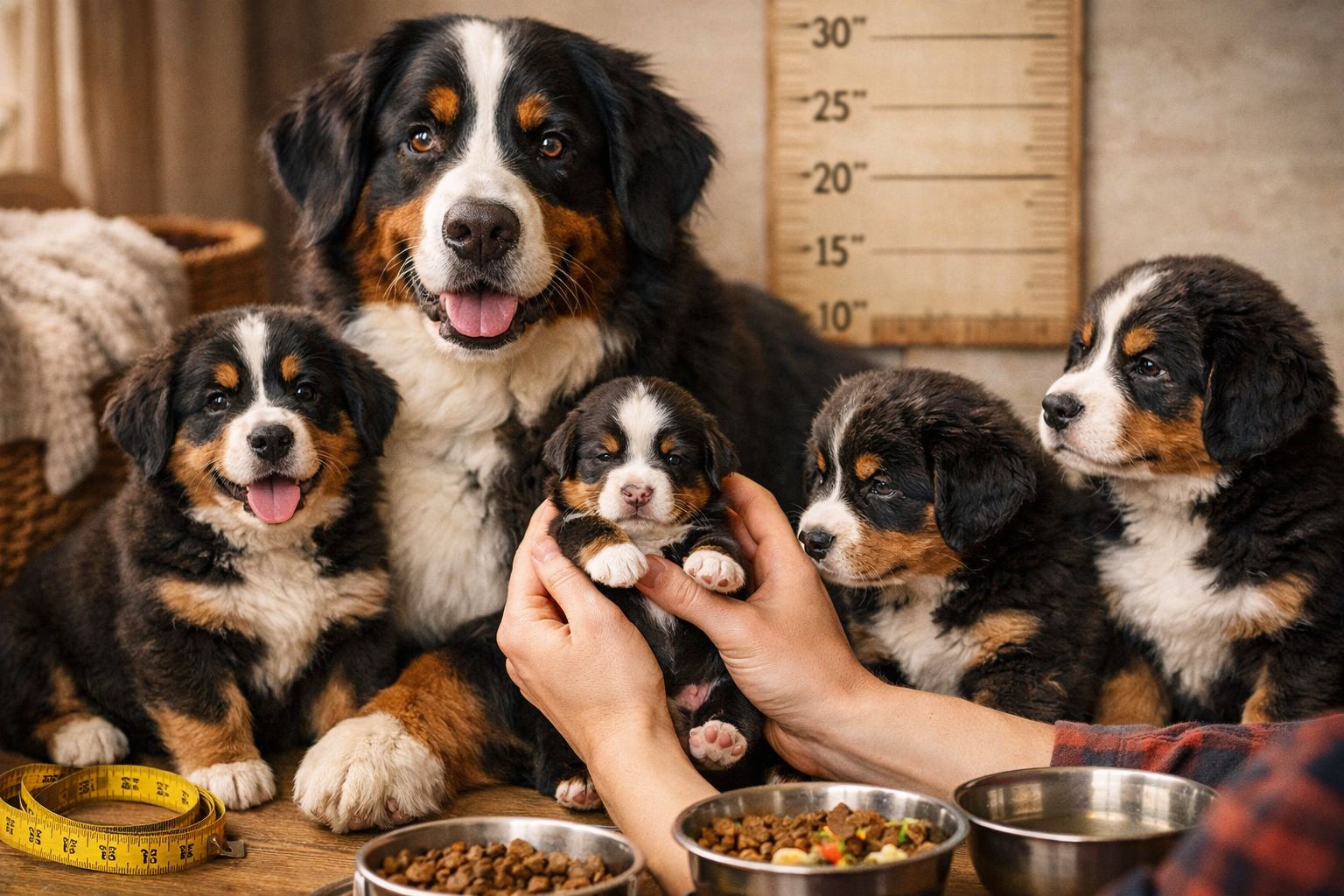
While the “From Puppy to Bear Cub: A Bernese Mountain Dog Growth Chart Guide” provides helpful averages, every dog develops at their own pace. Some Bernese reach their adult size earlier, while others take the full three years to mature completely.
Individual Variation is Normal
Factors causing variation include:
- Genetic differences between bloodlines
- Individual metabolism rates
- Nutrition quality and timing
- Overall health status
- Environmental factors
When to Consult Your Veterinarian
Schedule additional vet visits if your Bernese:
- Falls significantly outside normal weight ranges
- Shows signs of joint pain or mobility issues
- Experiences dramatic appetite changes
- Displays concerning behavioral changes
- Has any growth-related questions or concerns
Remember, your veterinarian knows your specific dog and can provide personalized guidance that generic charts cannot.
Conclusion: Embracing the Journey from Puppy to Bear Cub
The “From Puppy to Bear Cub: A Bernese Mountain Dog Growth Chart Guide” reveals the incredible transformation these gentle giants undergo. From that adorable 15-pound puppy to a majestic 100+ pound adult, every stage brings its own joys and challenges.
Your next steps for supporting healthy growth:
- Switch to large breed puppy food if you haven’t already – this single change makes the biggest difference in healthy development
- Schedule regular vet checkups every 3-4 months during the first year to monitor growth progress
- Create an exercise plan appropriate for your pup’s current age and development stage
- Keep a growth journal with weekly weights and monthly photos to track your Bernese’s amazing transformation
- Connect with other Bernese parents through local clubs or online communities for support and advice
Remember, raising a Bernese Mountain Dog puppy is like nurturing a gentle giant. With proper nutrition, appropriate exercise, and lots of love, that tiny furry family member will grow into the magnificent bear-like companion that makes Bernese Mountain Dogs so special. Every pound gained and inch grown brings you closer to years of adventures with your loyal, loving gentle giant.
The journey from puppy to bear cub happens faster than most dog parents expect. Embrace every stage, from those clumsy puppy days to the dignified adult years. Your patience and care during these crucial growth phases will be rewarded with a healthy, happy Bernese Mountain Dog who truly embodies the best of this remarkable breed.
References
[1] Bernese Mountain Dog Progression Growth Chart Milestones And Training Tips – https://a-z-animals.com/blog/bernese-mountain-dog-progression-growth-chart-milestones-and-training-tips/
[2] Bernese Mountain Dog Size Chart – https://thebernese.org/bernese-mountain-dog-size-chart/
[7] Breed – https://bernese.co.uk/breed/
[8] Bernese Mountain Dog – https://www.akc.org/dog-breeds/bernese-mountain-dog/