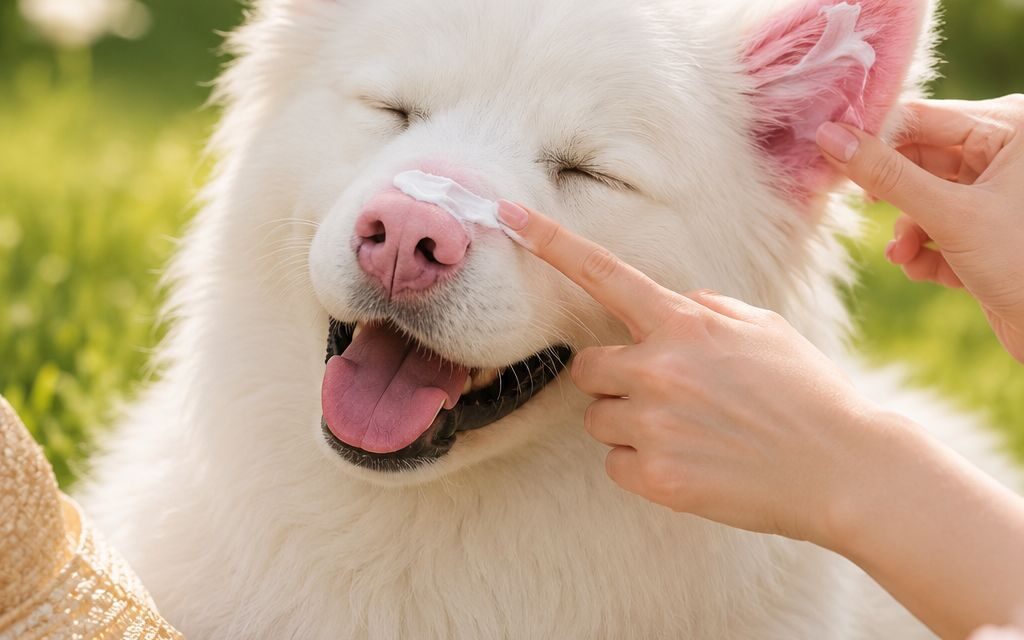
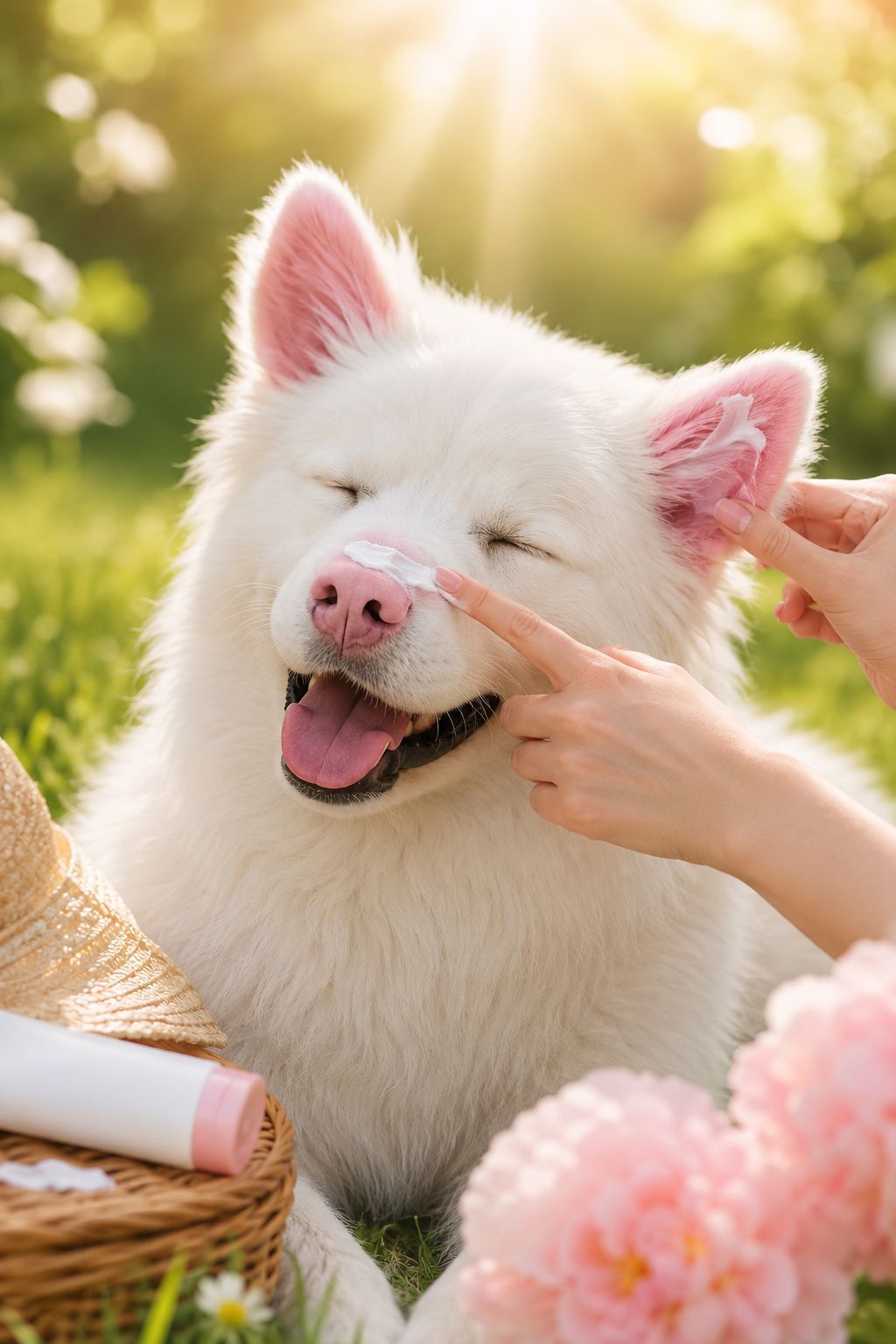
White dogs with pink skin get sunburned — and most pet owners have no idea it can happen. In fact, dogs with light-colored coats and pink or pale skin are at a much higher risk of sun damage, skin cancer, and painful burns than darker-coated breeds. If you share your life with a white pup, these 7 sunscreen tips for white dogs with pink skin could literally save their life. Let’s break it all down in simple, easy steps.

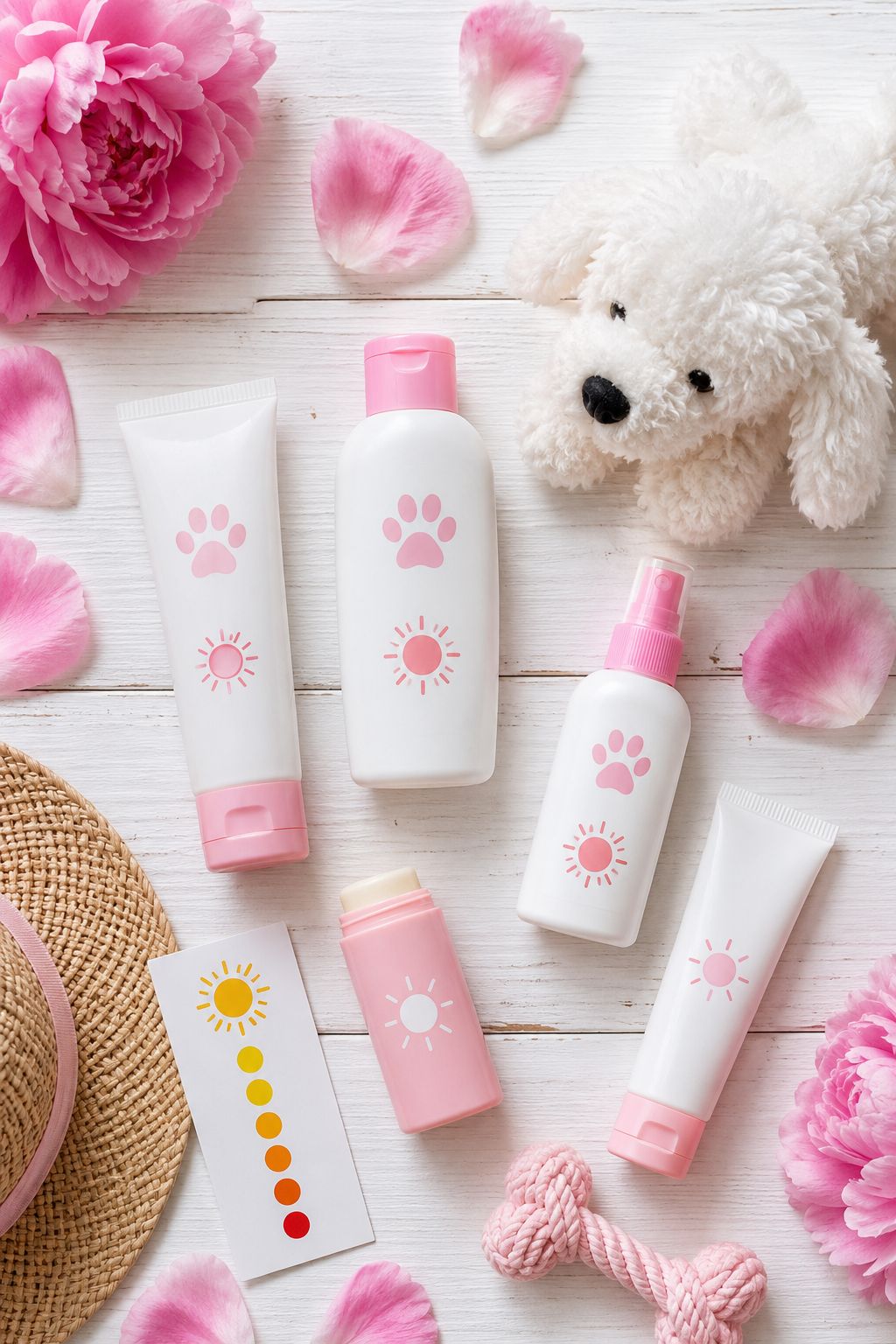
Key Takeaways
- ☀️ White dogs with pink skin can and do get sunburned — their light pigmentation offers little natural UV protection.
- 🧴 Only use dog-safe sunscreen — human sunscreen contains ingredients that are toxic to dogs.
- 🕙 Avoid peak sun hours (10 AM – 4 PM) to reduce UV exposure dramatically.
- 👕 Sun-protective clothing and shade are powerful tools alongside sunscreen.
- 🩺 Regular vet checkups help catch early signs of sun-related skin damage or cancer.
Why White Dogs with Pink Skin Need Sun Protection
Most people know to slather sunscreen on their kids before heading to the beach. But dogs? That thought often doesn’t cross our minds. Here’s the truth: dogs can get sunburned just like humans, and white dogs with pink skin are especially vulnerable.
Dogs with white or light fur have less melanin — the natural pigment that helps block UV rays. Their pink skin has even less protection. This means UV rays from the sun can damage their skin cells quickly.
Common areas that burn easily on white dogs include:
- The nose and tip of the snout
- The ears (especially the ear flaps)
- The belly and groin area
- Around the eyes
- Any area with thin or sparse fur
Repeated sunburns can lead to solar dermatitis (chronic sun-damaged skin) and increase the risk of squamous cell carcinoma, a type of skin cancer seen in dogs. Breeds like Bull Terriers, Dalmatians, Boxers, White German Shepherds, and Samoyeds are among those most at risk.
💡 Pull Quote: “Dogs with pink skin and white coats have very little natural UV protection — sun safety isn’t optional for them, it’s essential.”
The good news? Protecting your pup is easier than you think. Keep reading for the full list of 7 sunscreen tips for white dogs with pink skin.
The 7 Sunscreen Tips for White Dogs with Pink Skin
Tip 1: Always Choose Dog-Safe Sunscreen 🧴
This is the most important tip on the entire list. Never use human sunscreen on your dog.
Human sunscreens often contain ingredients that are toxic to dogs, including:
| Ingredient | Why It’s Dangerous for Dogs |
|---|---|
| Zinc oxide | Toxic if ingested; causes vomiting and anemia |
| PABA (para-aminobenzoic acid) | Can cause serious reactions in dogs |
| Octinoxate | Potentially harmful to dogs |
| Fragrances | Can irritate skin and cause allergic reactions |
Dogs lick themselves constantly. Whatever goes on their skin goes into their mouth. So using the wrong sunscreen can lead to poisoning.
What to look for in a dog-safe sunscreen:
- ✅ Labeled specifically as “pet-safe” or “dog sunscreen”
- ✅ Free from zinc oxide and PABA
- ✅ SPF 30 or higher
- ✅ Water-resistant formula
- ✅ Fragrance-free
Some popular dog-safe options include Epi-Pet Sun Protector Spray (the only FDA-compliant pet sunscreen as of recent years) and My Dog Nose It! balm for sensitive areas like the nose.
Always check with your vet before trying a new product, especially if your dog has sensitive skin or allergies.
Tip 2: Apply Sunscreen to the Right Spots 🎯
Even with a full coat of white fur, there are key spots that stay exposed to the sun. These are the areas that need the most attention when applying sunscreen.
High-priority spots to cover:
- 👃 Nose — This is the most commonly burned area on white dogs
- 👂 Ear tips and flaps — Thin skin here burns fast
- 🐾 Belly and groin — Often exposed when dogs lie on their backs
- 👁️ Around the eyes — Especially the eyelid edges
- 💪 Elbows and leg joints — Fur is thinner here
Apply a thin, even layer to each area. Gently rub it in so it absorbs into the skin. Avoid getting sunscreen in the eyes or mouth as much as possible.
Pro tip: Use a stick or balm formula for the nose and around the eyes. It’s easier to control and less likely to drip into sensitive areas.
Tip 3: Reapply Every 2 Hours (or After Swimming) ⏰
Sunscreen doesn’t last forever — not on humans and not on dogs either. Reapplication is key to keeping your white pup protected throughout the day.
Here’s a simple guide:
| Activity | How Often to Reapply |
|---|---|
| Regular outdoor play | Every 2 hours |
| Swimming or water play | Immediately after getting out |
| Sweating or heavy panting | Every 1.5 hours |
| Lying in the sun | Every 2 hours |
Dogs also tend to rub their faces on the grass or lick their paws — both of which remove sunscreen fast. Keep an eye on your dog and reapply if you notice they’ve rubbed off the product.
💡 Pull Quote: “Reapplying sunscreen every two hours isn’t just a human habit — it’s a must-do for white dogs spending time outdoors.”
Tip 4: Avoid Peak Sun Hours ☀️
The sun is strongest between 10 AM and 4 PM. During these hours, UV radiation is at its highest. For a white dog with pink skin, this window of time is the most dangerous.
Simple schedule tips:
- 🌅 Morning walks: Go before 10 AM when UV levels are lower
- 🌆 Evening walks: Head out after 4 PM when the sun has dropped
- 🏠 Midday rest: Keep your pup indoors or in the shade during peak hours
This one habit alone can significantly reduce the risk of sunburn and long-term skin damage. It doesn’t cost anything and doesn’t require any products — just a small shift in your daily routine.
Check the UV Index before heading outside. Many weather apps show the UV Index for free. A UV Index of 3 or higher means sun protection is needed.
| UV Index Level | Risk Level | Action Needed |
|---|---|---|
| 1–2 | Low | Minimal protection needed |
| 3–5 | Moderate | Apply sunscreen, seek shade |
| 6–7 | High | Limit outdoor time |
| 8–10 | Very High | Stay indoors during peak hours |
| 11+ | Extreme | Avoid outdoor exposure |
Tip 5: Use Sun-Protective Clothing and Gear 👕
Sunscreen is great, but it’s not the only tool in the box. Sun-protective clothing for dogs is a real thing, and it works really well.
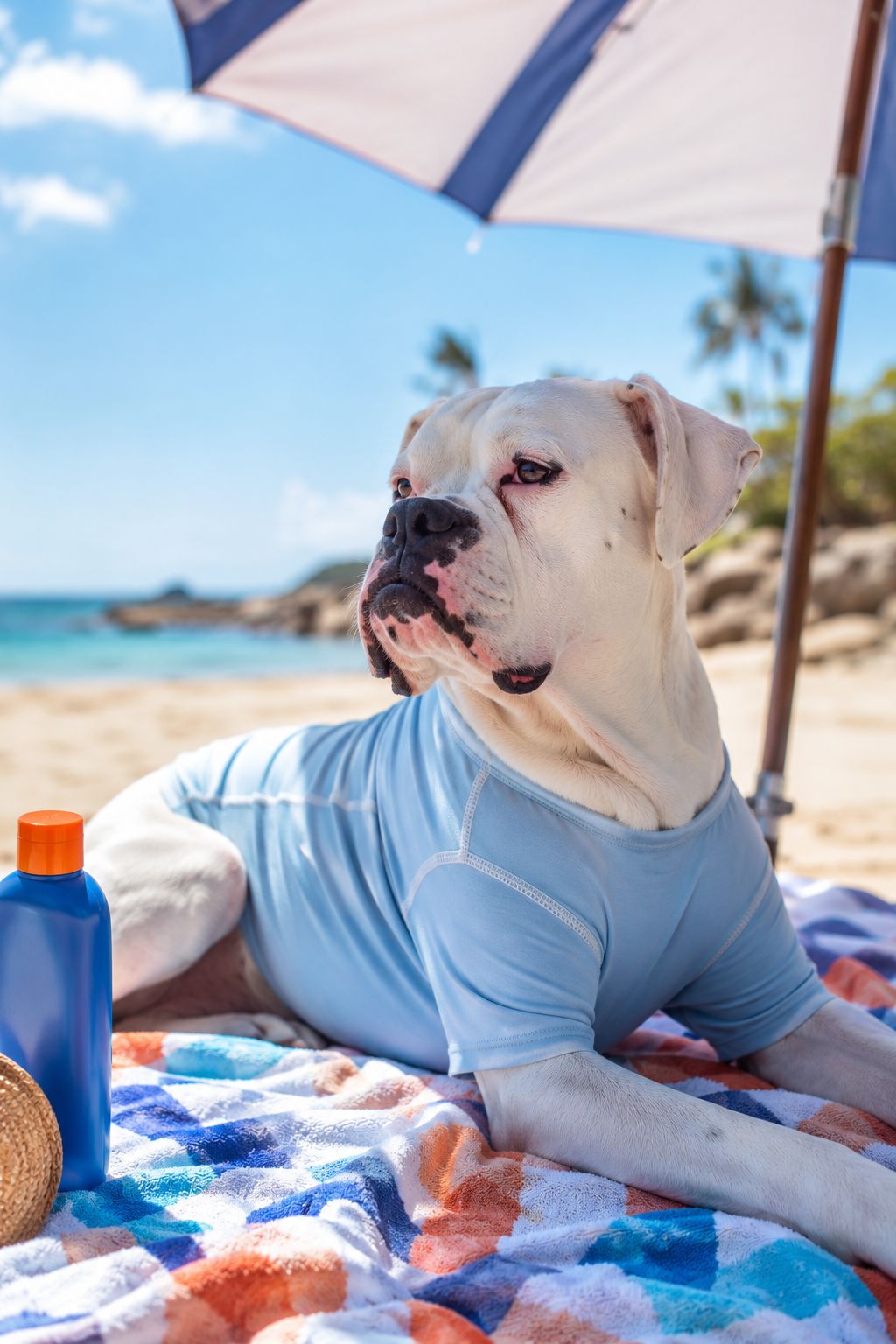
Dog UV shirts, also called rash guards or sun suits, are lightweight garments that cover the torso and sometimes the legs. They block UV rays from reaching the skin without making your dog overheat.
Benefits of dog sun shirts:
- ✅ Covers large areas of skin at once
- ✅ No need to reapply like sunscreen
- ✅ Comfortable for most dogs
- ✅ Great for dogs who lick off sunscreen quickly
- ✅ Washable and reusable
Look for clothing with a UPF (Ultraviolet Protection Factor) rating of 50+. That blocks over 98% of UV rays.
Other protective gear to consider:
- 🕶️ Dog goggles (Doggles): Protect eyes from UV rays
- 🧢 Dog sun hats or visors: Shield the head and ears
- ☂️ Portable dog shade tents: Great for beach or park trips
Tip 6: Create Shade Wherever You Go 🌳
Even with sunscreen applied and a sun shirt on, shade is your dog’s best friend on a sunny day. Direct sun exposure adds up quickly, especially on hot summer days.
Easy ways to create or find shade:
- 🌲 Walk or rest under trees
- ⛱️ Bring a beach umbrella or pop-up canopy to outdoor events
- 🚗 Use a car sunshade when traveling (never leave dogs in hot cars!)
- 🏠 Set up a shaded area in your backyard with a canopy or pergola
- 🐕 Use a dog-specific shade tent for parks and outdoor adventures
Watch for signs of overheating too, since white dogs with pink skin are often also more sensitive to heat:
- Excessive panting
- Drooling more than usual
- Red or pale gums
- Stumbling or weakness
- Glazed eyes
If your dog shows any of these signs, move them to a cool area immediately and offer fresh water. Call your vet if symptoms don’t improve quickly.
Tip 7: Schedule Regular Vet Skin Checks 🩺
The last of the 7 sunscreen tips for white dogs with pink skin is one that many pet owners skip — but it might be the most important in the long run.
Regular vet checkups that include a skin assessment can catch early signs of sun damage before it becomes serious. Vets look for:
- Changes in skin color or texture
- New growths, bumps, or lumps
- Crusty or scaly patches on the nose, ears, or belly
- Sores that don’t heal
- Redness or inflammation in sun-exposed areas
How often should you go?
| Dog’s Sun Exposure Level | Recommended Vet Skin Check Frequency |
|---|---|
| Low (mostly indoors) | Once a year |
| Moderate (daily outdoor walks) | Twice a year |
| High (outdoor dog, beach/pool access) | Every 3–4 months |
In between vet visits, do a home skin check once a month. Run your hands gently over your dog’s body. Look at the nose, ears, and belly. Note any changes and bring them up at your next vet visit.
💡 Pull Quote: “Catching skin cancer early in dogs dramatically improves treatment outcomes — don’t skip those vet skin checks.”
Early detection of squamous cell carcinoma or other sun-related skin cancers in dogs leads to much better outcomes. Treatment is often simpler and more effective when caught early.
Bonus: Quick Reference Table — All 7 Tips at a Glance
| # | Tip | Key Action |
|---|---|---|
| 1 | Choose dog-safe sunscreen | Avoid zinc oxide and PABA |
| 2 | Apply to the right spots | Nose, ears, belly, around eyes |
| 3 | Reapply every 2 hours | More often after swimming |
| 4 | Avoid peak sun hours | Stay in between 10 AM – 4 PM |
| 5 | Use sun-protective clothing | UPF 50+ dog shirts and goggles |
| 6 | Create shade everywhere | Umbrellas, canopies, trees |
| 7 | Schedule regular vet skin checks | Catch damage early |
Common Questions About Sunscreen for White Dogs
Can dogs really get skin cancer from sun exposure?
Yes, absolutely. Canine squamous cell carcinoma is a well-documented condition linked to chronic UV exposure. White dogs with pink skin are among the highest-risk groups. Studies in veterinary dermatology have confirmed the connection between sun exposure and skin tumors in light-pigmented dogs.
What if my dog keeps licking off the sunscreen?
This is a very common problem! Try these tricks:
- Distract your dog for 10–15 minutes after application (play, treats, a walk)
- Use a stick or balm formula that absorbs faster
- Put on a sun shirt to cover areas where sunscreen was applied
- Use an Elizabethan collar (cone) for a short time after application if needed
Is coconut oil a good natural sunscreen for dogs?
No. Coconut oil has an SPF of only about 4–6, which is far too low to provide meaningful sun protection. It should not be used as a replacement for proper dog sunscreen.
How do I know if my dog has a sunburn?
Signs of sunburn in dogs include:
- 🔴 Redness on the nose, ears, or belly
- 🤕 Skin that feels warm or tender to the touch
- 🩹 Peeling or flaking skin
- 😟 Your dog flinching when you touch a certain area
- 🌊 Blisters in severe cases
If you suspect a sunburn, keep your dog out of the sun and contact your vet for advice.
Conclusion
Protecting a white dog with pink skin from the sun is a real responsibility — and now you have everything you need to do it well. These 7 sunscreen tips for white dogs with pink skin cover every angle: the right products, the right timing, the right protective gear, and the right medical support.
Here are your actionable next steps:
- 🛒 Buy a dog-safe sunscreen today — check that it’s free from zinc oxide and PABA.
- 📅 Adjust your walk schedule to avoid the 10 AM – 4 PM peak sun window.
- 👕 Order a UPF 50+ dog sun shirt for outdoor adventures.
- ☂️ Set up a shaded spot in your yard or pack a portable canopy for outings.
- 📞 Call your vet to schedule a skin check if your white dog spends regular time outdoors.
Your pup trusts you to keep them safe. A little sun protection goes a long way toward giving them a happy, healthy life for years to come. 🐾☀️
References
- Bergman, P. J. (2007). Canine oral melanoma. Clinical Techniques in Small Animal Practice, 22(2), 55–60.
- Mauldin, E. A., & Peters-Kennedy, J. (2016). Integumentary system. In Jubb, Kennedy & Palmer’s Pathology of Domestic Animals (6th ed.). Elsevier.
- Nikula, K. J., Benjamin, S. A., Angleton, G. M., Burkhart, J. G., & Lee, A. C. (1992). Ultraviolet radiation, solar dermatosis, and cutaneous neoplasia in beagle dogs. Radiation Research, 129(1), 11–18.
- Rossman, J. M. (2011). Commercial pet sunscreens: What you need to know. Veterinary Medicine, 106(8), 342–347.
- Scott, D. W., Miller, W. H., & Griffin, C. E. (2001). Muller and Kirk’s Small Animal Dermatology (6th ed.). W.B. Saunders.
- World Health Organization. (2017). Ultraviolet radiation and health. WHO Press.
Tags: white dog sun protection, dog sunscreen, pink skin dogs, sunburn in dogs, dog skin cancer prevention, UV protection for dogs, dog sun safety, pet sunscreen tips, solar dermatitis in dogs, white dog care, dog summer safety, dog skin health