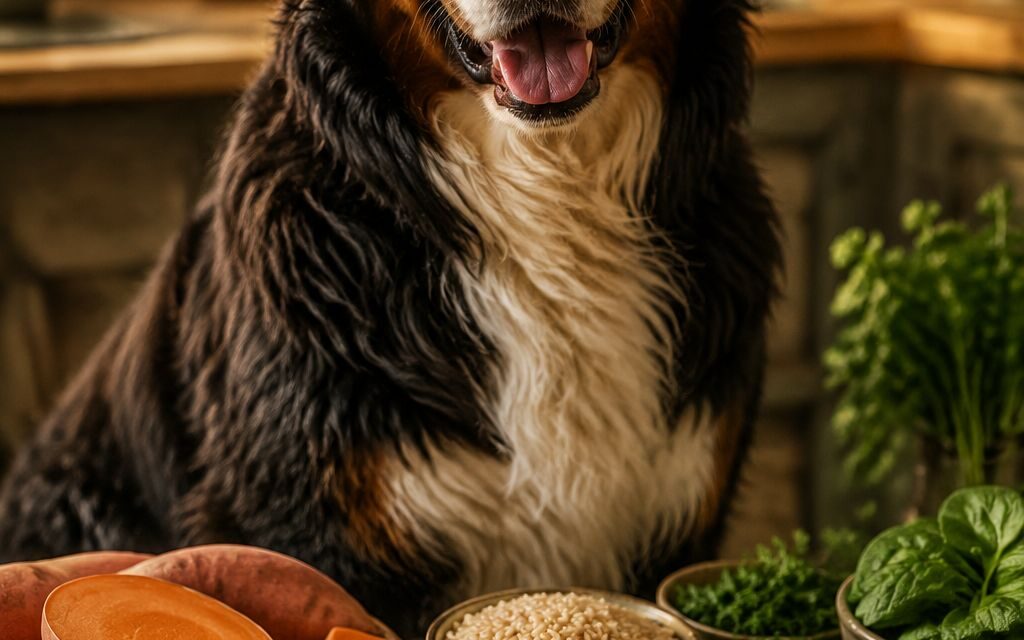
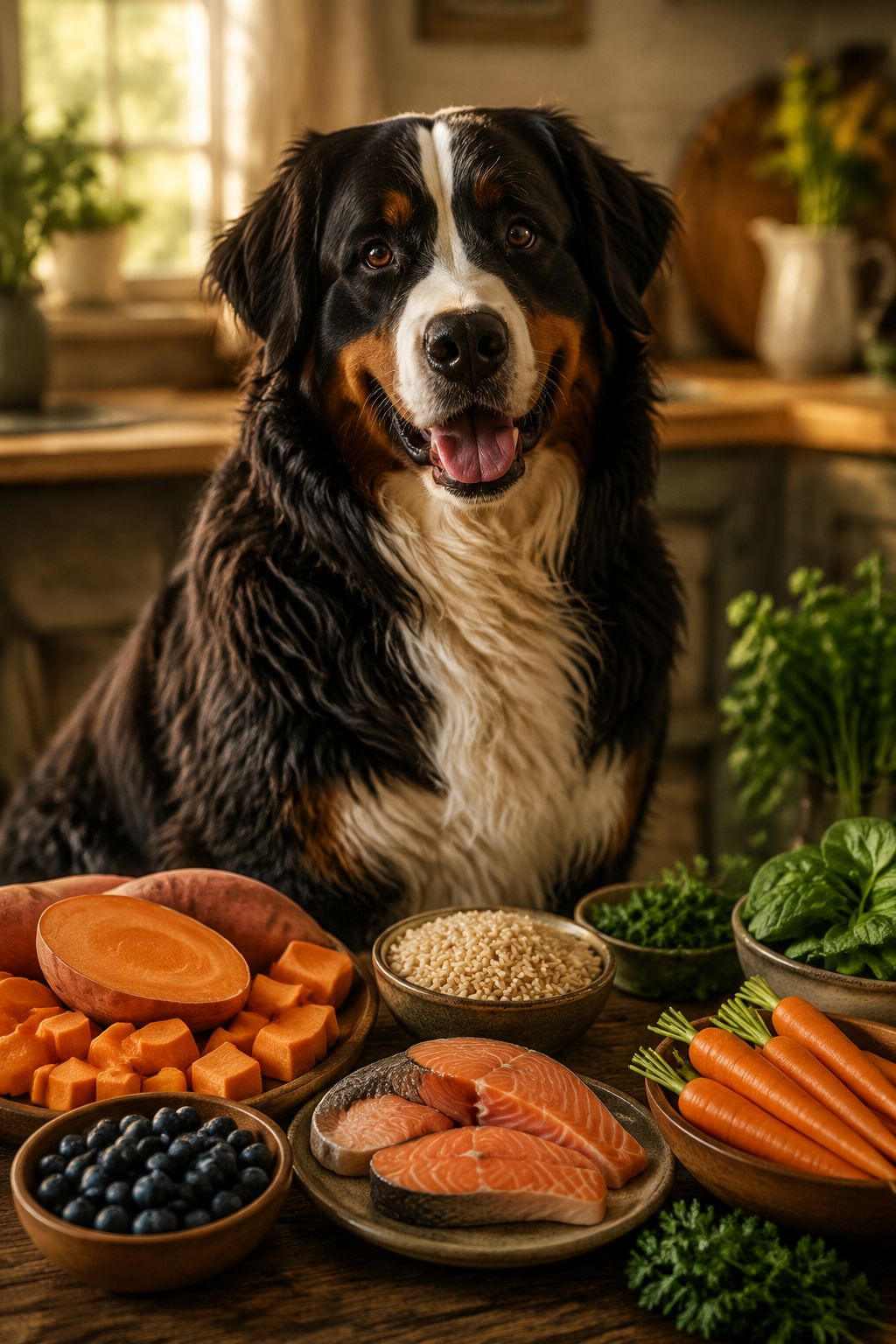
Bernese Mountain Dogs have one of the shortest lifespans of any large breed — just 7 to 10 years on average. That heartbreaking fact makes every meal you put in their bowl matter more than most dog owners realize. Understanding The Bernese Mountain Dog Diet: Feeding Your Gentle Giant for Health & Longevity is not just about keeping your dog full. It is about giving your beloved Berner the best possible chance at a long, healthy, and happy life.

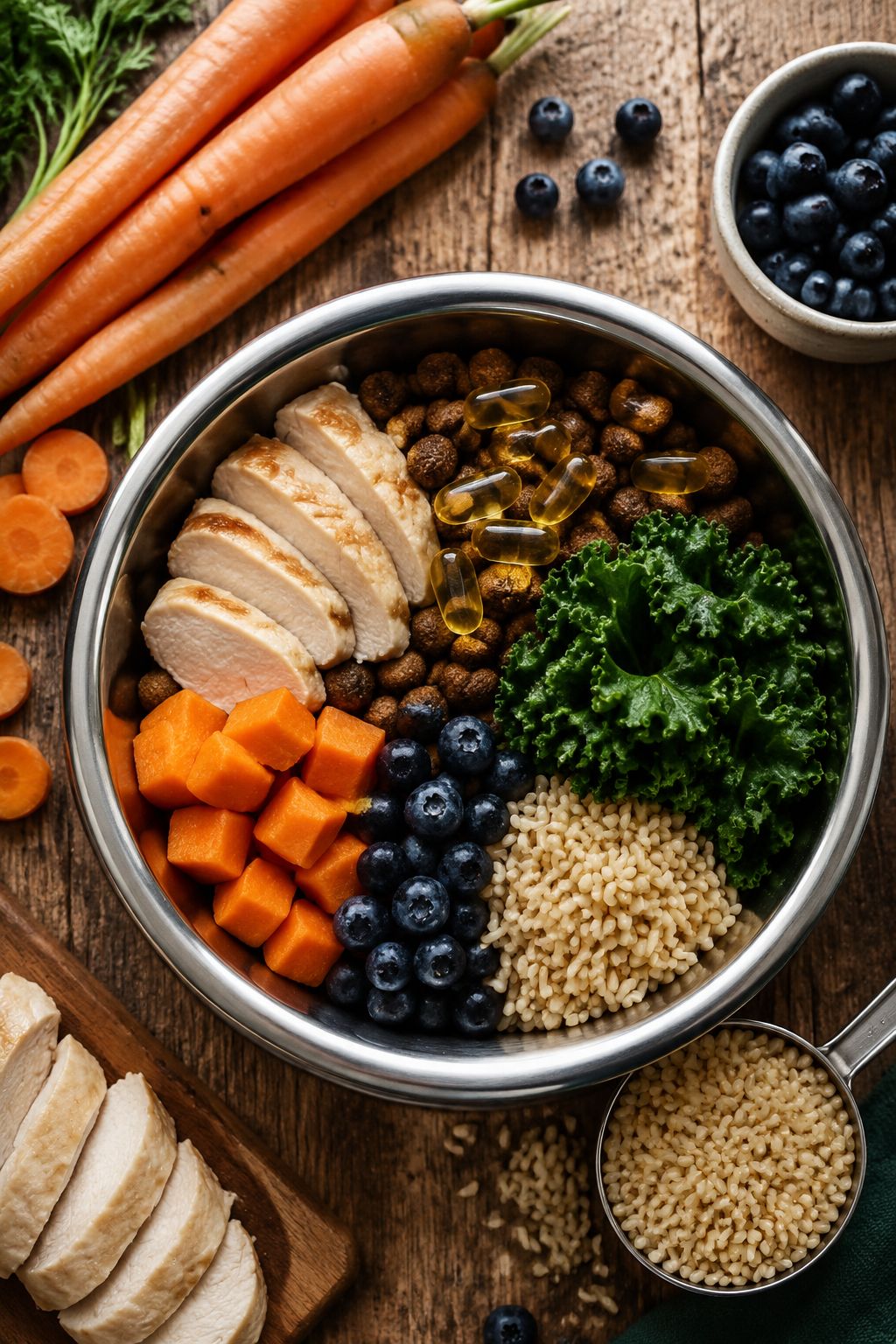
Key Takeaways
- 🐾 Berners need a high-protein, moderate-fat diet with quality whole-food ingredients to support their large frames.
- ⚠️ Bloat (GDV) is a life-threatening risk — never feed one large meal per day; split food into 2–3 smaller meals.
- 🦴 Joint health is critical — look for foods with glucosamine, chondroitin, and omega-3 fatty acids.
- 🍖 Avoid fillers like corn syrup, artificial preservatives, and low-quality by-products that offer little nutritional value.
- 📅 Feeding needs change with age — puppies, adults, and seniors all have different caloric and nutrient requirements.
Why Nutrition Is Everything for Bernese Mountain Dogs
Bernese Mountain Dogs are big, beautiful, and full of love. But their large size comes with big health challenges. They are prone to hip dysplasia, elbow dysplasia, cancer, and bloat. All of these conditions can be influenced — for better or worse — by what they eat every single day.
Think of food as medicine for your Berner. The right diet can:
- Reduce inflammation in joints 🦴
- Support a healthy immune system
- Keep weight in a safe range
- Improve coat health and energy levels
- Lower the risk of digestive problems
💬 “You cannot control your Berner’s genetics, but you absolutely can control what goes in their bowl.”
Understanding Your Berner’s Unique Body
A full-grown male Bernese Mountain Dog can weigh between 80 and 115 pounds. Females typically weigh 70 to 95 pounds. That is a LOT of dog to fuel properly!
Their bodies need:
| Nutrient | Why It Matters |
|---|---|
| Protein | Builds and repairs muscles |
| Healthy Fats | Supports brain, coat, and joints |
| Complex Carbs | Provides steady energy |
| Glucosamine | Protects cartilage and joints |
| Omega-3s | Fights inflammation |
| Calcium & Phosphorus | Keeps bones strong |
The Core Principles of The Bernese Mountain Dog Diet: Feeding Your Gentle Giant for Health & Longevity
Getting the basics right is the foundation of everything. Here are the key principles every Berner owner should follow.
1. 🥩 Prioritize High-Quality Protein
Protein should be the first ingredient on any dog food label. Look for named meat sources like:
- Chicken
- Beef
- Salmon
- Turkey
- Lamb
Avoid vague terms like “meat meal” or “animal by-products” as the primary protein source. These are lower quality and harder for your dog to use.
How much protein does a Berner need?
Adult Berners do well on food with 22–28% protein content. Active dogs or working dogs may need slightly more.
2. 🐟 Don’t Skip Healthy Fats
Fat is not the enemy! Healthy fats are critical for Bernese Mountain Dogs. They support:
- Brain function
- A shiny, thick coat
- Joint lubrication
- Energy levels
Best fat sources to look for:
- Salmon oil 🐟
- Flaxseed
- Chicken fat
- Fish meal
Aim for a food with 12–18% fat content for adult Berners. Puppies need slightly higher fat for growth.
3. 🌾 Choose Smart Carbohydrates
Not all carbs are bad! Complex carbohydrates give your Berner steady, lasting energy. Good options include:
- Sweet potatoes 🍠
- Brown rice
- Oats
- Peas
- Barley
Avoid: White rice as a primary ingredient, corn syrup, or excessive starchy fillers. These can spike blood sugar and contribute to unhealthy weight gain.
4. 🦴 Focus on Joint-Supporting Nutrients
This is huge for Berners. Hip and elbow dysplasia affect a large percentage of the breed. Feeding a diet rich in joint-supporting nutrients can slow the progression of these conditions.
Look for these on the label:
| Nutrient | What It Does |
|---|---|
| Glucosamine | Rebuilds cartilage |
| Chondroitin | Keeps cartilage flexible |
| Omega-3 Fatty Acids | Reduces joint inflammation |
| Vitamin E | Antioxidant that protects cells |
| MSM (Methylsulfonylmethane) | Supports connective tissue |
If your dog food does not contain these, talk to your vet about adding a joint supplement.
5. 🚫 Avoid Dangerous Fillers and Additives
Many budget dog foods are packed with ingredients that do more harm than good. For a breed already at health risk, this matters even more.
Ingredients to avoid:
- ❌ Artificial colors (Red 40, Yellow 5)
- ❌ Artificial preservatives (BHA, BHT, ethoxyquin)
- ❌ Corn syrup or sugar
- ❌ Excessive salt
- ❌ Unnamed “meat meal” as the first ingredient
- ❌ Propylene glycol (used in some soft foods)
💬 “A longer ingredient list is not always better. Simpler, cleaner ingredients often mean better nutrition.”
Feeding Schedule: How Much and How Often
One of the biggest mistakes Berner owners make is feeding one large meal per day. This dramatically increases the risk of Gastric Dilatation-Volvulus (GDV), also called bloat. Bloat can kill a dog within hours. It is a medical emergency.
Recommended Feeding Schedule by Age
| Age | Meals Per Day | Portion Size |
|---|---|---|
| 8–12 weeks | 4 times | Small, frequent |
| 3–6 months | 3 times | Moderate |
| 6–12 months | 3 times | Growing portions |
| 1–7 years (adult) | 2 times | Based on weight/activity |
| 7+ years (senior) | 2–3 times | Smaller, easier to digest |
How Much Food Does a Berner Need?
This depends on weight, age, and activity level. As a general guide:
- Puppies (2–6 months): 3–5 cups per day (divided)
- Adult males (80–115 lbs): 4–6 cups per day (divided)
- Adult females (70–95 lbs): 3.5–5 cups per day (divided)
- Senior dogs: Reduce by 10–20% as metabolism slows
⚠️ Always check the feeding guide on your specific dog food bag. Calorie content varies widely between brands.
Puppy Feeding: Building the Foundation Early
Berner puppies grow FAST. A puppy that weighs 15 pounds at 8 weeks can hit 80 pounds by 12 months. That rapid growth puts enormous stress on developing bones and joints.
Key rules for Berner puppy feeding:
- Feed large-breed puppy formula — not regular puppy food. Large-breed formulas have controlled calcium and phosphorus levels to prevent too-fast bone growth.
- Do not overfeed. Chubby puppies are cute, but excess weight stresses developing joints.
- Avoid high-calorie supplements unless your vet recommends them.
- Transition to adult food at 18–24 months — Berners mature slower than smaller breeds.
💬 “Feeding a Berner puppy the right food is one of the most powerful things you can do to protect their joints for life.”
Senior Berner Feeding: Supporting Aging Gracefully
Once your Berner hits 7 years old, they are considered a senior. Their metabolism slows down. Their joints may ache. Their digestion may become more sensitive.
What Changes in a Senior Berner’s Diet?
| Need | Adjustment |
|---|---|
| Fewer calories | Reduce by 10–20% to prevent weight gain |
| Higher protein | Maintain muscle mass (25–30%) |
| More joint support | Increase glucosamine and omega-3s |
| Easier digestion | Look for added probiotics and prebiotics |
| Antioxidants | Support immune function (Vitamin C, E, beta-carotene) |
Senior-friendly food additions:
- 🐟 Sardines in water (omega-3 boost)
- 🫐 Blueberries (antioxidants)
- 🥕 Steamed carrots (fiber and vitamins)
- 🍠 Mashed sweet potato (easy-to-digest carbs)
Healthy Treats and Foods to Add to Your Berner’s Bowl
Treats are a great way to bond with your Berner and add nutritional value. But treats should make up no more than 10% of daily calories.
✅ Safe and Healthy Treat Options
- 🥦 Broccoli (small amounts)
- 🍎 Apple slices (no seeds)
- 🥕 Baby carrots
- 🫐 Blueberries
- 🍌 Banana (in moderation)
- 🧀 Plain cottage cheese
- 🍗 Cooked chicken (no seasoning)
- 🥚 Scrambled eggs
❌ Foods That Are Toxic to Berners (and All Dogs)
Never feed these to your dog:
| Toxic Food | Why It’s Dangerous |
|---|---|
| Grapes/Raisins | Can cause kidney failure |
| Onions/Garlic | Damages red blood cells |
| Chocolate | Contains theobromine — toxic to dogs |
| Macadamia Nuts | Causes weakness and vomiting |
| Xylitol | Found in sugar-free products — can be fatal |
| Avocado | Contains persin — toxic to dogs |
| Alcohol | Extremely dangerous even in small amounts |
| Raw yeast dough | Expands in stomach, produces alcohol |
Wet Food vs. Dry Food vs. Raw: What Is Best for Berners?
There is no single perfect answer. Each option has pros and cons.
🥫 Dry Kibble
Pros:
- Convenient and affordable
- Helps clean teeth
- Easy to store and measure
Cons:
- Lower moisture content
- Quality varies widely
Best choice for: Most Berner owners looking for a practical, balanced option.
🥣 Wet/Canned Food
Pros:
- Higher moisture content (great for hydration)
- Often more palatable for picky eaters
- Good for seniors with dental issues
Cons:
- More expensive
- Does not help with dental health
Best choice for: Senior Berners or dogs who need extra hydration.
🥩 Raw Food Diet (BARF)
Pros:
- Whole, unprocessed ingredients
- Can improve coat and digestion for some dogs
Cons:
- Risk of bacterial contamination (Salmonella, E. coli)
- Difficult to balance nutritionally
- Expensive and time-consuming
Best choice for: Only with guidance from a veterinary nutritionist.
💬 “Whatever food format you choose, the quality of the ingredients matters far more than the format itself.”
Supplements Worth Considering for Berners
Even the best dog food may benefit from a few targeted supplements. Always check with your vet before adding anything new.
| Supplement | Benefit |
|---|---|
| Fish Oil (Omega-3) | Reduces inflammation, supports joints and coat |
| Glucosamine + Chondroitin | Protects and rebuilds joint cartilage |
| Probiotics | Supports gut health and digestion |
| Vitamin E | Antioxidant protection |
| Digestive Enzymes | Helps break down food more efficiently |
| Turmeric/Curcumin | Natural anti-inflammatory |
Practical Tips for Feeding Your Bernese Mountain Dog
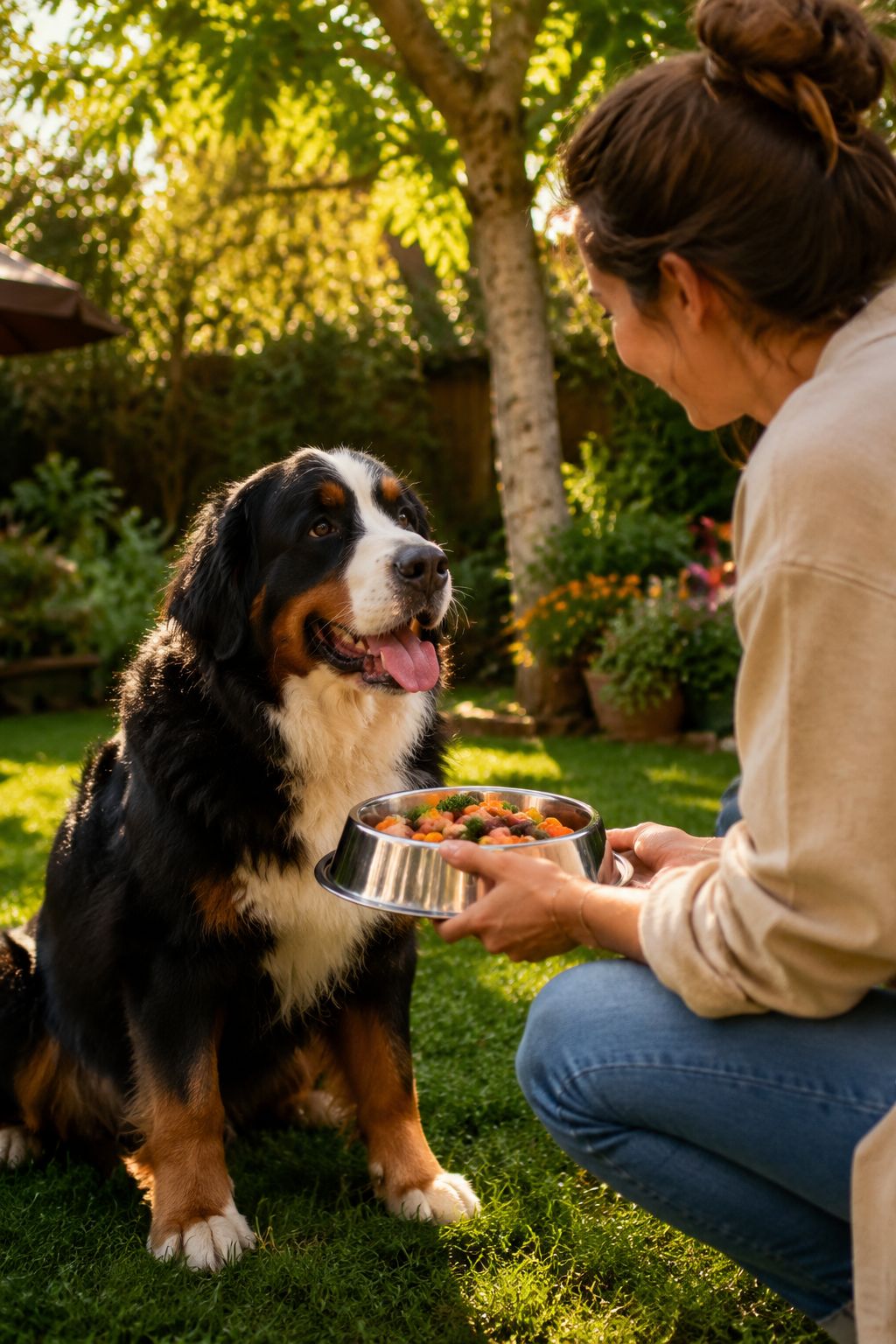
Knowing what to feed is one thing. Making it work in real life is another. Here are some practical tips:
🐾 Prevent Bloat (GDV)
- Always split meals into 2–3 servings per day
- Wait at least 1 hour before and after exercise to feed
- Use a slow-feeder bowl to prevent gulping
- Avoid elevated food bowls (research is mixed, but many vets now advise against them for large breeds)
- Watch for symptoms: distended belly, unproductive retching, restlessness
🏋️ Manage Weight Carefully
Berners love food. They will eat more than they should if given the chance. Obesity puts enormous stress on already-vulnerable joints.
Body Condition Score (BCS) check:
- You should be able to feel your Berner’s ribs easily but not see them
- There should be a visible waist when viewed from above
- The belly should tuck up slightly when viewed from the side
💧 Always Provide Fresh Water
Large dogs need a LOT of water. Make sure your Berner has access to clean, fresh water at all times. Dehydration can worsen joint issues and affect kidney health.
🔄 Transition Foods Slowly
When switching foods, do it over 7–10 days:
| Day | Old Food | New Food |
|---|---|---|
| Days 1–2 | 75% | 25% |
| Days 3–4 | 50% | 50% |
| Days 5–6 | 25% | 75% |
| Days 7–10 | 0% | 100% |
Sudden food changes can cause digestive upset, diarrhea, and vomiting.
Red Flags: Signs Your Berner’s Diet Needs Adjustment
Watch for these warning signs that something is off with your dog’s nutrition:
- 🔴 Dull, dry, or flaky coat — may signal omega-3 or protein deficiency
- 🔴 Excessive gas or loose stools — could indicate food sensitivity or poor-quality ingredients
- 🔴 Low energy or lethargy — may point to calorie imbalance or nutrient deficiency
- 🔴 Rapid weight gain or loss — portion sizes or food quality may need adjustment
- 🔴 Frequent ear infections — can be linked to food allergies (common triggers: chicken, beef, wheat)
- 🔴 Itchy skin — another potential sign of food sensitivity
If you notice any of these signs, schedule a visit with your vet. A food allergy test or elimination diet may be recommended.
The Bernese Mountain Dog Diet: Feeding Your Gentle Giant for Health & Longevity — A Quick Reference Guide
Here is a simple summary to keep handy:
| Category | Recommendation |
|---|---|
| Protein content | 22–28% (adults), 25–30% (seniors) |
| Fat content | 12–18% |
| Meals per day | 2–3 (never just 1) |
| Puppy formula | Large-breed specific |
| Key supplements | Fish oil, glucosamine, probiotics |
| Foods to avoid | Grapes, onions, chocolate, xylitol |
| Treat limit | Max 10% of daily calories |
| Water | Fresh, unlimited access |
Conclusion: Every Meal Is a Step Toward a Longer Life
The Bernese Mountain Dog Diet: Feeding Your Gentle Giant for Health & Longevity is one of the most important topics any Berner owner can learn about. These dogs give everything — their loyalty, their warmth, their gentle spirit. The least owners can do is give them the best possible nutrition in return.
Here are your actionable next steps:
- ✅ Review your current dog food label — is the first ingredient a named protein source?
- ✅ Switch to 2–3 meals per day if you are currently feeding once a day.
- ✅ Add a fish oil supplement to support joints and coat health.
- ✅ Schedule a vet check-up to discuss your Berner’s ideal weight and diet plan.
- ✅ Remove all toxic foods from your dog’s reach and educate everyone in the household.
- ✅ Invest in a slow-feeder bowl to reduce bloat risk.
- ✅ Monitor body condition monthly — adjust portions as your Berner ages.
Every good meal adds up. Every smart choice at the bowl is a vote for more years, more walks, more cuddles, and more of that wonderful Berner love. 🐾
References
- American Kennel Club. (2021). Bernese Mountain Dog. https://www.akc.org/dog-breeds/bernese-mountain-dog/
- Case, L. P., Daristotle, L., Hayek, M. G., & Raasch, M. F. (2011). Canine and Feline Nutrition: A Resource for Companion Animal Professionals (3rd ed.). Mosby Elsevier.
- Freeman, L. M., Chandler, M. L., Hamper, B. A., & Weeth, L. P. (2013). Current knowledge about the risks and benefits of raw meat-based diets for dogs and cats. Journal of the American Veterinary Medical Association, 243(11), 1549–1558.
- Glickman, L. T., Glickman, N. W., Schellenberg, D. B., Raghavan, M., & Lee, T. L. (2000). Incidence of and breed-related risk factors for gastric dilatation-volvulus in dogs. Journal of the American Veterinary Medical Association, 216(1), 40–45.
- National Research Council. (2006). Nutrient Requirements of Dogs and Cats. National Academies Press.
- Patronek, G. J., Waters, D. J., & Glickman, L. T. (1997). Comparative longevity of pet dogs and humans: Implications for gerontology research. The Journals of Gerontology, 52A(3), B171–B178.
- Roudebush, P., Zicker, S. C., Cotman, C. W., Milgram, N. W., Muggenburg, B. A., & Head, E. (2005). Nutritional management of brain aging in dogs. Journal of the American Veterinary Medical Association, 227(5), 722–728.
Tags: Bernese Mountain Dog diet, Berner nutrition, large breed dog food, dog joint health, bloat prevention dogs, senior dog feeding, dog food ingredients, healthy dog diet, Bernese Mountain Dog health, puppy feeding guide, omega-3 for dogs, dog longevity