
Bernese Mountain Dogs rank among the top 25 most popular dog breeds in the United States — and yet, first-time Berner owners are often caught off guard by just how much patience it takes to train one. These gentle giants are brilliant, loving, and deeply loyal. But they also have a stubborn streak wide enough to rival a mule. Training your Bernese Mountain Dog: tips for a smart (but stubborn) pup aren’t just helpful — they’re essential for a happy life together. Whether you just brought home a fluffy tricolor puppy or you’re working with a full-grown Berner, this guide has everything you need to turn that stubborn streak into a superpower. 🐾

Key Takeaways
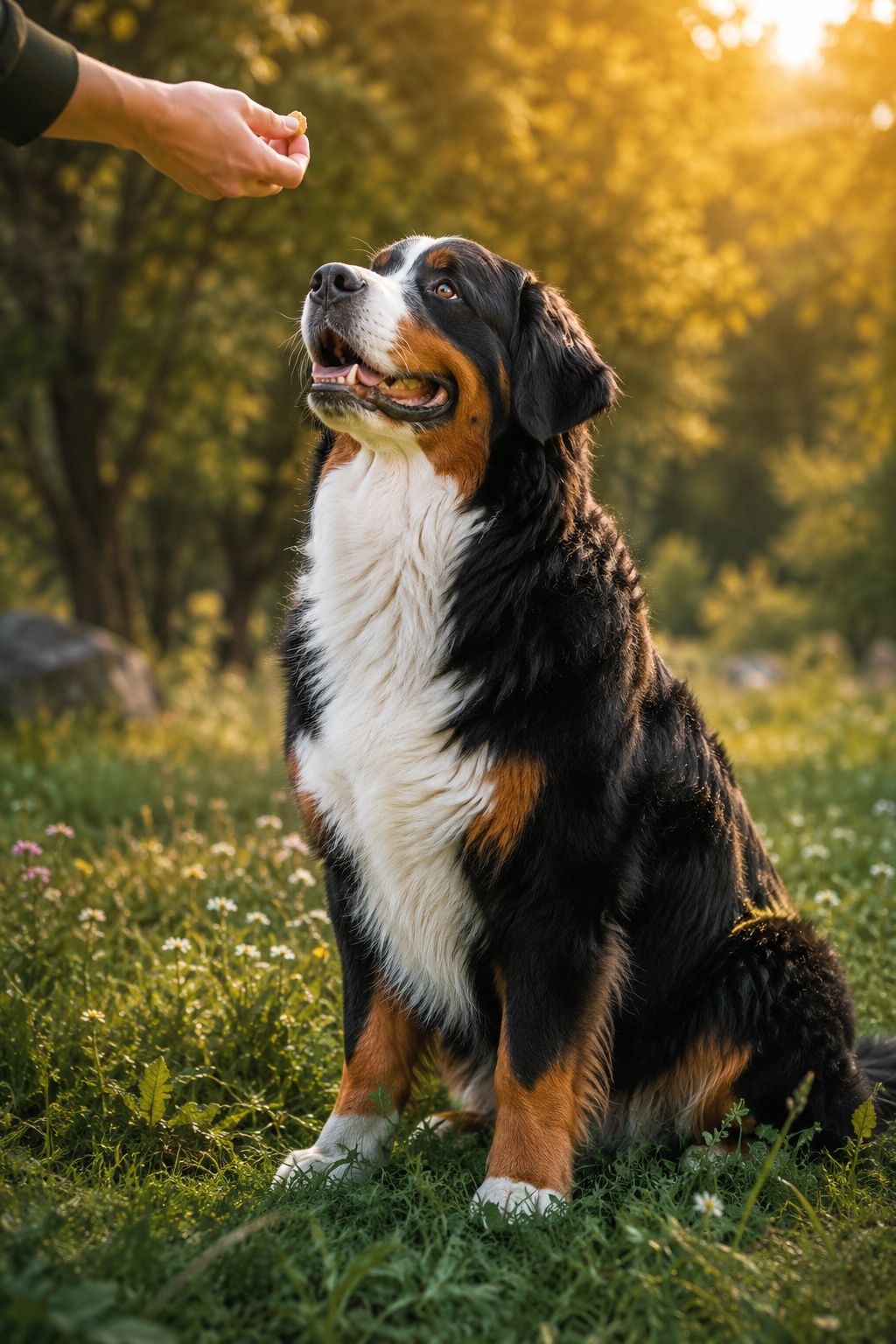
- 🧠 Berners are highly intelligent but can be independent thinkers — consistent, positive training works best.
- 🍖 Reward-based methods (treats, praise, play) outperform punishment every single time with this breed.
- ⏰ Short, fun training sessions (5–10 minutes) beat long, boring ones for Bernese Mountain Dogs.
- 🐕 Early socialization is one of the most important investments you can make in your Berner’s future.
- 💪 Patience and consistency are the two most powerful tools in any Berner owner’s training toolkit.
Understanding the Bernese Mountain Dog Personality
Before jumping into training techniques, it helps to understand who you’re working with. Bernese Mountain Dogs were bred in the Swiss Alps as farm working dogs. They pulled carts, herded cattle, and kept watch over homesteads. That history shaped everything about how they think and behave today.
What Makes Berners Unique
| Trait | Description |
|---|---|
| Intelligence | High — they learn quickly but may choose when to listen |
| Stubbornness | Moderate to high — they have strong opinions |
| Sensitivity | Very high — harsh words hurt them deeply |
| Energy Level | Moderate — not hyperactive, but need daily exercise |
| Loyalty | Extremely high — they bond deeply with family |
| Trainability | Good with the right approach — patience required |
💬 “Berners don’t fail at training. Training methods fail Berners.” — A common saying among experienced Berner owners.
The key thing to know is this: Bernese Mountain Dogs are sensitive souls. They do not respond well to harsh corrections, yelling, or punishment-based training. In fact, these methods can make them shut down completely. A Berner who feels pressured or scared will simply stop engaging. They’ll sit there, look at you with those big brown eyes, and do absolutely nothing. 😅
On the flip side, a Berner who is having fun, feels safe, and is being rewarded? That dog will work hard to please you all day long.
Training Your Bernese Mountain Dog: Tips for a Smart (But Stubborn) Pup — The Basics
Starting on the right foot matters more than most people realize. The first few weeks with a new Berner set the tone for the entire relationship. Here are the foundational training tips every Berner owner needs to know.

1. Start Training on Day One 🗓️
There is no such thing as “too early” when it comes to training a Bernese Mountain Dog. The moment that puppy walks through the door, training begins. That doesn’t mean formal obedience drills. It means:
- Setting boundaries about where the dog can and cannot go
- Rewarding calm behavior instead of jumping or barking
- Teaching the puppy its name through positive association
- Beginning crate training so the dog has a safe space
Puppies absorb information like sponges. Every interaction is a learning opportunity.
2. Use Positive Reinforcement — Always ✅
Positive reinforcement means rewarding the behavior you want to see more of. For Berners, this is not just the best approach — it’s the only approach that works long-term.
What counts as a reward for a Berner?
- 🍗 High-value treats (small pieces of chicken, cheese, or commercial training treats)
- 🎉 Verbal praise (“Yes! Good dog!”)
- 🧸 Play with a favorite toy
- 🤗 Physical affection (petting, belly rubs)
The trick is figuring out what your Berner values most. Some are super food-motivated. Others go crazy for a quick game of tug. Use whatever makes their tail wag the hardest.
3. Keep Sessions Short and Sweet ⏱️
This is one of the most overlooked tips for training your Bernese Mountain Dog. Berners are smart, but they also bore easily. Long training sessions lead to:
- Loss of focus
- Frustration (for both dog and owner)
- The dog “checking out” and refusing to engage
The golden rule: 5 to 10 minutes per session, 2 to 3 times per day. Always end on a success — even if that means asking for something easy like “sit” just to finish on a win.
4. Be Consistent — Every Single Time 🔄
Consistency is the backbone of all dog training, but it’s especially critical with Berners. If “off the couch” means off the couch on Monday, it needs to mean off the couch on Saturday too. Mixed signals confuse dogs and slow down progress dramatically.
Consistency checklist:
- ✔️ Use the same cue words for each command
- ✔️ Everyone in the household follows the same rules
- ✔️ Reward the same behaviors every time (especially early in training)
- ✔️ Never reward a behavior you don’t want repeated
5. Master the Core Commands First 🎯
Before moving on to fun tricks or advanced skills, nail the basics. These five commands form the foundation of a well-behaved Berner:
- Sit — the first and most important command
- Stay — builds impulse control
- Come (recall) — could save your dog’s life
- Down — teaches calm behavior
- Leave it — prevents dangerous scavenging
Practice these in low-distraction environments first (indoors, quiet backyard). Then slowly add distractions as the dog improves.
Tackling the Stubborn Side: Advanced Tips for Training Your Bernese Mountain Dog
Once the basics are in place, many Berner owners hit a wall. The dog knows the commands. It just doesn’t always feel like doing them. This is where training your Bernese Mountain Dog: tips for a smart (but stubborn) pup get a little more nuanced.
6. Make Training Feel Like a Game 🎮
Berners are playful by nature. When training feels like a fun game instead of a chore, they engage completely. Try these game-based training ideas:
- Hide and seek recall: Hide somewhere in the house or yard and call the dog. Huge reward when they find you!
- Name that toy: Teach the dog names for different toys, then ask them to fetch a specific one.
- Trick chains: Link simple tricks together (sit → down → roll over) for a fun sequence.
The more fun training is, the more the dog wants to participate.
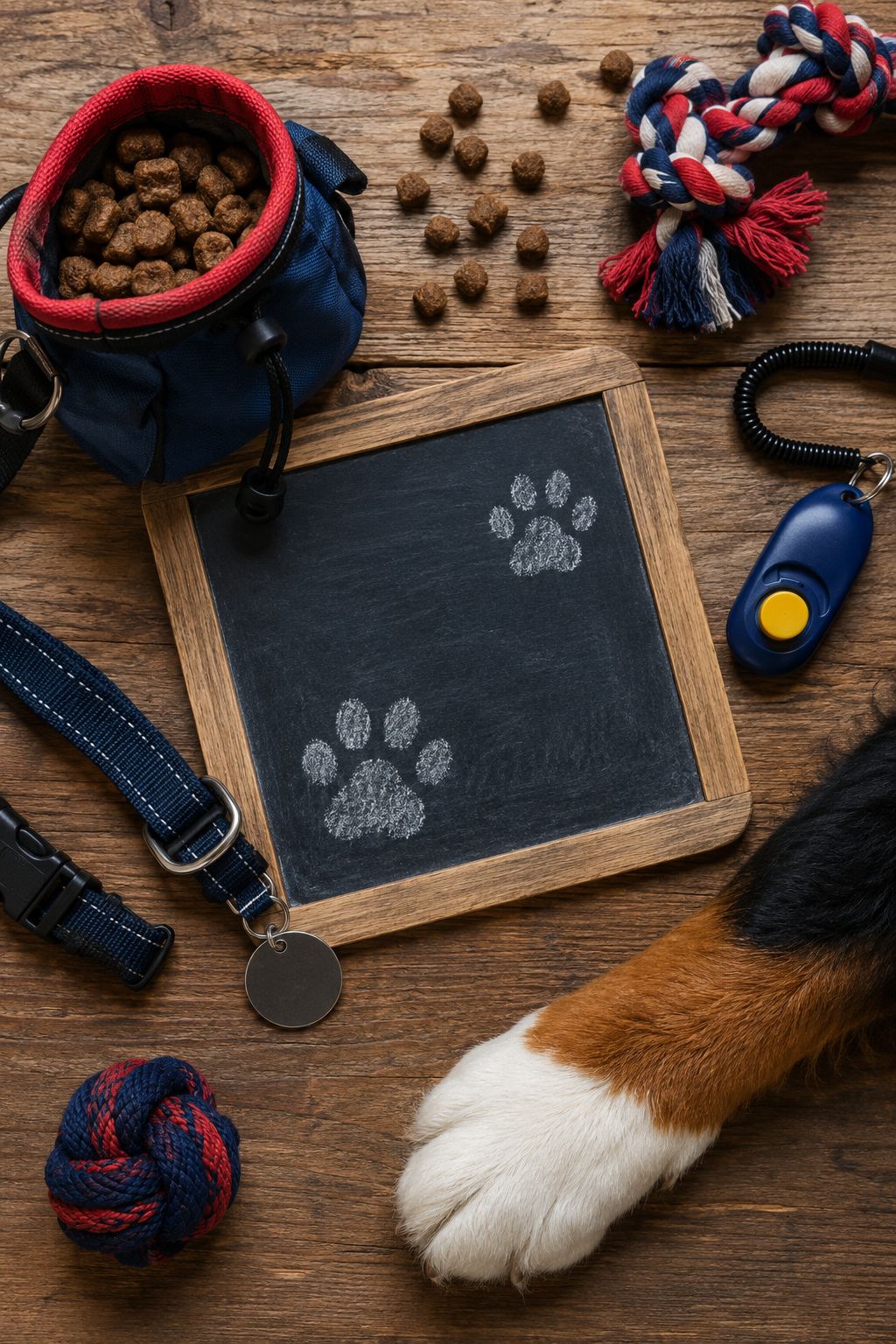
7. Use a Clicker for Precision 🔔
Clicker training is a powerful tool for Berners. A clicker makes a distinct sound the moment the dog does the right thing. This “marks” the behavior clearly, so the dog understands exactly what earned the reward.
How to start clicker training:
- Click once, then immediately give a treat. Repeat 10–15 times.
- The dog now understands: click = reward coming.
- Use the click to mark the exact moment of correct behavior.
- Always follow the click with a reward.
Clickers work especially well for stubborn dogs because they remove ambiguity. The dog knows precisely what behavior is being rewarded.
8. Work With Their Independent Thinking 🧩
Berners are not robots. They think for themselves, and that’s actually a feature — not a bug. Instead of fighting their independence, work with it.
Try “choice-based training”:
- Give the dog a moment to choose to comply before repeating a command.
- Reward the choice to comply enthusiastically.
- Ignore non-compliance (walk away, try again in a minute).
This approach respects the dog’s intelligence and builds a cooperative relationship rather than a power struggle.
9. Manage the Environment 🏠
Smart dogs find their own entertainment when bored. For Berners, that might mean chewing furniture, digging in the garden, or barking at everything that moves. The solution isn’t just more training — it’s smarter management.
Environmental management tips:
- Use baby gates to limit access to off-limits areas
- Provide puzzle toys and chew items to keep the brain busy
- Ensure the dog gets enough physical exercise daily (30–60 minutes for adults)
- Rotate toys to keep things interesting
A tired Berner is a well-behaved Berner. Mental exercise matters just as much as physical exercise for this breed.
10. Socialize Early and Often 🌍
Socialization is technically part of training, and it’s one of the most important investments a Berner owner can make. Well-socialized Berners are:
- Calmer in new environments
- More confident around strangers
- Better behaved at the vet, groomer, and in public
- Less likely to develop fear-based behaviors
Socialization checklist for young Berners:
| Experience | Target Age |
|---|---|
| Meeting friendly strangers | 8–12 weeks |
| Exposure to different surfaces (grass, tile, gravel) | 8–16 weeks |
| Hearing loud noises (traffic, thunder recordings) | 8–16 weeks |
| Meeting other vaccinated dogs | After first vaccines |
| Car rides | As early as possible |
| Puppy classes | 8–16 weeks |
⚠️ Important: Keep early socialization positive. Never force a scared puppy into a frightening situation. Let them explore at their own pace.
11. Address Problem Behaviors Calmly 😤➡️😌
Berners can develop some frustrating habits — pulling on the leash, jumping on guests, barking at the door. The key is addressing these calmly and consistently.
Leash pulling:
- Stop walking the moment the leash goes tight.
- Only move forward when the leash is loose.
- Reward walking nicely with treats and praise.
Jumping on people:
- Turn away and ignore the dog when it jumps.
- Ask for a “sit” instead, then reward the sit with attention.
- Ask guests to do the same — consistency from everyone matters.
Excessive barking:
- Identify the trigger (doorbell, strangers, boredom).
- Teach a “quiet” command using positive reinforcement.
- Ensure the dog has enough mental and physical stimulation.
12. Know When to Call a Professional 📞
Sometimes, even the most dedicated owner needs backup. Consider working with a certified professional dog trainer if:
- The dog shows signs of aggression
- Fear-based behaviors are getting worse, not better
- Basic commands aren’t sticking after weeks of consistent training
- The owner feels frustrated or overwhelmed
Look for trainers who use force-free or positive reinforcement methods. These are especially important for the sensitive Bernese Mountain Dog temperament. Organizations like the Association of Professional Dog Trainers (APDT) maintain directories of certified trainers.
Common Training Mistakes Berner Owners Make
Even well-meaning owners make mistakes. Here are the most common ones — and how to avoid them.
❌ Mistake 1: Repeating Commands
Saying “sit, sit, SIT” teaches the dog that it doesn’t need to respond the first time. Say the command once. Wait. If no response, help the dog into position and reward.
❌ Mistake 2: Training When Frustrated
Dogs read emotions. A frustrated owner creates a stressed dog. If feeling annoyed, take a break and come back later.
❌ Mistake 3: Skipping Mental Stimulation
Physical walks aren’t enough for a smart breed like the Berner. Puzzle feeders, training sessions, and interactive games are just as important as outdoor exercise.
❌ Mistake 4: Waiting Too Long to Train
Some owners wait until the dog is 6 months old to start training. By then, bad habits are already forming. Start from day one.
❌ Mistake 5: Inconsistent Rules
If one family member lets the dog on the couch and another doesn’t, the dog gets confused. Hold a family meeting and agree on the rules before the dog comes home.
Training Milestones: What to Expect at Each Stage
Training a Bernese Mountain Dog is a long-term commitment. Here’s a rough timeline of what to expect:
| Age | Training Focus |
|---|---|
| 8–12 weeks | Name recognition, sit, crate training, potty training |
| 3–6 months | Sit, down, stay, come, leash manners, socialization |
| 6–12 months | Proofing commands in distractions, leave it, impulse control |
| 1–2 years | Advanced commands, canine sports, off-leash reliability |
| 2+ years | Maintenance training, new tricks, ongoing enrichment |
💡 Pro tip: Berners mature slowly — both physically and mentally. Don’t expect adult-level reliability from a 6-month-old pup. Be patient with the process.
Fun Activities That Double as Training 🏆
Training doesn’t have to happen only in formal sessions. These activities build skills while keeping the Berner happy and engaged:
- Hiking: Practices leash manners and recall in real-world settings
- Carting/drafting: Connects to the breed’s working heritage and builds focus
- Nosework: Channels natural scenting instincts into a structured activity
- Agility: Builds confidence, coordination, and responsiveness to cues
- Therapy dog work: Requires excellent manners and socialization — a great goal for calm Berners
Berners excel at activities that involve working alongside their people. These dogs want a job to do. Giving them one makes training feel purposeful and rewarding for everyone involved.
Conclusion: Patience Pays Off With Your Bernese Mountain Dog
Training your Bernese Mountain Dog: tips for a smart (but stubborn) pup all point toward the same truth — this breed rewards patience, kindness, and consistency more than almost any other. Berners are not difficult dogs. They’re just dogs who need to trust their people before they’ll truly work with them.
The stubbornness that can feel so frustrating in the early months? It’s the same quality that makes Berners so loyal, so steady, and so deeply bonded to their families. Work with it, not against it.
Actionable next steps to take today:
- ✅ Pick one basic command to focus on this week (start with “sit”)
- ✅ Set a timer for 5-minute training sessions twice a day
- ✅ Stock up on high-value treats your Berner loves
- ✅ Enroll in a puppy class or beginner obedience course
- ✅ Share the household rules with everyone in the home so everyone is consistent
Every great Berner started as a confused, stubborn puppy. With the right approach, that pup can become the most loyal, well-mannered companion imaginable. 🐕❤️
References
- American Kennel Club. (2023). Bernese Mountain Dog. https://www.akc.org/dog-breeds/bernese-mountain-dog/
- Pryor, K. (2006). Reaching the Animal Mind: Clicker Training and What It Teaches Us About All Animals. Scribner.
- Association of Professional Dog Trainers. (2022). Finding a Trainer. https://apdt.com/
- Donaldson, J. (1996). The Culture Clash: A Revolutionary New Way of Understanding the Relationship Between Humans and Domestic Dogs. James & Kenneth Publishers.
- Serpell, J. (Ed.). (2017). The Domestic Dog: Its Evolution, Behaviour and Interactions with People (2nd ed.). Cambridge University Press.
- Overall, K. L. (2013). Manual of Clinical Behavioral Medicine for Dogs and Cats. Elsevier.
Tags: Bernese Mountain Dog training, dog training tips, positive reinforcement, stubborn dog breeds, puppy training, dog socialization, Berner behavior, large dog training, clicker training, dog obedience, working dog breeds, dog training mistakes