

Nine percent of dogs are silently struggling right now. That number comes from a massive study of over 43,000 dogs.[1] These pups aren’t sick. They aren’t “bad.” They’re heartbroken. And their owners often have no idea.

Here’s the hard truth: 5 Normal Things That QUIETLY Break Your Dog’s Heart (STOP NOW) are hiding in plain sight in almost every home. They feel harmless. They feel normal. But to your dog, they can feel like abandonment.
Dogs trust their humans completely. They wait by the window. They listen for the car. They love us with their whole furry hearts. So when everyday habits chip away at that trust, it matters. Big time.
This guide breaks down the science in simple words. No jargon. No boring lectures. Just real talk about the 5 normal things that quietly break your dog’s heart, and exactly how to stop today.
Key Takeaways
- 1 in 10 dogs show moderate to severe distress from being left alone, and it’s often missed.[1]
- 94% of owners call their dogs family, yet everyday habits can accidentally hurt that bond.[2]
- Quiet signs like whining or pacing are often signals of real fear, not just “clinginess.”[6]
- Skipping exercise and enrichment makes anxiety worse, not better.[3]
- Small, consistent changes, not dramatic overhauls, fix most of these problems fast.[9][10]
What Science Says About 5 Normal Things That QUIETLY Break Your Dog’s Heart (STOP NOW)
Let’s get one thing straight: dogs are not “just pets.” A UK survey found that 95% of owners say their dog is good for their mental health, and 84% say their dog gives them emotional support.[2] That love goes both ways.
But love doesn’t automatically protect against everyday mistakes.
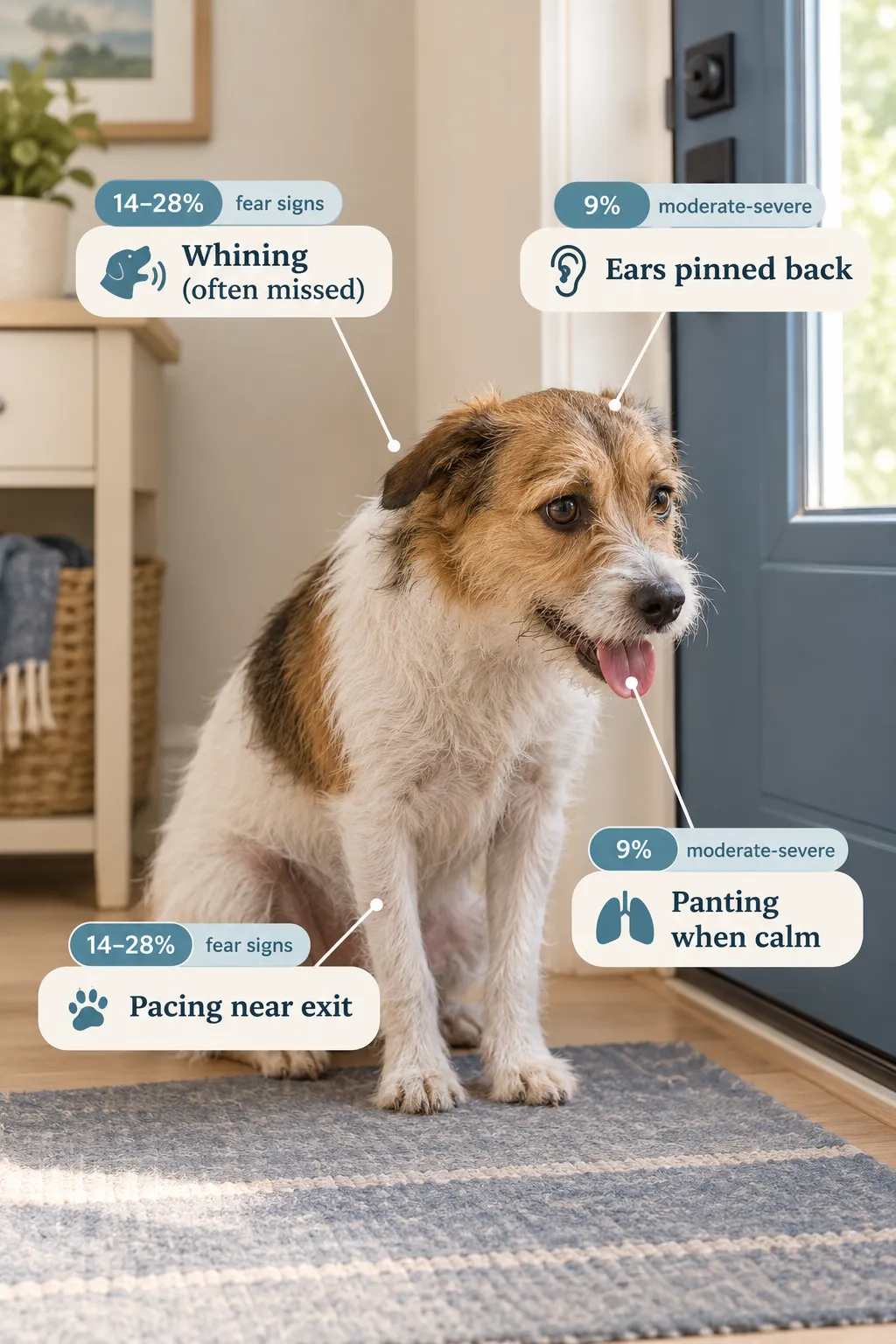
Researchers studying separation-related behavior found something surprising. Dogs that whine, but don’t bark, often show more fear, not less.[6] That means the quiet dog, the “good” dog who just whimpers softly by the door, might be hurting more than the loud, barky one.
During the COVID-19 pandemic, something interesting happened. When people spent more time at home, separation-related behavior dropped from 22.1% to 17.2%.[4] That’s a huge shift. It proves that “normal” long absences, something most owners never question, can quietly raise a dog’s stress levels.
Experts also say hyperattachment (a dog being “too clingy”) is not actually the cause of separation anxiety.[5] The real problem is insecure attachment. That happens when a dog can’t predict what’s coming next. Inconsistent attention. Random punishment. Confusing routines. These normal habits erode trust bit by bit.
“Separation-related problems are a real mental health issue for dogs, not bad behavior.”[9]
That quote matters. It changes how we should think about this whole topic.
The 5 Normal Things That QUIETLY Break Your Dog’s Heart (STOP NOW)
Ready for the list? Here are the 5 normal things that quietly break your dog’s heart,things almost every loving owner does without realizing it.
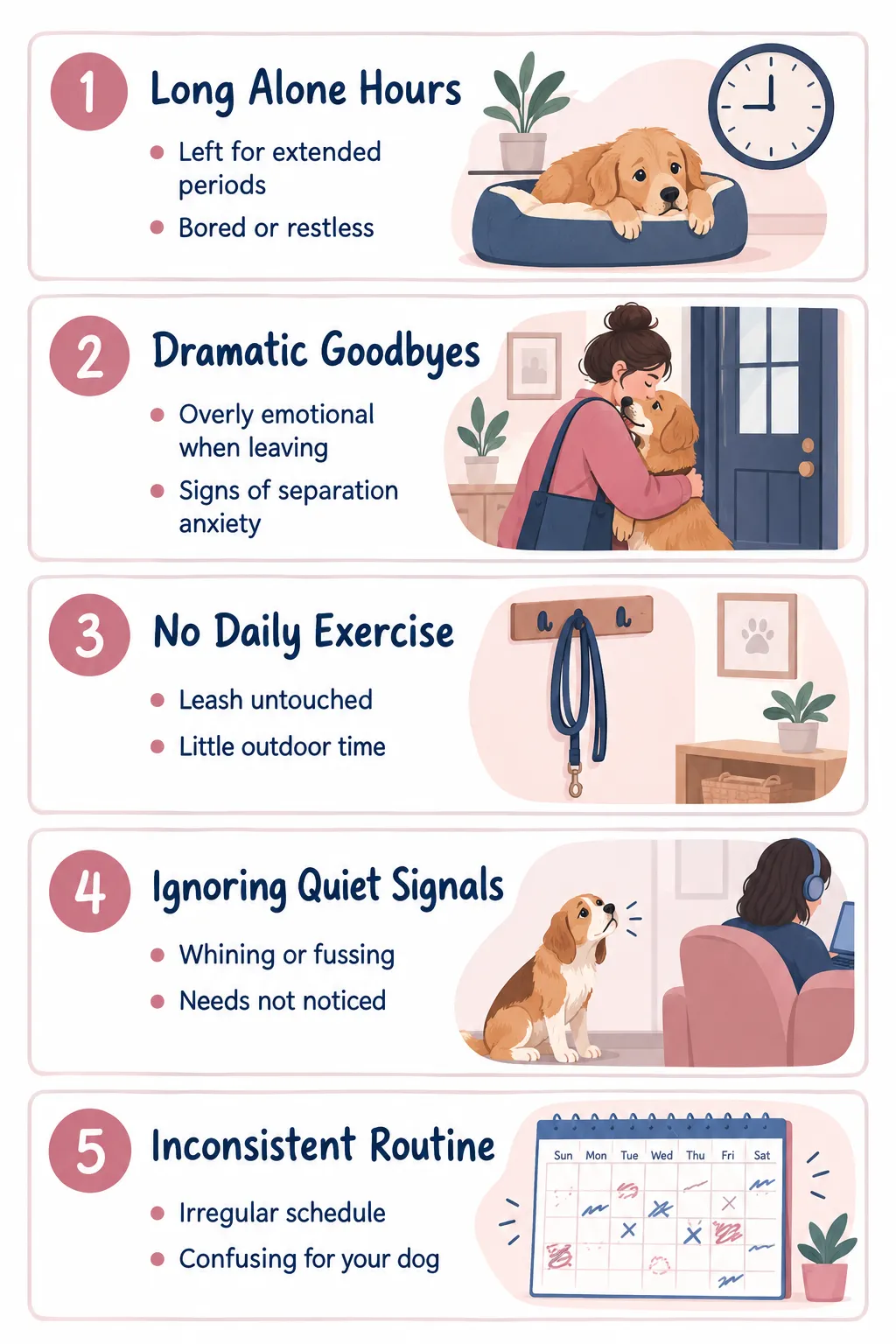
1. Leaving Your Dog Alone Too Long, Too Often
This is the big one. Long workdays. Errands. Date nights. It all adds up. Nearly 1 in 10 dogs show serious signs of separation distress.[1] Fear and anxiety-related behaviors show up in 14% to 28% of dogs.[1] That’s not rare. That’s common.
2. Making a Big Dramatic Deal Out of Goodbyes and Hellos
For years, trainers said to ignore your dog when leaving or coming home. New research says high-arousal greetings alone aren’t the main risk factor. But confusing, unpredictable departures still stress many dogs out. The fix isn’t drama-free, it’s consistency.
3. Skipping Exercise Because “They Seem Fine”
Vets rate exercise and mental stimulation from “inadequate” to “excellent” when treating anxiety.[3] A tired body means a calmer mind. Skipping walks feels normal on a busy day. But it quietly stacks stress on top of stress.
4. Ignoring the Quiet Signs
A little whine. A little pacing. Some panting when nothing’s hot outside. These feel like nothing. But they’re often early warning signs of real fear.[6] Owners dismiss them because the dog “seems fine most of the time.”
5. Inconsistent Routines and Attention
Dogs crave predictability. When attention comes and goes randomly, lots of love one day, ignored the next, it creates insecure attachment.[5] This isn’t about spoiling a dog. It’s about trust.
Here’s a quick table to see how common these issues really are:
| Everyday Habit | How Common It Is | Why It Hurts |
|---|---|---|
| Long alone time | ~9% show serious distress[1] | Dog feels abandoned |
| No exercise/enrichment | Rated “inadequate” in many homes[3] | Anxiety builds up |
| Ignoring quiet whining | Linked to fear signals[6] | Fear goes untreated |
| Dramatic or confusing goodbyes | Common but risky when unpredictable | Trust breaks down |
| Inconsistent attention | Tied to insecure attachment[5] | Dog can’t predict love |
None of these habits are done out of cruelty. They’re done out of normal life. That’s exactly why they’re so sneaky.
How to Stop Breaking Your Dog’s Heart (Starting Today)
Good news, dog parent: fixing this doesn’t require a total life makeover. Small, steady changes work best.
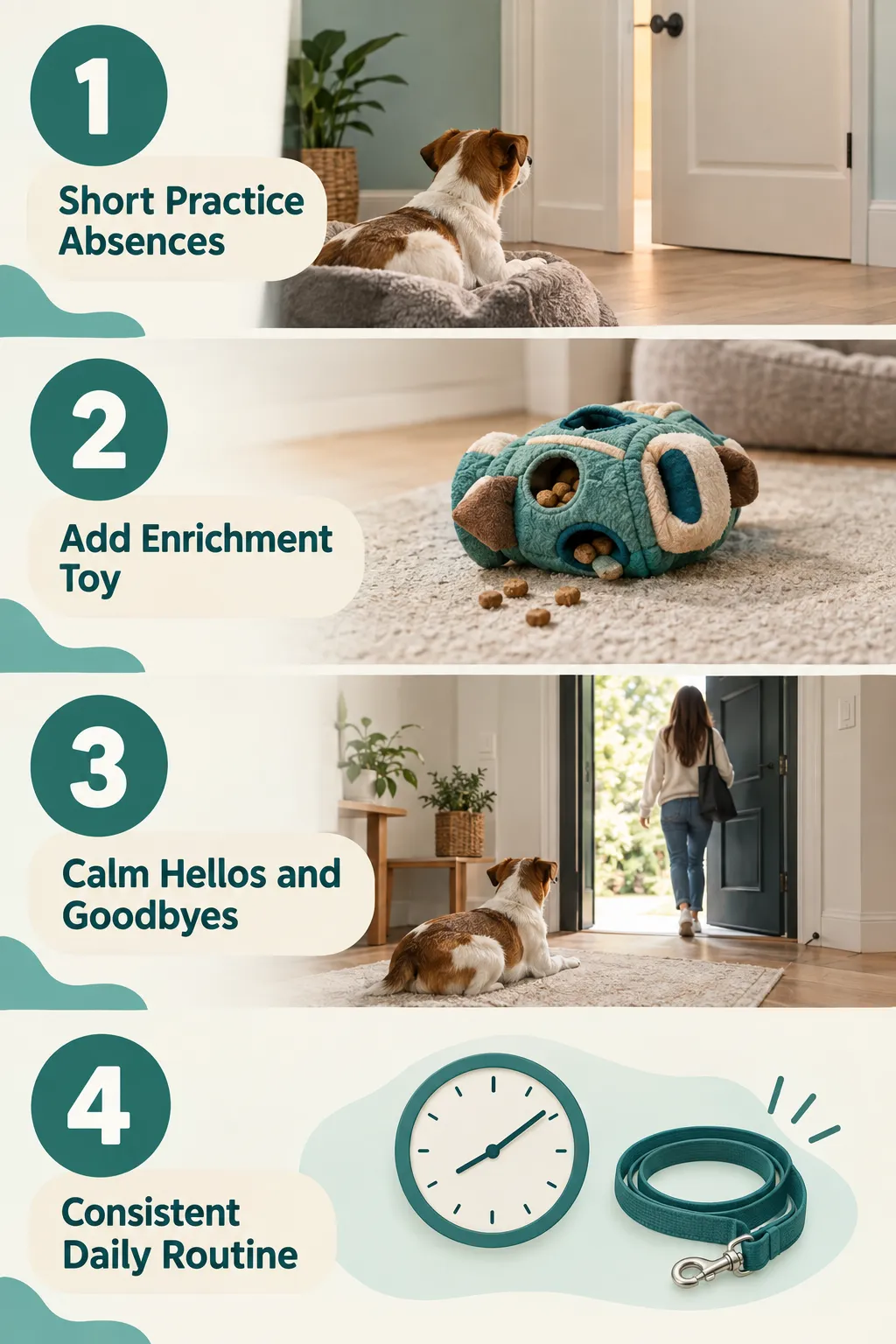
Try these paw-some fixes:
- Practice short absences. Leave for 5 minutes. Come back calm. Slowly build up time. This is called desensitization, and it’s the top treatment method vets recommend.[9]
- Add enrichment before you go. A stuffed puzzle toy or slow feeder gives your dog a job. Boredom is a real driver of distress.[8]
- Keep hellos and goodbyes calm and predictable. Skip the big emotional scenes. Steady is better than dramatic.
- Never punish anxious behavior. Scolding a dog for destroying a pillow while stressed only adds fear on top of fear.[9]
- Build daily exercise into your routine. Even a brisk 20-minute walk helps burn off nervous energy.[3]
- Watch for quiet signs. Whining, pacing, and panting are not “nothing.” They’re your dog asking for help.[6]
- Stay consistent with attention. Predictable love builds secure attachment, and secure dogs handle stress better.[5]
Australian vets say separation anxiety is partly preventable.[10] That’s huge. It means you have real power here. Gradual exposure, enrichment, and calm routines aren’t just nice extras, they’re proven prevention tools.[10]
And here’s something dog parents rarely hear: this isn’t just about your dog’s heart. Studies show owners who deal with frequent dog behavior problems are more likely to struggle with anxiety and depression themselves.[7] Fixing your dog’s stress can actually protect your wellbeing too. It’s a two-way street of tail-wagging love.
Conclusion
Dogs don’t ask for much. They ask for love, routine, and a person who notices the quiet stuff. The 5 normal things that quietly break your dog’s heart aren’t villains, they’re just habits that snuck in without anyone noticing.
The fix starts small. Watch for whining. Add a puzzle toy. Practice short goodbyes. Keep a steady routine. These tiny steps add up to a big difference for your furry family member.
Start today. Pick just one habit from this list and change it this week. Your dog will notice. And honestly? So will you.
References
[1] Separation Anxiety In Dogs Survey – https://www.certapet.com/separation-anxiety-in-dogs-survey/
[2] Nds%202025%20state%20of%20the%20nation%20report%20desktop%20version – https://www.dogstrust.org.uk/downloads/NDS%202025%20State%20of%20the%20nation%20report%20desktop%20version.pdf
[3] Javma.20.10.0602 – https://avmajournals.avma.org/view/journals/javma/259/10/javma.20.10.0602.xml
[4] Pmc8868415 – https://pmc.ncbi.nlm.nih.gov/articles/PMC8868415/
[5] Javma.20.08.0462 – https://avmajournals.avma.org/view/journals/javma/259/10/javma.20.08.0462.xml
[6] Pmc8479053 – https://pmc.ncbi.nlm.nih.gov/articles/PMC8479053/
[7] Dog Behavior Problems Affect Owner Mental Health – https://petsciencedaily.com/2025/06/11/dog-behavior-problems-affect-owner-mental-health/
[8] Full – https://www.frontiersin.org/journals/veterinary-science/articles/10.3389/fvets.2021.775092/full
[9] Pmc7521022 – https://pmc.ncbi.nlm.nih.gov/articles/PMC7521022/
[10] Pmc7459922 – https://pmc.ncbi.nlm.nih.gov/articles/PMC7459922/