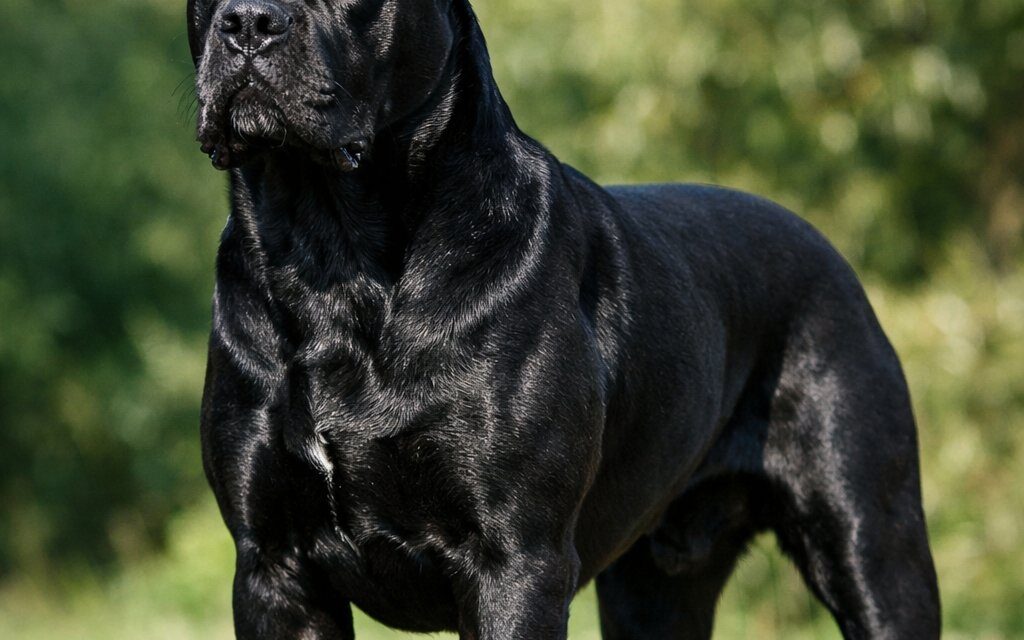
The Cane Corso is a powerful and loyal breed that many people love. If you have one of these dogs or are thinking about getting one, you might wonder if it’s truly purebred. This matters because purebred dogs have specific traits and health backgrounds that can help you care for them better.


Knowing whether your Cane Corso is purebred helps you understand what to expect from your dog’s appearance, behavior, and health needs. There are many ways to check if your dog is a true Cane Corso. Some signs are easy to spot, like body shape and coat color. Other clues take a closer look at papers, personality, and smaller details.
This guide will walk you through key features to look for in your dog. You’ll learn about physical traits like build and nose shape. You’ll also discover how purebred Cane Corsos act and move. By the end, you’ll have a clear picture of what makes a true Cane Corso.
1) Check for AKC registration papers
The easiest way to confirm if your Cane Corso is purebred is to look for official American Kennel Club registration papers. Your breeder should have given you these documents when you got your dog.
AKC registration papers prove your dog’s lineage and breed purity. The certificate includes important details about your Cane Corso, like its registered name, birth date, and parents’ information.
If you have the papers, you’ll see an AKC registration number on the certificate. This number is unique to your dog. You can verify this information directly with the AKC if you want to double-check that the papers are legitimate.
Sometimes breeders send the registration application separately after you purchase your puppy. Ask your breeder if you didn’t receive papers at pickup. They should provide you with the registration documents or help you complete the registration process.
Keep in mind that not having AKC papers doesn’t automatically mean your dog isn’t purebred. Some breeders choose not to register their dogs with the AKC. However, reputable breeders of purebred Cane Corsos typically register their litters.
You can contact the AKC directly if you’re unsure about your dog’s registration status. They can search their database using information about your dog or the breeder.
2) Observe the dog’s muscular and powerful build
A purebred Cane Corso has a distinct muscular appearance that sets it apart from other breeds. You’ll notice broad shoulders and a wide chest that show off their natural strength.
The breed’s body is built for both power and endurance. Your Cane Corso should have well-defined muscles throughout their frame, especially in the chest and shoulder areas. Their legs are strong and sturdy, supporting their large build.
When you look at your dog from the side, you should see a solid, athletic body. The muscles should be visible but not overly bulky. This balanced muscular development gives them their signature look.
A purebred Cane Corso moves with confidence and grace despite their size. You might notice their movement seems smooth and efficient, almost cat-like in nature. Their strong bone structure works together with their muscles to create this powerful yet agile gait.
The chest of your Cane Corso should be deep and wide. This provides room for well-developed heart and lungs, which support their working dog heritage. You’ll also notice their neck is thick and muscular, adding to their imposing presence.
Your dog’s overall appearance should look balanced and proportional. The muscles shouldn’t look uneven or overly developed in just one area. This even distribution of muscle mass is a key trait of the purebred Cane Corso.
3) Look for a large, snub nose with open nostrils
A purebred Cane Corso has a very specific nose structure that sets it apart from mixed breeds. The nose should be large and snub, meaning it’s somewhat flat and wide rather than long and pointed.
When you look at your dog’s face, check the muzzle length. Purebred Cane Corsos have short muzzles, but the nose itself is quite large in proportion to the face.
The nostrils should be open and wide. This is important because it helps the dog breathe properly despite having a shorter snout. You should be able to see the nostrils clearly when looking at your dog from the front.
The nose will appear broad and well-developed. It sits prominently on the face and doesn’t look small or pinched. The openings of the nostrils should be large and unrestricted.
If your dog has a long, narrow nose or small nostrils, this could indicate mixed breeding. The snub nose with large, open nostrils is a key physical trait that breeders look for in purebred Cane Corsos.
4) Examine the short, broad muzzle
The muzzle is one of the most telling features when checking if your Cane Corso is purebred. A true Cane Corso has a short, broad muzzle that gives the dog its distinctive look.
The muzzle should be wide and square-shaped. It’s not long and narrow like you’d see on some other breeds. The width of the muzzle matches the width of the skull, creating a balanced appearance.
Your Cane Corso’s muzzle length should measure about one-third of the total head length. If you look at your dog from the side, the muzzle appears noticeably shorter than the skull portion of the head.
The nose should be large with open nostrils. Purebred Cane Corsos have what’s called a “snub nose” that sits at the end of their short muzzle. The nose is black in most cases, though it can be gray in gray-colored dogs.
Pay attention to the overall structure of the face. The short muzzle gives Cane Corsos their strong, powerful look. The breed belongs to the Mastiff family, and this muzzle type is a key family trait.
Mixed breed dogs or dogs that aren’t purebred often have longer or narrower muzzles. If your dog’s muzzle seems too long compared to the rest of the head, this could indicate mixed breeding.
5) Identify the black or dark-colored coat with possible brindle or grey markings
A purebred Cane Corso can come in seven official coat colors. These include black, gray, fawn, red, black brindle, gray brindle, and chestnut brindle.
Black is one of the most common and striking colors you’ll see in this breed. If your Cane Corso has a solid black coat with a glossy shine, that’s a good sign of a purebred dog.
Gray coats are also standard for the breed. This color can range from light silver to a deeper slate shade.
Brindle patterns give your dog a tiger-striped appearance. These stripes are darker bands that run across a lighter base color. You might see black stripes on a red or fawn background, or darker gray stripes on a lighter gray base.
The brindle pattern makes each Cane Corso look unique. No two brindle dogs have exactly the same stripe pattern, which adds to their impressive appearance.
Your dog might also have small white markings on the chest or toes. These white patches are acceptable in purebred Cane Corsos as long as they stay small and limited to certain areas.
What you won’t see in a purebred Cane Corso is a mostly white coat or large white patches. Colors like cream, straw, or predominantly white coats don’t meet the breed standard set by kennel clubs.
The coat itself should be short, thick, and glossy. When you run your hand over it, the fur should feel dense and smooth with a natural shine.
6) Assess the dog’s stable and loyal temperament
A purebred Cane Corso has a calm and steady temperament that sets it apart from other dogs. You’ll notice your dog stays composed in most situations and doesn’t get easily rattled by new people or environments.
This breed is naturally protective without being aggressive. Your Cane Corso should show confidence around strangers but remain alert and watchful. They don’t typically act nervous or fearful when meeting new people.
Loyalty is a key trait you should see in your dog. A true Cane Corso forms strong bonds with family members and wants to stay close to their people. Your dog will likely follow you from room to room and prefer being near you.
The breed shows its stability through consistent reactions to everyday situations. You can test this by observing how your dog handles different scenarios like doorbell rings, car rides, or visits to new places. A purebred Cane Corso should remain balanced and not overreact.
Your dog should also display good judgment when it comes to protecting the home. Real Cane Corsos know the difference between actual threats and normal daily activities. They won’t bark at every little sound but will alert you to genuine concerns.
These dogs typically show patience with family members, including children they know well. Your Cane Corso should be gentle and tolerant in familiar settings. This stable nature makes them reliable family companions when properly trained and socialized.
Watch for signs of intelligence and trainability too. Purebred Cane Corsos are smart dogs that want to please their owners. Your dog should respond well to training and show an eagerness to learn new commands.
7) Notice the dog’s confident, alert stance
Purebred Cane Corsos carry themselves with a natural confidence that sets them apart from other breeds. When you watch your dog move and stand, you should see a relaxed but attentive posture. Their body appears loose and comfortable, not stiff or tense.
A true Cane Corso stands with their weight evenly balanced on all four legs. Their head stays level or slightly raised, and their ears point forward when something catches their attention. This breed doesn’t cower or crouch down when meeting new people or exploring new places.
You’ll notice your Cane Corso’s tail position tells you a lot about their confidence level. A confident dog holds their tail at medium height, sometimes with a slight curve. The tail shouldn’t be tucked between the legs or held extremely high.
Watch how your dog reacts to new situations. Purebred Cane Corsos approach unfamiliar things with curiosity rather than fear. They walk with purpose and keep their bodies upright. Their movements look smooth and controlled, not jumpy or nervous.
The breed’s confident stance comes from their history as guard dogs and working animals. Your Cane Corso should look ready to respond to their surroundings without appearing aggressive. Their body language shows they’re calm and in control of the situation.
8) Look for well-set, medium-sized ears, usually cropped in pedigrees
A purebred Cane Corso is born with medium-sized floppy ears. These ears sit high on the head and are well-proportioned to the dog’s large skull.
Many Cane Corso owners choose to have their dog’s ears cropped. This is a surgical procedure that removes the floppy part of the ear to create an upright, standing appearance. The procedure is typically done when the puppy is between 8 and 12 weeks old.
You’ll notice that most pedigree Cane Corsos in show rings have cropped ears. The most common cropping styles include the short crop, show crop, and battle crop. Each style leaves different amounts of ear length, but all create the characteristic alert, upright ear position.
The American Kennel Club accepts both cropped and uncropped ears in shows. However, cropped ears remain the traditional and preferred look for many breeders and owners. If you’re looking at a potential purebred Cane Corso, the ears should be medium-sized and triangular in shape, whether they’re cropped or natural.
Uncropped Cane Corso ears will hang down close to the cheeks. They should still be well-positioned on the head and proportionate to the dog’s size. The ear leather should be thick and triangular, not thin or overly long like some other breeds.
Keep in mind that ear cropping is a personal choice and doesn’t determine whether your dog is purebred. A Cane Corso with natural floppy ears can be just as purebred as one with cropped ears. What matters more is the ear placement, size, and shape relative to the breed standard.
9) Check for a deep chest and well-developed ribs
A purebred Cane Corso has a distinctive chest structure that sets it apart from other breeds. You should notice that your dog’s chest reaches down to the elbow level when standing. This deep chest gives the breed its powerful, athletic appearance.
To check this feature, stand your dog up and place your hand between the front legs. Feel where the elbows are positioned. The chest should be level with or slightly below the elbows.
The ribs should be well-developed and spring outward from the spine. When you run your hands along your dog’s sides, you’ll feel ribs that are long and moderately curved. They shouldn’t be flat or barrel-shaped.
A Cane Corso’s chest should also be broad and muscular. This width provides room for the heart and lungs, which supports the breed’s strength and endurance. The ribcage should taper slightly toward the rear, creating a subtle tuck at the abdomen.
You can observe the chest depth from the side as well. The underline of the chest should drop noticeably lower than the belly line. This creates a clear visual distinction between the deep front chest and the more tucked-up abdomen.
Keep in mind that puppies may not show these features as clearly as adult dogs. The chest develops fully as your Cane Corso matures. By around two years of age, you should see the complete chest structure typical of the breed.
10) Observe a strong, straight back with a slightly arched loin
A purebred Cane Corso should have a strong, straight back that shows power and stability. When you look at your dog from the side, the topline should appear level and solid from the withers to the tail.
The loin area sits between the ribs and the hips. In a Cane Corso, this area should have a slight arch to it. This isn’t the same as a roached back, which is a fault in the breed.
The loin connects the front and rear parts of your dog’s body. It’s only supported by seven lumbar vertebrae, so it needs to be muscular and well-developed. A good loin helps your Cane Corso move properly and gives them the strength they need for work.
You can check this by running your hand along your dog’s back. Feel for a firm, level topline with just a gentle rise over the loin area. The muscles here should feel broad and strong, not weak or sagging.
A weak or overly arched back doesn’t match the breed standard. The Cane Corso comes from the Mastiff family and belongs to the working group, so their build needs to support physical activity and strength.
11) Look at the tail, typically docked according to breed standards
The tail of a Cane Corso can give you clues about whether your dog is purebred. Traditionally, Cane Corso tails are docked when the puppies are very young.
Tail docking happens between 2 to 5 days of age at a veterinarian’s office. The procedure removes part of the tail to meet breed standards. According to breed guidelines, the tail should be docked to about one-third of its original length or at the fourth vertebrae.
You might see a Cane Corso with a docked tail that appears short and thick at the base. This is the traditional look that many breeders follow.
However, things have changed in recent years. The American Kennel Club now accepts both docked and natural tails for Cane Corsos. A natural tail won’t get lower points than a docked tail when judges evaluate the breed.
If your Cane Corso has a natural tail, it will be thick at the base and taper toward the tip. Natural tails are long and carried low when the dog is relaxed. When your dog is alert or excited, the tail may rise but shouldn’t curl over the back.
Some people choose to keep their Cane Corso’s tail natural for health reasons or personal preference. Others prefer the traditional docked look that matches historical breed standards.
Keep in mind that tail appearance alone doesn’t confirm if your dog is purebred. You’ll need to consider other physical traits and possibly DNA testing for a complete answer.
12) Check for a dense, short coat with a slight shine
A purebred Cane Corso has a short, dense coat that feels smooth when you run your hand over it. The coat lies close to the body and should look uniform across the entire dog.
When you look at your Cane Corso in good lighting, you should notice a natural shine to their coat. This glossy appearance is a sign of a healthy purebred. The coat should never look dry or brittle.
You won’t find any bald patches or thin areas on a purebred Cane Corso’s coat. The density should be consistent from head to tail. Some areas like the sides of the neck and the back legs might have slightly longer hair that lifts when it changes direction, but it still stays relatively short.
The texture matters as much as the length. Your dog’s coat should feel firm and smooth to the touch, not wiry or fluffy. This type of coat helps protect the dog while keeping them looking sleek and athletic.
A lower quality or mixed breed Cane Corso might have a coat that breaks easily or lacks that healthy shine. If your dog’s coat feels rough or looks dull even with proper grooming and nutrition, this could indicate they’re not a purebred.
13) Evaluate the dog’s level of physical activity—purebreds need daily exercise
Purebred Cane Corsos are large, muscular dogs that were bred to work. They have high energy levels and need plenty of daily exercise to stay healthy and happy.
Your Cane Corso should get at least one to two hours of exercise each day. This can include walks, runs, playtime in a fenced yard, or other physical activities. Without enough exercise, your dog may develop behavior problems like chewing, digging, or excessive barking.
A true Cane Corso will show a strong desire to move and play. They enjoy activities that challenge both their body and mind. Games like fetch, tug-of-war, and agility training work well for this breed.
Watch how your dog behaves during and after exercise. A purebred Cane Corso should have good stamina and recover quickly from physical activity. They shouldn’t seem tired after a short walk around the block.
Young Cane Corsos have even more energy than adults. Puppies need several shorter exercise sessions throughout the day instead of one long session. As your dog gets older, you can adjust the amount and type of exercise based on their needs.
If your dog seems content with minimal activity or tires easily during basic exercise, it might not be a purebred Cane Corso. These dogs were built to work all day and need owners who can keep up with their exercise requirements.
Remember that exercise needs can vary slightly between individual dogs. Your vet can help you create the right exercise plan for your specific dog based on their age, health, and overall condition.
14) Assess trainability and responsiveness to commands
Purebred Cane Corsos are known for being smart and eager to learn. They pick up on commands quickly when you work with them regularly.
Your Cane Corso should show interest when you start a training session. A purebred will watch you closely and focus on what you’re doing. They want to understand what you’re asking them to do.
These dogs respond well to clear, consistent commands. If your dog learns basic commands like sit, stay, and come within a few training sessions, this is a good sign. Purebred Cane Corsos have a natural desire to work with their owners.
You’ll notice that a true Cane Corso stays focused during training. They don’t get distracted as easily as some other breeds. This ability to concentrate helps them learn faster.
Your dog should show loyalty and a willingness to please you. Purebred Cane Corsos form strong bonds with their owners. This bond makes them more responsive to your voice and hand signals.
Watch how your dog reacts to repetition. Cane Corsos need consistency, but they don’t require endless repetition. They usually remember what they’ve learned after a few practice rounds.
A purebred will also show some independence in their thinking. They’re not robots who follow blindly. Your Cane Corso might pause to think before obeying, which shows their intelligent nature.
The breed tends to be assertive but trainable. You need to be firm and confident as their leader. If your dog responds to calm, steady guidance without being aggressive or stubborn, you likely have a purebred.
Keep in mind that even purebred Cane Corsos need early socialization and training. Starting young helps bring out their natural trainability. Poor training can affect any dog’s responsiveness, regardless of breeding.
15) Notice protective instincts balanced with affection toward family
A purebred Cane Corso shows a natural balance between being protective and loving with their family. You’ll see your dog stay alert when strangers approach, but then turn gentle and calm around the people they know and trust.
This breed typically develops protective instincts between 6 and 18 months of age. During this time, you’ll notice your Cane Corso becoming more aware of their surroundings and who belongs in your home.
Your purebred Cane Corso should be gentle with family members while remaining watchful of potential threats. They know the difference between normal visitors and unusual situations. You might see them position themselves between you and a stranger without showing aggression.
The key sign of a true Cane Corso is how quickly they can switch from guardian mode to family companion. One moment they’re monitoring someone at the door, and the next they’re leaning against you for affection. This isn’t confusing behavior – it’s exactly what the breed was developed to do.
You should see your dog show loyalty and devotion to your family every day. They’ll follow you from room to room and want to be near you. But they won’t be clingy or anxious when you leave.
A purebred Cane Corso also demonstrates good judgment about when to be protective. They don’t overreact to normal sounds or everyday situations. Instead, they save their guarding behavior for times when something seems genuinely off.
Your dog should be especially gentle with family members, including children they’ve been properly socialized with. This gentleness combined with their protective nature is a hallmark of the breed.
16) Confirm the absence of squished or overly flattened facial features
A true Cane Corso should never have a squished or extremely flat face. This breed has a normal muzzle length that gives them a balanced, athletic appearance.
You’ll notice that your Cane Corso’s nose sits at the end of a well-defined muzzle. The muzzle should be about one-third the length of the entire head. This is very different from breeds like Bulldogs or Pugs that have pushed-in faces.
Look at your dog’s profile from the side. The face should have clear structure with a visible bridge leading to the nose. If the face looks compressed or the nose appears pushed back into the skull, this is not typical of the breed.
The Cane Corso’s facial structure allows for proper breathing and function. Breeds with extremely flat faces often struggle with breathing problems, but this shouldn’t be an issue for a healthy Cane Corso.
Your dog’s cheeks should be well-developed without making the face look flat. The overall head shape is large and imposing but maintains natural proportions. The breed standard calls for a broad skull with good depth, not a pancake-flat appearance.
Check that your dog’s bite and jaw alignment look normal. A proper Cane Corso has a slightly undershot bite, but the facial bones should still maintain their natural shape and dimension.
17) Check for broad, well-muscled shoulders
A purebred Cane Corso has noticeably broad shoulders. When you look at your dog from the front, the shoulders should appear wide and sturdy.
The shoulder area connects to a deep, muscular chest. You should see clear muscle definition in this region. These powerful shoulders give the Cane Corso its athletic build.
Feel along your dog’s shoulder blades and upper front legs. A true Cane Corso will have thick, firm muscles in these areas. The muscles should feel solid under the coat.
The shoulders should be well-proportioned to the rest of the body. They create a strong foundation for the front legs. This build helps the breed move with power and grace.
Look at your dog’s stance when it’s standing naturally. The front legs should be set wide apart due to the broad shoulder structure. This wide stance is a key feature of the breed.
The shoulder muscles extend down into the upper front legs. You’ll notice the front legs look thick and muscular near the top. This muscling continues the powerful appearance from the shoulders.
Compare your dog’s shoulder width to its hip width. In a Cane Corso, the shoulders and hips should be roughly similar in width. This creates a balanced, rectangular body shape when viewed from above.