
Picture this: your magnificent Cane Corso puppy bounds into the kitchen, tail wagging with pure excitement, knowing it’s mealtime. But wait—are you feeding your gentle giant at the right times and with the proper schedule? Getting the feeding routine right for these majestic dogs isn’t just about filling their bowls; it’s about setting the foundation for a lifetime of health, happiness, and that special bond between you and your furry family member.

Cane Corsos are truly special dogs that deserve equally special care, especially when it comes to their nutritional needs. These powerful, loyal companions have unique dietary requirements that change dramatically throughout their lives. Understanding the 4 feeding schedules that work best for Cane Corso dogs can make the difference between a thriving, energetic companion and one struggling with digestive issues or behavioral problems.
Key Takeaways
• Puppy Cane Corsos (8-16 weeks) need 4-6 small meals daily to support rapid growth and prevent hypoglycemia
• Adolescent Cane Corsos (4-18 months) thrive on 3 meals per day with increased portions to fuel their development
• Adult Cane Corsos (18 months-7 years) do best with 2 well-balanced meals spaced 8-12 hours apart
• Senior Cane Corsos (7+ years) benefit from 2-3 smaller, easily digestible meals to accommodate slower metabolism
• Consistency in timing is crucial for all ages to prevent bloat and establish healthy digestive patterns
Understanding Your Cane Corso’s Unique Nutritional Needs
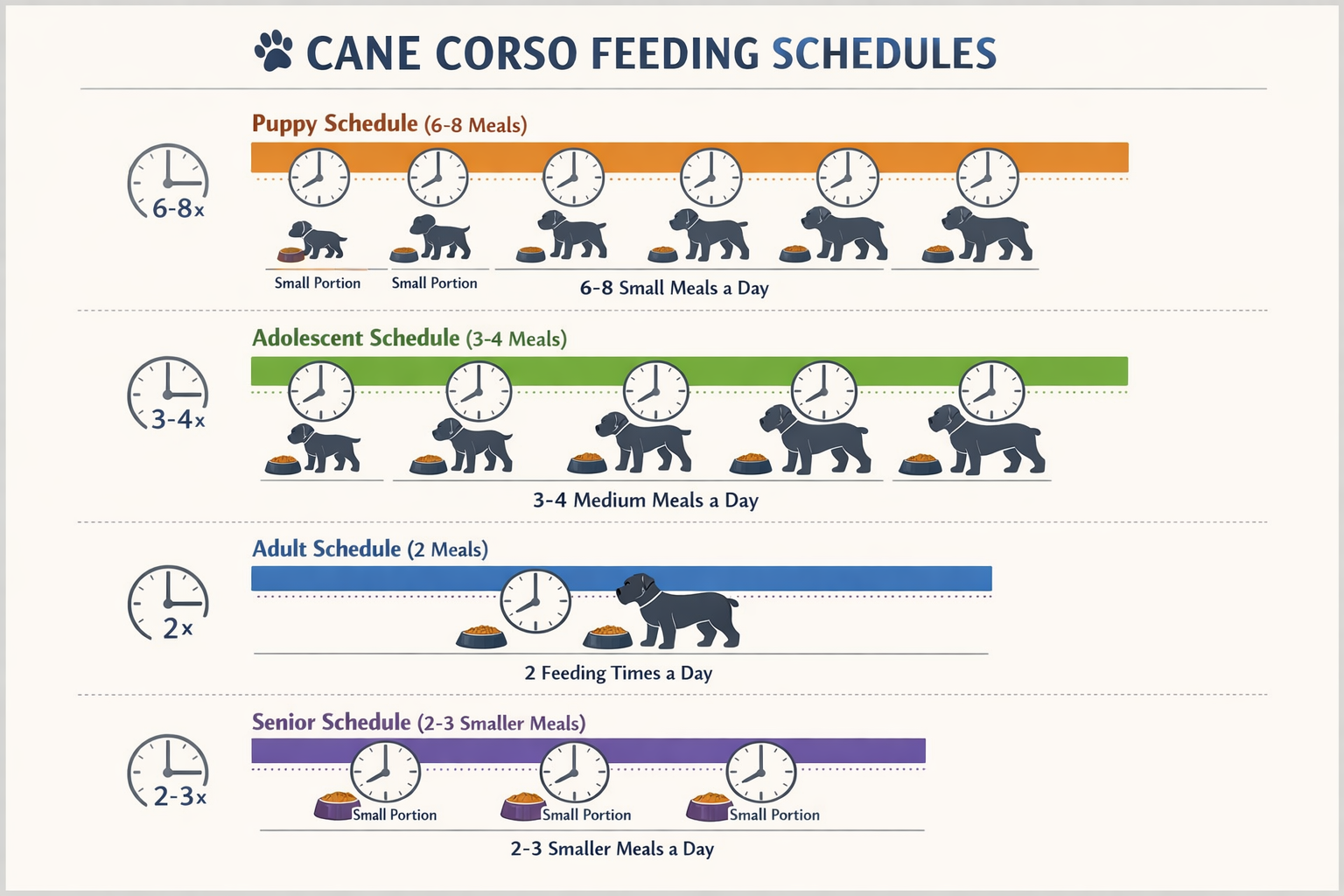
Before diving into the specific feeding schedules, it’s essential to understand what makes Cane Corsos different from other breeds. These magnificent Italian mastiffs are large, muscular dogs that can weigh anywhere from 88 to 120 pounds when fully grown [1]. Their size alone creates unique challenges and opportunities when it comes to nutrition.
Cane Corsos have a predisposition to bloat (gastric dilatation-volvulus), making meal timing and portion control absolutely critical [2]. Their deep chests and large stomach capacity mean they can easily overeat, leading to dangerous digestive complications. This breed also experiences rapid growth phases during puppyhood, requiring carefully calibrated nutrition to support healthy bone and muscle development without encouraging too-fast growth that could damage their joints.
The Science Behind Proper Feeding Schedules
Digestive health in Cane Corsos depends heavily on consistent meal timing. Their stomachs work best when they can predict when food is coming, allowing digestive enzymes to prepare appropriately. Regular feeding schedules also help with:
- Blood sugar regulation – preventing dangerous spikes and crashes
- Behavioral stability – reducing food anxiety and resource guarding
- Weight management – easier portion control and metabolism regulation
- Training opportunities – meals become positive reinforcement tools
The 4 Feeding Schedules That Work Best for Cane Corso Dogs: Complete Age-Based Guide
Schedule #1: Puppy Power Plan (8-16 Weeks) 🐕
Meal Frequency: 4-6 meals per day
Timing: Every 2-3 hours during waking hours
Portion Size: ¼ to ½ cup per meal (adjust based on puppy’s size)
Young Cane Corso puppies are like adorable little eating machines! Their tiny stomachs can’t hold much food, but their growing bodies need constant fuel. This frequent feeding schedule prevents hypoglycemia (low blood sugar) while supporting their incredible growth rate.
Sample Daily Schedule:
- 6:00 AM – Morning meal
- 9:00 AM – Mid-morning snack
- 12:00 PM – Lunch
- 3:00 PM – Afternoon meal
- 6:00 PM – Dinner
- 9:00 PM – Evening meal (optional for very young puppies)
💡 Pro Tip: Always supervise puppy meals and remove uneaten food after 15-20 minutes. This teaches good eating habits and prevents food spoilage.
Key Considerations for Puppy Feeding:
- Use high-quality puppy food specifically formulated for large breeds
- Monitor weight gain weekly – puppies should gain 2-4 pounds per week
- Provide fresh water constantly, but monitor intake before bedtime
- Never free-feed – scheduled meals help with house training and prevent overeating
Schedule #2: Adolescent Adventure Plan (4-18 Months) 🦴
Meal Frequency: 3 meals per day
Timing: Every 6-8 hours
Portion Size: 1-2 cups per meal (varies by age and activity level)
Teenage Cane Corsos are experiencing their most dramatic growth phase. They’re developing those impressive muscles and reaching toward their adult height. The 3-meal schedule provides steady energy while reducing the risk of bloat compared to larger, less frequent meals.
Sample Daily Schedule:
- 7:00 AM – Breakfast (largest meal)
- 1:00 PM – Lunch (moderate portion)
- 7:00 PM – Dinner (moderate portion)
Adolescent Feeding Highlights:
- Protein requirements are at their highest during this phase (22-24%)
- Watch for growth spurts – appetite may increase dramatically
- Maintain consistent timing even if portion sizes need adjustment
- Begin incorporating training treats into daily caloric calculations
This transitional period requires careful monitoring. Some adolescent Cane Corsos may try to gulp their food quickly due to increased appetite. Slow-feeder bowls or puzzle feeders can help prevent this dangerous habit while making mealtime more engaging.
Schedule #3: Adult Athlete Plan (18 Months – 7 Years) 💪
Meal Frequency: 2 meals per day
Timing: 8-12 hours apart
Portion Size: 2-4 cups per meal (based on activity level and body condition)
Adult Cane Corsos have reached their full size and settled into their mature metabolism. The twice-daily feeding schedule is perfect for maintaining their impressive physique while minimizing bloat risk. This schedule also aligns beautifully with most families’ daily routines.
Sample Daily Schedule:
- 7:00 AM – Morning meal (can be slightly larger)
- 6:00 PM – Evening meal
Adult Feeding Success Strategies:
- Measure portions precisely using a proper measuring cup
- Adjust quantities based on activity level, season, and body condition
- Allow 30-60 minutes of rest after meals before vigorous exercise
- Use mealtime for relationship building – teach “wait” commands and calm behavior
Adult Cane Corsos often develop strong food preferences during this stage. Consistency in both timing and food type helps maintain digestive health and prevents finicky eating behaviors that can develop in this intelligent breed.
Schedule #4: Senior Comfort Plan (7+ Years) 🧡
Meal Frequency: 2-3 smaller meals per day
Timing: Every 6-8 hours
Portion Size: 1.5-3 cups per meal (adjusted for reduced metabolism)
Senior Cane Corsos deserve extra consideration and care. Their metabolism slows down, they may develop arthritis or other age-related conditions, and their digestive systems become more sensitive. Some seniors do better with three smaller meals to aid digestion and maintain stable energy levels.
Sample Daily Schedule (2-meal option):
- 7:30 AM – Morning meal
- 5:30 PM – Evening meal
Sample Daily Schedule (3-meal option):
- 7:00 AM – Breakfast
- 1:00 PM – Light lunch
- 6:00 PM – Dinner
Senior-Specific Considerations:
- Senior dog food formulas with joint support supplements
- Softer kibble or wet food for dogs with dental issues
- More frequent vet check-ups to monitor weight and health
- Gentle exercise timing around meals becomes even more important
Implementing the Right Feeding Schedule for Your Cane Corso
Making the Transition Between Schedules
Changing feeding schedules shouldn’t happen overnight. Gradual transitions over 7-10 days help prevent digestive upset and behavioral stress. When moving from puppy to adolescent schedules, slowly eliminate one meal while slightly increasing portions in the remaining meals.
Transition Timeline Example:
- Days 1-3: Reduce eliminated meal by half
- Days 4-6: Offer eliminated meal every other day
- Days 7-10: Complete transition to new schedule
Signs Your Schedule Is Working
A well-fed Cane Corso on the right schedule will show:
- Consistent energy levels throughout the day
- Healthy weight maintenance (you should feel ribs easily but not see them)
- Regular, firm bowel movements
- Enthusiasm for meals without food anxiety
- Calm behavior between meal times
Red Flags That Require Schedule Adjustment
Watch for these warning signs that indicate your current feeding approach needs modification:
- Begging or scavenging behavior between meals
- Gulping food too quickly or showing food aggression
- Irregular bowel movements or digestive upset
- Excessive weight gain or loss
- Lethargy or hyperactivity around meal times
Special Considerations for Cane Corso Feeding Success
Preventing Bloat: The #1 Priority
Bloat prevention should influence every feeding decision for Cane Corsos. This life-threatening condition can develop rapidly, making prevention absolutely critical [3].
Bloat Prevention Strategies:
- Never feed immediately before or after vigorous exercise
- Use elevated feeding stations to reduce air intake while eating
- Consider multiple smaller meals rather than one large meal
- Avoid feeding during stressful situations or high excitement
Weather and Seasonal Adjustments
Cane Corsos may need seasonal feeding adjustments. During hot summer months, they might prefer cooler morning and evening meals. Winter months with increased activity might require slight portion increases to maintain body condition.
Working with Your Veterinarian
Regular veterinary consultations ensure your feeding schedule supports your Cane Corso’s individual health needs. Annual wellness exams should include discussions about:
- Body condition scoring
- Nutritional requirements based on health status
- Any necessary dietary modifications for medical conditions
- Age-appropriate feeding schedule recommendations
Common Feeding Mistakes to Avoid
Even well-intentioned Cane Corso parents can make feeding errors that impact their dog’s health and happiness. Avoiding these common mistakes will help ensure your feeding schedule succeeds:
Mistake #1: Free Feeding
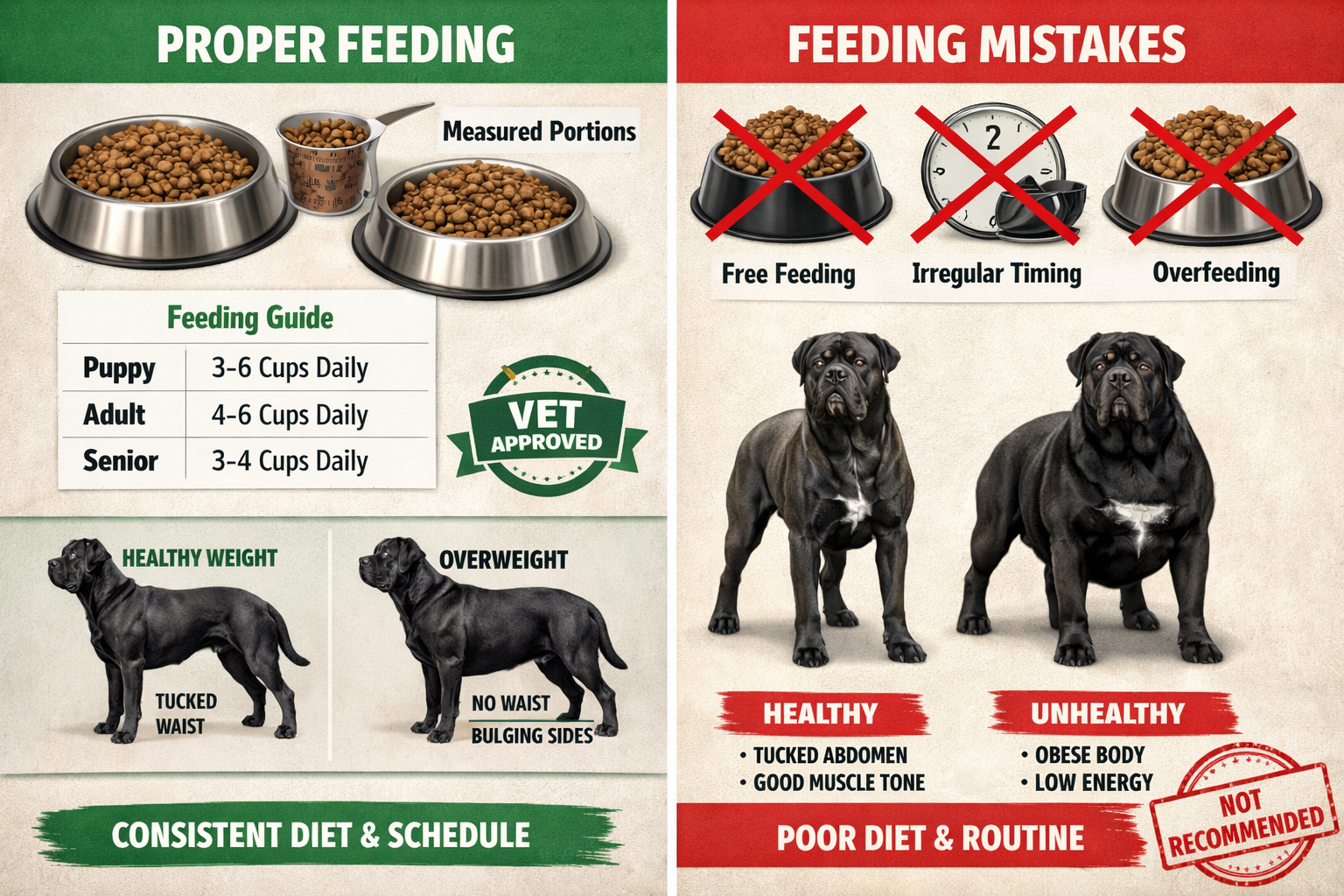
Free feeding (leaving food out all day) is particularly dangerous for Cane Corsos. It makes portion control impossible, increases bloat risk, and can lead to food guarding behaviors in multi-pet households.
Mistake #2: Inconsistent Timing
Feeding at different times each day disrupts your Cane Corso’s digestive rhythm and can create anxiety around meal times. Consistency builds security and supports healthy digestion.
Mistake #3: Ignoring Body Condition
Weight management requires ongoing attention. Monthly body condition assessments help catch weight changes early, allowing for schedule or portion adjustments before problems develop.
Mistake #4: Using Food as Primary Training Reward
While treats are valuable training tools, using regular meals as training rewards can disrupt feeding schedules and nutritional balance. Keep training treats separate from scheduled meals.
Advanced Feeding Strategies for Optimal Health
Incorporating Mental Stimulation
Puzzle feeders and slow-feed bowls transform mealtime into enrichment activities. These tools are especially valuable for intelligent Cane Corsos who benefit from mental challenges throughout their day.
Mental Stimulation Ideas:
- Rotating different puzzle feeder styles
- Hide-and-seek feeding games in the yard
- Frozen Kong toys with portions of their daily food
- Training sessions that incorporate mealtime
Monitoring and Adjusting Portions
Portion control is an ongoing process that requires attention to your Cane Corso’s changing needs. Factors that influence portion requirements include:
- Activity level changes (more exercise = more food needed)
- Seasonal temperature variations
- Health status and medication effects
- Age-related metabolism changes
- Stress levels and environmental changes
Building Food Security
Food security means your Cane Corso feels confident that meals will come reliably. This psychological comfort reduces food anxiety, prevents resource guarding, and supports overall emotional well-being.
Building Food Security:
- Maintain consistent feeding times even on weekends and holidays
- Use calm, predictable feeding routines
- Teach patience through “wait” commands before meals
- Avoid making dramatic changes to feeding locations or bowls
Troubleshooting Common Feeding Challenges
The Picky Eater Problem
Some Cane Corsos develop finicky eating habits, especially if they’ve been inadvertently rewarded for refusing meals. Addressing picky eating requires patience and consistency.
Solutions for Picky Eaters:
- Stick to scheduled meal times regardless of eating behavior
- Remove uneaten food after 20 minutes without drama
- Avoid offering alternatives or treats between meals
- Ensure the food is fresh and properly stored
Managing Multiple Dogs
Multi-dog households require special feeding considerations to prevent competition and ensure each dog receives proper nutrition.
Multi-Dog Feeding Strategies:
- Feed dogs in separate areas to reduce competition
- Supervise all meals to prevent food stealing
- Maintain individual schedules based on each dog’s age and needs
- Use barriers or crates if necessary during meal times
Travel and Schedule Disruptions
Travel and schedule changes are inevitable, but they don’t have to derail your Cane Corso’s feeding routine with proper planning.
Travel Feeding Tips:
- Maintain feeding times as closely as possible to home schedule
- Bring familiar food and bowls to reduce stress
- Plan feeding stops during long car trips
- Research pet-friendly accommodations with feeding facilities
The Long-Term Benefits of Proper Feeding Schedules
Implementing the right feeding schedule for your Cane Corso creates benefits that extend far beyond basic nutrition. Consistent, appropriate feeding supports:
Physical Health Advantages
- Optimal growth during developmental stages
- Reduced risk of bloat and other digestive issues
- Better weight management throughout life
- Improved nutrient absorption and utilization
- Stronger immune system function
Behavioral and Emotional Benefits
- Increased food security and reduced anxiety
- Better training responsiveness around meal times
- Reduced resource guarding tendencies
- Improved household routine and structure
- Enhanced human-dog bond through consistent care
Quality of Life Improvements
- More predictable daily routine for both dog and family
- Reduced veterinary costs from preventable health issues
- Greater longevity and healthier aging
- Improved energy levels and activity tolerance
- Enhanced overall happiness and life satisfaction
Conclusion
The 4 feeding schedules that work best for Cane Corso dogs provide a roadmap for supporting your magnificent companion throughout every stage of their life. From the frequent, small meals needed by growing puppies to the carefully timed adult schedule that prevents bloat, each phase requires thoughtful attention to timing, portions, and individual needs.
Remember that these feeding schedules are guidelines that should be adapted to your specific Cane Corso’s needs, activity level, and health status. Regular veterinary consultations, careful monitoring of body condition, and attention to your dog’s individual responses will help you fine-tune the perfect feeding approach.
Your next steps:
- Assess your current feeding schedule against the age-appropriate recommendations
- Gradually transition to the optimal schedule for your Cane Corso’s life stage
- Monitor your dog’s response and adjust portions as needed
- Schedule a veterinary consultation to discuss your feeding plan
- Stay consistent with timing while remaining flexible with individual needs
The investment in proper feeding schedules pays dividends in your Cane Corso’s health, happiness, and the special bond you share. These gentle giants deserve nothing less than the tail-wagging joy that comes from feeling secure, well-nourished, and deeply loved by their human family.
References
[1] American Kennel Club. (2026). Cane Corso Breed Standard and Characteristics. Retrieved from AKC Official Breed Information.
[2] Veterinary Emergency and Critical Care Society. (2025). Gastric Dilatation-Volvulus in Large Breed Dogs: Prevention and Management. Journal of Veterinary Emergency Medicine.
[3] Association of American Feed Control Officials. (2026). Nutritional Guidelines for Large Breed Dogs. AAFCO Official Publications.