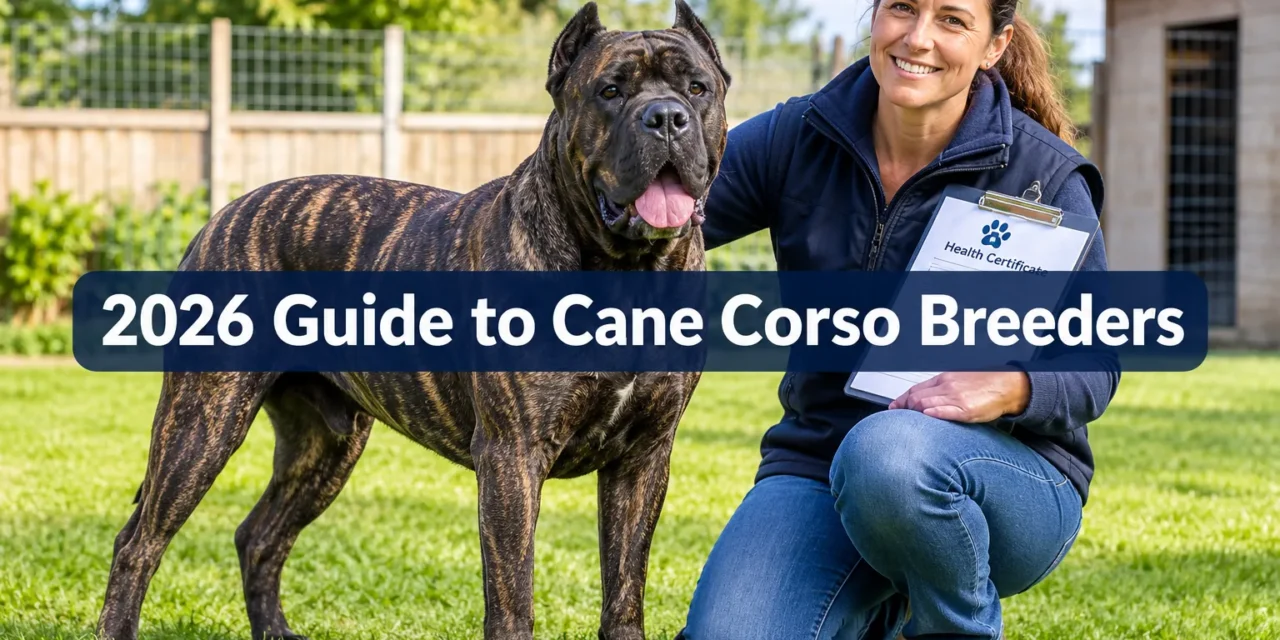
Here’s a number that should stop you in your tracks: a Cane Corso puppy with zero health testing behind it can cost just as much as one from a fully health-screened, ethical breeder. Price alone tells you nothing. That’s exactly why this 2026 Guide to Cane Corso Breeders: Red Flags, Health Tests, and How to Find an Ethical Mastiff Puppy exists, to help you tell the paw-some breeders apart from the risky ones before you fall in love with a face on a screen.

This breed is a big deal. Cane Corsos are gentle giants with serious guardian instincts, and they deserve a start in life that sets them up for health and happiness. Let’s dig in.
Key Takeaways
- Health testing is non-negotiable. Hips, elbows, heart, patellas, plus DNA tests for NCL-1 and DSRA should all be documented with dates and registry IDs.[1][2]
- “Health tested” isn’t enough. Demand specific test names, dates, and registry numbers you can verify independently.[1]
- Ethical breeders put welfare first. Groups like the British Cane Corso Society require honesty about health, pedigree, and temperament, no exceptions.[3]
- Red flags cluster together. No contract, no health papers, multiple litters available, and pressure to pay fast are all warning signs.
- A fair price reflects real costs. Health testing, vet care, and proper raising environments aren’t cheap, and that’s a good thing.[4]
Why This 2026 Guide to Cane Corso Breeders Matters More Than Ever
Demand for Cane Corsos keeps climbing, and where there’s demand, there’s opportunity for breeders who cut corners. Backyard breeders and puppy mills know this breed is trending, and they’re happy to slap a high price tag on an unscreened litter.
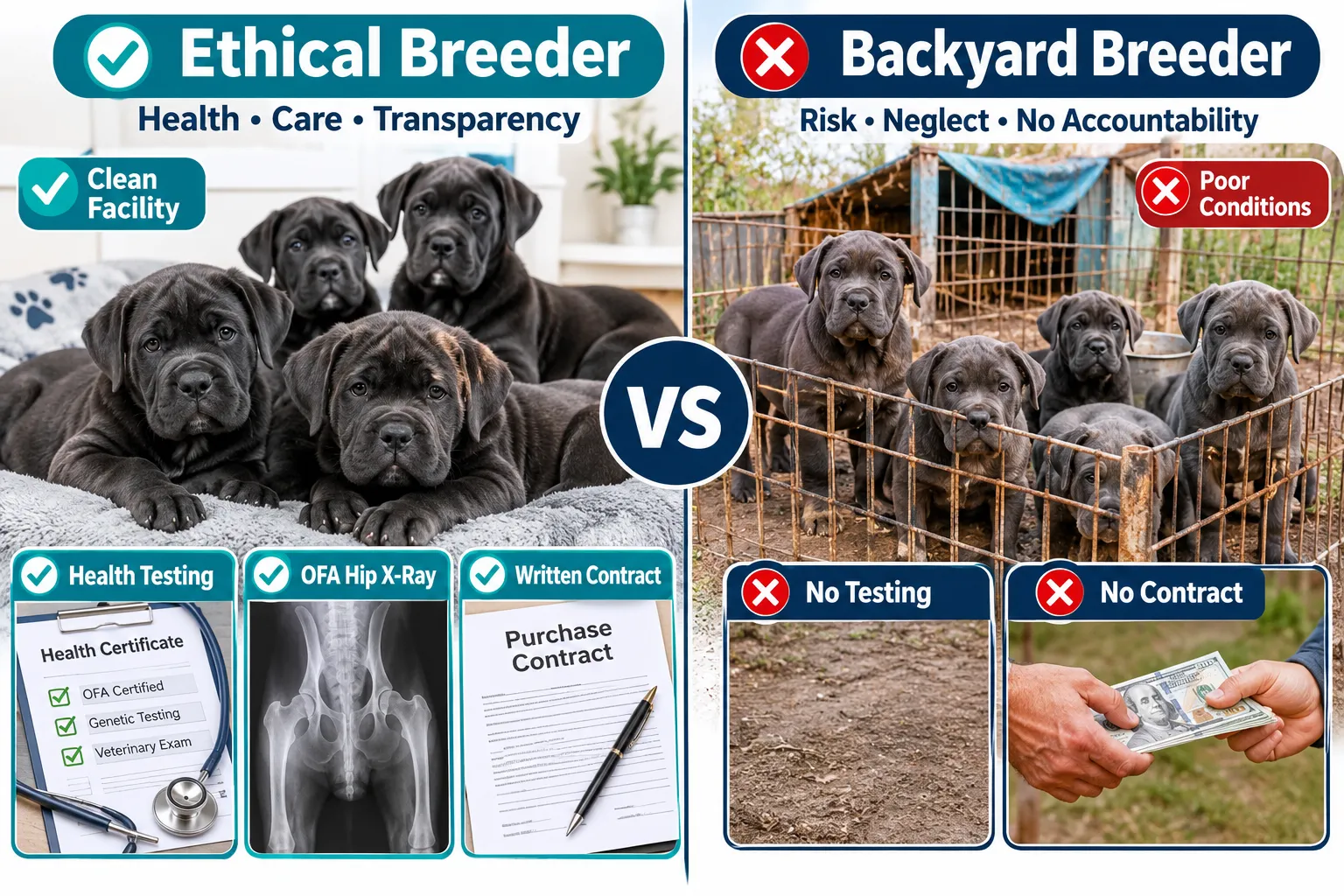
A responsible breeder isn’t just someone with a cute Instagram page. They’re part of a bigger system of accountability. The British Cane Corso Society’s ethics policy puts it plainly: a breeder’s financial or personal interests should never come before the dog’s welfare, and misrepresenting health, pedigree, or temperament is strictly forbidden.[3] That’s the bar. Anything less isn’t good enough for your future furry family member.
If you’re also trying to confirm a dog’s lineage or breed authenticity, this guide on spotting a purebred Cane Corso is a handy companion read.
The Health Tests Every Ethical Breeder Must Have
This is the heart of this 2026 Guide to Cane Corso Breeders: Red Flags, Health Tests, and How to Find an Ethical Mastiff Puppy, because health testing is where good intentions become proof.
The Cane Corso Association of America and the Canine Health Information Center require a full health panel before any breeding takes place:[1]
- Hip dysplasia evaluation, OFA or PennHIP
- Elbow dysplasia evaluation, OFA
- Annual cardiac evaluation
- Patellar luxation evaluation
- DNA testing for NCL-1 (neuronal ceroid lipofuscinosis)
- DNA testing for DSRA (dental-skeletal-retinal anomaly)
A responsible breeding pair in the U.S. should also carry recent negative brucellosis tests, with bitches tested before each breeding and studs every 6-12 months.[2]
Timing matters, too. Official OFA hip ratings only start at 24 months, while PennHIP can be done as early as 16 weeks.[2] If a breeder claims full hip clearance on a 1-year-old dog without PennHIP, something doesn’t add up.
Here’s the kicker: for some orthopedic issues in this breed, there’s no DNA test at all. X-ray-based screening is the only reliable method.[5] That means paperwork and films matter, not just a breeder’s word.
Why Vague “Health Tested” Claims Aren’t Good Enough
“Health tested” is one of the most overused phrases in the puppy world, and it’s practically meaningless on its own.[1] Ask for:
- The exact test name
- The date it was performed
- The registry (OFA, PennHIP, etc.)
- The registered name or ID of the parent dog
Then go look it up yourself in the OFA public database.[1][6] A good breeder won’t flinch at this request, they’ll be proud to show you.
“Independent registry results tied to the dog’s permanent ID carry the greatest weight.”, a standard every buyer should insist on.[1]
What Ethical Cane Corso Breeders Actually Look Like
Beyond the lab work, ethical breeders share a mindset. The British Cane Corso Society’s buyer guidance describes reputable breeders as people who:[4]
- Perform hip, elbow, and at minimum DSRA testing
- Understand their lines and temperament deeply
- Choose breeding dogs carefully, not just convenient ones
- Prioritize welfare over profit, every single time
They also go further than the testing itself. Look for breeders who:[4]
- Offer lifelong support, they want updates for years, not just a sale
- Use contracts with return clauses, so the dog never ends up in a shelter
- Raise puppies in clean, socialized environments, not isolated crates
- Charge transparent fees that reflect real costs: testing, vet visits, quality food, and care
If a price feels too good to be true, it probably reflects corners cut somewhere. For a full breakdown of contracts, litter evaluation, and first vet records, the puppy buying checklist for evaluating litters and breeder contracts is essential reading before you sign anything.
Red Flags: Signs of a Backyard Breeder or Puppy Mill
Let’s talk about the warning signs nobody should ignore. These red flags show up again and again with irresponsible breeders:
- 🚩 No health testing documentation, or vague claims with no dates
- 🚩 Multiple breeds or multiple litters available at once
- 🚩 No written contract or a contract with no return policy
- 🚩 Pressure tactics, “pay now or lose your spot”
- 🚩 Won’t let you visit the puppy or meet the parents in person
- 🚩 Dirty, cramped conditions for puppies and adult dogs
- 🚩 Shipping puppies without ever meeting the buyer
- 🚩 No questions asked about your home, yard, or experience with large breeds
A reputable breeder should actually interview you. If they don’t care who’s taking their puppy home, that’s a glaring red flag.
The American Kennel Club echoes this: responsible breeders are deeply invested in where their puppies end up, not just the sale itself.[7][8] Puppy scams have also grown more sophisticated, so always meet in person and verify everything before sending money.[9]
Price Realities: What You’re Actually Paying For
A fair price for a Cane Corso puppy from an ethical breeder isn’t arbitrary. It covers:
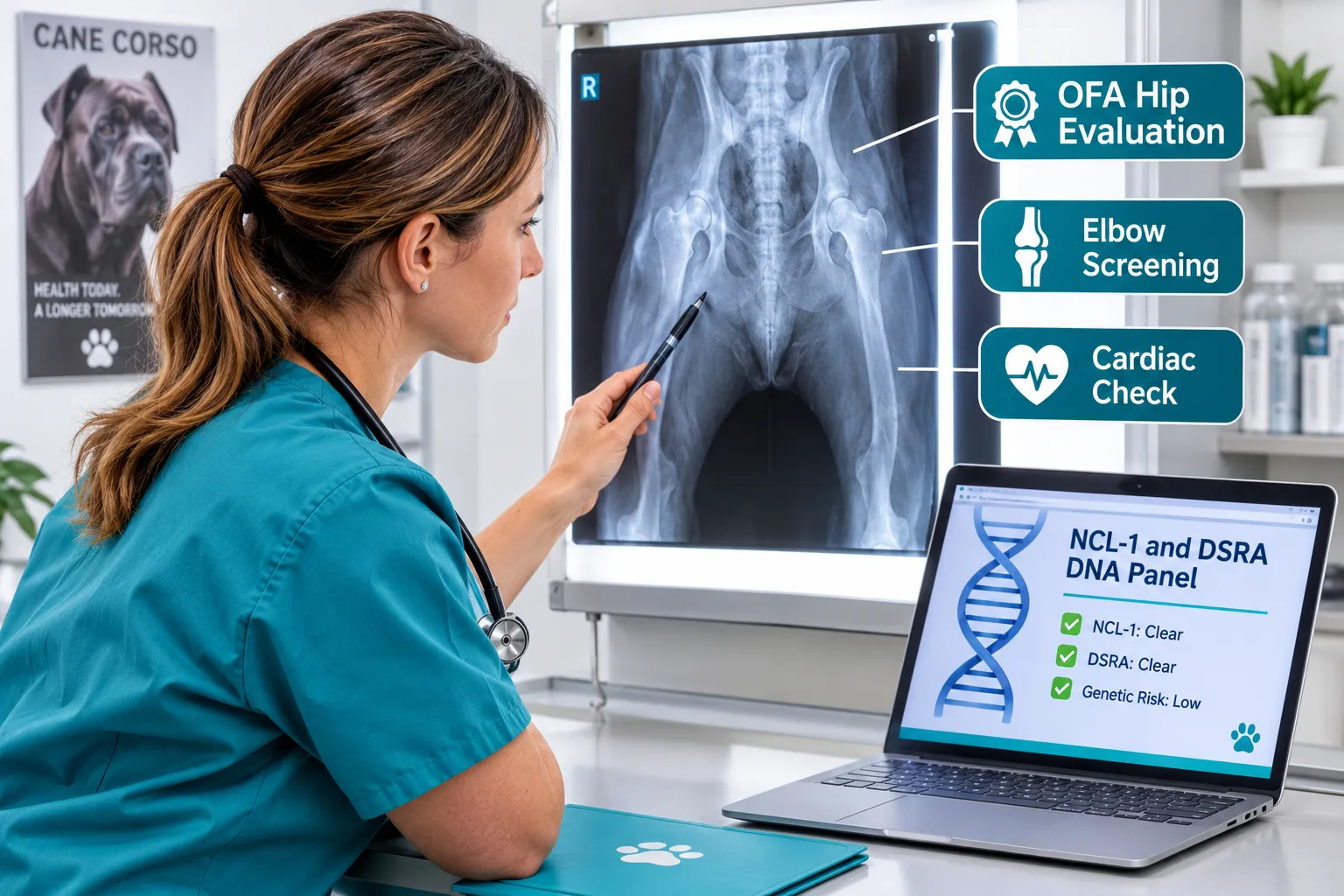
- Hip, elbow, cardiac, and patella screenings
- DNA testing for NCL-1 and DSRA
- Brucellosis testing for both parents
- Prenatal and whelping vet care
- Proper nutrition for the mother and litter
- Early socialization and enrichment
- Ongoing breeder support after you take the puppy home
If a breeder's price is dramatically lower than others in your area, ask yourself which of these costs they skipped. It's rarely a bargain, it's usually a shortcut.
Compare that to a backyard breeder who skips testing, raises puppies outside with minimal vet care, and still charges top dollar. You’re not paying less for the dog, you’re paying the same or more for far less oversight.
How to Vet a Breeder Step by Step
Here’s your practical checklist for this 2026 Guide to Cane Corso Breeders: Red Flags, Health Tests, and How to Find an Ethical Mastiff Puppy:
- Ask for registry IDs on both parents and verify them yourself on OFA.[6]
- Request the contract early, before you commit, read every clause.
- Visit in person and meet both parent dogs if possible.
- Ask about temperament, Cane Corsos need calm, confident breeding lines.
- Check for a return clause, a true safety net for the dog’s whole life.
- Talk to past puppy buyers if the breeder can connect you.
- Confirm ongoing support, will they answer questions in year five, not just week one?
Once your puppy arrives home, proper socialization matters just as much as where they came from. These proven techniques to socialize a Cane Corso properly and fun games Cane Corsos love are great next steps. It also helps to understand what’s ahead, this breakdown of the life stages every Cane Corso goes through sets realistic expectations for the years to come.
Quick Comparison: Ethical Breeder vs. Backyard Breeder
| Factor | Ethical Breeder | Backyard Breeder |
|---|---|---|
| Health Testing | Hips, elbows, heart, patella, NCL-1, DSRA documented | None or vague claims |
| Contract | Written, includes return clause | None or verbal only |
| Visits | Encouraged, in-person meetings | Discouraged or impossible |
| Support | Lifelong guidance for owners | None after sale |
Wrapping It Up: Choose the Breeder, Not Just the Puppy
Finding an ethical Cane Corso breeder takes patience, but it’s worth every bit of effort. This 2026 Guide to Cane Corso Breeders: Red Flags, Health Tests, and How to Find an Ethical Mastiff Puppy boils down to one simple rule: verify everything, trust nothing on faith alone.
Next steps:
- Make a list of local breeders and request OFA/PennHIP documentation
- Cross-check every result in public registries
- Read contracts carefully before paying any deposit
- Visit in person and trust your gut about the environment
Your future Cane Corso deserves the healthiest, happiest start possible, and now you know exactly how to find it.
References
- Cane Corso Breeding Overview. petful.com.
- How to Find a Mate or Stud for Your Cane Corso. petzlover.com.
- Ethics Policy. britishcanecorsosociety.co.uk.
- Buying a Cane Corso. britishcanecorsosociety.co.uk.
- Health Testing Guide. gooddog.com.
- Cane Corso Puppies. petful.com.
- Responsible Breeders. akc.org.
- Signs of a Responsible Breeder. akc.org.
- Spot Puppy Scam. akc.org.
cane corso breeders, ethical dog breeders, mastiff puppy, cane corso health testing, hip dysplasia screening, OFA testing, puppy buying guide, backyard breeder red flags, cane corso puppy price, responsible breeding standards, DSRA DNA test, dog breed guide