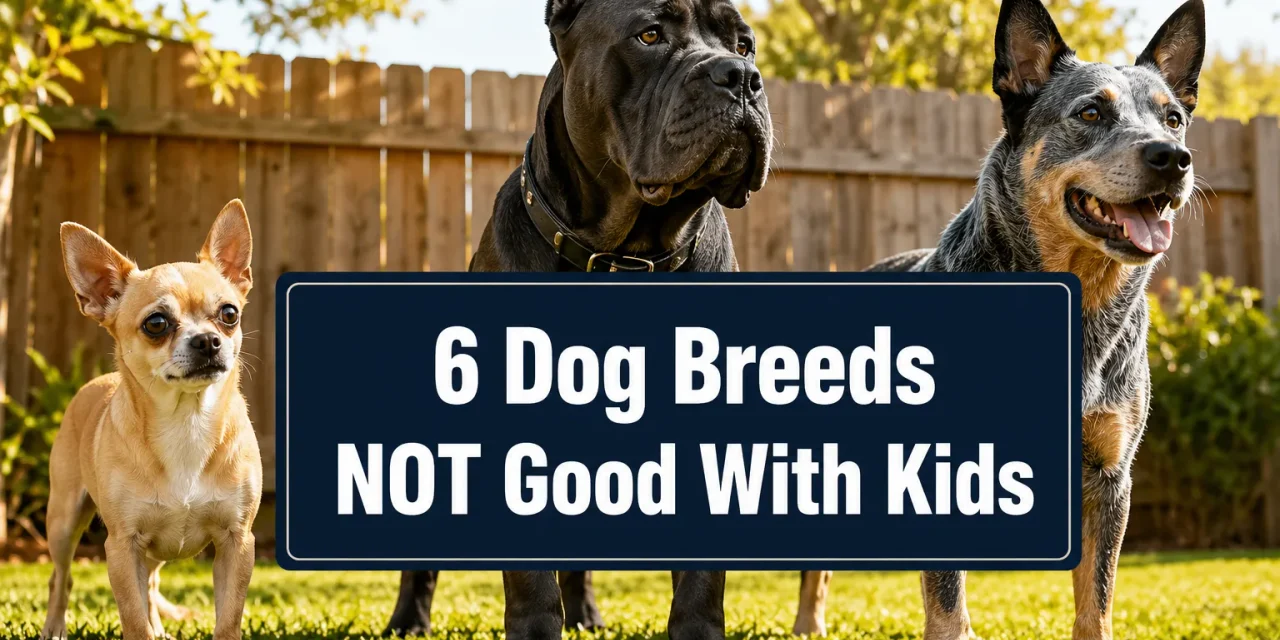
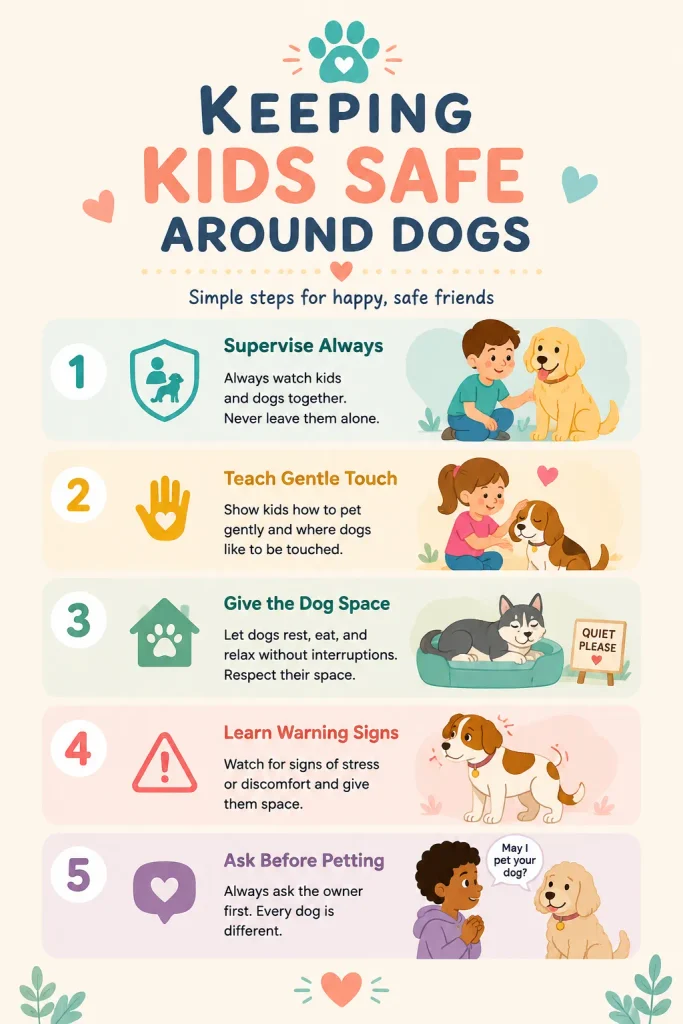
Every year, thousands of children end up in the emergency room because of dog bites. Most of these bites don’t come from strange dogs on the street, they come from the family pet, right at home [8]. That single fact should change how every parent picks a puppy. This guide breaks down 6 Dog Breeds NOT Good With Kids so families can make smarter, safer choices before they fall in love with a cute face at the shelter.
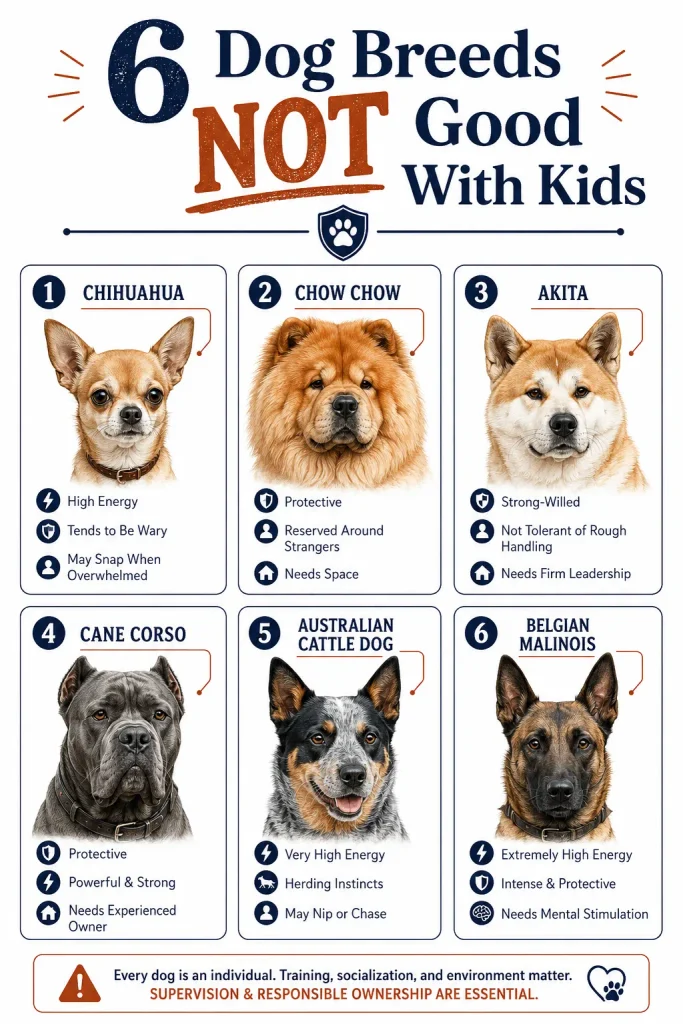
To be clear, no breed is “bad” by nature. But certain traits, like being extra small, extra strong, extra independent, or bred to herd and guard, can create real risks around young children. Below, we cover the 6 Dog Breeds NOT Good With Kids that experts and animal behaviorists flag most often, plus why they can be tricky in homes with little ones.
Save to Pinterest
Key Takeaways
🐾 Kids ages 1-5 face the highest risk of dog bites, and most bites happen inside the home [8].
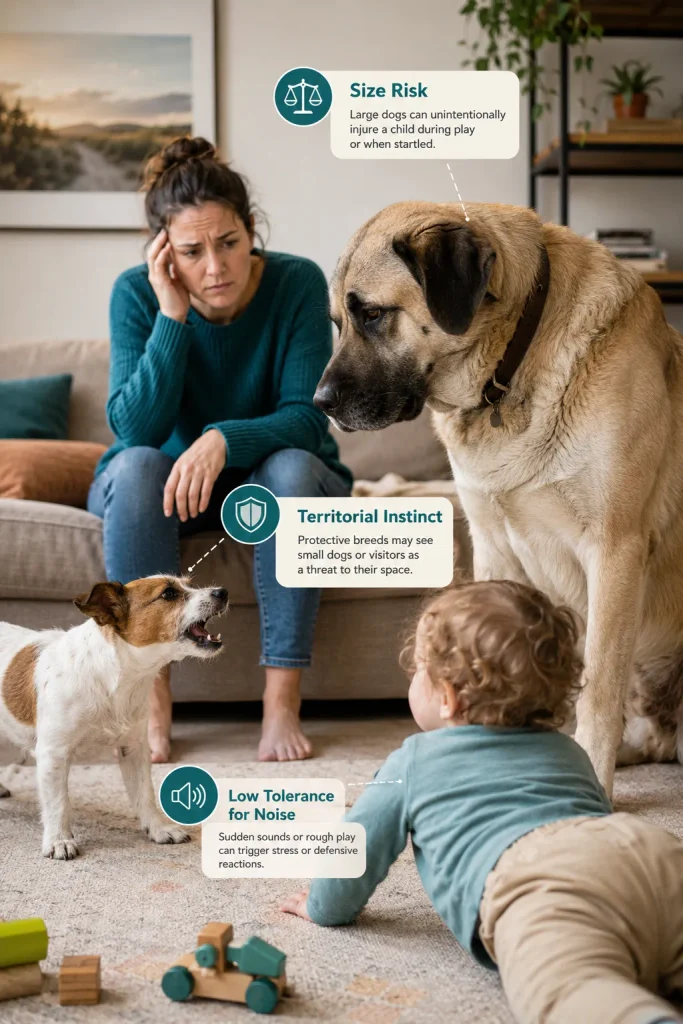
🐾 Small breeds like Chihuahuas can snap from fear, while giant breeds can injure kids just by playing rough [1][7].
🐾 High-energy herding breeds like Australian Cattle Dogs may nip at running, screaming children out of instinct [3][9].
🐾 Guardian breeds such as Akitas and Cane Corsos need experienced owners, not first-time dog parents with toddlers [4][6].
🐾 Supervision, training, and matching a dog’s needs to your family’s lifestyle matter more than any single breed label [1][9].
“The safest home isn’t the one with the ‘friendliest’ breed, it’s the one where the dog and the kids are never left guessing about each other.” 🐶
Save to Pinterest
1. Chihuahua
Chihuahuas are tiny, but they often act like they don’t know it. This breed is famous for being bold, feisty, and quick to react when startled [1][2]. That combination is risky around small kids who love to hug, chase, and grab.
Why they struggle with kids:
Chihuahuas weigh just a few pounds, so a toddler’s rough hug or accidental drop can seriously hurt them [1].
Because they’re fragile, many Chihuahuas learn to snap or bite first to protect themselves [2][3].
They can be possessive of their favorite person and growl at kids who get too close [7].
Better fit: Homes with older, gentle kids who understand how to handle small, delicate pets calmly.
2. Chow Chow
Chow Chows look like teddy bears, but their personality is anything but cuddly-simple. This ancient breed was developed as an independent guard dog, and that independent streak shows up at home [1][4].
Why they struggle with kids:
Chow Chows are naturally aloof and don’t crave constant attention the way kids expect from a pet [1].
They can be territorial over their space, food, and toys, a problem when a curious child wanders too close [4].
Their thick coat makes them prone to overheating, which can make them extra irritable during rough summer playtime [6].
Better fit: Calm households where the dog can have quiet, respected personal space.
3. Akita and Cane Corso
These two breeds are grouped together because they share the same core issue: size and power that demand serious handling skills. Both are large guardian breeds originally built to protect property and, in the case of the Cane Corso, even take down big game [4][6].
Why they struggle with kids:
Akitas are famously loyal but can be suspicious of strangers, including a child’s friends visiting the house [4].
Cane Corsos can weigh over 100 pounds and were bred to be intimidating guardians, not gentle playmates [6].
Both breeds need firm, experienced training. Without it, their natural guarding instincts can turn into unpredictable reactions around unfamiliar kids [9].
Better fit: Experienced dog owners with older children and a strong training routine already in place.
4. Herding Breeds: Australian Cattle Dog, Australian Shepherd, and Belgian Malinois
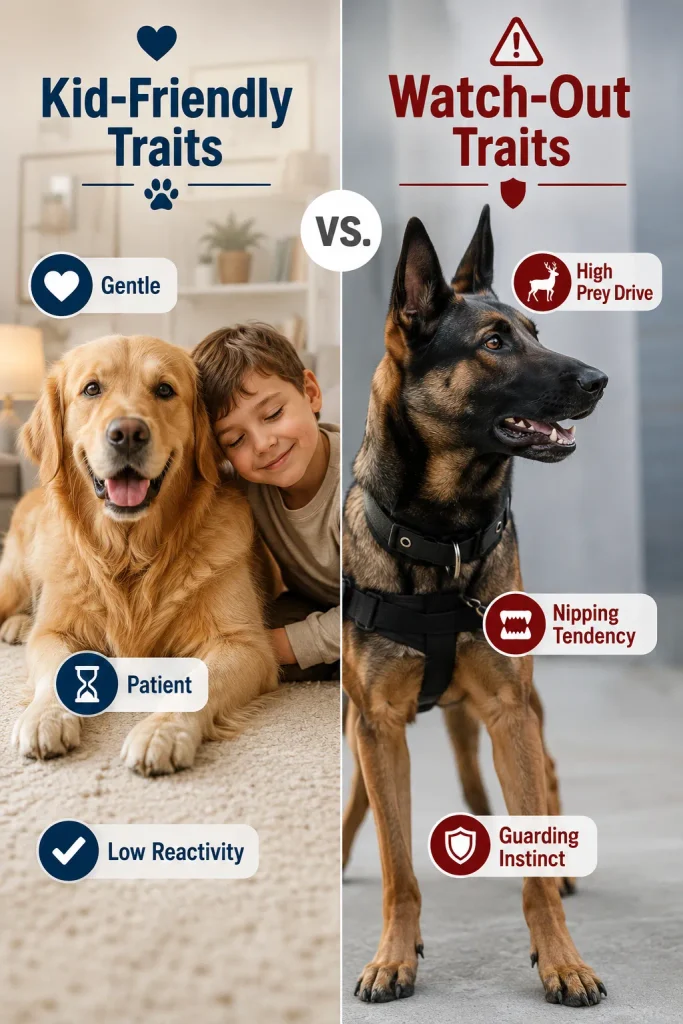
Herding dogs are smart, athletic, and full of energy, which sounds great until you realize what they’re bred to do: control the movement of other animals [3][9]. To a herding dog, a screaming, running child can look a lot like a stray sheep that needs to be corralled.
Why they struggle with kids:
These breeds often nip at heels to herd, and kids running around the yard can trigger that exact instinct [3].
Their high energy and need for constant mental stimulation can make them overwhelming for young children to manage [9].
Belgian Malinois in particular are working dogs often used in police and military roles, a sign of just how much drive and intensity they carry [7].
Breed
Instinct Risk
Energy Level
Best Home Type
Australian Cattle Dog
Nipping/herding
Very High
Active families, older kids
Australian Shepherd
Herding/chasing
Very High
Farms, active homes
Belgian Malinois
Intense drive
Extreme
Experienced handlers
Better fit: Active families with plenty of space, structured exercise, and older kids who won’t trigger herding chases.
5. Pit Bull-Type Dogs
This one is controversial, and it’s important to be fair: many pit bull-type dogs are loving family pets. But recent hospital studies keep showing something hard to ignore, pit bull-type breeds are disproportionately linked to the most severe pediatric bite injuries treated in emergency rooms [7][8].
Why they struggle with kids:
Studies on dog bite injuries in children show pit bull-type dogs are associated with more severe wounds requiring surgery compared to many other breeds [8].
Their powerful jaw strength means that even a “minor” bite can cause serious damage to a small child [7].
Individual temperament varies a lot, but the statistical pattern is consistent enough that pediatric and trauma researchers keep flagging it [8].
Better fit: Homes without very young children, paired with rigorous training, socialization, and constant supervision.
“A breed’s reputation matters less than its individual history, but the data on severity of injury is hard to ignore for families with toddlers.” 📊
6. Large, Boisterous Breeds: Rottweiler, German Shepherd, Great Dane, St. Bernard, and Dalmatian
This last group covers two overlapping problems: dogs that bite more often and severely (Rottweilers and German Shepherds), and dogs that hurt kids by accident just through sheer size (Great Danes, St. Bernards, Dalmatians, and Greyhounds) [4][7][9].
Rottweilers and German Shepherds:
Both breeds are frequently used as family and guard dogs, but studies show they’re involved in more frequent and more severe child bite incidents than many other breeds [8].
Their protective instincts, without proper training, can misfire around a child’s friends or unfamiliar visitors [4].
Great Danes, St. Bernards, Dalmatians, and Greyhounds:
These breeds don’t need to be aggressive to hurt a small child, a 150-pound Great Dane simply leaning on or knocking over a toddler can cause an injury [7].
Dalmatians, in particular, have a reputation for being high-strung and less tolerant of chaotic toddler energy [1][6].
Greyhounds are fast and can startle easily, sometimes reacting to sudden noise or movement in ways that surprise kids [7].
Better fit: Homes with older children who move calmly, plus enough space for these big dogs to live comfortably.
Save to Pinterest
Small Breeds Deserve a Second Look Too
It’s easy to assume “small dog” means “safe dog,” but that’s not always true. Shih Tzus, Pekingese, and Maltese dogs show up in bite statistics involving toddlers more often than people expect [2][3]. These breeds can be sensitive to loud noises, sudden grabs, and rough handling, the exact behaviors common in kids under five [8]. The lesson: size alone should never be the only factor in a family’s decision.
What Experts Recommend Instead of a Simple Ban
There’s no single official “do not adopt” list that every veterinarian or trainer agrees on [1][9]. Instead, most experts push families toward a smarter approach:
Match the dog to the family’s real lifestyle, not just looks or breed popularity [9].
Supervise every interaction between dogs and kids under six, since this age group faces the highest bite risk [8].
Teach kids dog manners, no grabbing ears, tails, or food bowls, and no surprise hugs from behind [1].
Choose trainers and breeders carefully if picking a breed known for guarding or herding instincts [4][6].
Watch body language, not just breed reputation, a stressed dog of any breed can react poorly [3].
Save to Pinterest
Conclusion
Picking a family dog is a big decision, and breed really does matter, but it’s not the whole story. The 6 Dog Breeds NOT Good With Kids covered here (Chihuahuas, Chow Chows, Akitas and Cane Corsos, herding breeds like Australian Cattle Dogs, pit bull-type dogs, and large breeds like Rottweilers, German Shepherds, and Great Danes) all carry specific traits that can clash with a busy, unpredictable household full of small children.
Before bringing home a new dog, families should research the breed’s energy level, size, and natural instincts, then honestly compare that to their kids’ ages and behavior. Meeting the dog in person, asking breeders or shelters detailed questions, and even consulting a trainer beforehand can prevent heartbreak later. The goal isn’t fear, it’s preparation. A well-matched dog and a well-taught child can build one of the best friendships of a kid’s life. 🐕💛
dog breeds, dog breeds not good with kids, family dogs, dog bite prevention, choosing a family dog, safe dog breeds, dog safety for children, pet parenting, dog training tips, dog behavior, kid-friendly pets, pet adoption guide