(As an amazon affiliate, we earn a commission when purchasing via our links below)

About 72% of dogs show signs of anxiety at some point in their lives, according to a large study of over 13,000 dogs. That means most dog owners will face this challenge, and many feel helpless when their furry friend is trembling, hiding, or barking without stopping. Learning how to calm an anxious dog is one of the most important skills any dog lover can develop. The good news? There are simple, proven techniques that really work, and this guide covers all of them.
Key Takeaways
- 🐾 Dog anxiety is very common and has clear signs you can learn to spot
- 🧘 Gentle touch, calming routines, and safe spaces are powerful tools
- 🛍️ Several products (like anxiety wraps and calming supplements) can help
- 🏋️ Regular exercise and training reduce anxiety over time
- 🩺 Severe anxiety may need help from a vet or professional trainer
Understanding Dog Anxiety: Signs Your Dog Is Stressed
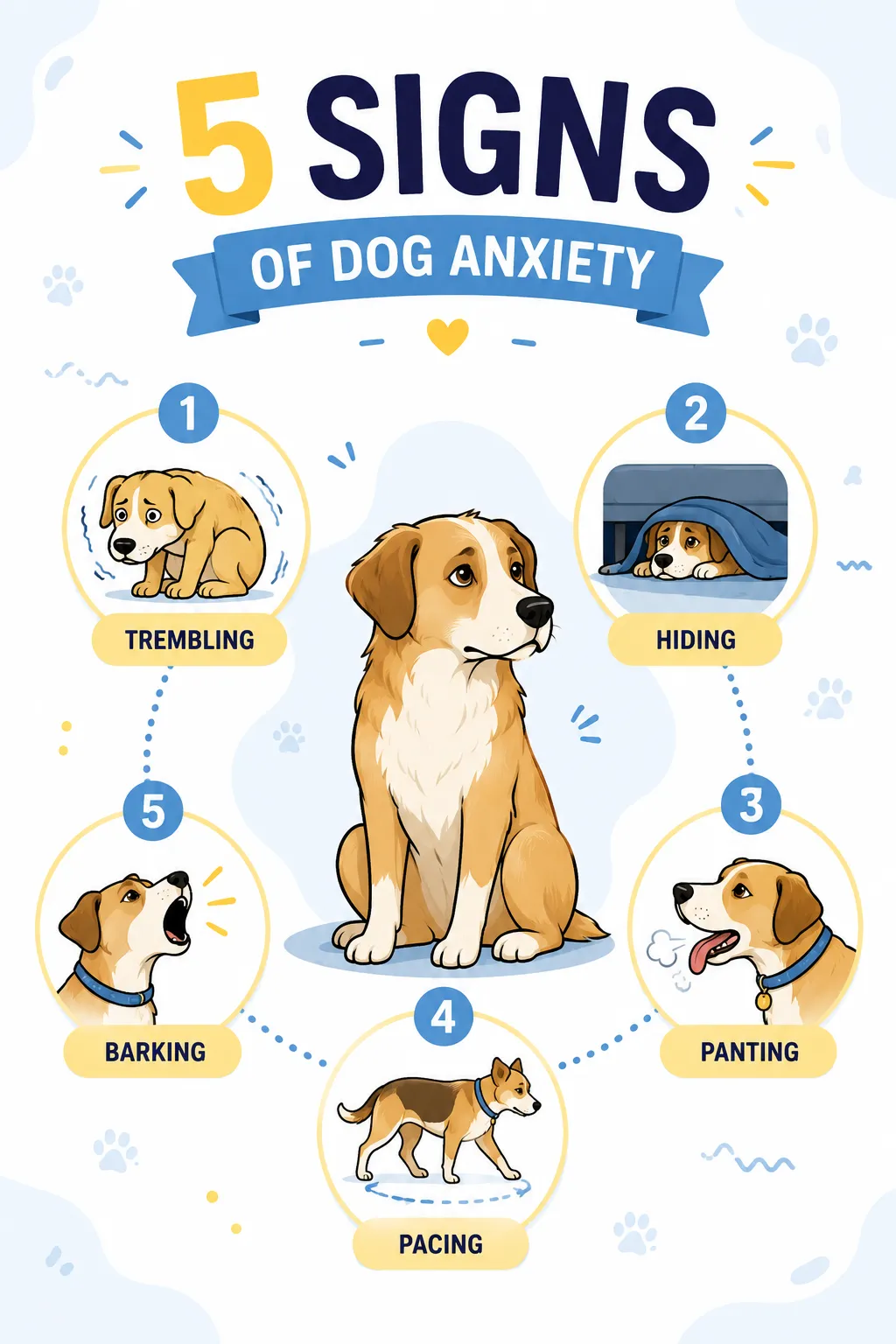
Before learning how to calm an anxious dog, it helps to know what anxiety looks like in dogs. Dogs cannot tell us they are scared. But their bodies do the talking.
Common Signs of Anxiety in Dogs
Here are the most common signs to watch for:
| Sign | What It Looks Like |
|---|---|
| Trembling | Shaking even when it’s not cold |
| Panting | Heavy breathing with no exercise |
| Pacing | Walking back and forth repeatedly |
| Hiding | Going under the bed or into corners |
| Barking/Whining | Loud, repeated sounds without a clear reason |
| Destructive behavior | Chewing furniture or scratching doors |
| Accidents indoors | Peeing or pooping inside despite being trained |
| Yawning or lip licking | Subtle stress signals many owners miss |
💡 Pull Quote: “A dog who suddenly hides or stops eating is often telling you something is wrong emotionally, not just physically.”
What Causes Dog Anxiety?
Dogs get anxious for many reasons. The most common causes include:
- Separation from their owner (called separation anxiety)
- Loud noises like thunderstorms or fireworks
- New environments or big changes at home
- Past trauma or abuse (common in rescue dogs)
- Aging, older dogs can develop anxiety as their senses change
- Lack of socialization as a puppy
Knowing the cause helps pick the best solution. A dog scared of thunder needs different help than a dog with separation anxiety.
How to Calm an Anxious Dog at Home: Gentle Techniques That Work
The fastest way to help a stressed dog is with calm, gentle actions. These techniques cost nothing and can be used right away.
1. Stay Calm Yourself
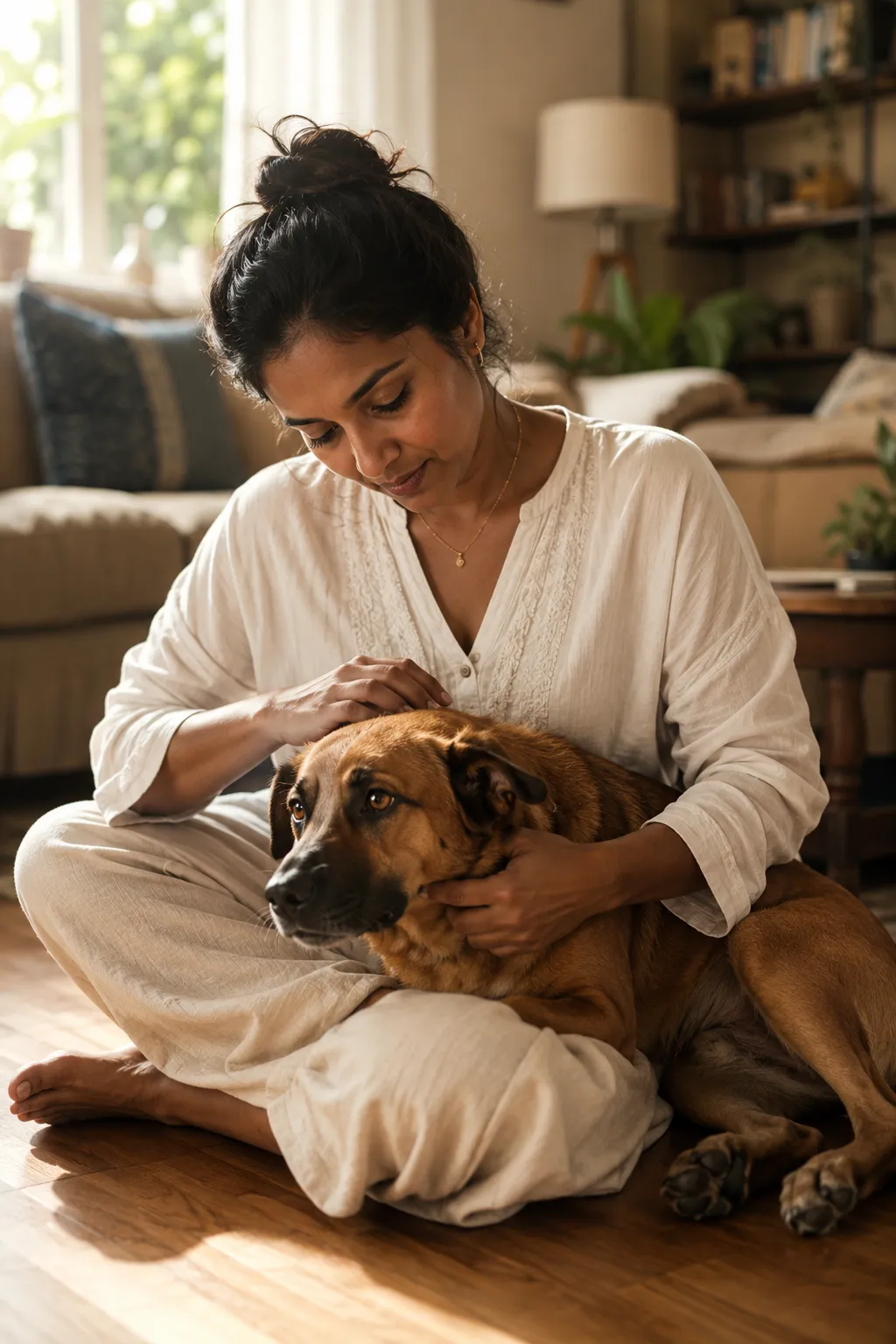
Dogs read human emotions very well. If an owner is nervous or upset, the dog feels it too. Taking slow, deep breaths and speaking in a soft, low voice helps signal to the dog that everything is okay.
Key tip: Avoid rushing toward a scared dog or speaking in a high-pitched, worried tone. It can make things worse.
2. Use Gentle Touch and Massage
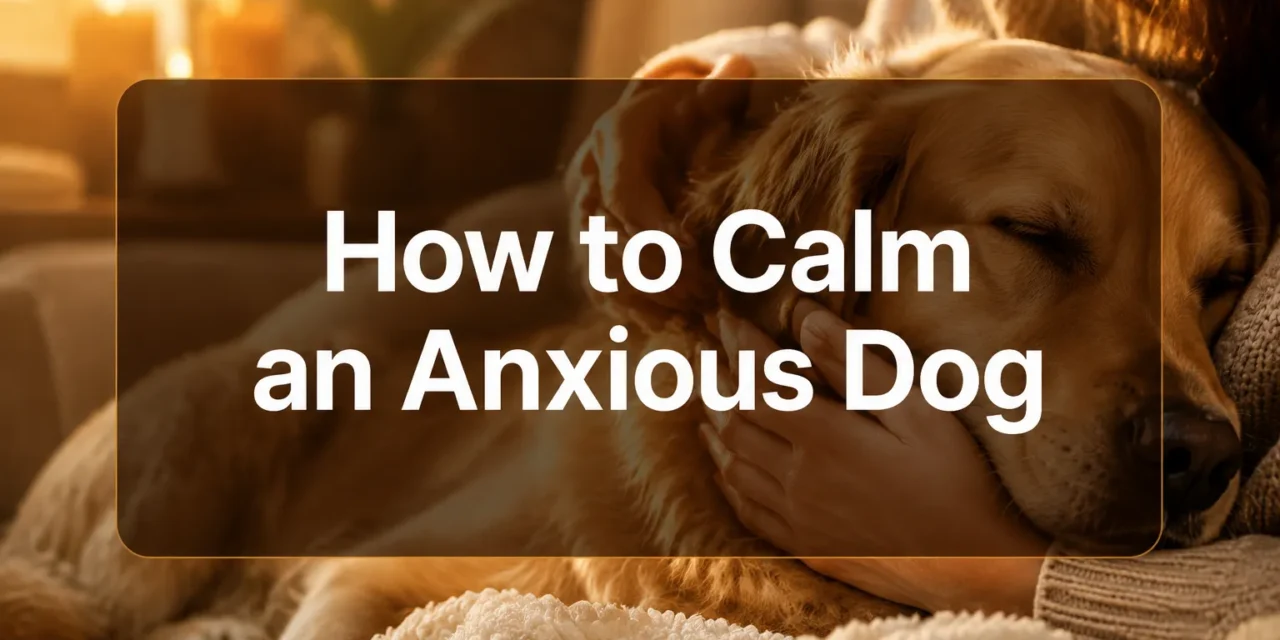
Slow, gentle strokes along a dog’s back, ears, or chest can lower stress hormones. Research shows that petting a dog can reduce cortisol (the stress hormone) in both the dog and the human! 🐕
Try this simple dog massage:
- Start at the top of the head
- Slowly stroke down to the neck and shoulders
- Use gentle circular motions on the back
- Finish with long, slow strokes from head to tail
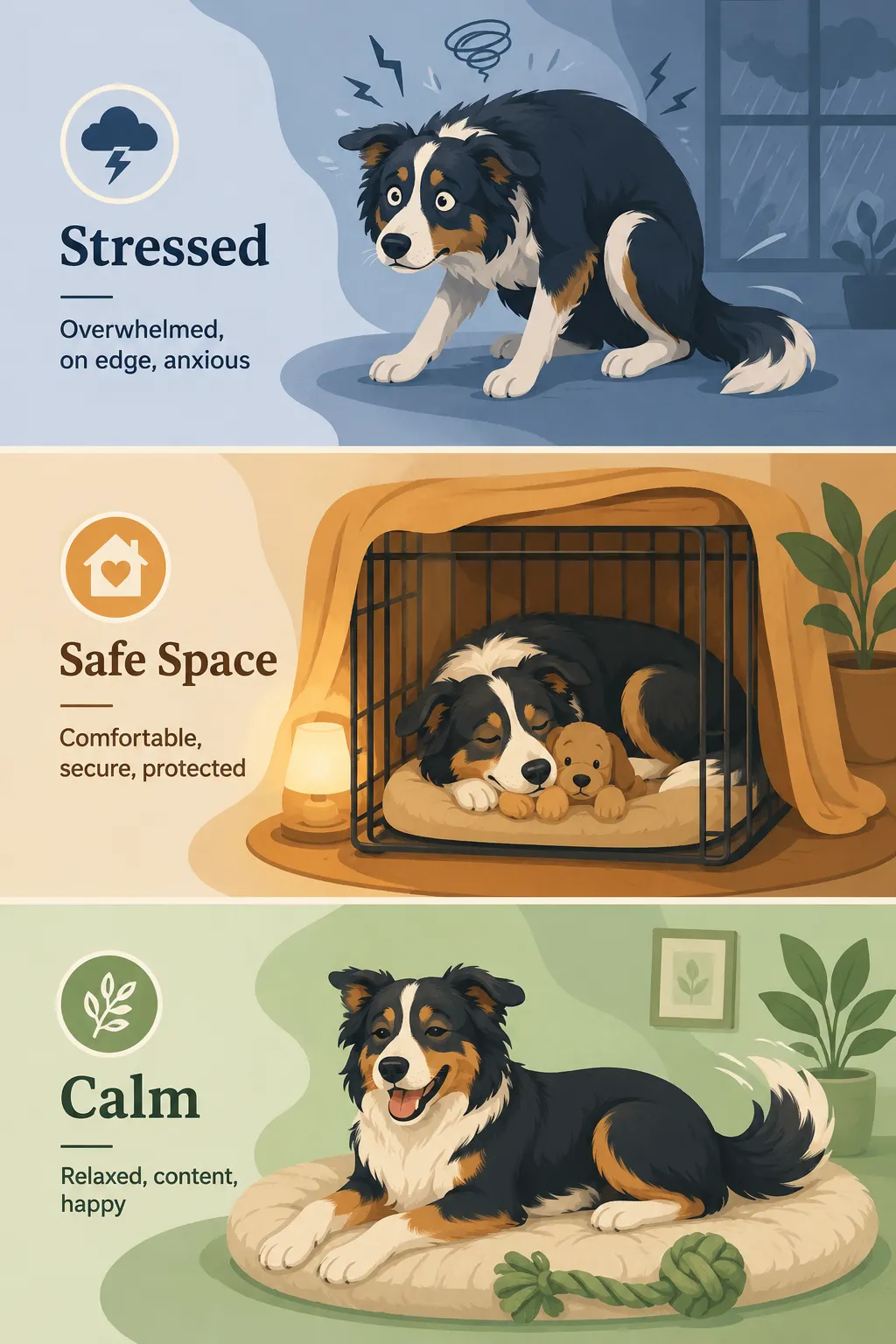
3. Create a Safe Space
Every anxious dog needs a “calm zone”, a quiet spot where they feel safe. This could be:
- A crate with a soft blanket and a worn t-shirt (the owner’s scent is comforting)
- A corner of a room with a cozy dog bed
- A closet with the door propped open (great for noise-phobic dogs)
🏠 Pro Tip: Never force a dog into their safe space. Let them go there on their own. The goal is for them to choose it when they feel scared.
4. Try the “T-Touch” Technique
Tellington TTouch is a gentle body-work method that many dog trainers use. It involves making small, circular movements with the fingertips on the dog’s skin. It can help calm the nervous system quickly.
How to do it:
- Use two or three fingers
- Make a full circle and a quarter on the skin (like drawing the number 6)
- Move slowly around the dog’s body
- Keep light pressure, about the weight of a coin
5. Distraction and Redirection
Sometimes the best tool is a fun distraction. Pulling out a favorite toy, starting a simple game, or giving a puzzle feeder can shift a dog’s focus away from the stressor.
🛒 Toy Recommendation: Look for interactive puzzle toys to redirect anxious energy. These keep dogs mentally busy


Calming Products That Help Anxious Dogs
There are many products designed to help dogs feel less stressed. Here are the most popular and effective ones.
Anxiety Wraps and Thunder Shirts
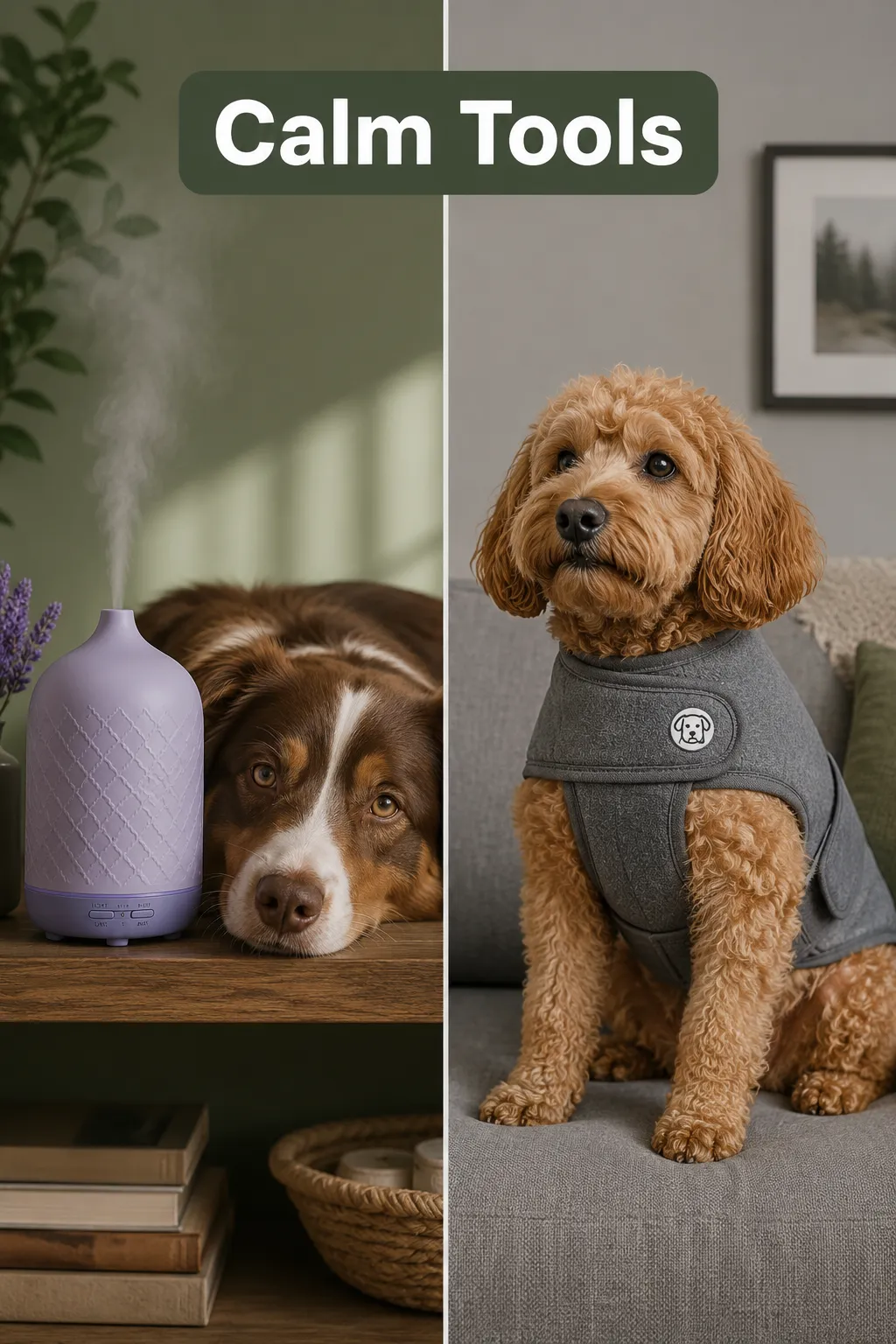
An anxiety wrap applies gentle, constant pressure to a dog’s body, similar to swaddling a baby. Many dogs calm down within minutes of putting one on.
How it works: The gentle pressure activates the nervous system in a calming way. Studies show it helps about 80% of dogs during thunderstorms and fireworks.

- #1 VET-RECOMMENDED DOG ANXIETY VEST – Help your dog feel calmer. Trusted by veterinarians, trainers and millions of pet …
- PATENTED DESIGN – CALMING PRESSURE TECHNOLOGY– This patented easy-to-apply dog calming vest provides constant, gentle pr…
- RESULTS DOG OWNERS TRUST – 89%* of pet parents reported improvement in their dog’s stress-related behaviors when using t…
Calming Supplements and Chews
Many vets recommend calming chews for mild to moderate anxiety. These usually contain:
- L-theanine, an amino acid that promotes relaxation
- Melatonin, helps with sleep and stress
- Chamomile, a natural calming herb
- Valerian root, known to reduce nervousness
⚠️ Important: Always check with a vet before giving any supplement. Dosage matters, and some ingredients can interact with medications.
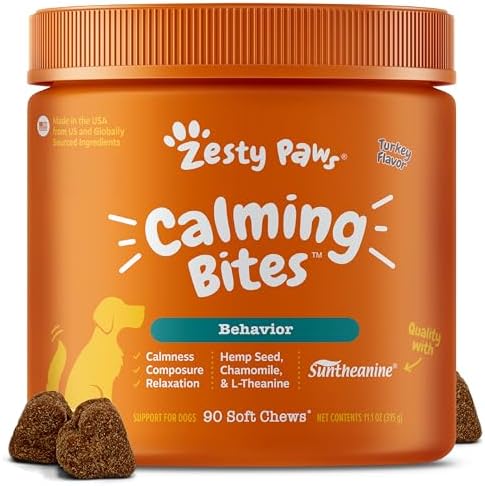
- CALMING SUPPORT: Our dog calming chews are crafted to help dogs manage everyday stress and hyperactivity, promoting a se…
- CLINICALLY STUDIED INGREDIENTS: The dog calming treats feature Suntheanine, a premium form of L-Theanine that helps prom…
- PROMOTES RELAXATION: Includes Ashwagandha to assist small to large dogs in handling external stresses, promoting a calm …
Calming Diffusers and Sprays
Dog Appeasing Pheromone (DAP) products mimic the natural pheromones a mother dog releases to calm her puppies. They come as:
- Plug-in diffusers (great for home use)
- Sprays (perfect for car rides or vet visits)
- Collars (provide all-day calming)

- 【Effectively Calming Dog Within Two Weeks】You don’t have to worry about your dog barking, seperation anxiety or other an…
- 【6 IN 1 Diffuser Kit- Veterinary Recommendation】The diffuser refill kit includes 2 diffuser head, 4 x 48ml refills, enou…
- 【Covers 700 Square Feet】The dog pheromones calming diffuser kit easily covers an area of up to 700 square feet and can b…
White Noise Machines and Calming Music
Sound therapy works surprisingly well for anxious dogs. Studies show that classical music and reggae reduce stress behaviors in shelter dogs. A white noise machine can also block out scary sounds like fireworks or traffic.



Calming Dog Beds
A donut-shaped or bolster dog bed gives dogs a sense of security by letting them curl up against raised edges. This mimics the feeling of being held or nestled safely.

- DONUT PET BED for pets up to 25lbs; CALMING COMFORT DESIGN round shape and 7in tall bolster provide sense of security (D…
- Filled and finished in the USA with premium high loft and high density polyfill for comfort and support (Dog Bed)
- Machine washable on gentle cycle and tumble dry low; follow label instructions for care (Dog Bed and Blanket)
Long-Term Strategies to Reduce Dog Anxiety
Calming a dog in the moment is great. But building long-term peace is even better. These strategies help reduce anxiety over weeks and months.
Regular Exercise Is a Game Changer 🏃
Exercise burns off nervous energy and releases endorphins, the brain’s natural feel-good chemicals. A tired dog is almost always a calmer dog.
Recommended daily exercise by size:
| Dog Size | Daily Exercise Goal |
|---|---|
| Small (under 20 lbs) | 30 minutes |
| Medium (20-50 lbs) | 45-60 minutes |
| Large (50+ lbs) | 60-90 minutes |
Even a simple walk around the block twice a day makes a big difference.
Consistent Daily Routines
Anxious dogs thrive on predictability. Feeding, walking, and bedtime at the same times every day helps dogs feel safe because they know what to expect.
Build a simple routine:
- ☀️ Morning walk + breakfast
- 🕑 Midday potty break
- 🌆 Evening walk + playtime
- 🌙 Quiet wind-down time + sleep
Desensitization Training
Desensitization means slowly introducing a dog to the thing that scares them, at a very low level, until they stop reacting to it.
Example for a dog scared of thunder:
- Play a thunder sound recording very softly
- Give treats and praise while the sound plays
- Slowly increase the volume over many sessions
- Eventually, the dog connects the sound with good things
This takes time and patience, but it works. Many professional trainers use this method.
Counter-Conditioning
This pairs a scary thing with something the dog loves. Over time, the dog starts to feel good about the thing that used to scare them.
Example:
- Dog is scared of strangers
- Every time a stranger approaches, give a high-value treat (like chicken)
- The dog learns: “Stranger = chicken = good!”
Obedience Training and Mental Stimulation
Dogs who know basic commands like “sit,” “stay,” and “go to your place” have more confidence. Training gives dogs a job to do and builds trust between dog and owner.
💡 Quick Tip: Just 10-15 minutes of training per day can significantly reduce anxiety over time.
Mental stimulation ideas:
- 🧩 Puzzle feeders and snuffle mats
- 🐾 Nose work games (hide treats around the house)
- 📚 Learning new tricks
- 🐕 Dog sports like agility or flyball
When to See a Vet or Professional Trainer
Sometimes anxiety is too severe for home remedies alone. It’s time to call a professional when:
- ✅ The dog harms themselves (excessive licking, chewing paws raw)
- ✅ The dog becomes aggressive when anxious
- ✅ Nothing seems to help after weeks of trying
- ✅ The anxiety is getting worse, not better
A veterinarian may recommend anti-anxiety medication. A certified professional dog trainer (CPDT) or veterinary behaviorist can create a custom behavior plan.
🩺 Note: Medications like fluoxetine (Prozac for dogs) or trazodone are safe and effective for many dogs when prescribed by a vet. They are not a last resort, they are a valid tool.
Quick Reference: How to Calm an Anxious Dog in Different Situations
Here is a fast cheat sheet for common anxiety triggers:
| Situation | Best Quick Fix | Long-Term Solution |
|---|---|---|
| Thunderstorm | Anxiety wrap + white noise | Desensitization training |
| Fireworks | Safe space + calming chews | Pheromone diffuser + vet consult |
| Separation anxiety | Puzzle toy + leave calmly | Gradual departure training |
| Car rides | Adaptil spray + calming chew | Short practice rides with treats |
| Vet visits | Bring high-value treats | Practice handling at home |
| New people | Counter-conditioning | Controlled socialization |
| New home/move | Keep routine the same | Give time + safe space |
Conclusion
Knowing how to calm an anxious dog is a skill that grows with practice and patience. Start with the basics: stay calm, create a safe space, and use gentle touch. Add in calming products like anxiety wraps, pheromone diffusers, and calming chews for extra support. Then build long-term habits, daily exercise, consistent routines, and positive training, to help a dog feel truly secure over time.
Actionable next steps:
- 🔍 Identify the trigger, figure out what is causing the anxiety
- 🛒 Pick one product to try (anxiety wrap, calming chews, or a diffuser)
- 🏃 Add 15 more minutes of exercise to the daily routine this week
- 🧘 Practice staying calm when the dog is stressed, lead by example
- 🩺 Call a vet if symptoms are severe or getting worse
Every dog deserves to feel safe and loved. With the right tools and a little consistency, even the most anxious dog can learn to relax and enjoy life. 🐾
References
- Tiira, K., & Lohi, H. (2015). Early life experiences and exercise associate with canine anxieties. PLOS ONE, 10(11), e0141907.
- Kogan, L. R., Schoenfeld-Tacher, R., & Simon, A. A. (2012). Behavioral effects of auditory stimulation on kenneled dogs. Journal of Veterinary Behavior, 7(5), 268-275.
- Cottam, N., Dodman, N. H., & Ha, J. C. (2013). The effectiveness of the Anxiety Wrap in the treatment of canine thunderstorm phobia: An open-label trial. Journal of Veterinary Behavior, 8(3), 154-161.
- Tellington-Jones, L. (2006). Getting in TTouch with Your Dog. Trafalgar Square Publishing.
- Overall, K. L. (2013). Manual of Clinical Behavioral Medicine for Dogs and Cats. Elsevier Mosby.
- Blackwell, E. J., Bradshaw, J. W. S., & Casey, R. A. (2013). Fear responses to noises in domestic dogs: Prevalence, risk factors and co-occurrence with other fear related behaviour. Applied Animal Behaviour Science, 145(1-2), 15-25.