A dog that can sit, stay, and heel like a champ can still lose it completely at the sight of a squirrel. That’s not a bad dog. That’s just… a dog. And science backs this up in a big way.

New research is flipping a common belief on its head. Many dog parents assume “trained” means “in control.” But a “Trained” Dog is a lot more complicated than a fancy list of commands. A dog can nail every obedience cue and still struggle to stop herself from bolting after a cat. 🐾
Here’s the surprising part. Some highly trained sport dogs actually did worse on self-control tests than everyday pet dogs with zero formal training [1]. That’s right. More training didn’t always mean more self-control. It’s time to dig into why.
Key Takeaways
Training and self-control are two different skills. A dog can be “obedience-trained” but still struggle to control impulses in real life [1][3].
Barn-hunt sport dogs scored worse on a self-control test than untrained pet dogs, showing that drive-focused training can hurt impulse control in other situations [1][3].
Training level can hide or reveal ADHD-like traits. Highly trained dogs showed no link between ADHD scores and self-control, but less-trained dogs did [2][6].
Harsh training methods can create “obedient” dogs that are secretly more stressed. Aversive methods are linked to more pessimistic thinking and higher stress hormones [5][8][12].
Real self-control must be taught on purpose, using rewards, patience, and everyday practice, not just suppressed with punishment [7][10].
The Truth About Training & Self-Control: What the Science Actually Found
Most dog parents think training equals discipline. Teach the commands, and self-control follows, right? Not exactly. A landmark 2025 study published in Animals put this idea to the test [1][3]. Researchers compared dogs with different training backgrounds, including competitive sport dogs, working dogs, and totally untrained family pets. They gave all the dogs the same self-control challenge: a classic motor inhibition task, kind of like the “don’t touch the treat” game.
The result? Formal training did not predict better self-control. In fact, some of the most impressively trained dogs flopped on the test.
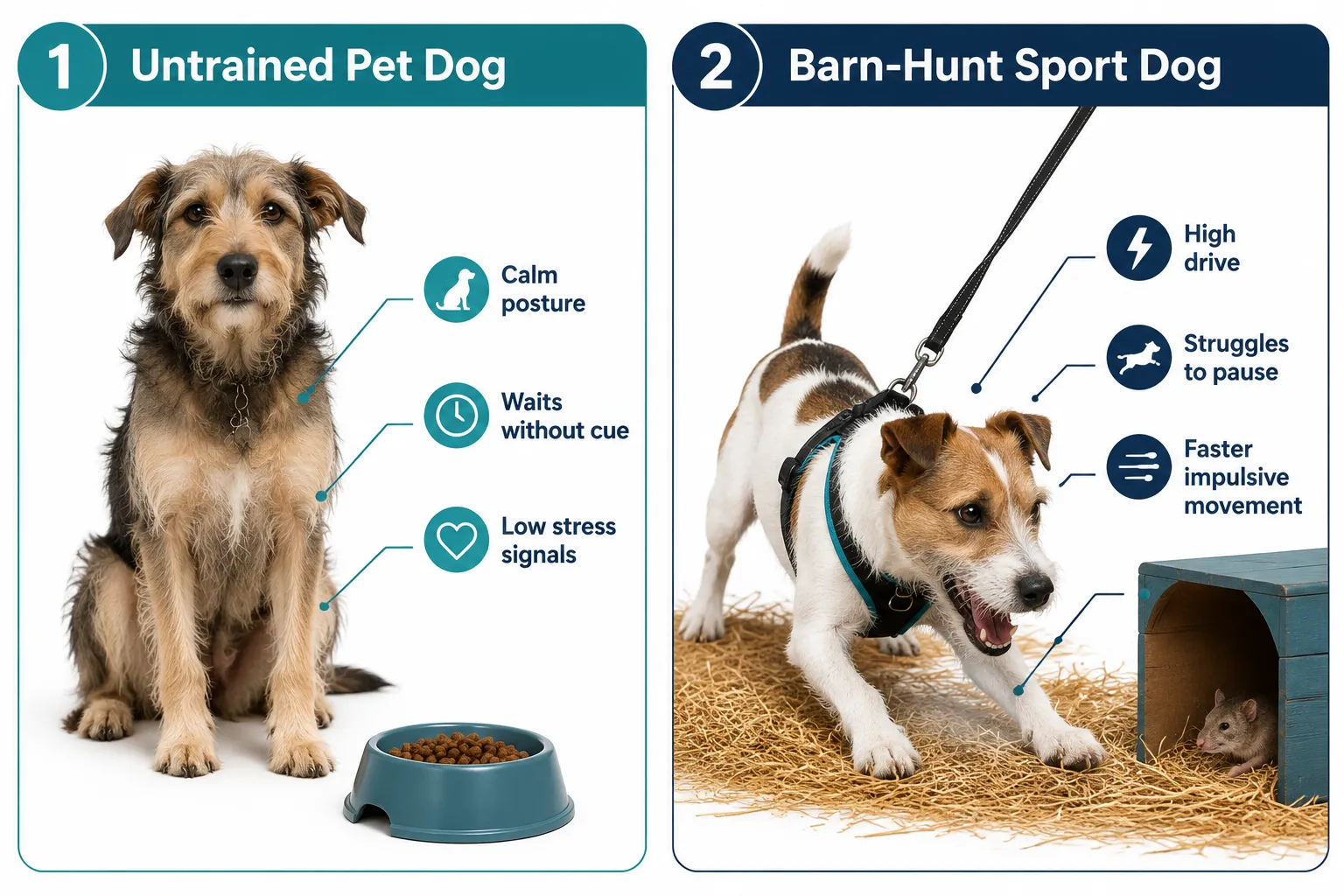
Barn-hunt competition dogs performed significantly worse than untrained pet dogs. These are dogs bred and trained to sniff out prey with laser focus and lightning speed. Their training rewards speed, drive, and intense motivation. That same fire that makes them stars in competition seems to work against them when it comes to pausing and thinking before acting [1][3].
Here’s the big lesson: self-control is not one single skill. The study found it involves several different mental processes, and none of them automatically “carry over” from one situation to another [1][3]. A dog trained to be laser-focused and fast in a hunt trial isn’t necessarily practicing patience. She’s practicing speed. And those are opposites.
Why “Well-Trained” Doesn’t Mean “Well-Controlled”
Think about it like this. A star athlete trained to sprint off the starting line the second the gun fires is not the same as an athlete trained to wait calmly in a long line at the grocery store. Different skills. Different muscles, both physical and mental.
That’s exactly 1. The Truth About Training & Self-Control: Why a “Trained” Dog Might Not Be Better in a nutshell. Training aimed at drive, speed, or motivation can actually work against a dog’s ability to pause and resist temptation in other parts of life [1][3][15].
So next time a dog effortlessly weaves through an agility course but can’t resist snatching food off the coffee table, remember: those are two totally different jobs for the brain.
Quick facts about the self-control study:
What Was TestedWhat Researchers FoundUntrained pet dogs vs. trained dogsNo consistent training advantage for self-control [1]Barn-hunt sport dogsPerformed significantly worse than untrained pets [1][3]Self-control across situationsDoes not generalize; many separate mental skills [1][3]High-drive training (speed, motivation)May reduce inhibition in other contexts [1][3][15]
“Self-control is not a single switch you flip with training. It’s a whole toolbox of separate skills.” 🧰
Training History Hides the ADHD Connection Nobody Talks About
Here’s where things get even more interesting. A 2025 study published in The Veterinary Journal looked at ADHD-like traits in family dogs and how they connect to self-control [2][6]. Just like people, dogs can show signs of inattention, hyperactivity, and impulsivity. Researchers wanted to know: do these traits actually predict poor self-control?
The answer was a big “it depends.”
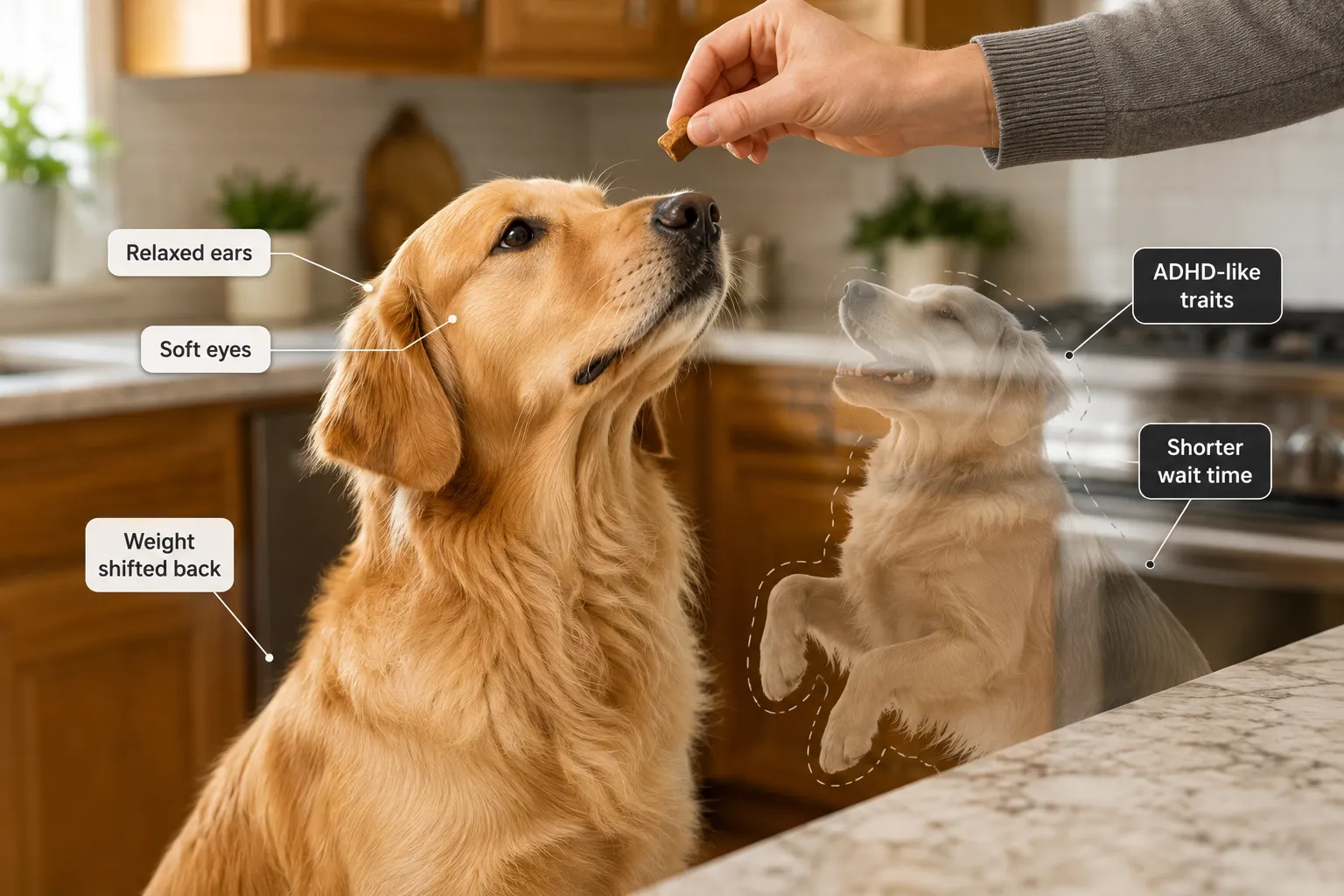
For dogs with basic or intermediate training, higher ADHD-like scores were linked to shorter “waiting times” in a classic delay-of-gratification test. That’s the test where a dog has to resist grabbing an okay treat now in hopes of getting a better treat later. Dogs with more hyperactive or impulsive traits gave up waiting sooner [2][6].
But here’s the twist. Among highly trained dogs, there was no link at all between ADHD scores and self-control performance [2][6]. The hyperactive pups who had a lot of training did just fine waiting for the better reward, at least on this specific task.
What This Really Means for Dog Parents
Don’t get too excited and think “more training cures ADHD-like traits in dogs.” That’s not what the researchers concluded. Instead, they found that intensive training can help a dog perform better on a specific task, without necessarily fixing the bigger picture of emotional regulation [2][6].
In simpler words: training can be like a really good disguise. A dog might ace one narrow test because she’s been drilled on similar skills, while her overall excitability, distractibility, or impulsiveness is still very much there underneath.
The researchers made a really important point that other scientists had been getting wrong for years. Many past studies never considered a dog’s training history at all [2][6]. That means when a trained dog outperformed an untrained one on a cognitive test, scientists might have wrongly assumed the trained dog was simply “smarter” or had better natural self-control. In reality, it might have just been practice effects from training, not a true difference in underlying ability [2][6].
This matters big time for anyone reading dog behavior research, dog trainer advice, or even breed self-control rankings online. Training level is a hidden variable that can mask the real story.
Key point: A trained dog acing a specific test doesn’t mean her self-control muscle grew everywhere. It might just mean she got really good at that one drill. 🎯
The Hidden Cost of “Obedient” Dogs: Why Method Matters More Than Results
This next part is a must-read for every dog parent. Because here’s a hard truth: some dogs that look perfectly trained and obedient are secretly struggling. Not physically. Emotionally.
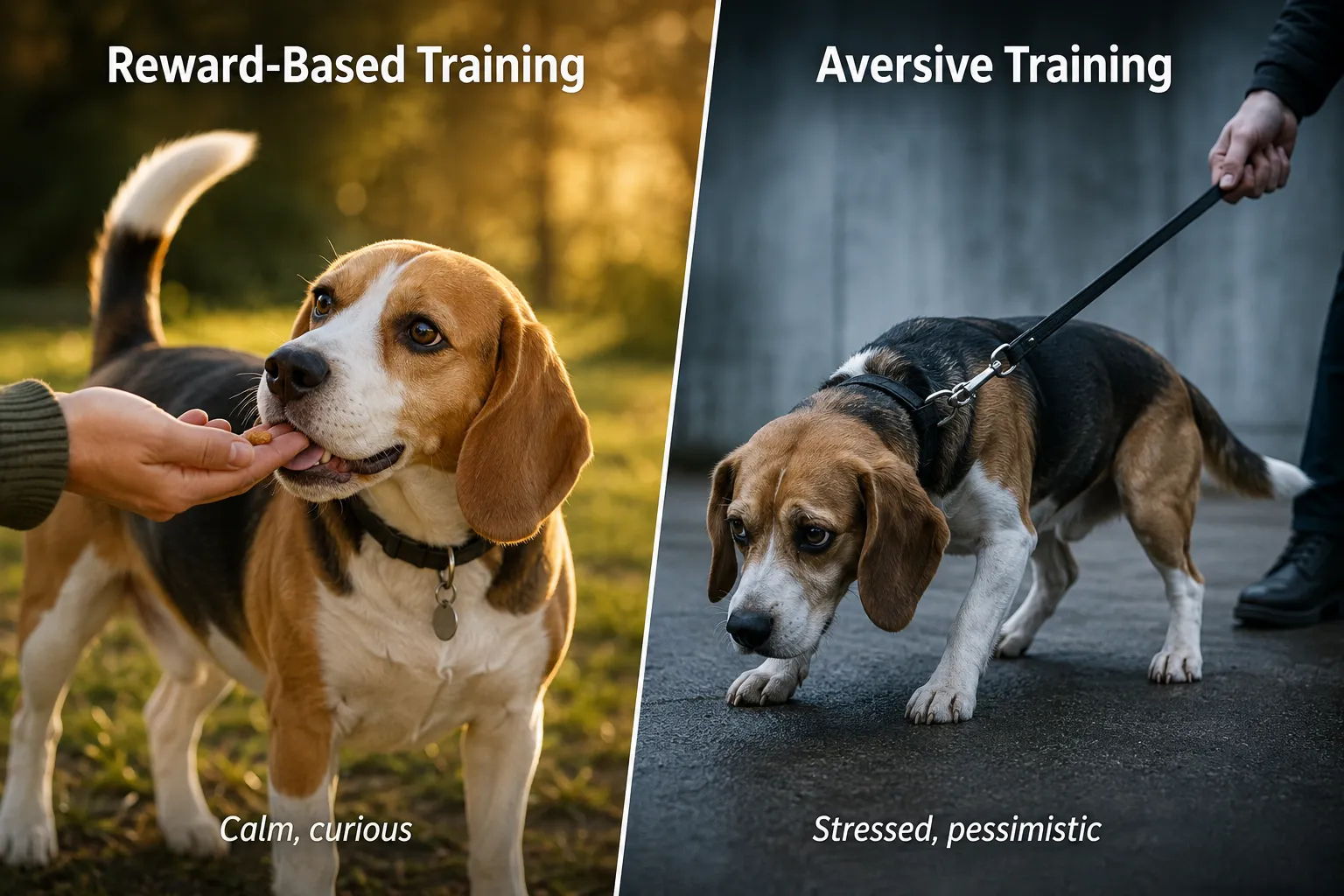
Multiple welfare studies show that training methods using shouting, leash jerks, or shock collars (also called e-collars) raise stress in dogs, even when the training “works” and produces obedient behavior [5][8][9]. That’s a critical piece of 1. The Truth About Training & Self-Control: Why a “Trained” Dog Might Not Be Better that too many people miss.
Dogs trained with these harsher, aversive methods show:
More stress-related behaviors like lip licking, panting, and lowered body posture [5][8]
More time spent tense and on edge, even outside of training sessions [8]
Higher cortisol levels after training, which is the body’s main stress hormone [5][8]
More pessimistic thinking in cognitive tests, meaning they expect bad things to happen more often [5][12]
The Pessimism Problem
One especially eye-opening 2021 study published in Scientific Reports tested dogs using something called a cognitive bias test. Basically, researchers taught dogs that a bowl in one spot always had food, and a bowl in another spot never did. Then they placed a bowl in an ambiguous, in-between spot and watched how fast the dogs approached it.
Dogs whose owners or trainers used two or more aversive training methods approached the ambiguous bowl more slowly and cautiously. That’s a sign of “pessimistic” thinking, basically the dog’s brain assuming the worst is more likely [12]. Dogs trained with fewer aversive methods, or none at all, approached with more confidence and hope.
The researchers were blunt about it: trainers and veterinary professionals should advise dog parents to avoid aversive methods altogether, because of the clear link to negative emotional states [12]. Good manners on the outside don’t always mean good feelings on the inside. 💔
E-Collars: No Real Advantage, More Risk
There’s another piece of research worth knowing about. A controlled study compared e-collar training to reward-based training for teaching off-leash obedience [9][11]. The result surprised a lot of trainers who swear by e-collars.
There was no consistent advantage of e-collars for achieving obedience. Dogs trained with rewards did just as well off-leash. But the e-collar-trained dogs showed greater welfare concerns, more stress, more fear-related behavior [9][11].
So the “results” argument for harsh tools falls apart pretty quickly when you look at the actual data. If reward-based training gets the same results with way less stress, why would anyone choose the harder path on their dog?
“A dog can be highly obedient and still be worse off if that obedience came from fear instead of trust.” 🐕
This is exactly why “trained” and “better” aren’t always the same word. A dog that’s obedient because she’s scared of what happens if she isn’t is a very different dog from one that’s calm because she trusts her person and understands what’s expected.
How to Actually Build Real Self-Control (The Right Way)
So if training alone doesn’t guarantee self-control, and harsh methods can backfire on emotional health, what actually works? Good news: humane organizations and behavior experts agree on the answer, and it’s simpler than most people think.
Self-control does not come naturally to dogs. It has to be taught, gently and consistently, using rewards [7][10]. Think of it less like flipping a switch and more like growing a muscle. It takes reps.
Easy Impulse-Control Exercises Every Dog Parent Can Try
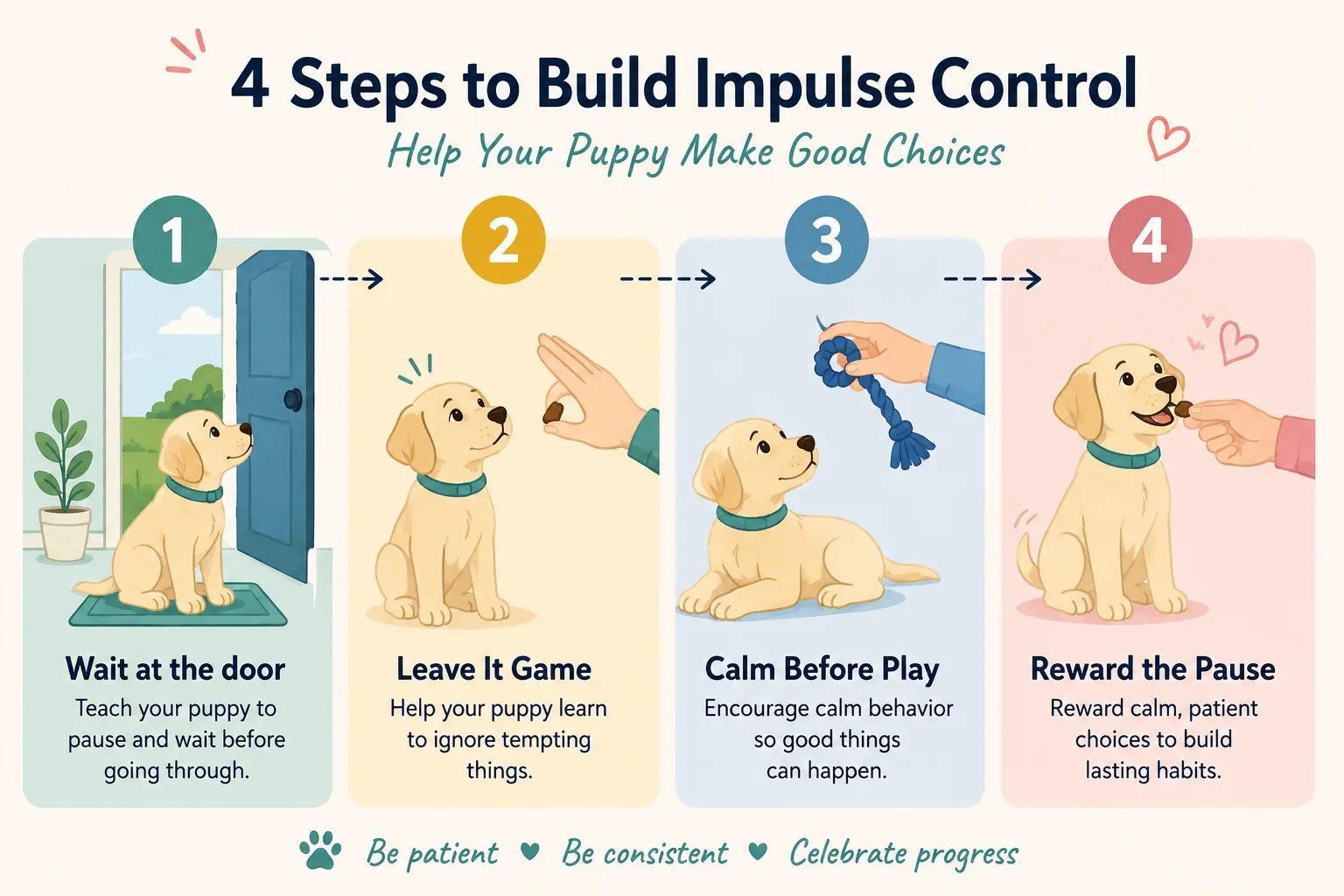
Here are real, expert-backed exercises that build self-control without fear or force [7][10]:
The “Wait” Game at Doors: Ask your dog to sit and wait before walking through any doorway. Open the door only when she’s calm. This builds patience in one of the most exciting daily moments (going outside!).
Open-Hand Treat Test: Hold a treat in an open palm. Don’t give it until your dog stops trying to grab it and looks calm. The second she settles, reward her. This teaches “good things come to dogs who wait.”
Meal-Time Patience: Ask your dog to sit or wait calmly before placing the food bowl down. It’s a small daily rep that adds up fast.
“Leave It” Cue: Practice with low-value items first (like a boring toy), then work up to yummier temptations. Reward heavily every time she looks away from the item toward you.
Play-Stop-Play Routine: During fetch or tug, pause the game randomly. Ask for a sit or a “wait.” Resume play only when she’s calm. This teaches dogs that self-control doesn’t end the fun, it continues the fun.
Why Context Matters So Much
Remember the barn-hunt dogs? Their training built incredible focus for one specific job, but it didn’t transfer to general impulse control [1][3]. That’s why experts recommend practicing self-control in lots of real-life contexts, not just one drill in one room [7][10].
Practice waiting:
Around food and treats
Around toys and other dogs
At doors and gates
During greetings with new people
Before getting in or out of the car
The goal is teaching your dog to make a good choice, not just to avoid getting punished for a bad one. That distinction is everything. A dog who chooses to sit calmly because she trusts good things follow is in a completely different headspace than a dog who freezes out of fear.
Don’t Forget the Basics: Exercise and Mental Stimulation
Here’s a fact that gets overlooked constantly. A tired dog is a calmer dog. Impulse-control training works so much better alongside regular exercise and mental stimulation [7][10]. A bored, pent-up dog has way more excess energy fueling those impulsive moments. Give that energy somewhere healthy to go first:
Daily walks (yes, even short ones count)
Puzzle toys and food-dispensing games
Sniff walks where she gets to explore at her own pace
Short, positive training sessions (five minutes, several times a day beats one long session)
Short and frequent beats long and rare, every single time. Dogs, like little kids, have limited attention spans. Five fun minutes of practice, several times a day, builds way more lasting self-control than one exhausting 45-minute session [7][10].
A Simple Self-Control Checklist for Dog Parents
Use this quick list to check where your pup stands:
✅ Can she wait at the door without bolting?
✅ Can she leave a treat alone when asked?
✅ Can she calm down mid-play when cued?
✅ Does she stay relaxed around new dogs or people?
✅ Does she settle down in the house without constant redirecting?
If you checked “not yet” on a few of these, that’s totally normal. It just means it’s time to add a few of the exercises above into your daily routine. Small, positive reps, done often, build real change over time. 🌟
Conclusion: What Every Dog Parent Should Remember
Here’s the paw-some truth to walk away with: training and self-control are not the same thing. A dog can nail every obedience command and still struggle with real self-control in everyday moments. Science backs this up clearly, even competition-level sport dogs can fall behind untrained pets on self-control tasks [1][3].
Training level can also hide important clues about a dog’s emotional world, like ADHD-like traits, especially in dogs with a lot of formal training under their belt [2][6]. And perhaps most important of all: how a dog is trained matters just as much as whether she’s trained. Harsh, aversive methods might produce obedience, but they often come with hidden costs to a dog’s stress levels and overall happiness [5][8][9][12].
The real goal isn’t a robot-like, perfectly obedient dog. It’s a dog who feels safe, trusts her person, and can make good choices because she wants to, not because she’s afraid not to.
Next steps for dog parents:
Start with one small self-control exercise this week, like the open-hand treat game.
Skip the harsh tools. Choose reward-based methods every time.
Practice patience in lots of everyday moments, not just formal training sessions.
Pair training with plenty of exercise and mental stimulation.
Celebrate small wins. Self-control is a skill built one calm moment at a time.
Every dog is capable of learning real self-control. It just takes the right approach, a little patience, and a whole lot of love. 🐾 That furry family member of yours is worth it.
References
[1] pubmed.ncbi.nlm.nih.gov – https://pubmed.ncbi.nlm.nih.gov/39943090/
[2] pubmed.ncbi.nlm.nih.gov – https://pubmed.ncbi.nlm.nih.gov/41203006/
[3] Doaj Art Cb394a4f38ab473e876421c4b7422e30 – https://library.kab.ac.ug/Record/doaj-art-cb394a4f38ab473e876421c4b7422e30?sid=2369656
[4] B219f8fbe35c05da269d02f310e38b66 – https://www.cambridge.org/core/journals/animal-welfare/article/dog-training-methods-their-use-effectiveness-and-interaction-with-behaviour-and-welfare/B219F8FBE35C05DA269D02F310E38B66
[5] 823427v1 – https://www.biorxiv.org/content/10.1101/823427v1
[6] 2025 11 Family Dogs Adhd Traits Linked – https://phys.org/news/2025-11-family-dogs-adhd-traits-linked.html
[7] Dog Impulse Control – https://www.battersea.org.uk/pet-advice/dog-advice/dog-impulse-control
[8] sciencedaily – https://www.sciencedaily.com/releases/2020/12/201217095536.htm
[9] Document – https://www.eerstekamer.nl/overig/20190920/do_aversive_based_training_methods/document
[10] 2023 Updated Canine Impulse Control Ehs Resources – https://www.edmontonhumanesociety.com/wp-content/uploads/2024/05/2023-UPDATED-canine-impulse-control-EHS-Resources.pdf