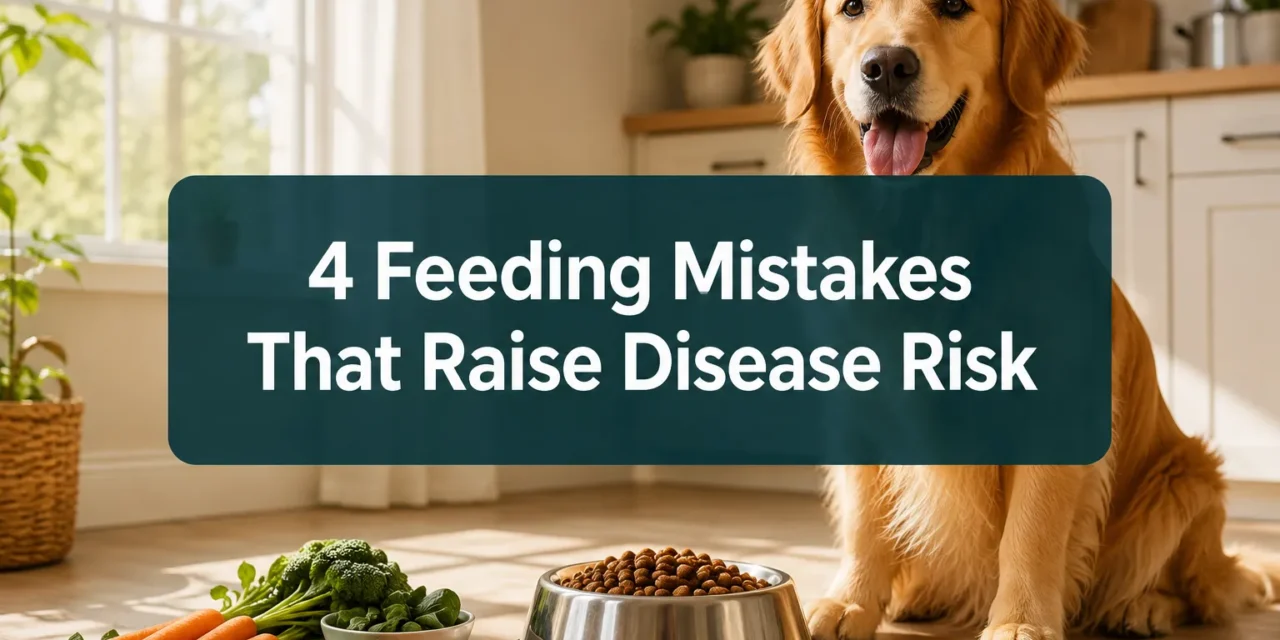
Did you know most chronic disease deaths trace back to what’s on the plate, not just genes? [3] That’s true for humans. And it’s true for our dogs, too. Vets see it every single day. A wagging tail can hide a ticking time bomb of bad habits at the food bowl.

Here’s the tail-wagging truth: your pup’s health starts with breakfast, dinner, and everything in between. Get feeding wrong, and disease risk climbs fast. Get it right, and you’re giving your furry family member more years by your side.
This guide breaks down the 4 Feeding Mistakes That Raise Disease Risk for dogs. These mistakes are sneaky. They look harmless. But they build up over time and open the door to heart trouble, obesity, tummy bugs, and more.
Let’s dig in. Your best friend deserves better.
Key Takeaways
- 🍖 Processed, salty foods hurt hearts, dog hearts and human hearts alike. [3][9]
- ⚖️ Overfeeding and portion mistakes are a top cause of preventable disease and weight gain. [4][8]
- 🧫 Poor food safety habits at home cause serious tummy illness that’s easy to prevent. [5][7][10]
- ⏰ Skipping regular meals or feeding on a messy schedule can raise health risks more than most owners realize. [6]
- 🐾 Small, consistent changes to feeding habits can add healthy years to your dog’s life.
Why Feeding Mistakes Matter More Than You Think
Food is medicine. Or it’s poison. There’s not much middle ground.
Research keeps showing the same thing: what goes into the body shapes what happens to the body. Poor diet quality is now linked to some of the biggest killers out there, heart disease, stroke, and diabetes. [1][3] Doctors call this the diet-disease connection, and it’s stronger than most people think. [2]
Dogs aren’t people. But their bodies respond to bad nutrition in eerily similar ways. Salt overload stresses the heart. Skipped meals stress the metabolism. Dirty food bowls spread bacteria. Overfeeding packs on dangerous weight.
The good news? These mistakes are 100% fixable. Let’s meet them one by one.
🐶 “You can’t out-cuddle a bad diet. Love your dog with good food, not just good pets.”
Mistake #1: Feeding Too Much Processed, Salty “Junk” Food
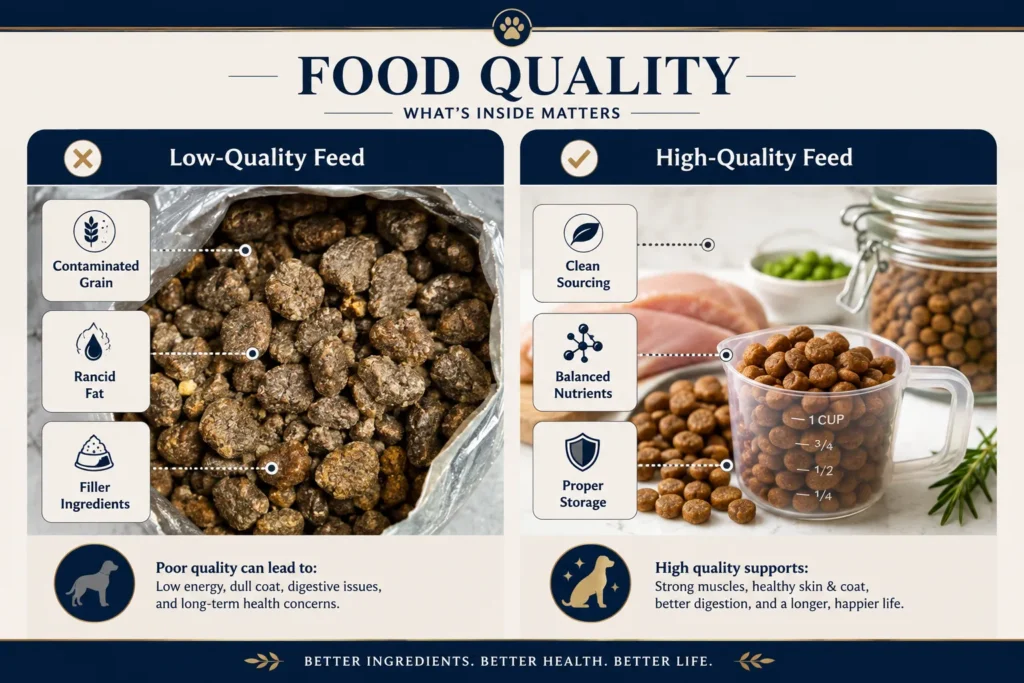
This is the biggest one. And it’s one of the top 4 Feeding Mistakes That Raise Disease Risk for dogs today.
Highly processed foods, think fatty table scraps, salty snacks, greasy fast food, and cheap fillers, are loaded with sodium and unhealthy fats. In humans, diets high in salt and saturated fat are a major driver of heart disease, stroke, and diabetes deaths. [3][9] Doctors and researchers agree: this is one of the clearest, best-proven links in all of nutrition science. [1][2]
Dogs face the same risks. Too much sodium makes the heart work overtime. Too much saturated fat clogs things up over the years. Add low amounts of “real,” whole-food nutrition, and you’ve got a recipe for trouble.
Signs This Mistake Is Happening
- Sharing fried, salty, or greasy human food often 🍔
- Buying the cheapest kibble with long ingredient lists you can’t pronounce
- Giving processed jerky treats as an “everyday” snack, not an occasional one
- Skipping fresh, whole ingredients like lean meats and veggies entirely
Why It’s Dangerous
| Habit | Risk It Raises |
|---|---|
| High-sodium treats & scraps | Heart strain, high blood pressure-like effects [3][9] |
| Heavy saturated fats | Clogged arteries, obesity, pancreas issues |
| Low whole-food intake | Weak immune system, poor coat & skin health |
| Ultra-processed snacks daily | Long-term chronic disease risk [1] |
The Fix
- Read labels. Look for real meat first, not “meat by-product meal” as the top filler.
- Swap salty jerky treats for plain, dried meat treats with no added salt.
- Add fresh, dog-safe veggies like carrots or green beans to meals a few times a week.
- Save fatty table scraps for never. Not even a little bit.
Small swaps here make a huge difference over a dog’s lifetime.
Mistake #2: Overfeeding, Bad Portions, and Forced Feeding
Here’s mistake number two on our list of the 4 Feeding Mistakes That Raise Disease Risk: giving too much food, too often, or forcing a dog to “finish the bowl.”
In babies and toddlers, research shows overfeeding early in life and forcing kids to eat, plus frequent sugary snacking, sets up a pattern of overweight and metabolic risk that can follow them for years. [4][8] The same pattern shows up in puppies and adult dogs.
Owners often think a chubby dog is a happy dog. It’s not. Extra weight is one of the top preventable causes of disease in dogs. It strains joints, stresses the heart, and raises the risk of diabetes.
Common Overfeeding Traps
- 🍽️ “Free feeding” with a bowl that’s never empty
- Giving full-size treats multiple times a day
- Feeding by “eyeballing it” instead of measuring
- Forcing a picky eater to finish every bite
- Ignoring weight gain because “they still run around fine”
Why Portion Mistakes Raise Disease Risk
Overfeeding doesn’t just cause weight gain. It’s linked to bigger, longer-term health problems:
- Joint stress and arthritis (shows up faster in heavy dogs)
- Insulin resistance and diabetes risk
- Heart strain from carrying extra pounds
- Shorter lifespan overall
Studies on early-life overfeeding in humans found it can raise obesity and allergic disease risk down the road. [4] Dogs fed too much too early, especially large-breed puppies, face similar long-term risks to joints and metabolism.
The Fix
- Use a measuring cup. Every time. No guessing.
- Follow feeding guidelines on the food bag, then adjust based on your vet’s advice.
- Treats should be less than 10% of daily calories.
- Feed on a schedule, two set meals a day works well for most adult dogs.
- Never force a dog to “clean the bowl.” Let them stop when they’re full.
Pull quote: “A lean dog is a longer-living dog. Full bowls don’t equal full love.” 🐾
Mistake #3: Ignoring Food Safety at Home
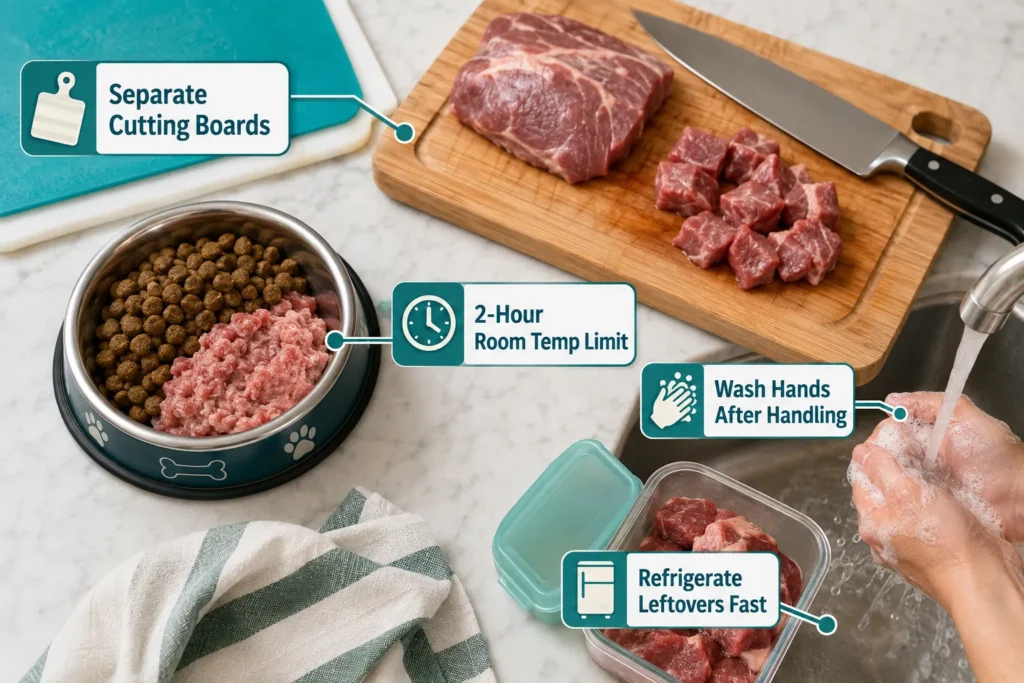
This one flies under the radar. But poor food handling is a massive, well-documented cause of illness, in humans and pets alike. [10]
Improper storage, dirty bowls, and unsafe temperatures create the perfect breeding ground for bacteria. In babies, unsafe formula prep and dirty bottles are directly tied to serious diarrhoeal disease. [5][7] Dogs face the exact same risk with dirty water bowls, spoiled wet food, and improperly stored raw diets.
Sneaky Food Safety Mistakes
- Leaving wet food out for hours at room temperature
- Never washing food and water bowls (yes, this happens a lot)
- Storing dry kibble in a hot garage or damp basement
- Feeding raw food without proper handling or storage
- Using expired food because “it still smells okay”
Why This Raises Disease Risk
Bacteria like Salmonella and E. coli thrive in warm, dirty, or old food. [10] These bugs cause vomiting, diarrhea, and in serious cases, dehydration and hospitalization, for dogs and the humans handling their food.
🧼 Quick Food Safety Checklist for Dog Parents- ✅ Wash food & water bowls daily with hot, soapy water
- ✅ Refrigerate wet food after opening; toss after 2-3 days
- ✅ Store dry kibble in a cool, dry, sealed container
- ✅ Check expiration dates before every feeding
- ✅ Wash hands before and after handling raw food diets
The Fix
- Treat your dog’s food area like your own kitchen. Clean, dry, and organized.
- Never let wet food sit out longer than 30-60 minutes.
- Wash your hands after touching raw meat-based diets.
- When in doubt, throw it out. Spoiled food isn’t worth the risk.
Mistake #4: Irregular Feeding Schedules and Skipped Meals
The last of our 4 Feeding Mistakes That Raise Disease Risk might be the most surprising: messy meal timing.
New research on humans found that skipping or delaying breakfast can raise mortality and cardiovascular risk significantly, by as much as 29% in some studies. [6] The body relies on steady, predictable fuel. When meals get skipped or pushed late, metabolism gets thrown off balance.
Dogs are creatures of routine. Their bodies expect food at certain times. When feeding is random, sometimes early, sometimes late, sometimes skipped entirely because “we were busy”, it can cause:
- Stomach acid buildup and nausea (especially in small dogs)
- Blood sugar swings, risky for diabetic or senior dogs
- Increased begging and overeating later to “catch up”
- Higher stress hormones from unpredictability
Signs of a Messy Feeding Schedule
- Feeding times shift by hours, day to day
- Meals get skipped when the family is out late
- Breakfast is “whenever someone remembers”
- Treats replace real meals on busy days
The Fix
- Set two fixed mealtimes and stick to them, even on weekends.
- Use an automatic feeder if your schedule is unpredictable.
- Never skip a meal to “make up” for overfeeding earlier. Fix portions instead.
- Keep meal times within 30 minutes of the same time each day.
Consistency isn’t boring. It’s protective. 🛡️
The 4 Feeding Mistakes That Raise Disease Risk: Quick Reference Table
| Mistake | Main Risk | Easy Fix |
|---|---|---|
| Processed, salty food | Heart disease, high blood pressure risk | Choose whole foods, skip salty scraps |
| Overfeeding / bad portions | Obesity, diabetes, joint strain | Measure meals, limit treats |
| Poor food safety | Bacterial infection, tummy illness | Clean bowls, store food properly |
| Irregular feeding schedule | Metabolic stress, higher mortality risk | Fixed mealtimes, twice daily |
How to Fix These Feeding Mistakes Today
Good news: none of these fixes require fancy gear or a huge budget. They just require attention and consistency.
Here’s a simple game plan:
- Audit the pantry. Toss anything expired, overly processed, or loaded with salt.
- Measure every meal. Grab a proper measuring cup this week if you don’t have one.
- Deep clean the food station. Bowls, storage bins, the whole setup.
- Set a feeding alarm. Two set times, every single day, no exceptions.
- Talk to the vet. Ask about ideal weight, portion size, and any diet red flags specific to your dog’s breed or age.
Doctors and researchers agree that ignoring known prevention guidelines, even when the risks are well documented, is one of the most persistent mistakes people make with diet and health. [1][3] Don’t let that be the story for your dog.
Conclusion: Small Feeding Fixes, Big Health Payoffs
Here’s the honest truth: nobody sets out to hurt their dog with food. These 4 Feeding Mistakes That Raise Disease Risk sneak in slowly. A little extra treat here. A skipped cleaning there. A late dinner because life got busy.
But awareness is powerful. Now that these four mistakes are on the radar, processed salty foods, overfeeding, poor food safety, and irregular schedules, it’s time to act.
Next steps for dog parents:
- ✅ Check the treat jar today. Swap anything too salty or processed.
- ✅ Grab a measuring cup and start portioning meals properly.
- ✅ Give the food bowls a deep clean this weekend.
- ✅ Pick two mealtimes and lock them into the daily routine.
- ✅ Book a quick vet check-in if it’s been a while.
A dog’s tail-wagging energy, shiny coat, and long, happy life all trace back to what’s in the bowl. Fix the feeding habits, and watch that health, and that bond, grow stronger every single day. 🐾❤️
References
[1] How Dietary Factors Influence Disease Risk – https://stagetestdomain3.nih.gov/news-events/nih-research-matters/how-dietary-factors-influence-disease-risk
[2] Mayo Clinic Minute Mayo Clinic Minute Relationship Between Food Disease Stronger Than You May Think – https://newsnetwork.mayoclinic.org/discussion/mayo-clinic-minute-mayo-clinic-minute-relationship-between-food-disease-stronger-than-you-may-think/
[3] A Poor Diet Increases Your Risk Of Dying From Heart Disease Stroke Diabetes – https://health.clevelandclinic.org/a-poor-diet-increases-your-risk-of-dying-from-heart-disease-stroke-diabetes
[4] Pmc8491802 – https://pmc.ncbi.nlm.nih.gov/articles/PMC8491802/
[5] Dietitian Cautions Parents Against Improper Administration Of Infant Formula – https://realnewsmagazine.net/dietitian-cautions-parents-against-improper-administration-of-infant-formula/
[6] The Breakfast Mistake That Can Raise Your Risk Of Death By Up To 29 – https://nypost.com/2026/08/24/health/the-breakfast-mistake-that-can-raise-your-risk-of-death-by-up-to-29/
[7] 20160729085538 31dui – https://news.trust.org/item/20160729085538-31dui/
[8] Pmc7055094 – https://pmc.ncbi.nlm.nih.gov/articles/PMC7055094/
[9] Diet And Heart Disease Risk – https://www.betterhealth.vic.gov.au/health/conditionsandtreatments/diet-and-heart-disease-risk
[10] Index – https://www.cdc.gov/food-safety/prevention/index.html