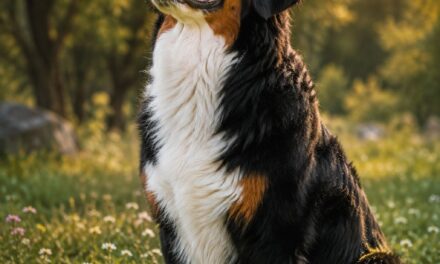
A 110-pound dog that thinks it’s a lapdog. A guardian breed bred to guard property without barking at every leaf. A working dog so loyal it was once used to herd cattle and protect Roman soldiers. These three breeds couldn’t be more different in personality, even though strangers lump them together as “big scary dogs.”

Choosing between a Cane Corso, Rottweiler, and Bullmastiff isn’t about picking the toughest-looking pup at the shelter. It’s about matching a massive, loving, protective dog to your real life, your home, your experience level, and your family’s energy.
This guide breaks down Cane Corso vs Rottweiler vs Bullmastiff: Which Guardian Breed Fits Your Home? from every angle that actually matters: temperament, training, exercise, guarding style, and the honest cost of loving one of these giants.
Key Takeaways
- Cane Corsos are intense, highly driven guardians best suited for experienced owners with space and time for serious training.
- Rottweilers are confident, loyal working dogs that need firm, consistent leadership and daily structure.
- Bullmastiffs are the gentle giants of the trio, calm, watchful, and often the most forgiving with families and kids.
- All three breeds need early socialization, strong leadership, and a securely fenced yard. None are “set it and forget it” dogs.
- Budget for serious food, vet, and insurance costs, these breeds are big, and big comes with a bigger price tag.
Meet the Three Guardians: Origins and Purpose
Every guardian breed was built for a job. Knowing that job explains almost everything about how these dogs act today.
The Cane Corso descends from ancient Roman war dogs. Italian farmers later used them to guard property, drive cattle, and even help hunt wild boar [1][4]. That history is still baked into the breed. A Corso doesn’t just bark at danger, it assesses it.
The Rottweiler has deep working roots too. Originally bred in Germany to drive livestock to market and guard the money attached to the cart, Rottweilers evolved into all-purpose working dogs: police dogs, military dogs, and devoted family protectors.
The Bullmastiff was engineered for one very specific job: catching poachers on English estates, quietly. Gamekeepers needed a dog fearless enough to tackle an intruder but calm enough not to maul them [3][8]. That’s why Bullmastiffs are often described as “silent guardians.” They watch. They wait. They act only when needed.
Those original jobs still shape temperament today. A dog bred to make split-second decisions (Corso) behaves differently than a dog bred to patiently sit on a poacher until the gamekeeper arrived (Bullmastiff).
Size and Physical Presence: How Big a Guardian Do You Need?
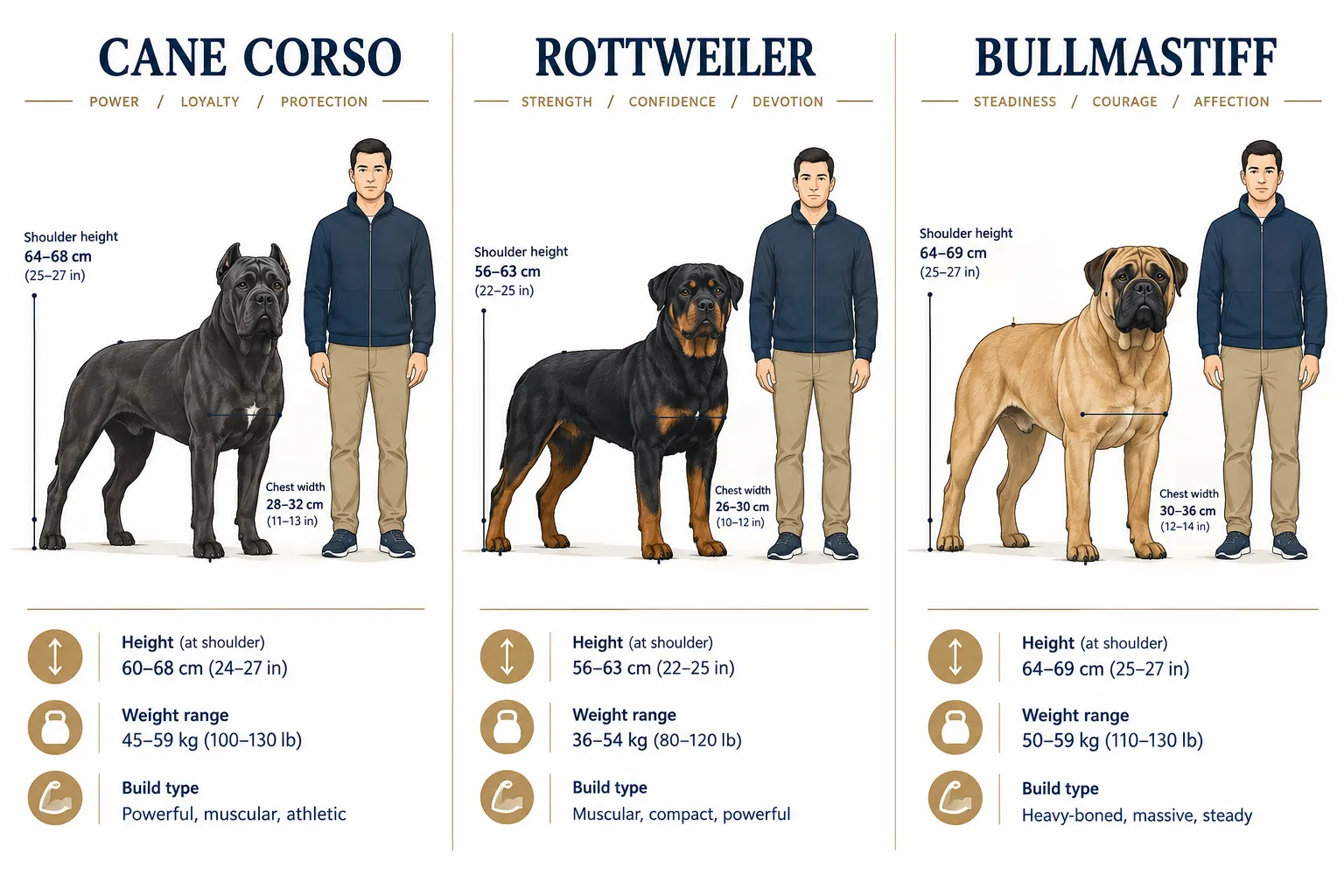
Size matters here, not just for intimidation, but for daily life. A 150-pound dog needs more space, more food, and a much sturdier leash arm than a 90-pound dog.
Here’s how the three guardian breeds stack up physically:
| Breed | Male Height | Male Weight | Build |
|---|---|---|---|
| Cane Corso | 25-27.5 in | 90-120 lbs | Athletic, muscular, agile [2] |
| Rottweiler | 24-27 in | 95-135 lbs | Powerful, compact, dense |
| Bullmastiff | 25-27 in | 110-130 lbs | Massive, heavy-boned, broad [6] |
The Cane Corso is the most athletic of the three. It’s built like a canine linebacker who could also run a 40-yard dash. Rottweilers are thick and powerful, built for pulling and steady work. Bullmastiffs are the heavyweights, less athletic, more “immovable object.”
If you want a dog that looks imposing but moves slowly around the house, the Bullmastiff wins. If you need a guardian who can also keep pace on a jog, the Corso takes that title. Curious about other large breeds with serious presence? Check out this roundup of big dog breeds for more context on what “big” really means day to day.
Temperament Showdown: Cane Corso vs Rottweiler vs Bullmastiff
This is where the real differences show up, and where most first-time owners get surprised.
Cane Corso temperament is intense. These dogs are highly protective, deeply bonded to their families, and always scanning their surroundings [1]. They’re not aggressive by default, but they are serious. A Corso rarely “relaxes” the way a Golden Retriever does. It watches. It assesses. It takes its job personally.
Rottweiler temperament is confident and steady. Rotties are affectionate with their people, sometimes shockingly goofy at home, but naturally wary of strangers. They need an owner who projects calm, clear leadership. Without it, a Rottweiler’s confidence can tip into pushiness.
Bullmastiff temperament is the outlier here. Bullmastiffs are famously described as “fearless yet docile” [6][8]. They’re protective without being reactive. Most Bullmastiffs won’t bark much, won’t posture, and generally save their guarding instincts for actual threats, not the mail carrier.
“A Bullmastiff doesn’t guard loudly. It guards calmly,which is exactly why it’s often called a property guardian rather than an attack-ready protector.” [3]
Here’s a quick side-by-side:
- Cane Corso 🐾, high-alert, highly bonded, intense focus
- Rottweiler 🐾, confident, loyal, needs firm leadership
- Bullmastiff 🐾, calm, watchful, slow to react
Understanding how a dog’s body signals stress or alertness helps with all three breeds. This guide to reading your dog’s body language is worth bookmarking before bringing any guardian breed home.
Training and Socialization Demands
Here’s the blunt truth: none of these three breeds are beginner dogs. But they’re not all equally demanding either.
Rottweilers and Cane Corsos require very confident, experienced handlers [9]. Both breeds are smart, sometimes too smart. They’ll test boundaries, especially during adolescence (roughly 6 months to 2 years). Inconsistent rules create a dog that makes its own.
Training priorities for Corsos and Rotties:
- Start obedience training at 8 weeks, not 8 months
- Socialize with people, dogs, sounds, and environments constantly during puppyhood
- Use positive reinforcement, but stay firm and consistent
- Enroll in structured obedience classes, group classes help with socialization too
- Never skip leash manners; a lunging 100-pound dog is a real liability
Bullmastiffs are generally easier to train in terms of temperament, but they come with their own challenge: stubbornness. They’re not hyper-reactive, but they can be slow to respond to commands simply because they’re not that motivated to move fast. Patience (and good treats) go a long way.
If you’re considering a Cane Corso specifically, this breakdown of things to consider before bringing a Cane Corso dog home covers the realistic training and management commitment involved.
Bottom line: Rottweilers and Cane Corsos need owners who’ve handled strong-willed dogs before. Bullmastiffs are more forgiving of a learning-curve owner, but still need consistent rules from day one.
Exercise Needs and Energy Levels
Guardian breeds aren’t all couch potatoes, and they’re definitely not all marathoners either.
Cane Corso, High energy, high drive. Needs 60-90 minutes of exercise daily, plus mental stimulation like training drills or scent work. A bored Corso finds its own “jobs,” and you won’t like most of them.
Rottweiler, Moderate-to-high energy. Loves structured activity: pulling sports, obedience trials, hiking. Needs 45-60 minutes of daily exercise minimum.
Bullmastiff, Low-to-moderate energy. Short walks and yard time usually do the trick. Bullmastiffs overheat easily due to their size and short muzzle, so exercise should be light, especially in warm weather [6].
Mental enrichment matters as much as physical exercise for all three. These fun activities to keep your Cane Corso mentally stimulated work surprisingly well for Rottweilers too, since both breeds are working dogs that crave a job to do.
Guarding Instinct: Who Protects How?
All three breeds guard, but they guard differently, and that difference should drive your decision more than anything else.
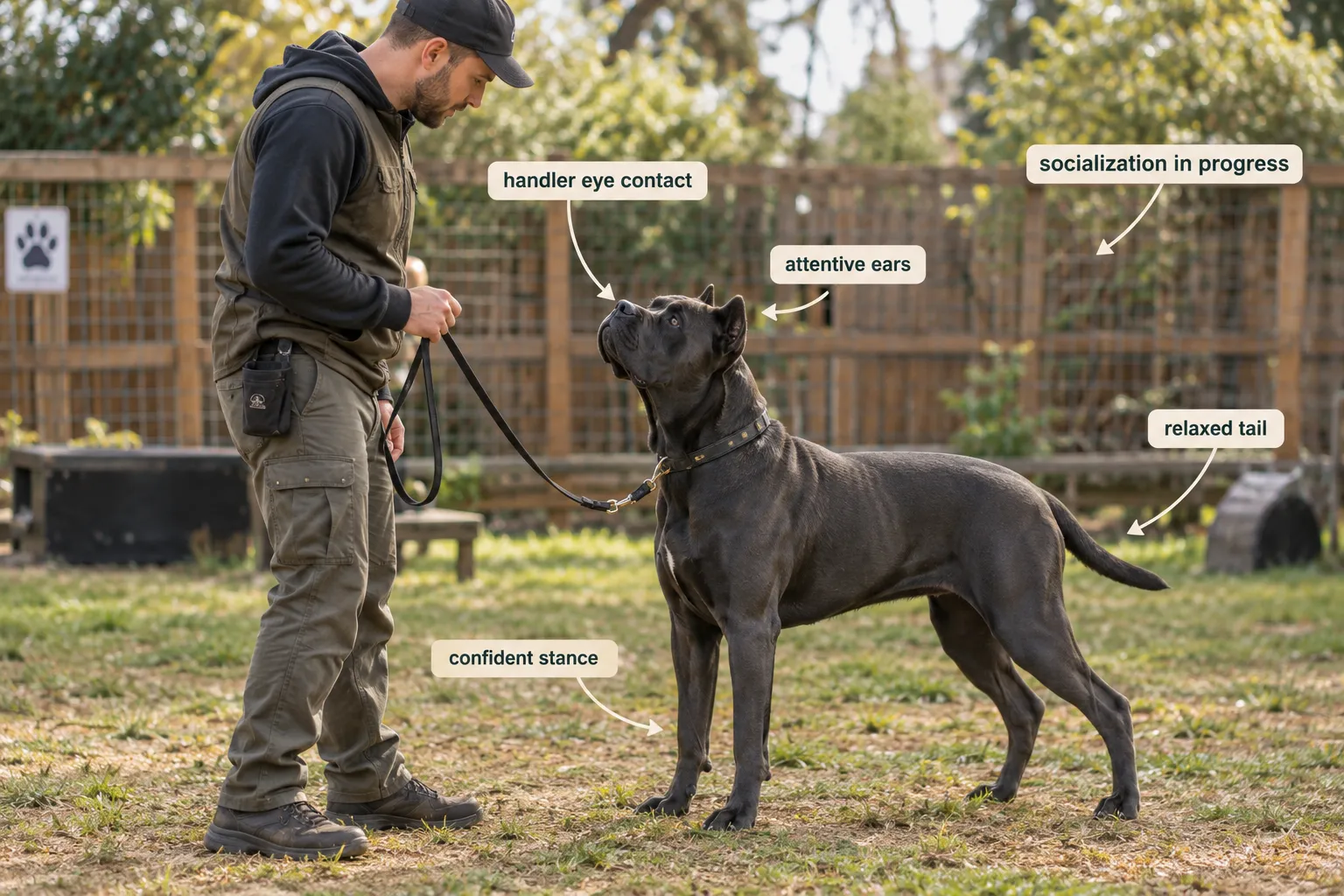
The Cane Corso is a highly protective working guardian. It bonds intensely with its family and can be suspicious of strangers without proper socialization. Corsos actively patrol and position themselves between perceived threats and their people.
The Rottweiler guards through steady confidence. It’s less about constant vigilance and more about decisive action when something’s actually wrong. Well-trained Rotties are famously discerning, they know the difference between a guest and a genuine threat.
The Bullmastiff is the quiet observer of the group, true to its roots as a “property guardian” [3][6]. It won’t pace the fence line barking at squirrels. It’ll lie near the door, seemingly asleep, and spring into action only if truly needed. Many owners say their Bullmastiff barks so rarely that a single bark is treated like a fire alarm.
Quick guarding-style cheat sheet:
| Trait | Cane Corso | Rottweiler | Bullmastiff |
|---|---|---|---|
| Barking frequency | Moderate | Moderate-high | Low |
| Stranger wariness | High | Moderate-high | Moderate |
| Reaction speed | Fast | Fast | Slow, deliberate |
| Best guarding style | Active perimeter guard | Alert family protector | Silent property guardian |
Family Compatibility: Which Breed Fits Your Home?
This is the section every parent, partner, or roommate actually cares about.
The Bullmastiff is often cast as the most family-friendly guardian of the three [3][6]. They’re patient with kids, tolerant of chaos, and generally not reactive to loud noises or sudden movement, a big plus in homes with toddlers.
Rottweilers can absolutely be wonderful family dogs when properly socialized from puppyhood. They’re affectionate, even silly, with their own people. But their size and strength mean supervision around small kids is non-negotiable.
Cane Corsos can be amazing family dogs too, loyal, loving, and gentle with their own household. But their high-alert nature means they need more active management around visitors, other dogs, and unfamiliar situations. They’re a better fit for families already experienced with large, driven breeds. This piece on why a Cane Corso makes the perfect family guardian digs deeper into the upside, while still being honest about the commitment required.
Quick family fit snapshot:
- Best for first large-dog families: Bullmastiff
- Best for active families who’ve owned big dogs before: Rottweiler
- Best for experienced handlers wanting a dedicated working guardian: Cane Corso
Training, Socialization, and Management Demands Compared
Beyond basic training, daily management looks different across these breeds, and this is where lifestyle fit really gets tested.
- Fencing: All three need a secure 6-foot fence minimum. Corsos can jump surprisingly well for their size.
- Visitors: Corsos and Rotties need structured introductions to new people. Bullmastiffs are usually calmer with guests out of the box.
- Other dogs: Same-sex aggression can appear in all three breeds, especially Rottweilers and Corsos. Early, ongoing socialization matters.
- Drool and shedding: Bullmastiffs are heavy droolers. Rottweilers and Corsos shed moderately but drool less.
- Noise sensitivity: Rottweilers and Corsos may react to doorbells and sudden sounds more than Bullmastiffs.
None of these breeds thrive on neglect. All three need daily structure, a job (even a small one, like “carry this basket”), and real relationship-building, not just feeding and walking.
Home and Lifestyle Fit: Rural vs Urban vs Suburban
Where you live changes which breed makes the most sense.
Cane Corso as a rural, high-intensity guardian is the classic match. Corsos thrive with acreage to patrol, livestock or property to watch, and space to burn off serious energy. Apartment life is possible but genuinely hard for this breed, they need room to move and a job to focus on.
Rottweiler fits suburban life well. A fenced yard, regular walks, and a family willing to train consistently make for a happy, balanced Rottie. They adapt reasonably well to city living too, provided exercise needs are met.
Bullmastiff is surprisingly adaptable to apartments and smaller homes, given their lower energy level, though their sheer size still means a home with more floor space is kinder on both the dog and the furniture.
If you’re weighing nutrition alongside lifestyle planning for a large guardian breed, this guide on best foods to feed a Cane Corso for optimal health offers a useful framework that applies to large-breed feeding in general, including Rottweilers.
Ownership Costs: What to Budget For
Big dogs come with big bills. Here’s a realistic look at what owning any of these three breeds costs beyond the initial purchase price.
Food: Large and giant breeds eat a lot. Expect to spend significantly more monthly on quality large-breed kibble than you would for a 30-pound dog.
Veterinary care: All three breeds are prone to size-related issues, hip and elbow dysplasia, bloat, and joint problems. Routine vet visits, plus emergency fund planning, are essential.
Pet insurance: Premiums run higher for large breeds due to injury and illness risk. It’s worth shopping around early, ideally before any pre-existing conditions show up.
Training: Professional obedience classes or private trainers are a smart investment, especially for Corsos and Rottweilers. Budget for at least one structured training course in year one.
Weight management: Keeping these breeds lean extends joint health and lifespan significantly. For Rottweiler owners specifically, this resource on Rottweiler weight management is a smart bookmark, excess weight is one of the biggest preventable health risks for the breed.
Quick cost comparison snapshot:
- Highest food costs: Bullmastiff (largest average body mass)
- Highest training investment needed: Cane Corso
- Moderate overall costs across the board: Rottweiler
Cane Corso vs Rottweiler vs Bullmastiff: Which Guardian Breed Fits Your Home Profile?
Let’s pull it all together. Recent guard dog rankings and consumer guidance consistently point to the same conclusion: there’s no single “best” guardian breed, only the best breed for a specific household [9].
Choose a Cane Corso if:
- You have prior experience with large, intense working breeds
- You have space, ideally a yard or rural property
- You want an active training partner, not just a pet
- You can commit serious time to daily exercise and socialization
Choose a Rottweiler if:
- You want a loyal, confident family protector
- You can provide firm, consistent leadership
- You have a fenced yard and time for regular structured exercise
- You’re comfortable managing a strong, smart dog through adolescence
Choose a Bullmastiff if:
- You want a calmer, quieter guardian presence
- You have young kids or a lower-energy household
- You’re newer to giant breeds but still ready for serious size and drool
- You want a dog that guards by watching, not barking
Every one of these breeds can become an incredible, devoted member of your family. The right choice just depends on matching their natural instincts to your real daily life, not the dog you wish you had time for, but the one you actually do.
Conclusion
There’s no wrong guardian breed here, only a wrong fit. The Cane Corso rewards experienced, active owners with unmatched loyalty and sharp instincts. The Rottweiler offers steady, confident protection for families willing to lead with consistency. The Bullmastiff brings calm, gentle strength to homes that want a watchful guardian without the intensity.
Before bringing any of these breeds home, do three things: meet adult dogs of the breed in person, talk to a reputable breeder or rescue about temperament, and be brutally honest about your energy level and experience. A guardian breed is a decade-plus commitment, make sure it’s the right one.
Whichever breed earns a spot on the couch, one thing stays true: these dogs give everything they have to protect the people they love. Give them the training, structure, and home they deserve, and they’ll return it tenfold.
References
[1] Cane Corso Right For You – https://www.akc.org/expert-advice/dog-breeds/cane-corso-right-for-you/ [2] Cane Corso – https://www.akc.org/dog-breeds/cane-corso/ [3] About The Breed – https://bullmastiff.us/about-the-breed/ [4] Fun Facts Cane Corso – https://www.akc.org/expert-advice/lifestyle/fun-facts-cane-corso/ [5] Cane Corso – https://images.akc.org/judges/cane_corso.pdf [6] Bullmastiff – https://www.petmd.com/dog/breeds/bullmastiff [7] Canecorso – https://images.akc.org/pdf/breeds/standards/CaneCorso.pdf [8] Bullmastiff – https://www.lemonade.com/pet/explained/bullmastiff/ [9] Best Guard Dog Breeds Comparison Guide – https://paws-tales.com/training/best-guard-dog-breeds-comparison-guide [10] What To Know About Bullmastiffs – https://www.webmd.com/pets/dogs/what-to-know-about-bullmastiffs