Search interest in dog strollers has spiked hard in recent months. Owners everywhere are typing “dog stroller near me” into Google at record rates[1][2]. Why? Because city life and dog life don’t always mix easily. Hot pavement. Crowded sidewalks. Tiny senior legs that just can’t keep up anymore.

That’s where dog strollers and urban mobility for pets come together. This isn’t a fad for pampered pups. It’s a real solution for real problems: aging joints, recovery from surgery, small breeds dodging giant human feet, and busy streets that move way too fast.
This guide breaks down everything dog parents need to know. Expect real use cases, smart buying tips, and a peek at where this booming market is headed.
Key Takeaways
- Dog strollers aren’t just for tiny “purse dogs.” New stroller wagons support large, senior, and disabled dogs too[1].
- Urban mobility gear is going high-tech. Think suspension systems, never-flat tires, and whisper-quiet wheels for smooth city rides[1][3].
- The market is exploding. Analysts project strong growth for pet strollers through the early 2030s, with 2026 shaping up as a big demand year[4][5].
- Safety first, always. Look for secure harness clips, sturdy brakes, and breathable mesh panels before buying[6][7].
- Access matters. Some cities and venues require dogs to stay in bags or strollers in public spaces, especially overseas[1].
Why Dog Strollers Are Becoming Essential Urban Mobility for Pets
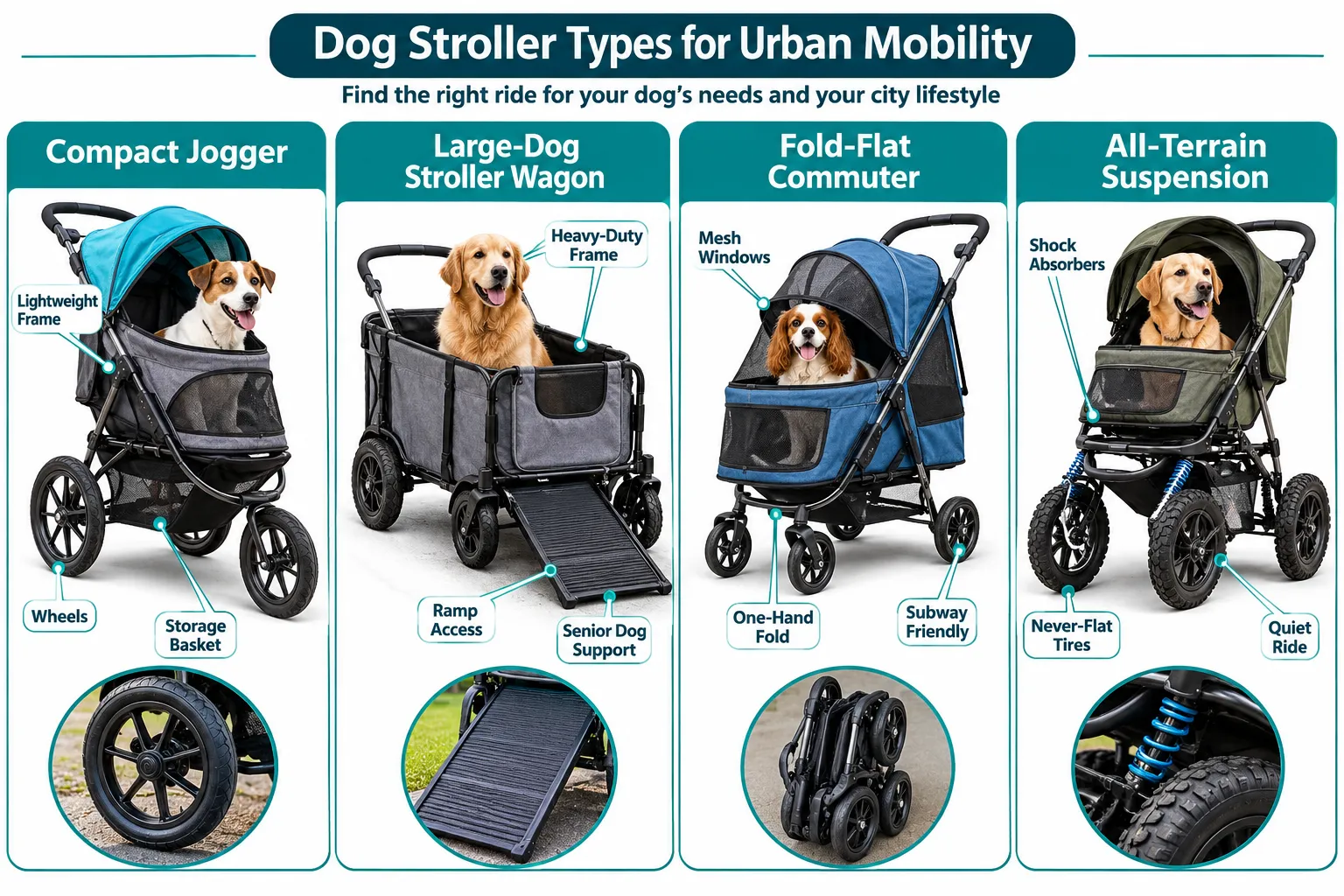
City dogs face a tough world. Concrete gets scorching hot in summer. Subway platforms are loud and crowded. Small dogs get stepped on more than you’d think. A stroller solves a lot of these headaps in one paw-some move.

Think about the furry family members who need extra help:
- Senior dogs with achy hips who still want fresh air 🐾
- Small breeds who tire out fast on long city blocks
- Recovering pets healing from surgery or injury
- Anxious dogs overwhelmed by traffic, noise, and crowds
- Disabled dogs who need wheels instead of legs to explore
A stroller lets these dogs stay part of the family adventure. No dog gets left behind just because their legs can’t keep up. That’s the heart of good urban mobility for pets, inclusion, not isolation.
Safety is another huge piece of the puzzle. Dense traffic, bike lanes, and scooters make busy streets risky for a dog walking at knee height. A stroller lifts them up and out of harm’s way. Many models even come with 5-point leash clips so pups can’t make a sudden break for it[8].
This matters even more for breeds already prone to joint or spine issues. Owners of low-riders, for example, should check out this guide on dog breeds that stay low to the ground to understand extra mobility needs. And small-space city dwellers will love these notes on apartment-friendly small breeds.
Design Trends Shaping Dog Strollers and Urban Mobility for Pets
Stroller design has leveled up big time. Gone are the days of flimsy frames and squeaky wheels. Today’s models are engineered specifically for city streets.
Here’s what’s trending right now:
- Compact, maneuverable frames. Brands are shrinking the footprint so strollers fit through narrow doorways, elevators, and crowded sidewalks[3][9].
- Suspension systems. New city-specific models smooth out bumpy curbs and cracked pavement, just like a baby stroller[1].
- Never-flat, quiet tires. No more loud squeaking down quiet apartment hallways. These tires roll smooth and silent[1].
- One-hand fold mechanisms. Perfect for hopping on a bus or train without a wrestling match[10].
- Mesh ventilation panels. Keeps air flowing so pups stay cool, even in summer heat[6].
- Swivel front wheels. Makes tight turns around corners and crowded crosswalks way easier[8].
Retailers have noticed the shift too. Everyday big-box stores now carry fold-flat pet strollers built for simple errands, not just fancy outings[8]. That tells us something important: strollers have gone mainstream. They’re not a novelty item anymore. They’re practical gear, like a good leash or a comfy harness.
Large-Dog Stroller Wagons: Expanding Mobility Beyond Small Breeds
Here’s a myth that needs busting: strollers aren’t just for Chihuahuas and Yorkies. Big dogs need mobility help too, especially as they age.
Enter the stroller wagon. These heavy-duty rigs support dogs well over 50 pounds, with reinforced frames and wide wheelbases built for stability[1]. Senior Labradors, disabled German Shepherds, and recovering Rottweilers can now roll through the park instead of being left at home.
“Mobility shouldn’t end when a dog’s legs slow down. It just needs a new set of wheels.” 🐕
Some standout features in this category:
| Feature | Why It Matters |
|---|---|
| Reinforced steel frame | Holds heavier dogs securely |
| Ramp access | Easy entry for dogs who can’t jump |
| Wide, stable wheelbase | Prevents tipping on uneven ground |
| Weatherproof canopy | Shields pets from sun and rain |
This matters a lot for breeds already dealing with weight-related joint stress. Owners managing a heavier dog should also check out these weight management tips for Rottweilers to keep joints healthy longer.
Accessory makers are jumping in too, blending leashes directly into carts, wheelchairs, and strollers so owners don’t need five separate gadgets[1]. One company recently rolled out combined mobility and home safety tools aimed squarely at aging and disabled pets[1]. This is a genuine shift toward treating senior dogs like the beloved family members they are, not an afterthought.
How the Dog Stroller Market Is Growing in 2026
Numbers don’t lie, and the numbers here are impressive. Market researchers expect the global dog stroller and pet stroller segment to keep climbing steadily through 2033-2035[4]. Fresh market intelligence pegs 2026 as a year of strong, sustained demand rather than a passing trend[5].

A few forces are driving this growth:
- More dogs living in cities. Urban pet ownership keeps rising, and apartment living means dogs need gear suited to tight spaces.
- Aging pet populations. Vet care keeps dogs living longer, which means more senior pups need mobility support.
- Seasonal demand spikes. Searches and sales tend to rise in spring and summer when city outings peak[5].
- Pandemic-era pet adoption echoes. Many dogs adopted years ago are now entering their senior years, right as owners look for ways to keep them active.
Wholesale and trend-tracking platforms confirm steady sell-through for dog trolleys and carts, suggesting this isn’t a one-season fad but a maturing product category[2]. Editorial outlets have also started publishing dedicated city-walk buying guides, a sign the category has earned mainstream staying power[3][7].
For dog parents curious about what else is trending in the pet gear space, this roundup of fast-growing dog care trends is a great next read.
Choosing the Right Stroller for Dog Strollers and Urban Mobility for Pets
Picking a stroller isn’t about grabbing the cutest one at the store. Fit, function, and safety come first.
Before buying, check for:
- ✅ Weight capacity that matches your dog’s size, plus some buffer
- ✅ Secure harness clip inside the stroller (never rely on the carrier alone)
- ✅ Sturdy brakes for hills and busy intersections
- ✅ Breathable mesh on all sides for airflow
- ✅ Easy fold for buses, trains, and elevators
- ✅ Washable fabric because, well, dogs
The American Kennel Club notes that a good stroller should feel like a safe little den, not a cramped box[6]. Dogster’s expert reviewers emphasize testing the brake system before any busy-street outing, since sudden stops near traffic are common in dense areas[7].
Small-breed owners have plenty of compact options to compare. If a dog is still getting used to any new gear, pairing it with some positive training tricks can help build comfort and confidence fast.
Community Events and Public Access for Stroller-Bound Dogs
Strollers aren’t just for errands. Entire community events now build them into the plan. Fitness walks and charity runs increasingly list strollers and “family mobility” devices as welcome, not just tolerated[1]. That’s a big win for families with senior or disabled dogs who still want to join the fun.
Access policies matter too, especially internationally. In South Korea, many public venues require dogs to stay inside a bag or stroller at all times, rather than walking freely[1]. That rule has actually fueled stroller demand there, since it’s often the only way to bring a dog along at all.
This global angle is worth watching for any dog parent planning overseas travel. For inspiration on dog-friendly trips, check out this guide to dog-friendly travel destinations or learn what it’s like exploring Amsterdam with dogs.
Conclusion
Dog strollers and urban mobility for pets have moved from niche accessory to everyday essential. Senior dogs get to keep exploring. Small breeds stay safe from busy sidewalks. Recovering pups heal without missing out on family walks. And big dogs finally get mobility gear built for their size, too.
The market is only growing, with strong demand expected well into 2026 and beyond[4][5]. That means better designs, smarter safety features, and more choices for every dog parent out there.
Next steps: Measure a dog’s weight and length, check local stroller access rules if traveling, and test a stroller’s brakes and harness clip before hitting busy streets. A little homework now means many more tail-wagging walks ahead. 🐾
References
- Article 90577b0a 688f 5543 9b8c 41d1c2ab9441. guardonline.com.
- Dog Trolley Best Sellers. accio.com.
- Best Pet Stroller for City Walks. thepetbench.com.
- Dog Stroller Market Report. cognitivemarketresearch.com.
- Dog Stroller. salehoo.com.
- Dog Strollers. akc.org.
- Best Dog Strollers. dogster.com.
- A 1007856958. target.com.
- Dog Strollers. urbantailco.com.
- Easyfold Pet Stroller. pawhutstore.com.
dog strollers, urban mobility for pets, senior dog care, pet travel gear, dog stroller wagon, city dog walking, large dog strollers, pet mobility aids, dog safety gear, dog market trends