Your dog trots up with a soggy tennis ball or a favorite stuffed bear, drops it near your feet, and stares at you with those big eyes. Your first thought is probably “fetch time.” If your dog brings you a toy, they’re often asking for attention, connection, or comfort rather than a straightforward game of play. The toy acts as a social tool, a way to start a conversation when your dog doesn’t have words to use.

Dogs are experts at reading our moods and routines, and they learn fast that carrying something in their mouth gets a reaction out of us: a wagging tail, a reach for the ball, or a quick “aww” when you walk in the door. Once a dog figures out that a toy brings you closer, they’ll keep using it as their go-to icebreaker. Knowing the difference between a play invitation and a bid for closeness changes how you respond, and it can even tell you something about how your dog is feeling in the moment.
Is Your Dog Asking for Attention or Connection?
A dog carrying a toy toward you is usually looking for a response, not a wrestling match over the squeak toy. This behavior often works as a social opener, a way for your dog to close the distance between you two and start an interaction on familiar terms.

A Familiar Way to Start an Interaction
Dogs rely on routines and objects to communicate since they don’t have spoken language. A toy acts as a bridge, something your dog already associates with good feelings, so bringing it to you is a low-risk way to test whether you’re in the mood to interact. It’s a pattern many dogs repeat daily, especially right after you walk through the door or sit down after a long stretch of being busy.
Showing You a Favorite Toy Without Giving It Up
Watch closely and you might notice your dog holds the toy just out of reach, or drops it and scoops it back up before you can grab it. This isn’t about teasing you. Your dog may simply want you to notice the toy and acknowledge them, without any intention of starting a tug-of-war or a fetch session. Think of it as “look what I have” rather than “take this from me.”
How Your Reactions Encourage the Habit
Every time you smile, talk in a happy voice, or pet your dog when they show up with a toy, you reinforce the behavior. Dogs pick up on these small cues quickly. If your dog learns that carrying a toy earns a scratch behind the ears or a few minutes of your focus, expect the habit to stick around for years.
Could Carrying a Toy Help Your Dog Handle Big Feelings?
Carrying a toy can help some dogs manage excitement, stress, or uncertainty, almost like a security blanket for a toddler. The object gives them something to focus their energy on when emotions run high.

Why Dogs Grab Toys During Excited Greetings
Plenty of dogs snatch up a toy the second they hear keys in the door or spot you walking up the driveway. This burst of excitement can feel overwhelming for a dog, and grabbing an object gives them a physical outlet. The toy soaks up some of that energy so your dog doesn’t jump, bark, or spin in circles quite as much. It’s a small self-regulation trick many dogs figure out on their own.
When a Familiar Toy May Offer Comfort
During thunderstorms, after a vet visit, or when a household feels tense, some dogs reach for a favorite toy the same way a person might grip a stress ball. The toy carries positive memories, like naptime or quiet cuddles, and holding it can take the edge off a stressful moment. A dog that brings you that same toy during an anxious moment may be sharing their comfort object with you, which says a lot about the trust in your relationship.
How Can You Tell What Your Dog Wants?
Your dog’s body language tells you whether they want a game of fetch, simple company, or just a moment of connection. Loose, bouncy movements paired with a dropped toy usually mean play, while a toy held close to the body with soft eyes points toward companionship instead.
Signs Your Dog Is Inviting You to Play
A dog who wants to play usually shows loose body language: a wagging tail, a play bow with front legs stretched low and rear end in the air, and quick drops of the toy right at your feet. They might bark once or twice, bounce backward, or nudge the toy closer. These dogs tend to let go of the toy easily and wait for you to toss it or reach for it.
Clues They Want Company Rather Than Fetch
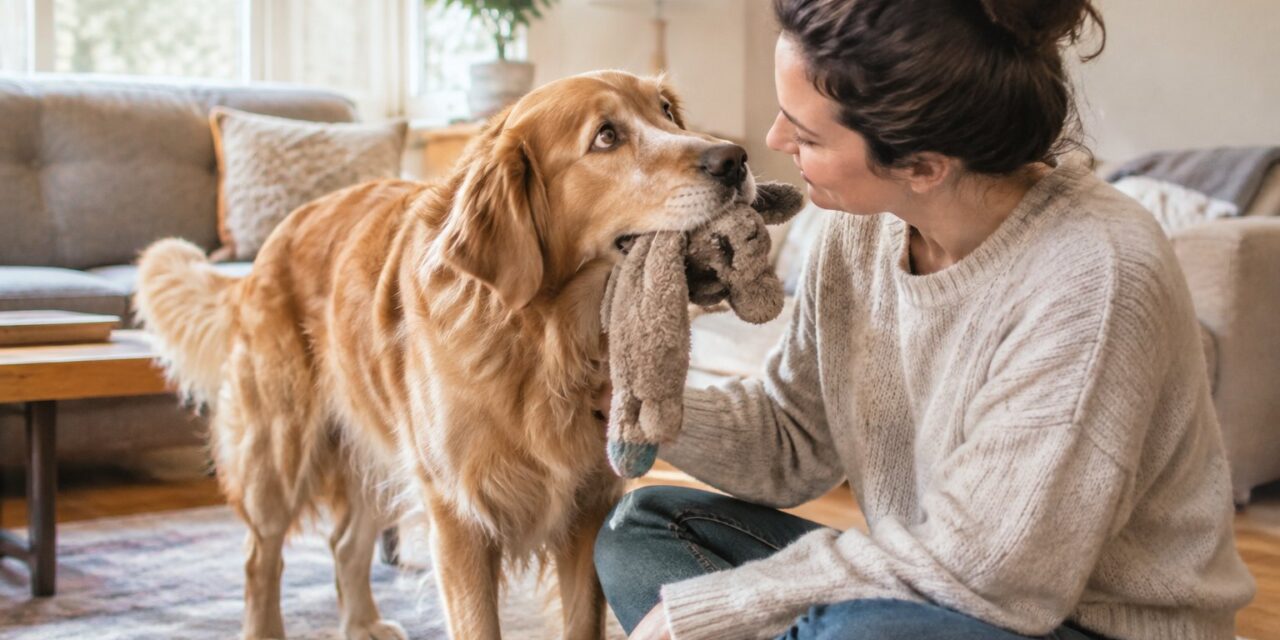
A dog looking for connection often holds the toy gently in their mouth while leaning against your leg or sitting close by. They may not drop the toy at all, and their tail wag tends to be slower and lower. Soft eyes, a relaxed jaw, and a willingness to just sit near you point toward a bid for closeness rather than a game.
Why Holding On Does Not Always Mean Resource Guarding
A dog that keeps the toy in their mouth while approaching you isn’t necessarily guarding it. True resource guarding comes with stiff posture, a hard stare, or a low growl when you get close. A dog simply showing off a toy will stay loose and wiggly, often inviting you to pet them while the toy stays in their mouth. The context and body language around the behavior matter more than the act of holding on.
How Should You Respond When Your Dog Approaches?
Match your response to what your dog’s body language is telling you instead of assuming every toy delivery means “throw this.” A calm, observant reaction builds trust and helps your dog feel understood.
Offer a Calm Greeting and Let Your Dog Set the Pace
Crouch down, speak in a relaxed tone, and let your dog come to you fully before reaching for the toy or petting them. Rushing at your dog with excited energy can overwhelm them, especially if they came to you seeking comfort rather than a wild play session. Give them a few seconds to settle before deciding what comes next.
Invite Play Without Grabbing the Toy
If your dog’s body language says “play with me,” respond by patting the floor, backing up a step, or tossing a second toy instead of yanking the one in their mouth. Many dogs feel more comfortable dropping a toy on their own terms than having it pulled away. Letting your dog choose when to release it keeps the interaction positive on both sides.
Respect Signs That Your Dog Needs Space
A dog holding a toy tightly, turning their head away, or stepping back when you reach for them is asking for room. Give them that space rather than coaxing the toy out of their mouth. Sit nearby, talk softly, and let them come closer when ready. Forcing an interaction at this point can undo the trust you’re trying to build.
When Does Toy Carrying Need Professional Attention?
Toy carrying crosses into a concern when it comes with sudden behavior changes, ongoing distress, or aggression around the object. Most dogs who carry toys are simply communicating, but a few warning signs call for a conversation with your vet or a certified dog trainer.
Sudden Changes, Persistent Distress, or Difficulty Settling
If a dog who never carried toys before suddenly won’t put one down, or starts whining and pacing with a toy in their mouth for long stretches, something may be bothering them. This kind of shift can point to anxiety, boredom that has grown into a bigger problem, or even physical discomfort. A dog that can’t settle down despite having the toy, and keeps pacing or whining for more than a few minutes at a time, is worth a closer look from your vet.
Stiffening, Growling, or Snapping Around Toys
A dog that goes stiff, growls, or snaps when you or another pet comes near their toy is showing real resource guarding, not a simple invitation. This behavior can escalate if left alone, especially around children or other animals in the house. A certified trainer who uses positive reinforcement methods can help you work through this safely, and a vet visit rules out any pain or medical issue driving the behavior.
Let Your Dog’s Signals Guide the Moment
A toy at your feet can mean a dozen different things depending on your dog’s posture, the speed of their tail wag, and what’s happening around them that day. Reading those small details gives you a much clearer picture than assuming every toy delivery is a request for fetch.
Dogs who feel heard in these small moments tend to settle into interactions faster and show less frustration overall.
Pay attention over the next few weeks to when your dog brings a toy: right after you get home, during a storm, after a long stretch alone, or in the middle of a quiet afternoon. Patterns will start to show up, and those patterns tell you more about what your dog needs than any single gesture can.