That slow-motion stretch your dog does the second they spot you, front legs out, chest low, tail up and wagging, is one of the sweetest hellos in the dog world. If your dog stretches when they see you, this is what it means: your dog feels safe, comfortable, and genuinely glad you’re there. Dog trainers and behaviorists often call this the “I love you” stretch, and it shows up most in dogs who trust the person standing in front of them.

This greeting stretch looks almost identical to a yoga pose. Front legs stretch forward, the chest dips close to the floor, and the back end lifts into the air. Some dogs hold it for a second or two. Others add a full-body shake or a happy spin right after. It can look playful, but it carries real meaning behind it: a mix of physical comfort and emotional trust that’s worth understanding, especially since the same stretch can sometimes point to something else going on with your dog’s body.
Why Does Your Dog Stretch During a Greeting?
Your dog stretches when they see you mainly because they feel calm, their body is waking up, or they’re excited about what comes next. Several things can be happening at once, and most of them are good signs about how your dog feels in that moment.
They Feel Relaxed and Ready to Interact
A dog who stretches toward you is showing a relaxed body. Tense, anxious dogs tend to hold their muscles tight and keep their movements small and guarded. A loose, full stretch takes confidence, because it puts your dog in a vulnerable position with their belly and throat exposed. Dogs don’t do that around people or situations that make them nervous.
They Are Waking Up and Loosening Their Muscles
Plenty of greeting stretches happen because your dog was just resting. If you walk in after your dog has been napping on the couch, that stretch might simply be their muscles waking up, the same way you might stretch after sitting too long at a desk. This is a normal part of a dog’s movement pattern and happens many times a day, not only when you walk through the door.
They Anticipate Play, Attention, or a Familiar Routine
Dogs learn patterns fast. If your arrival usually means a walk, a meal, or some playtime, your dog’s stretch can be their way of gearing up for what’s coming. The stretch loosens their legs and back right before they spring into action, similar to an athlete stretching before a sprint.
They Have Learned That Stretching Gets a Positive Response
Dogs repeat behaviors that get a reaction. If you smile, talk in a happy voice, or bend down to pet your dog every time they stretch, your dog picks up on that pattern. Over weeks and months, the stretch can become a learned greeting that reliably earns your attention, which makes your dog more likely to do it again next time.
How Can You Tell a Greeting Stretch From a Play Bow?
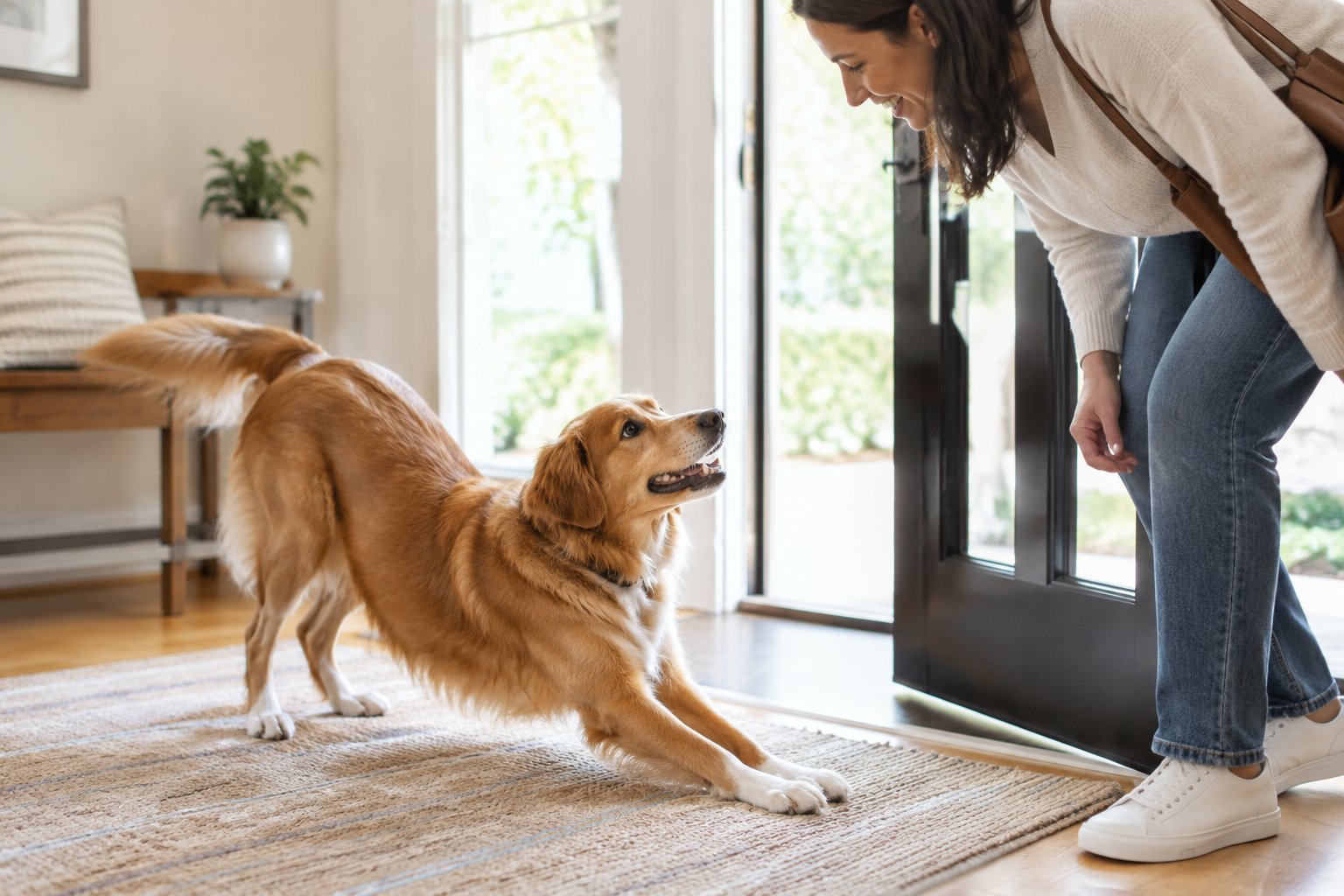
A greeting stretch and a play bow can look almost the same, but the context around them tells you which one you’re seeing. A play bow usually comes with bouncy energy and an invitation to chase or wrestle, while a greeting stretch is often quieter and tied to the simple joy of seeing you.
Look at the Whole Body, Not Just the Pose
The stretch itself only tells part of the story. Check the tail, ears, and eyes along with it. A soft, wagging tail, relaxed ears, and a loose mouth point to a calm, affectionate greeting. A stiff tail held high, hard staring eyes, or a tense face suggest something different is going on, even if the front legs are stretched out the same way.
Watch What Happens Before and After the Stretch
A play bow typically happens mid-interaction, often after some bouncing or barking, and it’s followed by darting away or nudging a toy toward you. A greeting stretch tends to happen right when your dog first notices you, before any play starts, and it’s often followed by calm nuzzling, leaning into your hand, or simply settling down near you.
When Could Stretching Signal Pain or Illness?

Stretching becomes a concern when it happens over and over, outside of greetings, or along with other symptoms like limping or a hunched back. An occasional stretch when you walk in the door is normal dog behavior. Frequent stretching paired with discomfort is a different situation and worth paying attention to.
How Repeated Stretching Differs From an Occasional Greeting
A happy greeting stretch happens once, maybe twice, right as your dog sees you, and then your dog moves on to normal activity. Pain-related stretching tends to repeat throughout the day, even when no one is around, and it often looks stiff or incomplete rather than loose and full. If your dog keeps stretching their front legs or back every few minutes regardless of what’s happening around them, that pattern is worth noting.
What Is the Prayer Position in Dogs?
The “prayer position” is a stretch where a dog lowers their front half to the ground with their chest almost flat and their back end stays raised, similar to the greeting stretch pose, but it’s held longer and repeated often. In some dogs, this position points to abdominal pain, pancreatitis, or digestive upset, especially when it shows up outside of greetings and comes with a hunched look or reluctance to move. A one-time pose at the door is not the same as a dog returning to this position again and again through the day.
Which Warning Signs Need Prompt or Emergency Veterinary Care?
Call your vet if stretching comes with any of these signs:
- Vomiting, diarrhea, or a swollen belly
- Whining, shaking, or yelping during the stretch
- Reluctance to walk, jump, or climb stairs
- Loss of appetite or unusual tiredness
- Stiffness that doesn’t ease up after moving around
A dog showing a bloated or hard belly along with repeated stretching and restlessness needs emergency care right away, since this combination can point to a serious condition like bloat.
Why Does Your Dog Stretch for You but Not Other People?
Your dog saves the full greeting stretch for people they know well because it ties closely to trust and daily familiarity. Dogs build their social world around routine, scent, and repeated positive experiences, and the people who show up in that routine most often tend to get the warmest greetings.
Familiarity, Daily Routines, and Different Greeting Styles
The person who feeds, walks, and plays with a dog every day becomes a reliable, predictable part of their world. That predictability builds the kind of comfort that shows up as a full-body stretch. A visiting relative or a new friend might get tail wags and sniffing instead, simply because the dog hasn’t built that same history with them yet. None of this means your dog dislikes other people; it just means the stretch is reserved for the most familiar faces.
Why One Gesture Cannot Measure Your Dog’s Bond
A missing stretch doesn’t mean a weaker bond. Some dogs show affection through leaning, following you room to room, or resting their head on your lap instead of stretching. Breed, age, and personality all shape how a dog expresses comfort, so a dog who never does the greeting stretch can still be deeply attached to you in other visible ways.
How Should You Respond When Your Dog Stretches?
The best response to a greeting stretch is a calm, warm greeting that lets your dog decide how much contact they want. Matching their relaxed energy keeps the moment pleasant instead of overstimulating.
Offer a Calm Greeting and Let Your Dog Choose Contact
Crouch down, speak in a soft voice, and let your dog come to you rather than reaching out immediately. This gives your dog control over the interaction, which builds even more trust over time. Pet areas your dog usually enjoys, like the chest or side of the neck, instead of going straight for the top of the head.
Follow Their Lead if They Invite Play
If the stretch turns into bouncing, a toy in the mouth, or a play bow, go ahead and engage. A short game of tug or a few tosses of a ball right after a greeting stretch can be a great way to burn off that first burst of excitement, especially for dogs who have been alone for a few hours.
Notice Changes Without Rewarding Every Stretch
Pay attention if the stretch changes shape, speed, or frequency over weeks, since that can be an early clue about your dog’s physical comfort. At the same time, you don’t need to give treats or exaggerated praise every single time your dog stretches at the door. A calm hello works fine and keeps the greeting natural instead of turning it into a trained trick.
Read the Whole Dog, Not Just the Stretch
A stretch at the door is almost always a good sign. It usually means your dog feels relaxed, trusts you, and is glad you’re home, sometimes mixed with simple muscle warm-up or excitement about what’s coming next.
The same pose can occasionally point to discomfort, especially when it repeats often, shows up as the prayer position, or comes with other symptoms like vomiting or a tense belly. Watching your dog’s whole body (their tail, ears, posture, and energy) gives you a far clearer picture than the stretch alone ever could.
Pair that daily awareness with regular vet checkups, and you’ll be able to enjoy that sweet greeting stretch while staying alert to any changes that need attention.