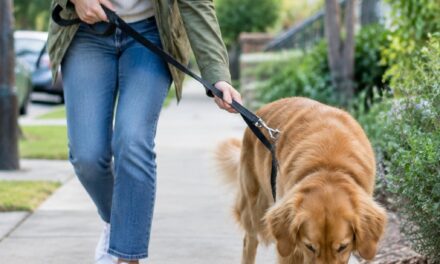
Your dog likely dreams about familiar experiences, including play, walks, and people such as you, although the exact content of dog dreams remains unknown. Sleep recordings and animal memory research support that possibility, giving you a reasonable explanation for those twitching paws without revealing the story behind them.

When you ask, “What do dogs dream about?” you’re asking something science reaches indirectly. Your dog’s sleep stages are measurable. Their private experience during those stages remains beyond what a brain recording or a muffled bark reveals.
That distinction helps you interpret sleep behavior calmly. A paddling paw is compatible with dreaming; identifying a squirrel chase from that movement takes the evidence further than it goes.
Do Familiar People and Daily Adventures Appear in Dreams?
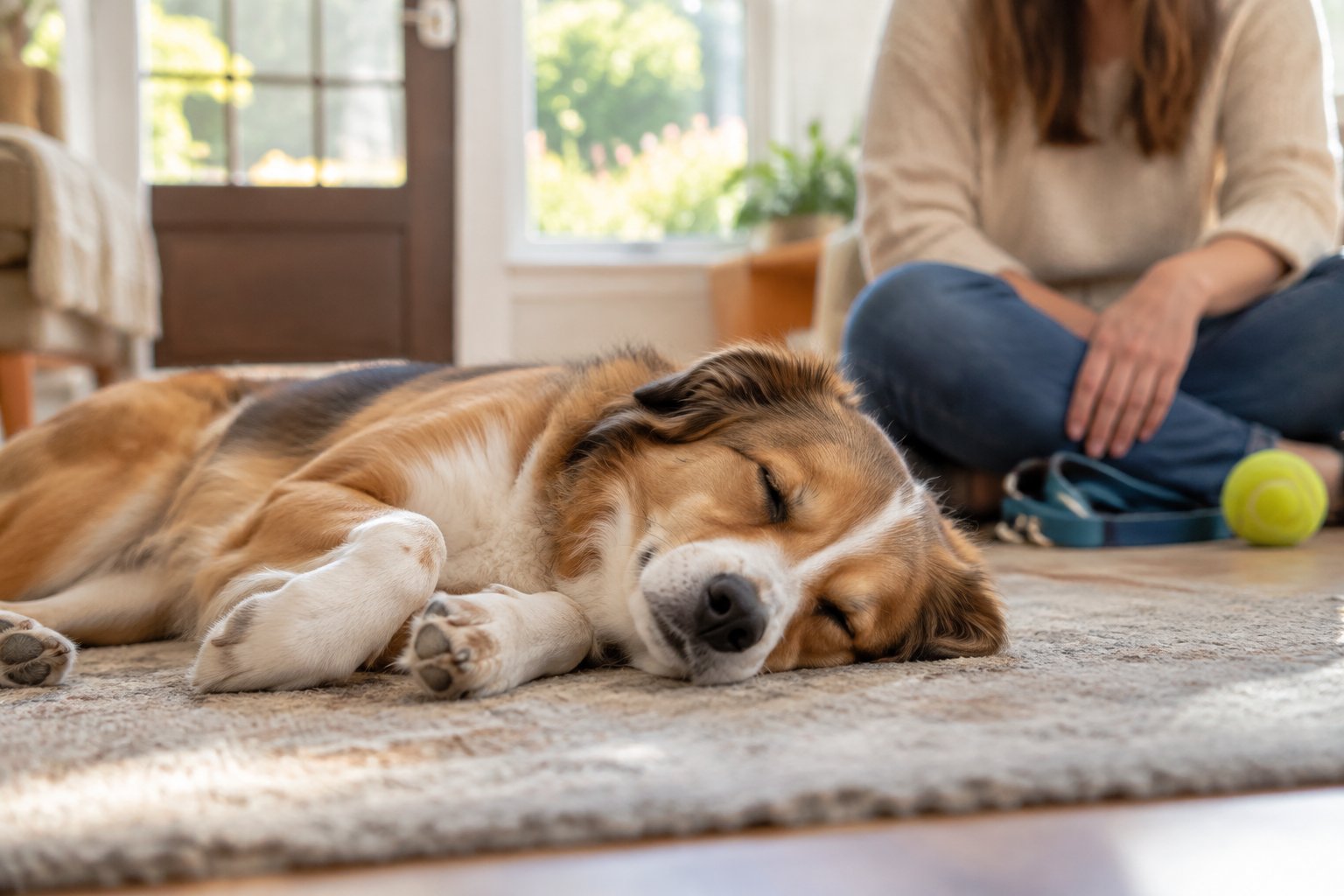
Your dog’s familiar activities and relationships are plausible ingredients for dreams. Experiences that occupy their waking life give you sensible candidates, with different levels of evidence behind each suggestion.
Why Play, Walks, and Familiar Places Are Likely Candidates
Your dog builds memories while exploring and interacting with the world. Research in other animals shows that patterns of brain activity associated with waking experiences return during sleep. That makes a favorite walking route or a game of fetch a reasonable possibility for dream content.
You should treat those examples as informed guesses. Memory replay supports a connection between waking experience and sleeping brain activity, while a recognizable dream scene involves additional assumptions about what your dog experiences.
Do Dogs Dream About Their Owners?
You are a plausible part of your dog’s dreams because you occupy an important place in their daily life. Your voice and scent accompany experiences ranging from meals to time together outdoors.
The idea that dogs dream about their owners remains a hypothesis. Even if your dog’s sleeping brain processes memories involving you, that leaves open how those memories feel or appear within a dream.
What Deirdre Barrett Suggests About Emotional Bonds
You’ll encounter Harvard psychologist Deirdre Barrett’s comments in many discussions of what dogs dream about. Her suggestion is that emotionally important people and activities are likely dream material, drawing on the relationship between human dreams and waking concerns.
For your dog, that puts interactions with you among the candidates. Barrett’s owner-related comments are expert interpretation, not a demonstrated recording of a dog dreaming about a particular person. You can appreciate the possibility while keeping that distinction clear.
How Do Scientists Know Dogs Likely Dream?
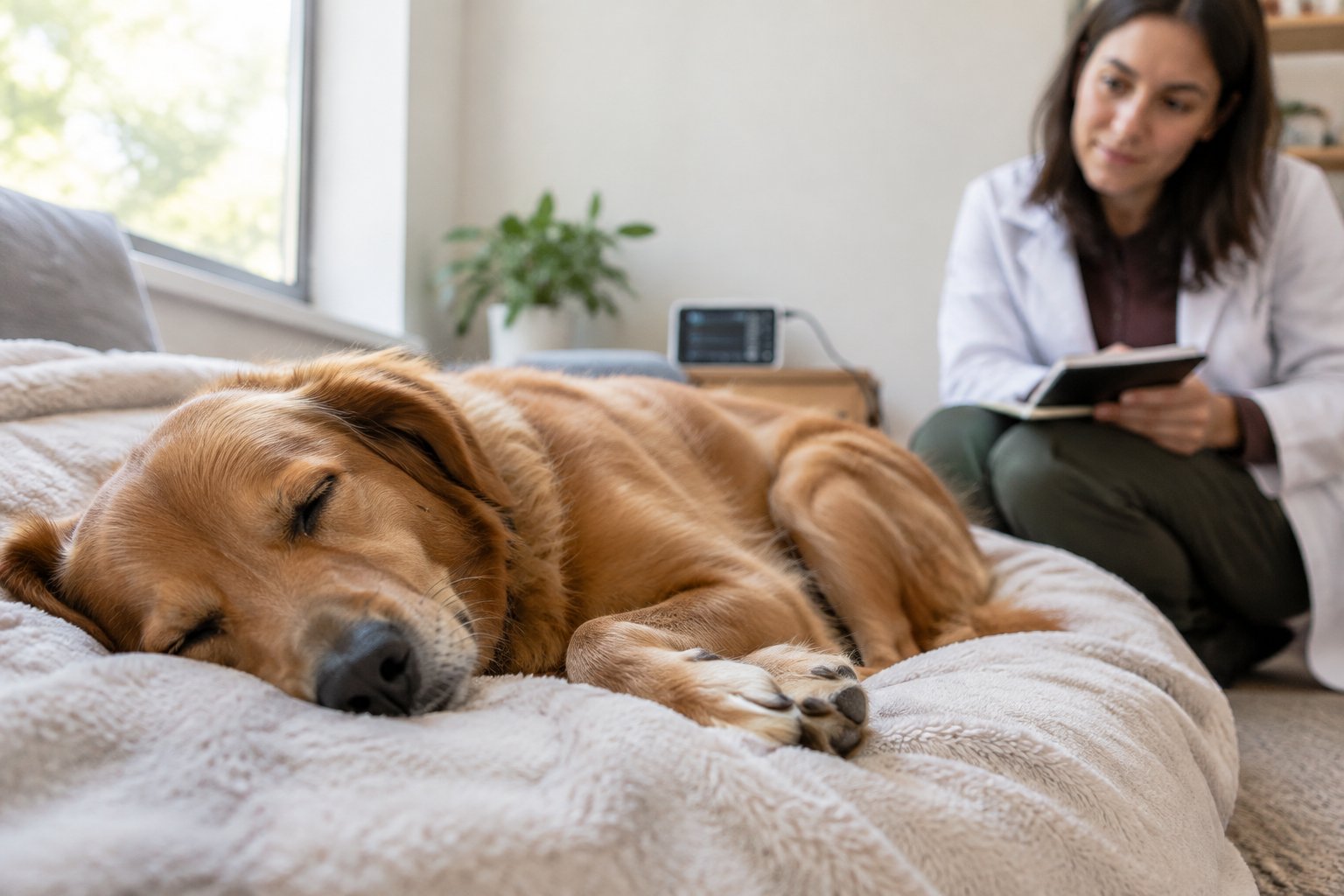
Your dog’s measurable sleep physiology gives scientists strong reasons to infer dreaming. Canine sleep includes recognizable stages, and research in other mammals connects sleeping brain activity with earlier experiences.
What REM Sleep and Brain Recordings Reveal
Your dog cycles through non-REM sleep and rapid eye movement sleep, also called REM sleep. Electroencephalography, or EEG, records electrical activity through electrodes placed on the scalp, helping researchers distinguish these stages.
During REM sleep, your dog’s brain shows an active pattern alongside characteristic eye movements and reduced muscle tone. In humans, this stage is strongly associated with vivid dreams. The similarities support the inference that your dog has dream experiences, although EEG does not display their content.
What the MIT Rat Study Suggests About Memory Replay
You get an important clue from work by researchers at the Massachusetts Institute of Technology involving rats. They recorded patterns of activity in the hippocampus, a brain region involved in memory, while the animals performed a running task.
Related sequences appeared again during REM sleep. This replay suggests that sleeping brains revisit waking experiences in an organized way. Applying that finding to your dog supports familiar experiences as potential dream material, while leaving the details of canine dreaming unresolved.
Why Researchers Cannot Decode a Dog’s Dream
You cannot obtain a dream report from your dog, which creates a fundamental challenge. Human dream research connects sleep measurements with what people describe after waking. Your dog has no comparable way to explain a sleeping experience.
Brain activity also requires interpretation: a pattern associated with movement does not reveal a complete scene or emotion. You therefore have stronger evidence for sleep stages and memory processing than for any particular dream narrative.
Why Do Sleeping Dogs Twitch, Paddle, and Whimper?
Your dog’s small sleep movements are compatible with normal REM physiology. Reduced muscle activity keeps most of the body still, while brief twitches and vocal sounds sometimes occur.
How REM Muscle Inhibition Limits Movement
During REM sleep, your dog’s nervous system suppresses much of the activity in muscles used for voluntary movement. Brainstem circuits, including circuits associated with the pons, help produce this temporary reduction in muscle tone.
This suppression leaves room for small movements. You might notice an ear flick, a brief paw jerk, or movement beneath closed eyelids. These observations fit normal sleep physiology, especially when your dog remains relaxed and settles afterward.
Why Visible Movements Cannot Reveal Dream Content
You see the movement that reaches your dog’s muscles; the experience behind it remains inaccessible. A paddling motion resembles running, yet it does not identify a location, another animal, or a reason for moving.
The same caution applies to sounds. A whimper supplies too little information to establish fear, and a tail movement does not establish happiness. Some movements also occur outside REM sleep, so dog dreaming cannot be identified reliably from a single twitch.
Should You Wake a Dreaming Dog?
You should usually let a peacefully sleeping dog wake on their own. If waking is necessary, use your voice from a safe distance and allow time for your dog to become alert.
Can Dogs Have Nightmares?
Your dog may experience unpleasant dreams, given the broader evidence for mammalian dreaming and emotional experience. Establishing that a particular episode is a nightmare requires information their sleep behavior cannot supply.
Whining or growling alone gives you no dependable measure of distress. Even a startled awakening has several possible explanations, including an outside noise or discomfort. If your dog repeatedly wakes frightened or struggles to settle, discuss the pattern with your veterinarian.
Why Calling Gently Is Safer Than Touching
Calling your dog’s name gently gives them a chance to wake before anyone enters their immediate space. An abruptly awakened dog sometimes reacts defensively while disoriented, including snapping at a familiar person.
If you need to wake your dog, keep your face and hands away from their mouth. Say their name softly, pause, and wait until they look alert before approaching. Teach children to leave sleeping dogs undisturbed, particularly when the dog is tucked into a bed or crate.
When Unusual Sleep Movements Need Veterinary Attention
You should seek veterinary advice for forceful, prolonged, or changing sleep movements. Stiff movements accompanied by drooling, confusion, or incontinence warrant veterinary assessment. These signs require professional interpretation and do not establish a diagnosis at home.
If it is safe, record a video and note how the episode begins and ends. Your veterinarian will also want to know how your dog behaves afterward. Responding to your voice is useful information, but it does not reliably rule a seizure in or out.
For a suspected seizure, clear nearby hazards and keep your hands away from your dog’s mouth. Avoid restraining them. Seek urgent veterinary care for a prolonged episode, repeated episodes without recovery, breathing difficulty, or an injury.
How Can You Support Restful Sleep?
You support healthy canine sleep by protecting rest time and providing a comfortable, predictable environment. Your dog’s usual sleep pattern also gives you a useful baseline for noticing changes.
Provide a Quiet Sleeping Space and Consistent Routine
Give your dog a bed away from busy household traffic, with enough room to stretch or change position. Choose bedding that suits their mobility and the room’s temperature. A dog with joint discomfort needs easy access without climbing or jumping.
Keep daily activity and bedtime routines reasonably consistent. Match exercise to your dog’s age and health, and provide opportunities to sniff and explore during waking hours. Let your dog retreat to their sleeping space without being disturbed for attention.
You cannot choose your dog’s dream content through a bedtime routine. Your practical goal is comfortable, uninterrupted rest.
Discuss Persistent Sleep Changes With Your Veterinarian
Contact your veterinarian if your dog develops repeated nighttime waking or a sustained change in sleep. Note whether the change coincides with a new medication, household disruption, or signs of pain.
Keep a brief record of when disturbances happen and how your dog behaves during the day. Include relevant details such as itching, difficulty getting comfortable, loud snoring, or pauses in breathing. Those observations help your veterinarian assess causes that extend beyond dreaming.
Avoid giving your dog human sleep aids or supplements without veterinary guidance. Treatment should address the reason for disrupted sleep.
Familiar Experiences Are Likely, but Dream Stories Remain Unknown
Your dog’s everyday experiences are the most plausible starting point for thinking about dream content. Measured sleep physiology supports dreaming, animal memory research supports replay, and expert hypotheses put familiar people such as you among the possibilities.
The precise stories remain unknown. When you notice brief, relaxed twitching, allow your dog to rest. If movements become forceful or sleep changes persist, record what you observe and share it with your veterinarian.