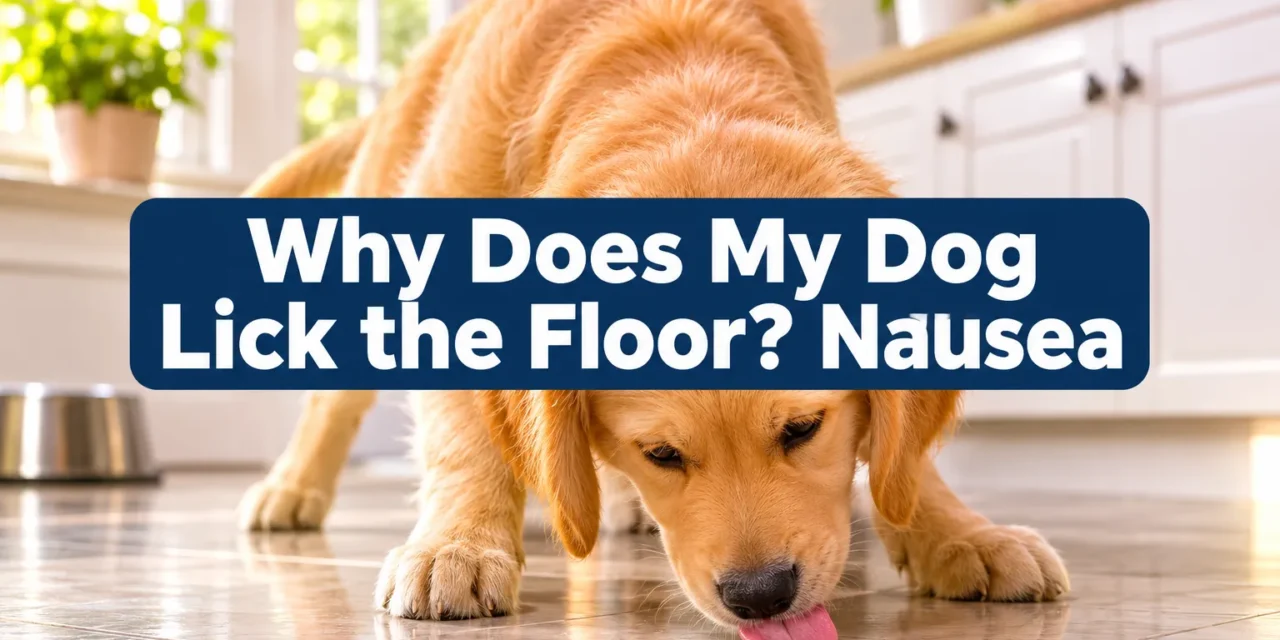
Here’s a fact that surprises most dog parents: floor licking isn’t just a weird quirk. Vets now have a name for it, “excessive licking of surfaces,” or ELS. And studies show it’s tied to tummy trouble way more often than boredom or habit [1].

If your pup has turned your kitchen tiles into their personal lollipop, you’re probably wondering: is this normal? Or is something wrong? The answer to why does my dog lick the floor, nausea, anxiety, compulsive behavior, and household hazards, depends on frequency, context, and what else is going on with your furry best friend.
This guide breaks it down by cause, how often it happens, and when it’s time to call the vet. Let’s get into it.
Key Takeaways
- Floor licking is often a medical red flag, not just a bad habit, GI disease is the top suspected cause [1][2].
- Nausea causes behavioral signs like floor licking, lip smacking, and excessive swallowing before dogs even vomit [3].
- Anxiety and compulsive behavior can trigger licking too, but vets now treat these as secondary, not primary, causes [2][4].
- Household hazards like spilled chemicals or food residue can turn innocent licking into a toxic emergency [5][6].
- If licking comes with vomiting, drooling, or lethargy, book a vet visit, don’t wait it out [3][7].
Why Does My Dog Lick the Floor? Nausea Is the Most Common Culprit
Let’s start with the big one: nausea. Research shows dogs with chronic floor and surface licking are way more likely to have an underlying GI disorder than dogs who don’t lick [1]. We’re talking issues like:

- Gastritis (stomach inflammation)
- Acid reflux
- Pancreatitis
- Food intolerances
- Intestinal parasites
- Foreign objects stuck in the gut
Dogs can’t tell you their stomach hurts. So they show it. Floor licking, lip licking, and gulping are classic behavioral signs of nausea [3]. Think of it like this: when your tummy feels off, you might chew gum or sip water. Your dog licks the floor.
“Behavioral signs of nausea, including floor licking, deserve the same clinical attention as vomiting itself.” [3]
One dvm360 commentary put it bluntly: vets should stop filing this under “weird behavior” and start treating it as a diagnostic clue pointing toward the gut [2]. That’s a big shift. For years, excessive licking got brushed off as a nervous tic. Now? It’s a signal worth investigating.
The Licking-Vomiting Connection
Here’s a pattern worth watching closely: if your dog licks the floor right before throwing up, that’s a strong sign of nausea-driven licking [3][7]. This combo shows up again and again in clinical observations. If you notice this cycle more than once, it’s time to loop in your vet.
Anxiety, Stress, and Compulsive Behavior: The Secondary Suspects
Not every lick is about tummy trouble. Stress and anxiety absolutely play a role too, just usually not the starring one [4].
Dogs under stress might lick floors, furniture, or even their own paws as a self-soothing behavior. It’s similar to how some people bite their nails. The licking releases endorphins, which calm the nervous system temporarily.
Common anxiety triggers include:
- 🏠 Separation from their favorite human
- ⚡ Loud noises (thunderstorms, fireworks)
- 🐾 New pets or people in the home
- 🧳 Moving to a new house
- 🩺 Past trauma or rescue history
If your dog’s floor licking ramps up during specific situations, like when you grab your car keys, anxiety is likely driving it. For nervous pups, especially small breeds, check out these 7 Chihuahua Anxiety Remedies to Calm Your Nervous Pup for practical, vet-friendly calming strategies. You can also browse general dog anxiety remedies for broader tips that apply to any breed.
When Licking Becomes Compulsive
Compulsive disorders are different from garden-variety anxiety. They’re repetitive, hard to interrupt, and don’t seem to serve any obvious purpose. A dog with compulsive licking might do it for minutes at a time, seemingly unable to stop.
Here’s the twist: experts now believe many “compulsive” cases actually have a GI component hiding underneath [2][4]. So before labeling your dog’s behavior as purely psychological, it’s worth ruling out physical causes first.
Breed matters here too. Some breeds are more prone to anxious or compulsive tendencies, check out Chihuahua behavior or Berner behavior patterns if you want breed-specific context.
Household Hazards: When Floor Licking Turns Dangerous
Sometimes the floor itself is the problem, not your dog’s brain or gut. Floors collect all kinds of things dogs shouldn’t eat:
| Hazard | Risk Level | What Happens |
|---|---|---|
| Cleaning chemicals | 🔴 High | Chemical burns, poisoning |
| Antifreeze residue | 🔴 Severe | Kidney failure, can be fatal |
| Dropped medication | 🔴 High | Toxicity, organ damage |
| Food crumbs (onion, garlic) | 🟡 Moderate | GI upset, toxicity in large amounts |
| Dust, dirt, debris | 🟢 Low | Mild stomach upset |
If your dog suddenly starts licking one specific spot on the floor with intensity, go check that area immediately [5][6]. It could be something spilled, a crumb of something toxic, or even a scent only your dog can detect.
This is also where urgency matters most. Unlike nausea or anxiety, which usually build up over time, hazard-related licking can turn into a true emergency fast, especially with toxins like antifreeze or xylitol.
Frequency and Context: Your Decision-Making Framework
Not all licking needs a vet trip. Here’s how to sort harmless from worrisome:
Occasional licking (once in a while, no other symptoms)
- Likely just curiosity or cleaning up a crumb
- No action needed, just keep floors tidy
Frequent licking tied to specific triggers (keys jingling, doorbell, thunder)
- Likely anxiety-driven
- Try calming tools, routine, and training
Repetitive licking with no clear trigger, hard to interrupt
- Possible compulsive behavior, but get a GI checkup first [2]
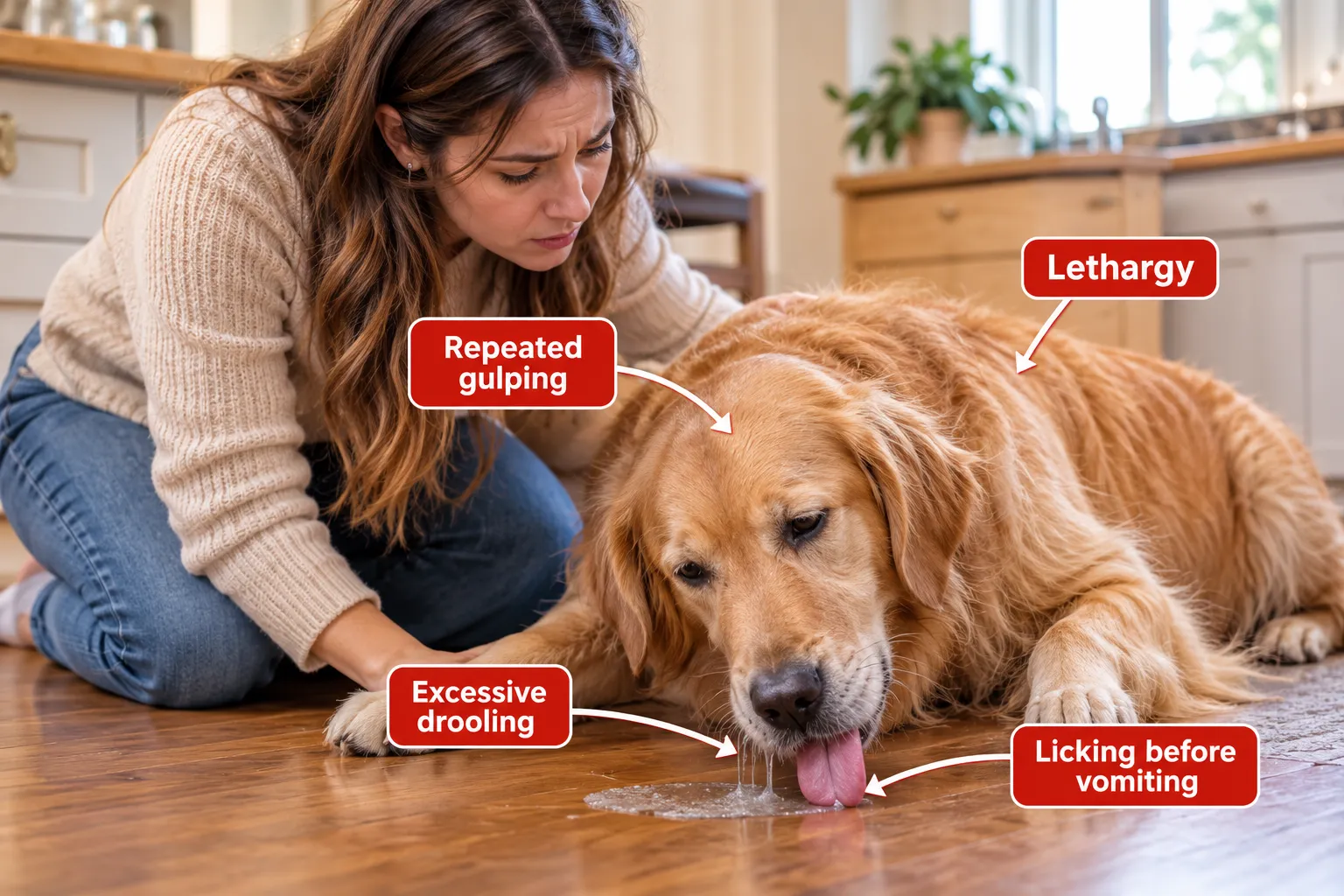
Licking paired with vomiting, drooling, or lip-smacking
- Strong sign of nausea, vet visit recommended [3]
Sudden, intense licking at one specific spot
- Possible hazard exposure, check the area and call your vet or poison control immediately
Red Flags: When to Call the Vet Right Away
Updated symptom checklists from veterinary sources highlight specific warning signs that mean “stop waiting, start calling” [5][7]:
- 🚨 Licking followed by repeated vomiting
- 🚨 Loss of appetite for more than 24 hours
- 🚨 Lethargy or unusual tiredness
- 🚨 Pale gums
- 🚨 Excessive drooling alongside licking
- 🚨 Known or suspected exposure to a toxin
- 🚨 Licking that’s new, sudden, and intense
If you see two or more of these together, don’t wait. Early GI treatment tends to resolve floor licking faster and more completely than letting it ride [2]. Vets increasingly report real improvement once the underlying stomach issue gets treated, which backs up the medical-first approach pet parents should lean into.
Dogs Lick for Many Reasons, Here’s the Bigger Picture
It’s worth remembering: licking is just one of many behaviors dogs use to communicate. Some licking happens during totally normal moments, like grooming or even strange things dogs do while you sleep. Context is everything.
The forward-looking research trend points toward something called the “gut-brain connection”, the idea that your dog’s stomach and brain are constantly talking to each other [2][8]. Stress can upset digestion, and digestion issues can stress the brain. It’s a two-way street. That’s why treating floor licking holistically, gut health AND emotional wellbeing, tends to work better than picking just one angle.
Managing a nervous or compulsive licker often means combining training with environment changes. If you’re working on calming behaviors at home, clicker training can help redirect anxious energy into positive habits. And honestly, if your dog trusts you enough to show you their weird behaviors, that’s a sign of a strong bond, check out the signs that mean you’re a truly great owner for a confidence boost.
How to Support a Floor-Licking Dog at Home
While you’re figuring out the cause, here’s what helps in the meantime:
- Keep floors spotlessly clean. Fewer crumbs and chemicals mean fewer hazards.
- Track the pattern. Write down when licking happens, time of day, triggers, duration.
- Watch for vomiting or drooling. These tip the scale toward medical causes.
- Reduce anxiety triggers where possible. Calm routines go a long way.
- Don’t punish the licking. It’s communication, not misbehavior.
- Schedule a vet visit for anything persistent. GI workups can catch issues early.
A calm, safe environment matters for overall wellbeing too, even something like a cozy, well-designed outdoor space can reduce stress for dogs who spend time outside. Take a look at these adorable dog house designs or insulated dog house hacks for freezing winters if your pup’s stress ties to their outdoor time.
Conclusion
Floor licking isn’t just quirky dog behavior, it’s a clue. And the evidence is clear: why does my dog lick the floor, nausea, anxiety, compulsive behavior, and household hazards, all deserve a spot on your checklist, but nausea and GI issues top the list [1][2][3].
Here’s your action plan:
- Watch for patterns, triggers, and accompanying symptoms.
- Rule out hazards by checking the exact spot your dog licks.
- Treat anxiety with calming routines and training support.
- Always get persistent or symptom-paired licking checked by a vet.
Your dog can’t explain what’s going on inside. But their behavior speaks volumes, and now you know how to listen. 🐾
References
- Gastrointestinal Disorders in Dogs with Excessive Licking of Surfaces. academia.edu.
- Compulsive Disorders Have You Considered Gi Involvement. dvm360.com.
- Behavioral Signs of Nausea. drjeffnichol.com.
- Abnormal Behaviors Arent Always Psychological. psychologytoday.com.
- Dog Licking Floor. caninejournal.com.
- Dog Licking Floor Excessively Suddenly. caninesandpups.com.
- Why Do Dogs Lick the Floor. dogster.com.
- 65df05adb766d82b18ffc50f. agris.fao.org.
dog floor licking, dog nausea symptoms, dog anxiety behavior, compulsive licking dogs, canine GI disorders, household hazards for dogs, dog behavior problems, vet checkup signs, dog gut health, excessive licking surfaces, dog stress relief, dog body language