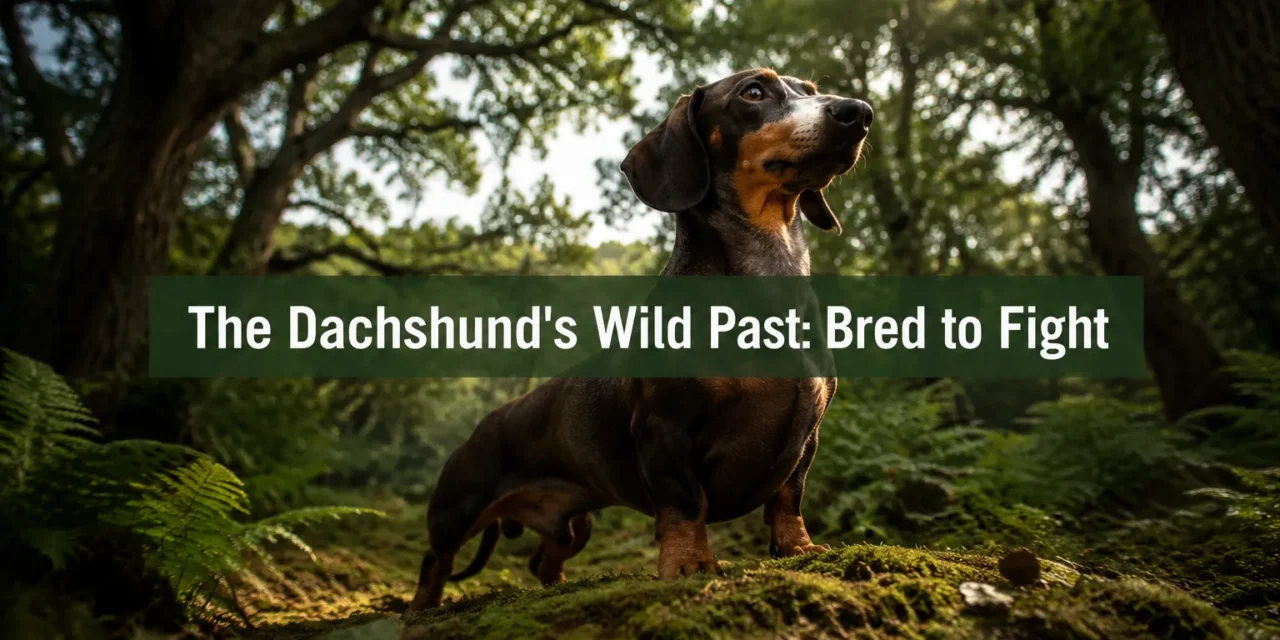
A badger can weigh up to 30 pounds, has razor-sharp claws, and will fight ferociously when cornered underground. Yet for centuries, German hunters sent a short-legged, long-bodied dog into dark tunnels to face this formidable opponent, and that dog won. That dog was the dachshund. 🐾

The Dachshund’s Wild Past: Bred to Fight Badgers (And Win!) is one of the most surprising stories in dog history. Today, dachshunds are one of the most popular family pets in the world. But behind those floppy ears and adorable short legs lies a warrior bred for underground combat. Understanding where this breed truly comes from makes every dachshund owner see their little dog in a completely new light.
Key Takeaways
- 🦡 Dachshunds were specifically bred in Germany to hunt badgers underground, their unique body shape is no accident.
- 🐕 The name “dachshund” literally means “badger dog” in German.
- 💪 Every physical feature of the dachshund, from its short legs to its loose skin, was designed for tunnel hunting.
- 📅 The breed has existed for over 600 years and was officially recognized by the American Kennel Club in 1885.
- 🏠 Despite their fierce history, dachshunds are now beloved family companions, but they still carry that bold, stubborn hunting spirit!
The Dachshund’s Wild Past: Bred to Fight Badgers (And Win!), Where It All Began
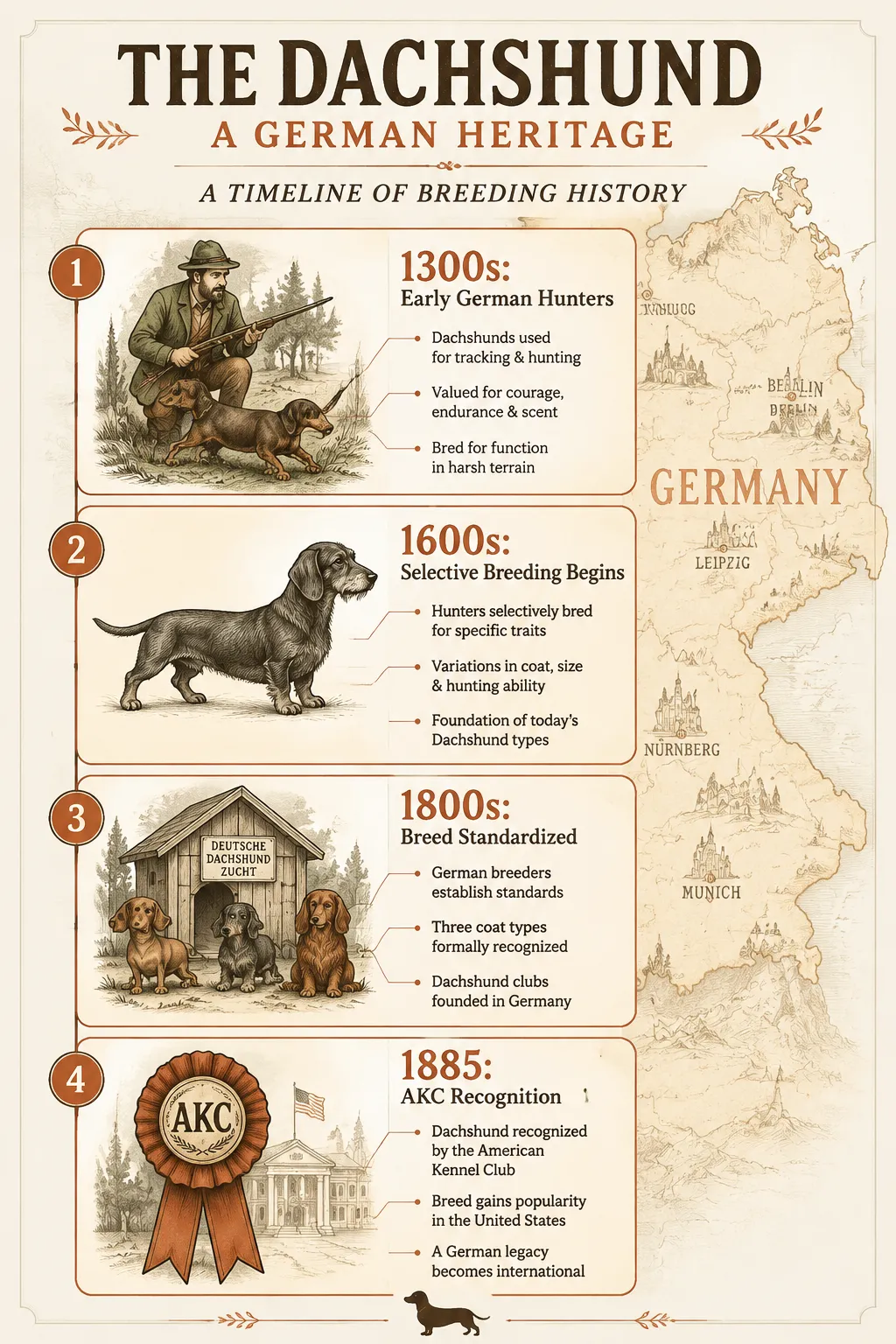
The story starts in Germany, somewhere around the 1300s to 1400s. German hunters had a big problem. Badgers were everywhere. They dug up farmland, raided food stores, and were incredibly hard to catch. Badgers live underground in complex tunnel systems called “setts.” Normal hunting dogs couldn’t follow them in.
So hunters did something clever. They started selectively breeding dogs with specific traits. They wanted a dog that could:
- Fit inside a narrow underground tunnel
- Dig powerfully with strong front paws
- Fight a badger face-to-face in a confined space
- Bark loudly so hunters above ground could hear where the dog was
Over many generations, this careful breeding produced the dachshund, a dog perfectly shaped for the job.
“Dachshund” comes from two German words: “dachs” (badger) and “hund” (dog). The name literally means “badger dog.” 🇩🇪
By the 1600s, German hunters were refining the breed further. By the 1800s, the dachshund was a recognized and celebrated breed across Europe. In 1885, the American Kennel Club (AKC) officially recognized the dachshund as a breed. Today, the AKC consistently ranks it among the top 10 most popular dog breeds in the United States.
Early Dachshund Types
Early dachshunds were not quite like the ones seen today. They were larger and heavier. Some historians believe early versions weighed as much as 30 to 40 pounds. As breeding became more precise, the dogs got smaller and more specialized.
| Time Period | Key Development |
|---|---|
| 1300s, 1400s | Early selective breeding in Germany begins |
| 1600s | Breed becomes more defined and widely used |
| 1800s | Breed standards established in Germany |
| 1885 | AKC officially recognizes the dachshund |
| 1900s | Miniature variety gains popularity worldwide |
A Body Built for Battle: The Science Behind the Shape
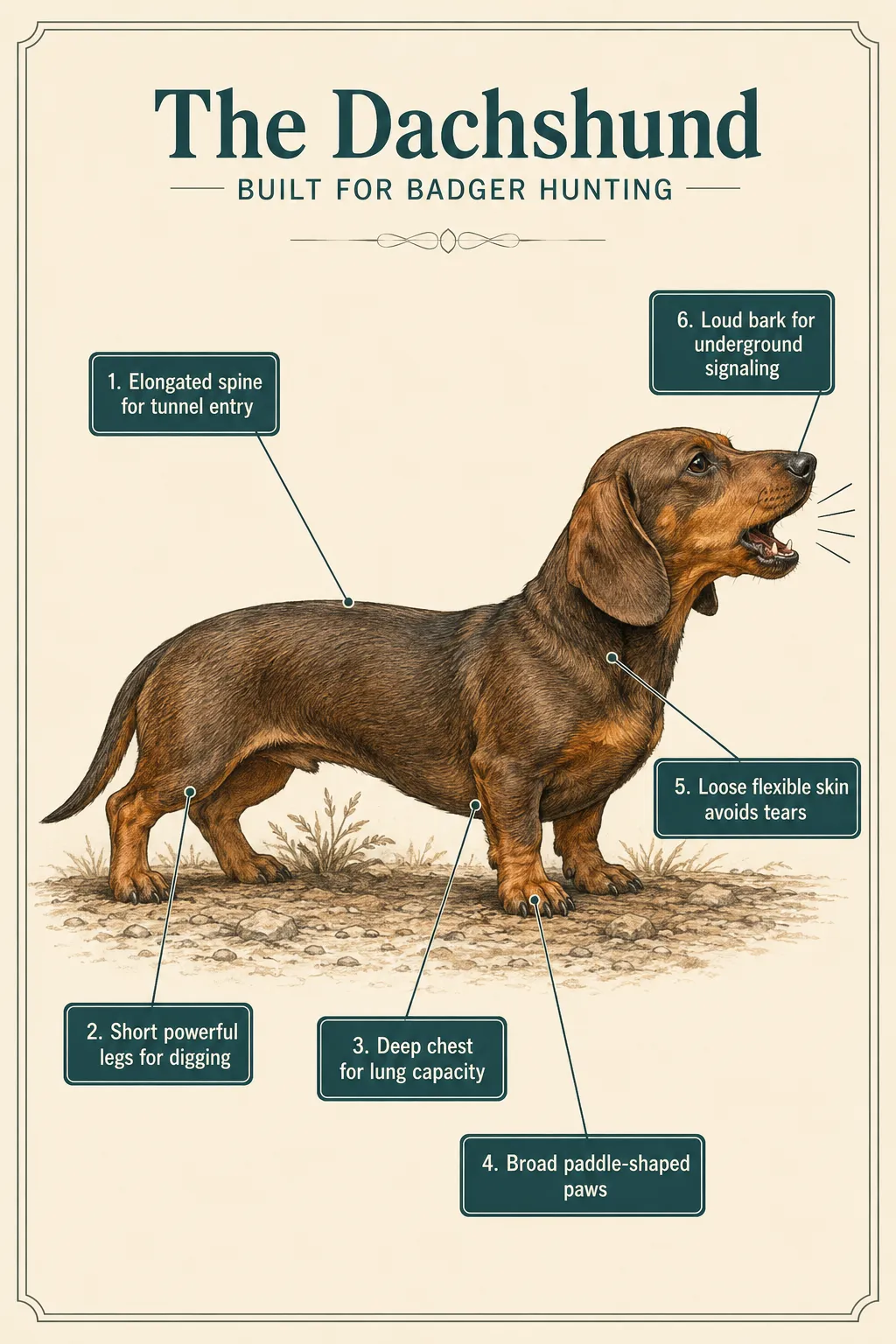
Every single part of a dachshund’s body tells a story about The Dachshund’s Wild Past: Bred to Fight Badgers (And Win!). This is not a dog that ended up looking this way by chance. Each physical feature was carefully selected by hunters who needed a specific tool for a specific job.
Those Famous Short Legs
The dachshund’s short legs are caused by a genetic condition called chondrodysplasia, a form of dwarfism that affects bone growth. Hunters actually selected for this trait on purpose. Short legs meant the dog could:
- Crawl through narrow tunnels without getting stuck
- Stay low to the ground while digging
- Move efficiently in tight underground spaces
The Long, Flexible Body
That iconic long spine is not just for looks. A long, flexible body allowed the dachshund to navigate twists and turns inside a badger’s tunnel. The dog could actually turn around in spaces that would trap other breeds.
⚠️ Important note for owners: This same long spine that made dachshunds great hunters also makes them prone to a painful condition called Intervertebral Disc Disease (IVDD). More on that later!
Powerful Paws and Loose Skin
Look closely at a dachshund’s front paws. They are wide, paddle-shaped, and turned slightly outward. This is a perfect digging design. The dog could move earth quickly and efficiently.
The dachshund’s skin is also notably loose and thick. This was not an accident. When a badger bites, loose skin means the dog can twist and move without the bite causing a deep wound. It is essentially a built-in protective layer.
A Deep Chest and Loud Voice
Dachshunds have a surprisingly deep chest for their size. This gives them excellent lung capacity, important when working underground where air can be limited. Their bark is also famously loud and deep, far bigger than expected from such a small dog. Hunters relied on that bark to track the dog’s location underground.
Here is a quick summary of dachshund physical features and their hunting purpose:
| Physical Feature | Hunting Purpose |
|---|---|
| Short legs | Fits inside narrow tunnels |
| Long flexible body | Navigates tunnel twists and turns |
| Wide paddle paws | Powerful digging ability |
| Loose thick skin | Protection from badger bites |
| Deep chest | Extra lung capacity underground |
| Loud, deep bark | Signals location to hunters above ground |
| Strong jaw | Grips and holds prey |
Standard vs. Miniature: Two Hunters, Two Prey
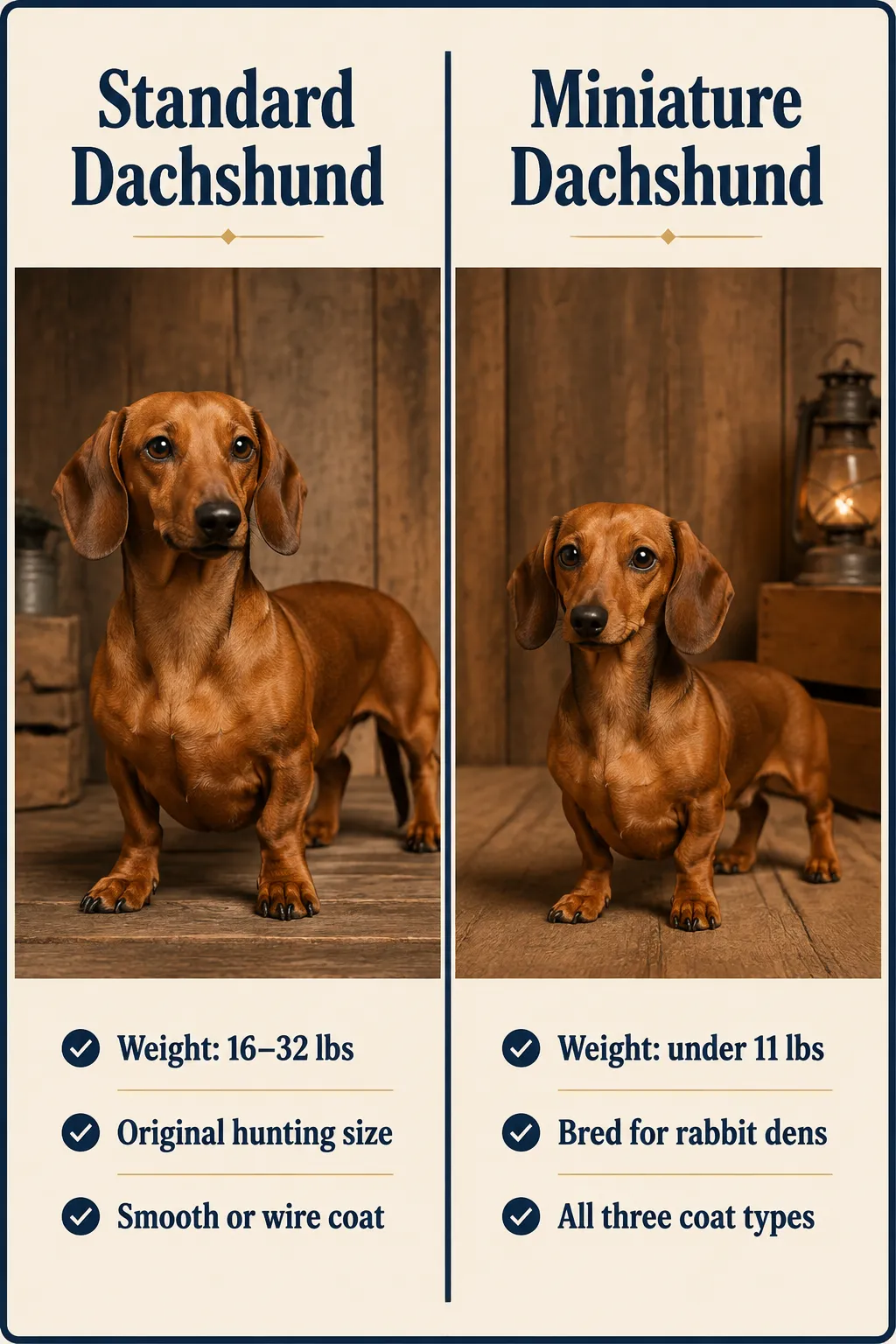
Not all dachshunds are the same size, and that difference goes back to their hunting history. The Dachshund’s Wild Past: Bred to Fight Badgers (And Win!) actually produced two distinct size varieties, each bred for a different quarry.
The Standard Dachshund
The standard dachshund is the original. These dogs typically weigh between 16 and 32 pounds. They were bred specifically to hunt badgers. Their size gave them the strength and power needed to confront a large, aggressive badger underground.
Standard dachshunds were also used to hunt:
- 🦊 Foxes
- 🐗 Wild boar (in packs)
- 🦌 Tracking wounded deer
The Miniature Dachshund
As hunting practices evolved, hunters needed a smaller dog for smaller prey. The miniature dachshund was bred to hunt rabbits in their burrows. Miniatures weigh under 11 pounds and can fit into much tighter spaces than their standard cousins.
Miniatures became especially popular in the late 1800s and early 1900s. Today, miniature dachshunds are actually more common as pets than standard dachshunds in many countries.
The Three Coat Types
Beyond size, dachshunds also come in three coat varieties, and yes, each has a hunting connection:
- Smooth coat, The original and most common. Easy to keep clean after digging through muddy tunnels.
- Wire coat, Developed by crossing dachshunds with terriers. The rough, bristly coat offered extra protection against thorns and rough underground terrain.
- Long coat, Developed by crossing with spaniels. Some believe the longer coat offered warmth in colder German climates.
Fun fact: A wire-haired dachshund has a slightly different personality than a smooth or long-haired one, often described as more terrier-like, feisty, and mischievous! 😄
From Badger Fighter to Beloved Family Dog

So how did a fierce underground badger hunter become one of the world’s most popular lap dogs? The transition happened gradually, and it reveals a lot about what makes dachshunds such wonderful companions today.
The Personality That Survived
Here is the thing about selective breeding: it shapes personality just as much as it shapes the body. Dachshunds were bred to be:
- Independent thinkers, A dog working alone underground cannot wait for instructions. It has to make its own decisions.
- Brave and bold, Facing a badger requires serious courage. Dachshunds are famously fearless, often unaware of their own small size.
- Determined and stubborn, Once a dachshund decides to do something, it is very hard to change its mind. Hunters needed a dog that would not give up.
- Vocal, That loud bark was essential for hunting. Today it means dachshunds are excellent (if sometimes noisy) watchdogs.
These traits did not disappear when dachshunds moved from forests to living rooms. Every dachshund owner knows the stubborn streak, the fearless attitude, and the surprisingly loud bark that comes with the breed.
Dachshunds in Popular Culture
Dachshunds became fashionable pets in Europe during the 1800s. Queen Victoria of England was a famous dachshund lover. Her fondness for the breed helped make them trendy among the upper classes.
During World War I and World War II, dachshunds faced a strange challenge. Because they were a German breed, they became unpopular in countries at war with Germany. Some owners even renamed their dogs “liberty hounds” or “badger dogs” to avoid anti-German sentiment. Despite this difficult period, the breed’s popularity recovered strongly after both wars.
By the mid-20th century, dachshunds had firmly established themselves as beloved family pets worldwide. 🌍
Health Considerations for Modern Dachshund Owners
That long, heroic spine that made dachshunds such great hunters comes with a modern health challenge. Intervertebral Disc Disease (IVDD) affects approximately 1 in 4 dachshunds at some point in their lives. This condition occurs when the discs between the vertebrae of the spine rupture or herniate, causing pain or even paralysis.
Tips to protect a dachshund’s spine:
- ✅ Use ramps or steps instead of letting the dog jump on and off furniture
- ✅ Keep the dog at a healthy weight, extra weight puts more stress on the spine
- ✅ Avoid activities that involve a lot of jumping or twisting
- ✅ Regular vet check-ups to catch early signs of disc problems
- ✅ Consider pet insurance that covers IVDD treatment
Other common health issues in dachshunds include:
- Patellar luxation (kneecap problems)
- Dental disease (common in small breeds)
- Progressive retinal atrophy (eye condition)
- Obesity, dachshunds love food and can easily gain too much weight
Training a Dog with a Hunting Brain
Training a dachshund requires understanding its history. This is a dog bred to work independently, make its own decisions, and never give up on a scent. That makes dachshunds wonderful but sometimes challenging to train.
Effective training tips for dachshunds:
- 🎯 Keep sessions short and fun, dachshunds get bored with repetition
- 🎯 Use high-value treats, food motivation works extremely well
- 🎯 Be patient and consistent, stubbornness is in their DNA
- 🎯 Start socialization early, expose puppies to many people, animals, and environments
- 🎯 Never use harsh methods, dachshunds respond poorly to punishment-based training
- 🎯 Harness their nose, scent games and nose work activities are perfect for this breed
“The dachshund is not a small dog. It is a large dog in a small body, with the attitude to match.”, Common saying among dachshund enthusiasts 🐕
Dachshunds Today: Still Hunters at Heart
Even the most pampered, sofa-loving dachshund still carries those ancient hunting instincts. Watch a dachshund in a garden and the behavior becomes obvious. They dig. They follow scent trails with intense focus. They investigate every hole and burrow. They bark at things much bigger than themselves without any hesitation.
Many dachshund owners participate in earthdog trials, organized events where dogs can practice their natural underground hunting instincts in a safe, controlled environment. The AKC offers earthdog titles specifically for dachshunds and terriers. These events are a wonderful way to honor the breed’s remarkable heritage.
Dachshunds also excel in:
- Scent work competitions
- Agility (surprisingly good despite the short legs!)
- Therapy dog work (their affectionate nature makes them great comfort animals)
- Conformation shows
Conclusion
The dachshund’s journey from fierce badger hunter to beloved family companion is one of the most fascinating stories in the dog world. Every time a dachshund stubbornly refuses to come inside, digs up the garden, or barks at a dog three times its size, it is honoring hundreds of years of carefully crafted breeding.
Understanding The Dachshund’s Wild Past: Bred to Fight Badgers (And Win!) does not just make for a great conversation piece, it genuinely helps owners understand and appreciate their dogs better. That stubborn streak is not bad behavior. That loud bark is not a flaw. That irresistible urge to dig is not destructive mischief. It is all simply a dachshund being exactly what it was born to be.
Actionable next steps for dachshund lovers:
- 🏥 Schedule a vet visit to discuss IVDD prevention and spine health for your dachshund.
- 🐾 Look up AKC earthdog trials in your area, give your dachshund a chance to use its natural instincts safely.
- 📚 Read about dachshund-specific training techniques to work with the breed’s independent nature rather than against it.
- 🛋️ Install ramps or steps at furniture your dachshund uses regularly to protect that precious spine.
- 🌿 Try nose work or scent games at home, a mentally stimulated dachshund is a happy dachshund.
These little dogs carry an enormous legacy. They deserve owners who understand and celebrate every bit of it. 🦡❤️🐕
References
- American Kennel Club. (2023). Dachshund breed information. AKC. https://www.akc.org/dog-breeds/dachshund/
- Alderton, D. (2008). The encyclopedia of dogs. Parragon Books.
- Fogle, B. (2009). The encyclopedia of the dog. DK Publishing.
- Meade, R. (2016). Dachshunds: A complete pet owner’s manual. Barron’s Educational Series.
- Brearley, J. M. (1977). The book of the dachshund. TFH Publications.
- American Kennel Club. (2022). Earthdog tests: Rules and regulations. AKC. https://www.akc.org/sports/terrier/earthdog/
- Strain, G. M. (2011). Deafness in dogs and cats. CABI Publishing.
- Bergman, R. L., et al. (2000). Rottweiler dog encephalitis. Journal of Veterinary Internal Medicine, 14(5), 539-542.
- Hansen, H. J. (1952). A pathologic-anatomical study on disc degeneration in dog. Acta Orthopaedica Scandinavica, 11(Suppl), 1-117.