Only 4% of dogs surrendered to shelters are given up because of aggression. The rest? Bad matches between dog and owner. That stat says everything. The wrong breed in the wrong hands leads to frustration, heartbreak, and a confused dog who never got a fair shot.

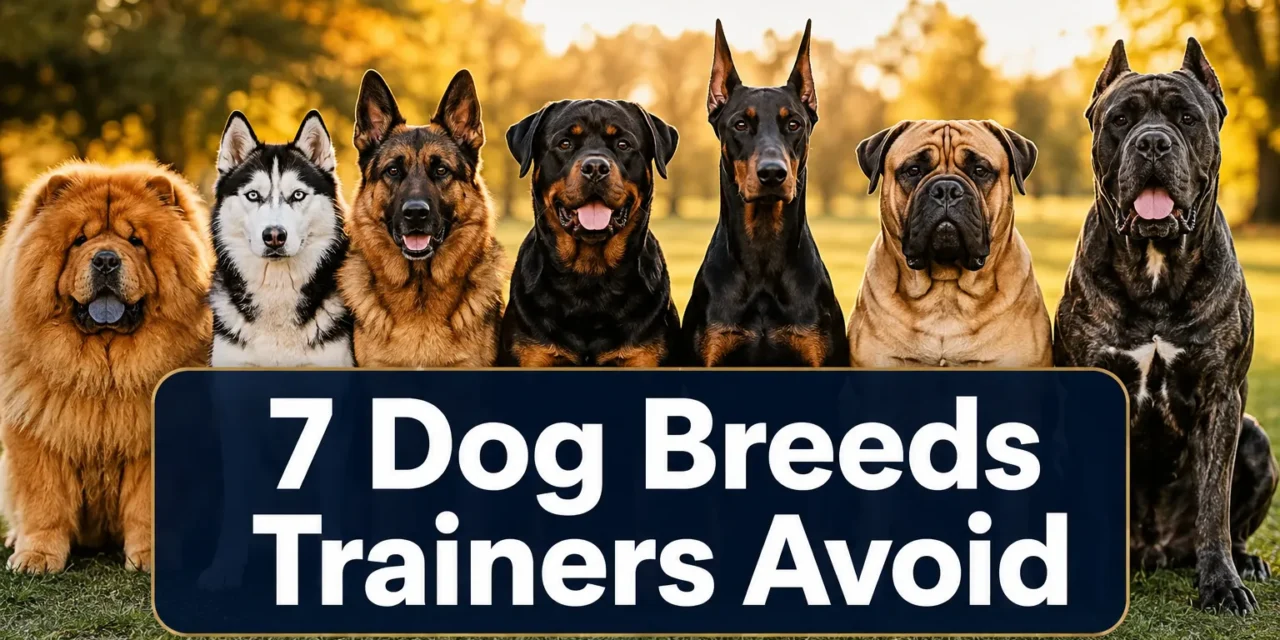
That’s exactly why the topic of 7 dog breeds trainers avoid has exploded across social media in 2026. Professional trainers, people who work with hundreds of dogs every year, are speaking up. They’re naming the breeds that challenge even the most experienced handlers. Not to shame these dogs. But to protect them.
This article breaks down the 7 dog breeds trainers avoid most often. It explains why these breeds are so tough. And it helps you decide if one of them could still be right for your family.
Why Professional Trainers Speak Up About Difficult Breeds
Professional trainers see it all the time. A family falls in love with a fluffy Husky puppy at the pet store. Six months later, that Husky has eaten the couch, escaped the yard three times, and howled through every night. The family is exhausted. The dog is stressed. Nobody wins.
That’s the story behind the growing conversation about 7 dog breeds trainers avoid. These pros aren’t trying to cancel certain breeds. They’re trying to save dogs from bad situations, and save owners from biting off more than they can chew.
“These dogs are not literally impossible to train. But their independence, prey drive, and need for experienced handlers make them ‘almost impossible’ for typical pet owners to manage successfully.” [5]
Here’s the thing: every breed on this list has fans who adore them. Many of these dogs are loyal, beautiful, and deeply bonded to the right owner. The keyword there is right owner.
Trainers across multiple interviews and videos in 2025 and 2026 consistently flagged the same core problems:
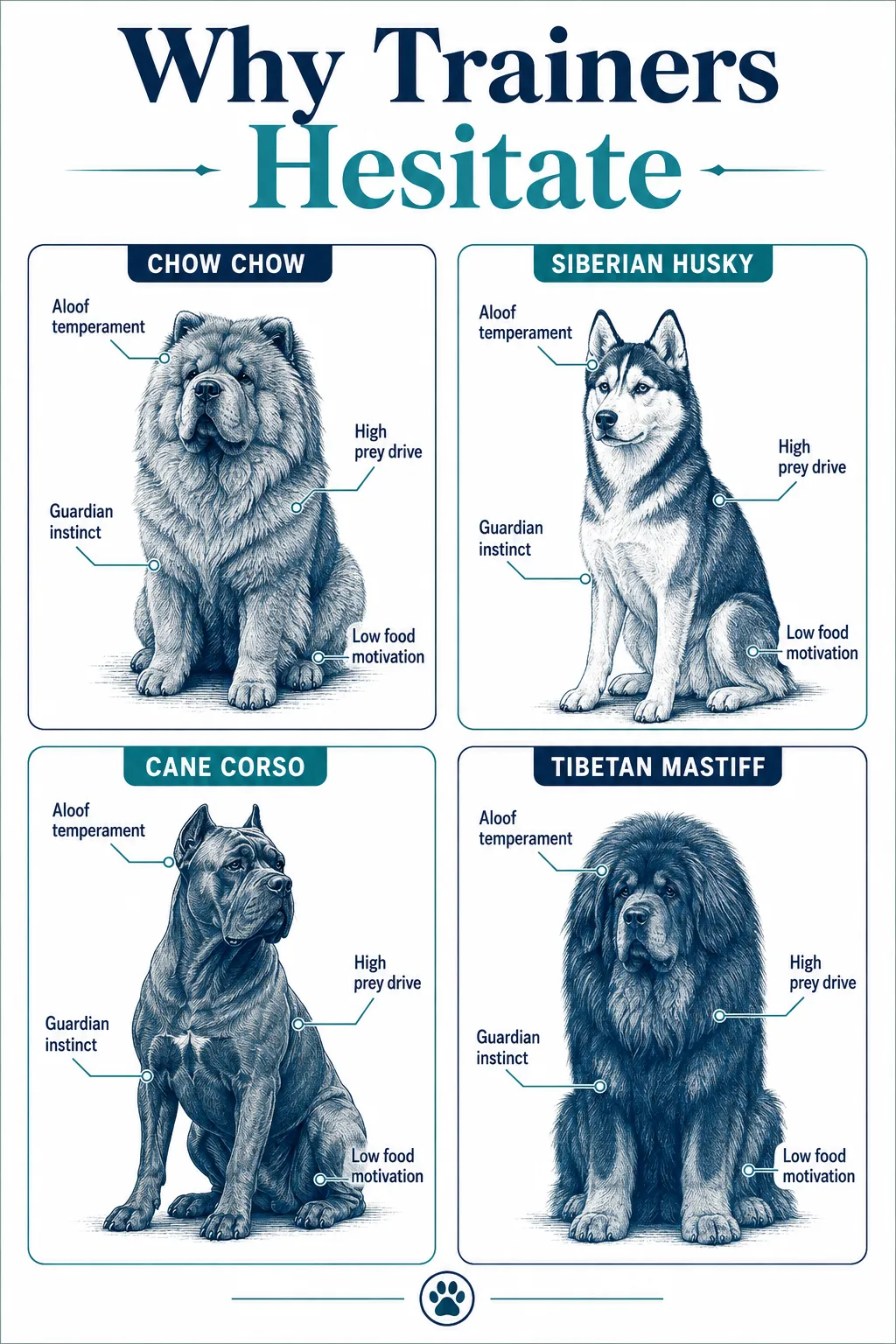
Low food motivation, some dogs just don’t care about treats
Strong guardian instincts, protective drives that can turn dangerous without expert handling
High prey drive, the urge to chase that overrides all training
Independence, a “why should I?” attitude toward commands
Health issues, chronic problems that make training harder and life shorter
Let’s dig into the actual list.
The 7 Dog Breeds Trainers Avoid Most Often
1. 🐻 Chow Chow
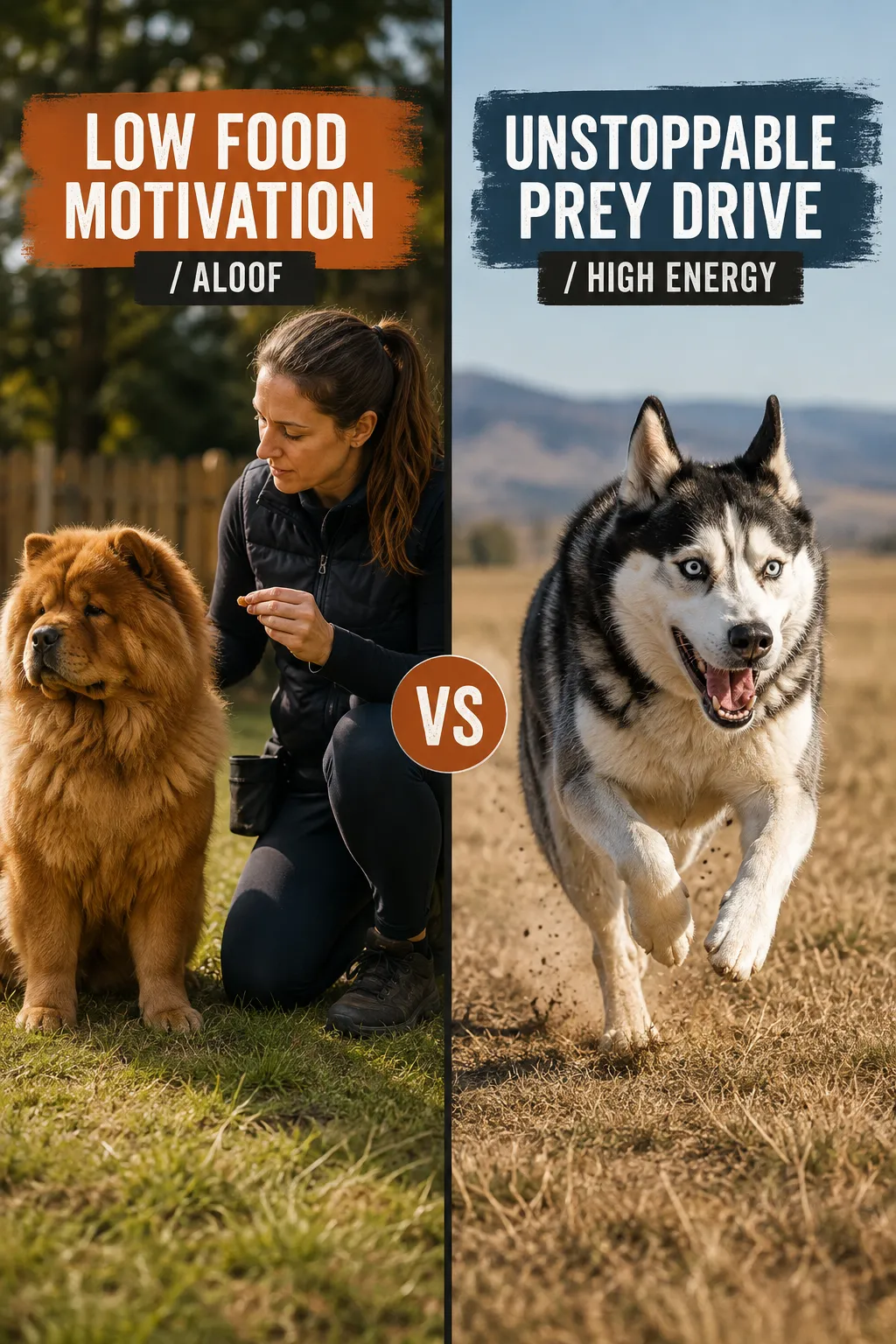
The Chow Chow is the poster dog for this entire conversation. One trainer called it the flagship example of a breed that “resists typical training approaches.” [1]
Why trainers avoid them:
Deeply aloof, they’re not people-pleasers
Low food motivation makes reward-based training tough
Strong-willed and independent by nature
Higher bite risk when mishandled or pushed too hard [1]
Chow Chows are ancient dogs. They weren’t bred to follow commands. They were bred to guard and hunt independently. That history doesn’t disappear just because they’re living in a suburban home now.
One trainer put it simply: Chow Chows are “aloof, strong-willed, and less interested in human guidance.” That’s not a flaw. It’s just who they are.
Who can handle a Chow Chow? Someone with experience in guardian breeds, tons of patience, and zero ego about being ignored.
2. 🐺 Siberian Husky
Ask any trainer which breed first-time owners should absolutely avoid, and the Siberian Husky tops the list almost every time. [7]
Why trainers avoid them:
Intense work drive, they were built to run 100 miles a day
Extremely high exercise requirements
Prey drive that makes off-leash time dangerous
Vocal, stubborn, and escape-artist level clever [5]
One professional trainer ranked the Husky as the single most difficult breed for novice owners. [7] Another described Huskies as “serious working dogs that are not fun to train for typical owners.” [8]
The problem isn’t that Huskies are mean. They’re actually social and friendly. The problem is that their energy and independence are relentless. An under-exercised Husky becomes destructive fast. [9]
Who can handle a Husky? Active owners with large outdoor spaces, experience with working breeds, and the time to provide serious daily exercise.
3. 🦁 Chow Chow’s Big Cousin: The Caucasian Shepherd (Caucasian Mountain Dog)
The Caucasian Shepherd, also called the Caucasian Mountain Dog, is a bear-sized livestock guardian that can weigh over 150 pounds. And that size is just the beginning of the challenge.
Why trainers avoid them:
Extreme protective instincts that are hard to manage
Rarely make good family pets due to guardian drive [9]
Can become unsafe if poorly socialized
Described as “bear-like livestock guardians whose extreme protective instincts make them unsuitable for most households”
One trainer stated plainly that Caucasian Shepherds “rarely make good pets due to their size and guardian drive.” [9] Another trainer included the Caucasian Mountain Dog on his personal list of breeds he’d never own.
These dogs were bred to fight off wolves and bears in the mountains of the Caucasus region. That’s not a background that translates well to apartment living or casual dog ownership.
Who can handle a Caucasian Shepherd? Experienced owners with large rural properties, deep knowledge of guardian breeds, and professional training support from day one.
4. 🐾 Cane Corso
The Cane Corso is a stunning, powerful Italian mastiff. It’s also one of the three breeds a professional trainer specifically said they’d “never recommend for families.” [10]
Why trainers avoid them:
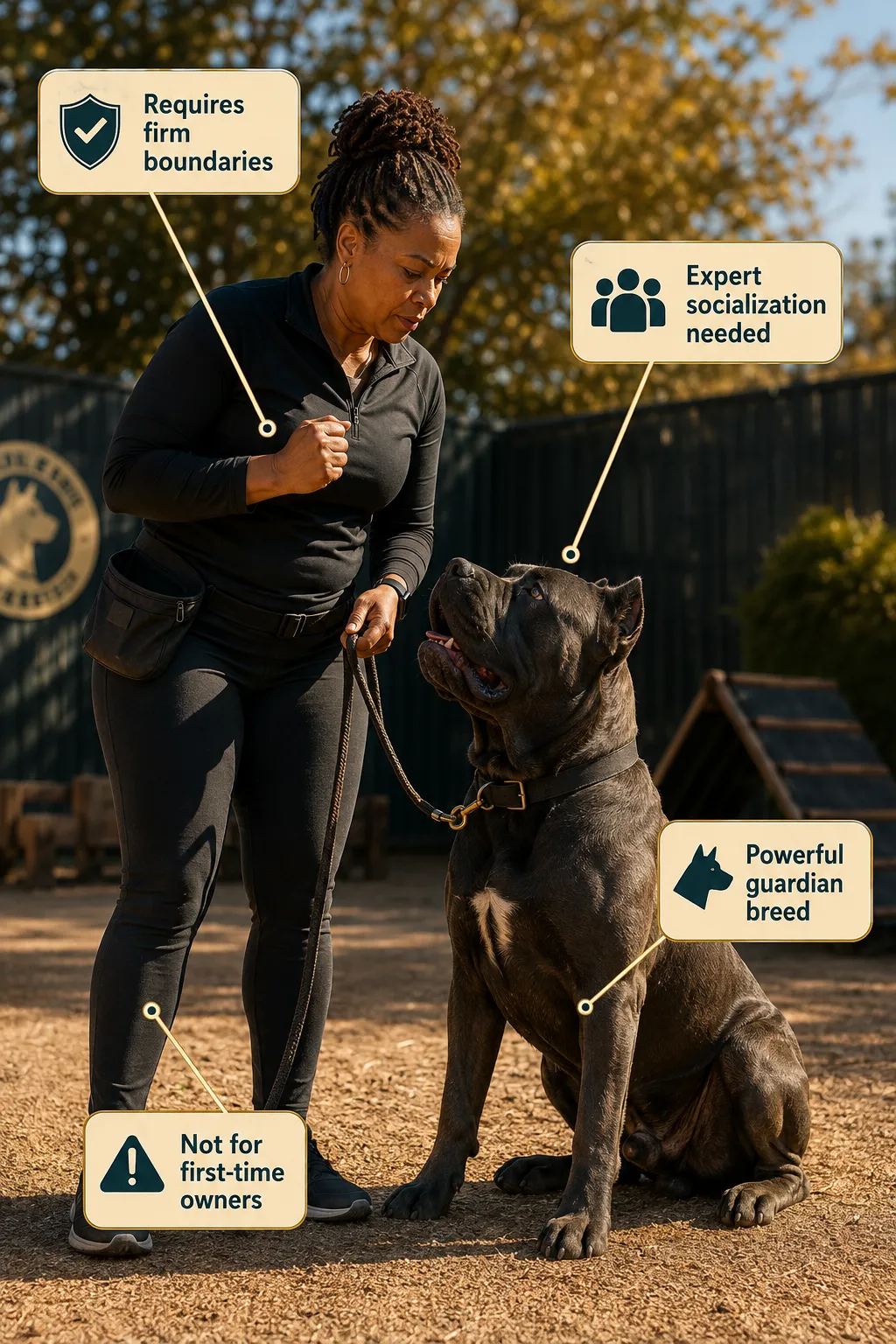
Powerful guardian breed demanding expert management
Can be unsafe if poorly socialized [10]
Requires consistent, confident leadership
Size and strength make mistakes very costly
The Cane Corso was bred as a war dog and estate guardian. It bonds deeply with its family, but that loyalty comes with a fierce protective instinct. Without proper socialization and training from an expert, that instinct can become a serious problem. [10]
Who can handle a Cane Corso? Experienced dog owners who have worked with large guardian breeds, have time for intensive socialization, and can provide firm, consistent structure every single day.
5. 🏔️ Tibetan Mastiff
The Tibetan Mastiff is majestic. It’s also one of the most challenging dogs on the planet for the average pet owner.
Why trainers avoid them:
Powerful, independent guardian breed
Demands expert management at all times [10]
Nocturnal by nature, they bark at night
Extremely territorial and suspicious of strangers
Like the Cane Corso, the Tibetan Mastiff made one trainer’s list of three breeds they’d never recommend for families. [10] These dogs were bred to guard Himalayan monasteries and nomadic camps. They made decisions independently, without human direction. That instinct is deeply hardwired.
The Tibetan Mastiff doesn’t look to you for guidance the way a Golden Retriever does. It looks at you and decides whether your input is worth considering. That’s a tough dynamic for most owners.
Who can handle a Tibetan Mastiff? Highly experienced owners familiar with primitive and guardian breeds, ideally with professional trainer support and a large, secure property.
6. 😤 Chihuahua
Don’t let the tiny size fool you. The Chihuahua is one of the most bite-prone dogs in the world, and trainers know it.
Why trainers avoid them:
Described as “pocket-sized demons” with a tendency to bite anything within reach
Extreme defensive biting behavior in pet environments [6]
Often poorly socialized because owners underestimate them
Reactivity and feistiness that rivals much larger breeds
Trainer Will Wing specifically called out Chihuahuas for displaying “extreme, defensive biting behavior in pet environments when not carefully bred and trained.” [6] Another trainer described them alongside Rat Terriers as “stubborn, prey-driven, and prone to reactivity.”
Here’s the irony: because Chihuahuas are small, owners often don’t take their behavior seriously. They get away with growling and snapping that would never be tolerated in a big dog. That lack of boundaries makes the problem worse over time.
Who can handle a Chihuahua? Patient owners who commit to proper socialization early, set firm boundaries, and don’t let “small dog syndrome” slide just because the bites are smaller.
7. 😮💨 Pug & French Bulldog (The Brachycephalic Pair)
These two breeds often appear together on trainers’ avoid lists, and for heartbreaking reasons.
One trainer called the Pug “a health crisis on four legs” because of chronic brachycephalic and spinal problems. A vet technician and dog trainer specifically listed French Bulldogs on her personal “never own” list, citing breathing and spinal issues that make training and daily life a constant challenge. [4]
These dogs can’t exercise for long. They overheat quickly. They struggle to breathe during training sessions. That’s not a training problem, it’s a welfare problem baked into their anatomy.
“A dog that can’t breathe properly can’t train properly.”, The core issue with brachycephalic breeds.
Who can handle a Pug or Frenchie? Someone who goes in with eyes wide open about the health costs, is prepared for vet bills, and understands that training sessions need to be short, cool, and gentle.
What These Breeds Have in Common
Looking at the full list of 7 dog breeds trainers avoid, a clear pattern emerges. These dogs share specific traits that make them tough for the average owner.
The Big Three Challenges:
1. Independence Over Obedience
Chow Chows, Tibetan Mastiffs, and Caucasian Shepherds were all bred to make decisions without human input. They guarded livestock and property alone. That independent streak doesn’t disappear in a pet home. It just becomes harder to manage.
2. Drive That Overwhelms
Huskies and Chihuahuas (in very different ways) have drives that override training. For Huskies, it’s the running and prey drive. For Chihuahuas, it’s the defensive and reactive drive. Both require experienced handling to channel safely.
3. Bodies That Complicate Everything
Pugs and French Bulldogs have physical limitations that make standard training difficult. Their health issues aren’t just expensive, they actively interfere with a dog’s ability to learn and thrive.
The trainers who speak about these breeds are consistent: these are not bad dogs. They’re dogs that need more than the average owner can typically provide. [4][7][10]
Important Disclaimer: These Are Personal Opinions
This is crucial to understand. None of the trainers’ lists discussed here come from kennel clubs, veterinary associations, or academic research bodies. [4][6][7][9][10]
These are personal professional opinions shared through social media, YouTube videos, and tabloid media interviews. Every trainer’s list is slightly different. One trainer avoids Chow Chows. Another avoids Dachshunds. Another would never own a Bloodhound (which can reach 110 pounds and follow a scent trail into the next county). [6]
The consensus across trainers is this: these breeds can thrive with experienced, dedicated owners. The problem is that they’re often mismatched with first-time or casual pet owners, which is why trainers publicly advise many people to “avoid” them. [4][7][10]
What this means for you:
✅ These breeds are not banned or inherently dangerous
✅ With the right owner and training, they can be amazing companions
✅ Do your own research beyond any single trainer’s opinion
✅ Talk to breed-specific rescue groups and experienced owners
⚠️ Be honest with yourself about your experience level and lifestyle
So Should You Get One of These Breeds?
Here’s the tail-wagging truth: some of the most devoted, passionate dog owners in the world have chosen breeds from this exact list. Husky owners are a tribe. Chow Chow fans are fiercely loyal. Cane Corso enthusiasts will tell you there’s no better dog on earth.
The question isn’t whether these breeds are “good” or “bad.” The question is whether they’re right for you.
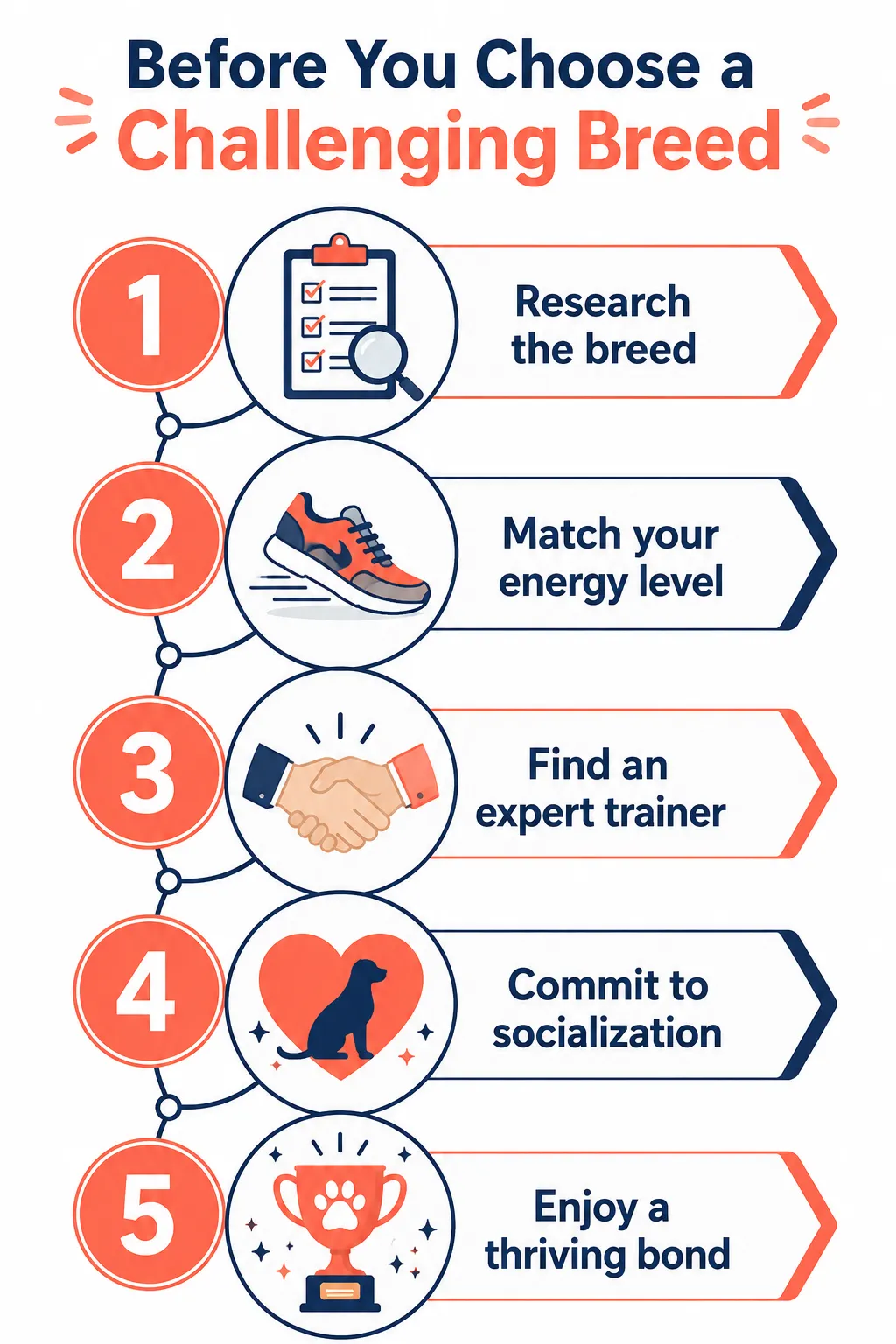
Ask yourself these questions before choosing a challenging breed:
🏃 Do you have the energy? Huskies need serious daily exercise. Can you match that?
🏠 Do you have the space? Caucasian Shepherds and Tibetan Mastiffs need room to roam.
💰 Do you have the budget? Pugs and French Bulldogs come with significant vet bills.
📚 Do you have the experience? Cane Corsos and Chow Chows need confident, knowledgeable handlers.
⏰ Do you have the time? Every dog on this list needs more training investment than average.
If you answered “yes” to all of the above, and you’re genuinely drawn to one of these breeds, go for it. Just go in prepared. Find a breed-specific trainer. Connect with experienced owners. Do the work.
If you answered “no” to several of those questions, that’s okay too. There are hundreds of wonderful breeds out there that will fit your lifestyle perfectly. The best dog is always the one that matches your real life, not just your dream life.
Conclusion: Knowledge Is the Best Leash
The conversation around 7 dog breeds trainers avoid isn’t about fear. It’s about respect, for the dogs, for the training process, and for the real commitment that comes with owning a challenging breed.
Professional trainers speak up because they’ve seen what happens when the wrong dog meets the wrong owner. It’s not pretty for anyone involved. But when the right owner finds one of these incredible, complex breeds? The bond is extraordinary.
Your action steps:
Research deeply, Read breed-specific books, forums, and rescue group resources before deciding.
Be honest, Assess your lifestyle, experience, and energy level truthfully.
Find a trainer first, Before bringing home a challenging breed, connect with a professional trainer who specializes in that breed.
Visit the breed, Spend time with adult dogs of the breed (not just puppies) to understand what you’re really signing up for.
Consider rescue, Breed-specific rescues often have adult dogs whose personalities are already known, no guessing games.
Every dog deserves an owner who chose them with open eyes and a full heart. Use this guide to make sure that owner is you. 🐾
References
[1] Watch – https://www.youtube.com/watch?v=OXZDioeeXR0
[4] Vet Dog Trainer Reveals Unstable Breeds – https://www.thesun.co.uk/fabulous/37463084/vet-dog-trainer-reveals-unstable-breeds/
[5] Watch – https://www.youtube.com/watch?v=hlu6yktRUS4
[6] Dog Trainer Shares 3 Dog Breeds He Would Never Own – https://nypost.com/2023/09/28/dog-trainer-shares-3-dog-breeds-he-would-never-own/
[7] Im Dog Trainer First Time 36582423 – https://www.mirror.co.uk/lifestyle/im-dog-trainer-first-time-36582423
[8] Dog Trainer Reveals Five Dog Breeds Hed Never Own – https://nypost.com/2024/01/03/lifestyle/dog-trainer-reveals-five-dog-breeds-hed-never-own/
[9] Dog Trainer Shares One Breed Never – https://www.express.co.uk/life-style/life/2023829/dog-trainer-shares-one-breed-never
[10] Dog Trainer 3 Breeds Not Recommend – https://www.express.co.uk/life-style/life/2178246/dog-trainer-3-breeds-not-recommend