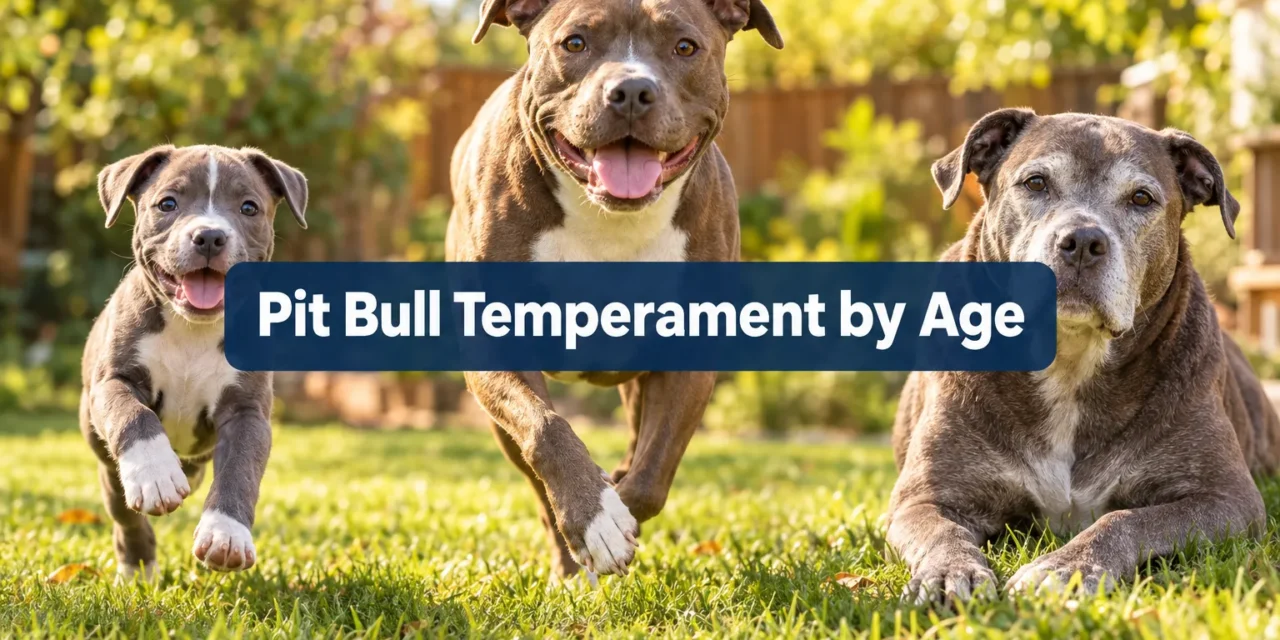
A pit bull’s personality isn’t fixed at birth. It’s built, week by week, walk by walk, treat by treat. That’s the real story behind Pit Bull Temperament by Age: Puppy Socialization, Adult Behavior, and Senior Care, and it’s way more hopeful than the stereotypes suggest.

Here’s the truth: most behavior problems in pit bulls trace back to missed socialization windows, inconsistent training, or an overlooked health issue, not some switch that flips with age.[5][10] Understanding what’s normal at each life stage helps dog parents set realistic expectations and catch red flags early. That’s what this guide is for.
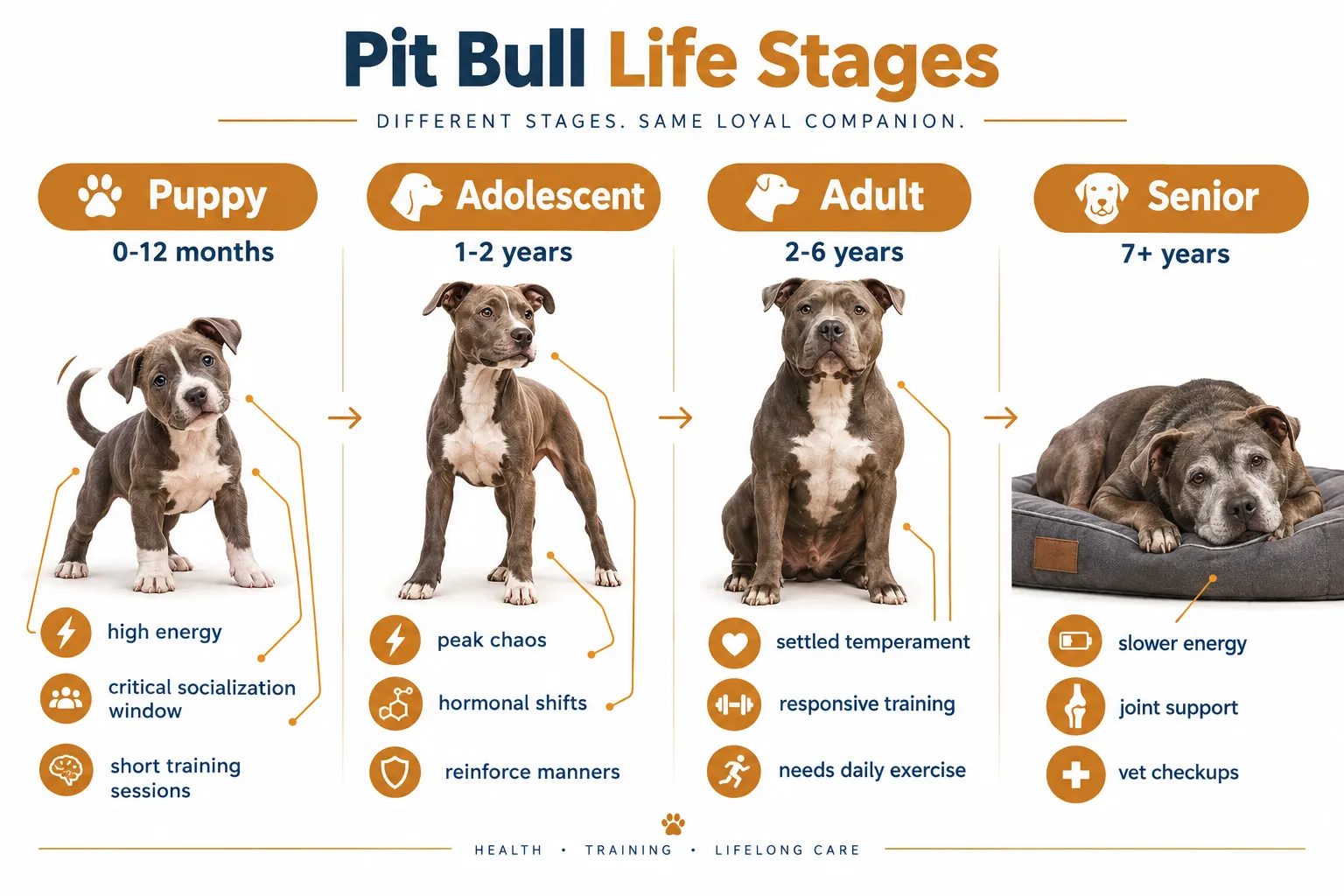
Pit bulls move through four clear life stages: puppyhood, adolescence, adult prime, and the senior years.[1][2][7] Each stage comes with its own quirks, challenges, and joys. Let’s dig in.
Key Takeaways
- Socialization peaks early. The critical window for shaping a confident, friendly pit bull is roughly 8-14 weeks, tapering off by 16 weeks.
- Adolescence is the wild card stage. Expect “peak chaos” between 1-2 years as hormones and energy spike, this is not a sign of a bad dog.[1]
- Adulthood is the payoff stage. With good training, adult pit bulls (roughly 2-6 years) tend to be affectionate, settled, and eager to please.[2][5][8]
- Pit bulls don’t get meaner with age. Sudden aggression, anxiety, or house-soiling in older dogs usually signals a medical issue, not a personality shift.[5][10]
- Senior care is about adapting, not shrinking life. Shorter, more frequent walks and joint support keep senior pit bulls happy well into old age.[1][4][7]
Puppy Pit Bulls: The Foundation Years (0-12 Months)
Pit bull puppies are bundles of pure energy. They’re playful, curious, and ridiculously eager to learn.[2][3] This is the single most important stage for shaping lifelong temperament, and the good news is, it’s also the most fun.
During the first year, puppies grow fast. Their brains are soaking up new experiences like a sponge. Positive experiences now create a confident, resilient adult dog later.[2][3]
The Socialization Window Nobody Should Skip
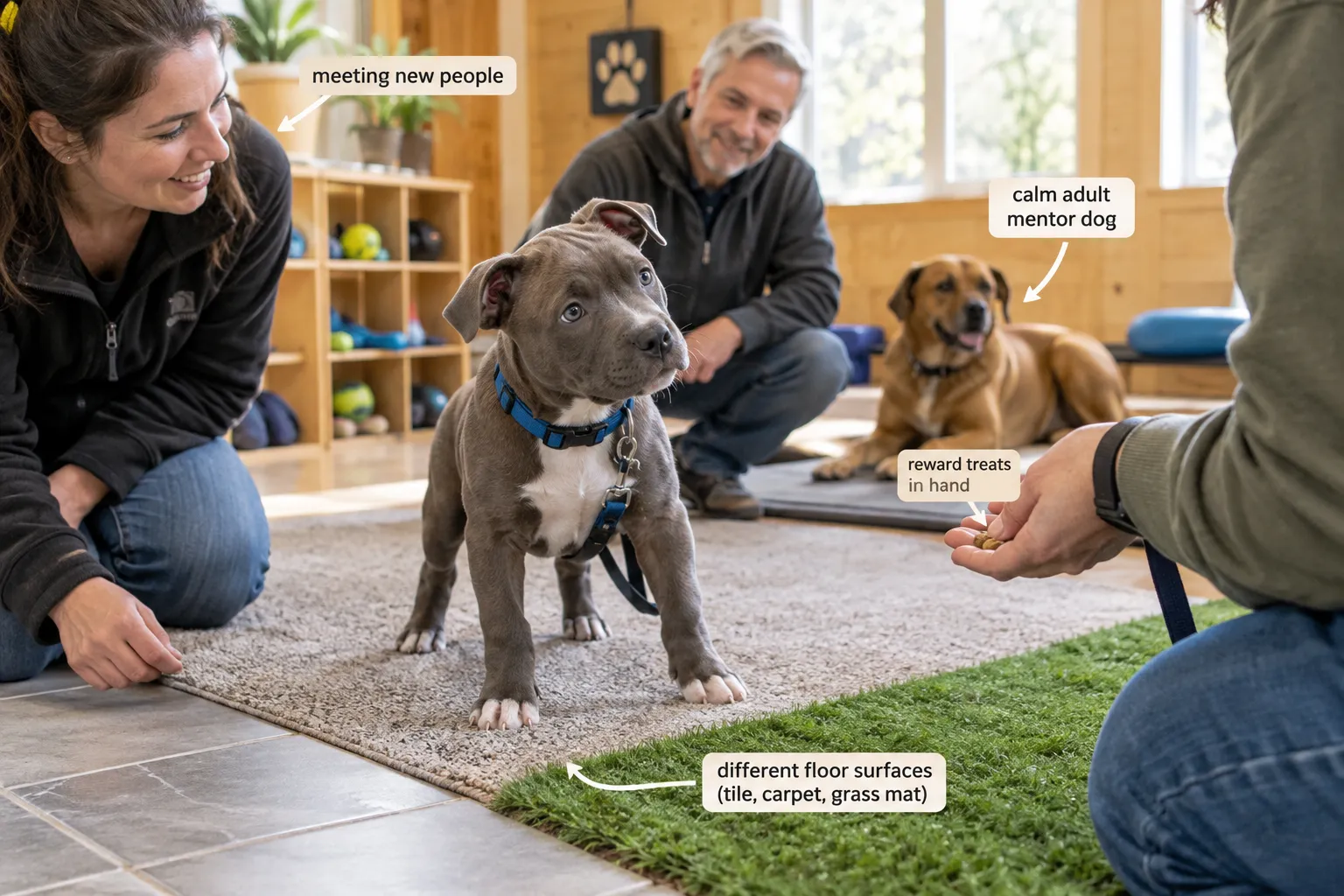
Mark this on the calendar: weeks 8 through 14 are prime socialization time for pit bull puppies. This window starts closing around 12-14 weeks and is mostly shut by week 16.
Why does this matter so much? Puppies form their view of the world during this stage. Positive, low-stress exposures now build a dog who’s chill about new people, sounds, and places later. Missed exposures can lead to fear or reactivity down the road.[9]
A solid week-by-week socialization checklist includes:
- 🐾 Meeting 10+ different types of people (tall, short, hats, wheelchairs, kids)
- 🐾 Walking on 5+ surfaces, grass, tile, gravel, carpet, metal grates
- 🐾 Hearing everyday sounds at low volume, vacuums, doorbells, traffic
- 🐾 Taking several short car rides so travel feels normal, not scary
- 🐾 Enrolling in puppy kindergarten once vaccines allow
“Primary socialization largely closes between 12 and 14 weeks, what happens before then shapes confidence for life.”
Dog-to-Dog Introductions: Slow and Steady Wins
Skip the dog park for now. Pit bull puppies do best meeting calm, temperament-tested adult dogs in controlled settings rather than chaotic free-for-alls.[9]
Here’s a smarter approach:
- Start with one steady “mentor” dog who tolerates puppy nonsense gracefully.
- Keep sessions short and supervised.
- Reward the puppy for calmly disengaging, not just for playing longer.[9]
- Avoid flooding puppies with too many dogs at once, it can backfire into fear or reactivity.[9]
Pit bull puppies generally get along great with other dogs and love learning through play.[6] But supervision matters. Rough play can tip into bad habits fast without guidance.[6]
Training That Actually Sticks
Puppy brains have short attention spans. Expert guides recommend:
- Short, 5-10 minute training sessions[3]
- One or two commands at a time, don’t overload them[3]
- Reward-based methods only, treats, praise, play[2][3]
- Structured play to burn off that famous puppy energy[3]
Consistency beats intensity here. A few minutes, several times a day, builds way more reliable behavior than one long, frustrating session.
Adolescent Pit Bulls: “Peak Chaos” (1-2 Years)
Buckle up. This stage earns its nickname: peak chaos.[1] Hormones kick in, energy spikes, and some of that sweet puppy obedience seems to vanish overnight.
This doesn’t mean training failed. It means the dog is growing. Adolescent pit bulls may test boundaries, forget commands they knew cold, or get a little too excited around other dogs, even ones they used to play with nicely.[9]
Keep socialization going through this stage. Some skills regress during hormonal shifts, so consistency matters more than ever.[9] Owners who stay patient and keep reinforcing good manners usually see things stabilize by age two or three.
A few adolescent survival tips:
- Keep training sessions going, don’t pause just because it gets harder
- Increase physical exercise to match rising energy levels
- Reintroduce structured socialization if reactivity pops up
- Stay calm and consistent, frustration doesn’t speed things up
Adult Pit Bull Behavior: The Settled, Loyal Years (2-6+ Years)
This is where all that early effort pays off. Adult pit bulls are typically described as affectionate, people-oriented, and genuinely eager to please.[2][5][8]
American Pit Bull Terriers in particular form intense bonds with their families. Expect leaning, lap-sitting (yes, even at 50+ pounds), and a dog who follows every family member from room to room.[5][8] That’s the pit bull love language.
Strong-Willed, Not Stubborn-for-No-Reason
Adult pit bulls are powerful dogs with strong personalities. They can be strong-willed, which means training and management stay important even into adulthood.[2][5][8] Without clear structure, a well-meaning adult pit bull can still get overexcited or reactive in unfamiliar situations.[5][8]
The fix isn’t harsh correction, it’s ongoing structure. Think of training less like a puppy phase and more like a lifelong relationship habit.
Exercise Is Behavior Medicine
Adult pit bulls are athletes. Their temperament stability depends heavily on getting enough physical and mental work.[2] A bored pit bull is a pit bull looking for trouble, chewed couches, hyperactivity, restlessness.
Great options for adult exercise include:
| Activity Type | Examples | Benefit |
|---|---|---|
| Cardio | Long walks, running, hiking | Burns physical energy |
| Sport & Play | Flirt-pole games, agility | Builds strength and focus |
| Mental Work | Puzzle toys, scent games | Prevents boredom behaviors |
| Obedience | Advanced training, tricks | Strengthens the human-dog bond |
Pit bulls built for this kind of activity often thrive alongside large breed care routines that account for their muscle mass and joint needs. Owners managing multiple power breeds might also find it useful to compare traits in guardian breed comparisons like Cane Corso vs Rottweiler vs Bullmastiff for general structure and training parallels.
Diet also plays a quiet but real role in behavior. A well-fed, properly nourished adult pit bull has steadier energy and mood. Check out these vet-approved pitbull diet plans for optimal health to match food to activity level.
Seasonal Adjustments Matter Too
Adult pit bulls’ short coats mean weather affects comfort and mood more than people expect. In hot months, follow smart summer pet care guidance to avoid overheating during exercise. In cold months, frozen winter pet care tips help protect paws and joints from icy sidewalks.
Senior Pit Bulls: Slowing Down, Not Shutting Down (7-10+ Years)
Senior status generally starts somewhere between 7 and 10 years old for pit bulls.[1][7][10] This is the stage where owners notice real, visible changes, and it’s worth paying close attention.
What Normal Aging Looks Like
- Tiring more easily on walks[4][7]
- Hesitating on stairs or avoiding jumps[4][7]
- Preferring naps over zoomies[1]
- Needing a bit more encouragement to play
What’s NOT Normal, Call the Vet
Here’s the part every pit bull parent needs to hear loud and clear: pit bulls do not naturally become more aggressive or grumpy with age.[5][10] If a senior dog’s personality shifts suddenly, something medical is usually going on.
Watch for these warning signs:
- 🚩 Increased thirst or urination
- 🚩 New lumps or bumps
- 🚩 Restlessness at night
- 🚩 Unexplained weight loss or gain
- 🚩 New aggression, anxiety, or house-soiling
These symptoms often point to pain, organ disease, or elevated cancer risk, all more common in senior years.[4][7][10] Catching them early can seriously improve quality of life. Don’t write off new “grumpiness” as just old age. Get it checked.[4][7][10]
Adjusting Daily Life for Senior Comfort
Senior care isn’t about doing less with your dog, it’s about doing things differently.[1][4][7]
Practical adjustments that help:
- Switch to senior-formula food around age 7-8[1][4]
- Add joint supplements like glucosamine/chondroitin or fish oil[1][4]
- Upgrade to an orthopedic bed with real cushioning[1][4]
- Break up exercise, three 20-minute walks instead of one long hike[1][2][7]
- Keep mental stimulation going with gentle puzzle games[1][2]
- Do monthly at-home body checks for new lumps or skin changes[1][4][7]
- Visit the vet more often than during the adult years[1][4][7]
Grooming routines also deserve a refresh for seniors, since skin and coat changes often show up first. These pitbull grooming tips for a happy, healthy pup make it easier to spot issues early during routine brushing. Dog parents navigating care for aging pets in general may also enjoy browsing cute dog breeds for seniors content for broader perspective on senior pet life.
“Many pit bulls retain puppy-like playfulness well into their senior years, even as their physical abilities change.”[8][1]
That playful spirit doesn’t disappear. It just needs a little extra support to shine through.
Pit Bull Temperament by Age: Puppy Socialization, Adult Behavior, and Senior Care, The Big Picture
Zooming out across the whole lifespan, a pattern emerges. Pit Bull Temperament by Age: Puppy Socialization, Adult Behavior, and Senior Care isn’t really about age at all, it’s about consistency.
The dogs who turn into calm, confident, affectionate seniors are usually the same dogs who got:
- Solid socialization before 16 weeks[5][8]
- Patient training through the adolescent chaos
- Regular exercise and mental work as adults[2]
- Quick medical attention when something seemed “off” in the senior years[4][7][10]
Genetics load the gun, sure. But environment, training, and health pull the trigger on actual behavior. That’s genuinely good news, it means owners have real power to shape a pit bull’s temperament at every single stage.
Quick Reference: Temperament by Life Stage
| Life Stage | Approx. Age | Typical Temperament | Key Focus |
|---|---|---|---|
| Puppy | 0-12 months | Playful, curious, eager to learn[2][3] | Socialization, basic training |
| Adolescent | 1-2 years | Energetic, testing limits, “peak chaos”[1] | Consistency, continued socialization |
| Adult | 2-6 years | Affectionate, settled, loyal[2][5][8] | Exercise, mental stimulation |
| Senior | 7-10+ years | Calmer, still affectionate, slower[1][7] | Joint care, vet checkups, comfort |
Conclusion: Loving a Pit Bull at Every Age
Pit bulls aren’t ticking time bombs that turn mean with age. They’re loyal, loving, athletic dogs whose temperament is built through socialization, training, exercise, and attentive care, not luck.[5][10]
Here’s the action plan:
- During puppyhood, max out positive socialization before 14-16 weeks.
- Through adolescence, stay patient and keep training consistent.
- In adulthood, prioritize daily exercise and mental stimulation to keep behavior steady.[2]
- As seniors, adapt routines and never ignore sudden behavior changes, book that vet visit.[4][7][10]
Every pit bull parent who follows this road map gives their dog the best shot at a confident, affectionate life from the first wobbly puppy steps to the last slow senior stroll around the block. That’s the real heart of Pit Bull Temperament by Age: Puppy Socialization, Adult Behavior, and Senior Care, a lifetime of love, built one stage at a time.
References
[1] When Does A Pit Bull Reach Old Age – https://iheartdogs.com/when-does-a-pit-bull-reach-old-age/ [2] Pit Bull – https://www.caninebible.com/pit-bull/ [3] Pit Bull – https://www.pumpkin.care/dog-breeds/pit-bull [4] Senior Pitbull Care Guide – https://pitbullscare.com/senior-pitbull-care-guide/ [5] American Pit Bull Terrier – https://www.petmd.com/dog/breeds/american-pit-bull-terrier [6] Caring For A Pitbull Some Key Things You Should Know – https://www.sparkpaws.com/blogs/community/caring-for-a-pitbull-some-key-things-you-should-know [7] Pitbull Lifespan How Long Do Pitbulls Live – https://www.bubblypet.com/pitbull-lifespan-how-long-do-pitbulls-live/ [8] American Pit Bull Terrier Temperament Guide – https://paws-tales.com/breed-profile/american-pit-bull-terrier-temperament-guide [9] Pitbull Socialization With Other Dogs – https://pitbullscare.com/pitbull-socialization-with-other-dogs/ [10] tcm-vet – https://www.tcm-vet.com/zh/category/dog-cancer-and-tumor/page/10/