Here’s a fact that surprises most dog lovers: “Pit Bull” isn’t even an official breed name. It’s a nickname. A catch-all label stretched over several different dogs, including the American Staffordshire Terrier.[1][5][7][10] That mix-up has caused decades of confusion at shelters, in rental applications, and around dinner tables where families debate which dog to bring home.

This guide clears up the Pit Bull vs. American Staffordshire Terrier: Breed Differences, Temperament, and Ownership Fit question once and for all. No fluff. No scare tactics. Just the facts dog parents need to make a confident, loving decision.
Key Takeaways
- 🐾 “Pit Bull” is a general term, not one breed. It often describes American Staffordshire Terriers, American Pit Bull Terriers, Staffordshire Bull Terriers, and mixes.[1][5][10]
- 📏 AmStaffs tend to be stockier and more standardized in build. Pit Bull-type dogs (APBTs) are often leaner, taller, and more variable in size.[1][3]
- 💛 Both breeds are typically affectionate, loyal, and people-focused when raised with training and socialization.[1][3][7]
- 🏃 Both need serious daily exercise and structured training. Neither is a good fit for low-activity households.[1][3][6]
- 🏠 Ownership success depends far more on training and environment than on the label stamped on a dog’s paperwork.[5]
What Do “Pit Bull” and “American Staffordshire Terrier” Actually Mean?
Let’s untangle the terminology first, because this is where most of the confusion starts. “Pit Bull” is a nickname applied to several distinct breeds and mixes, not a single registered breed.[1][5][7][10] That means two dogs labeled “Pit Bull” at a shelter could be genetically very different from each other.
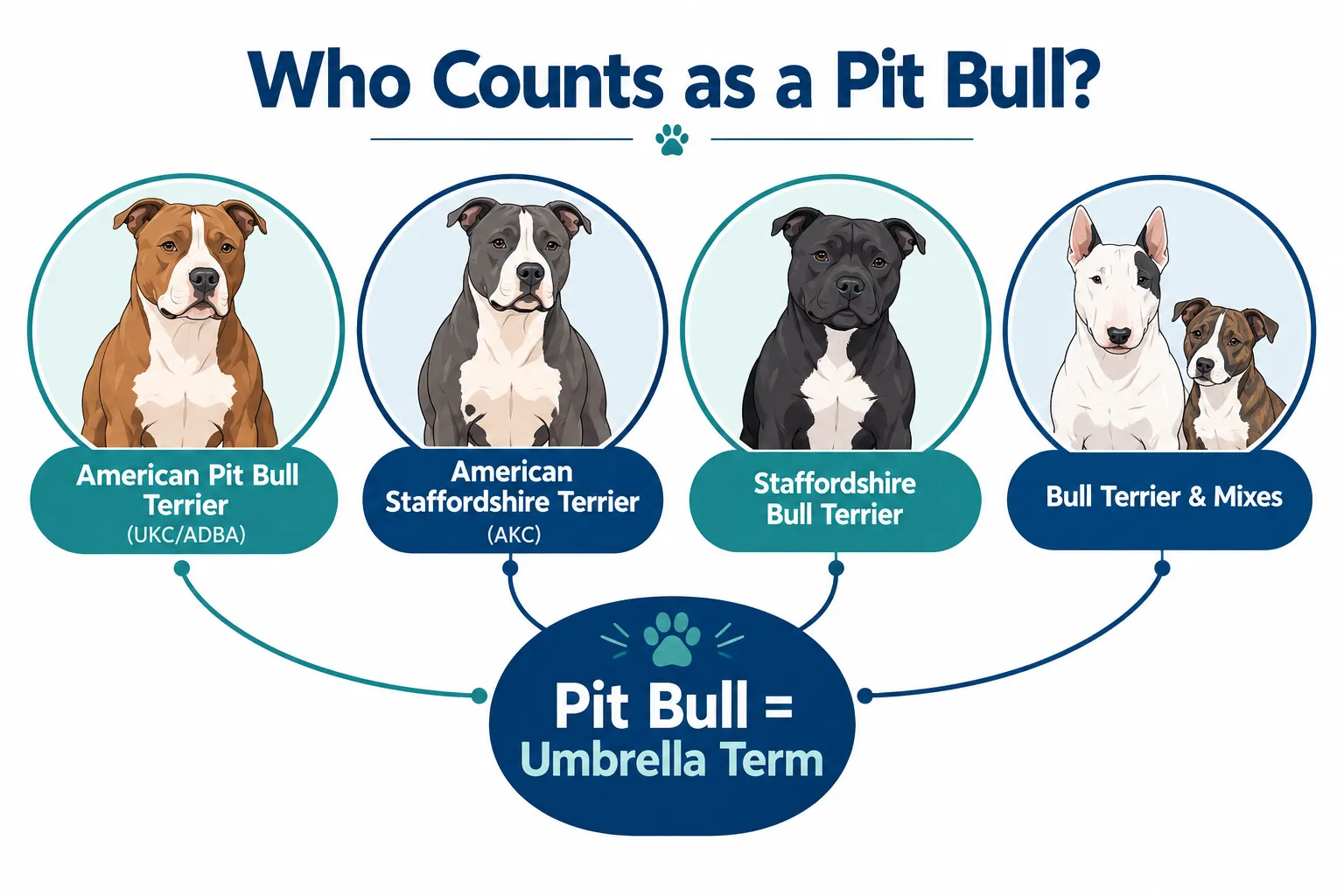
The American Staffordshire Terrier (AmStaff) is a specific, AKC-recognized breed with its own written standard.[2] The American Pit Bull Terrier (APBT) is recognized by other registries, including the United Kennel Club (UKC) and the American Dog Breeders Association (ADBA).[5][8] These two lines share deep roots but officially split in the mid-1930s, when some breeders focused on conformation and show qualities (creating the AmStaff) while others kept breeding for working ability and performance traits (keeping the APBT/Pit Bull identity).[5][4]
Here’s where it gets genuinely messy: experts don’t even agree on whether AmStaffs and Pit Bulls are the “same breed.” The AKC and Continental Kennel Club treat them as separate breeds. The UKC lumps AmStaff-type dogs into its broader APBT category. DNA testing companies describe them as closely related but distinct.[9][10]
“Staffordshire Terrier” and “Pit Bull” are often used as labels for a type of dog, not a precise, universally agreed breed.[5][7]
Rescue and advocacy groups add an important layer of nuance here: genetically and historically, APBTs and AmStaffs are “essentially the same dogs.” Behavior differences come far more from training and environment than from which name is on the paperwork.[5] That matters a lot when thinking through family fit, a well-raised dog of either type can thrive in a loving home.
Other bully-type breeds often swept into the “Pit Bull” conversation include the Staffordshire Bull Terrier and the Bull Terrier.[10] If a family is researching powerful, loyal breeds more broadly, it’s worth comparing notes with other strong guardian-type dogs like the Cane Corso temperament, size, training, and health guide, since many of the same “strong dog, strong training plan” principles apply.
Pit Bull vs. American Staffordshire Terrier: Breed Differences, Temperament, and Ownership Fit, Size and Appearance Side by Side
Size and build are where the two types start looking noticeably different, even though they share a similar silhouette at first glance.
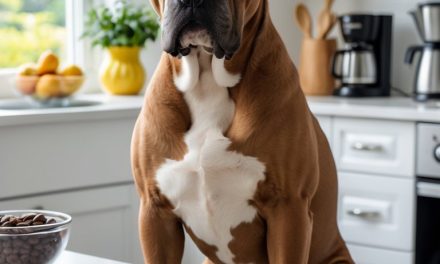
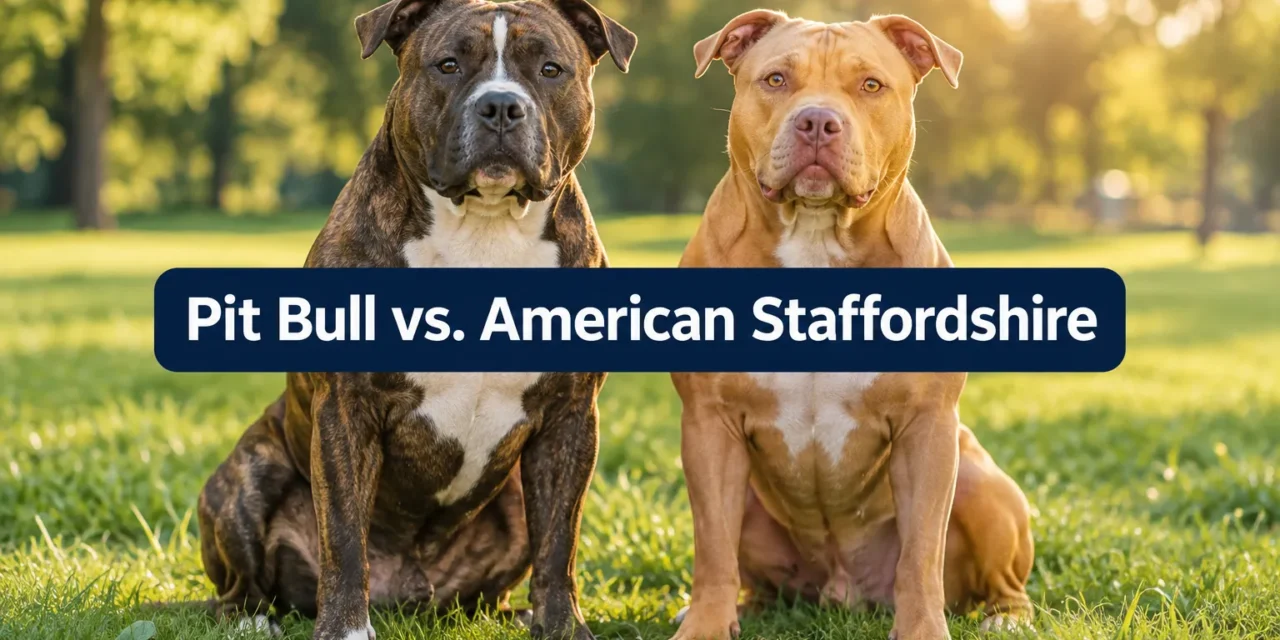
The AKC standard describes the American Staffordshire Terrier as a dog of “great strength for his size,” well put together, muscular yet agile and graceful.[2] Males typically stand about 18-19 inches at the shoulder; females run 17-18 inches.[2] Breed-club materials describe a broad head and pronounced cheek muscles, giving AmStaffs a stockier, more standardized look compared to the leaner APBT/Pit Bull type.[4]
Pit Bull-type dogs (APBTs), by contrast, show more variation. Males often range from 17-22 inches tall and 30-75 pounds, giving them a taller, more athletic outline on average.[1][3]
Here’s a side-by-side snapshot:
| Trait | American Staffordshire Terrier | Pit Bull (APBT-type) |
|---|---|---|
| Height (males) | ~18-19 inches [2] | ~17-22 inches [1][3] |
| Weight (males) | ~55-70 lbs [1][3] | ~30-75 lbs [1][3] |
| Build | Stocky, standardized, broad head [4] | Leaner, more athletic, variable [1] |
| Coat colors | Often solid or brindle | Any color except merle |
| Coat type | Short, stiff | Short, stiff |
Both breeds carry a short, low-shedding coat, which is good news for busy households. Neither needs fancy grooming, just a quick weekly brush and occasional bath.[3] The bigger appearance variable with Pit Bull-type dogs comes down to the fact that “Pit Bull” covers more genetic ground, so individual dogs can look quite different from one another.[1][10]
Temperament Showdown: Family Dog or Handful?
This is the section most families actually care about. So let’s get straight to it: both AmStaffs and Pit Bulls are typically loyal, affectionate, and deeply people-oriented.[1][3][7] These are not aloof dogs. They want to be close to their humans, on the couch, in the kitchen, following from room to room.
A few temperament patterns show up consistently across breed profiles:
- Pit Bulls (APBT-type) are often described as especially outgoing and affectionate toward all people, including strangers.[3][7]
- AmStaffs may be slightly more reserved with new people but are still warm, playful, and devoted once bonded.[3][7]
- Both types tend to bond intensely with their owners and can become anxious or stressed when left alone for long stretches.[3][7]
Both breeds light up around their people. The real difference shows up in how they handle unfamiliar dogs, not unfamiliar humans.
Here’s the part responsible owners need to take seriously: despite friendliness toward people, Pit Bull-type dogs are statistically more likely than AmStaffs to show aggression toward unfamiliar dogs if they weren’t carefully socialized as puppies.[3] This doesn’t mean a Pit Bull is destined to be dog-aggressive, early, consistent socialization makes an enormous difference. But it does mean leash control and supervision around other dogs matter more with this type.
General references also note that pit bull-type dogs have been involved in serious bite incidents, which is why responsible handling, secure fencing, and public leash control are non-negotiable.[10][1] This isn’t about fear, it’s about respect for a powerful dog’s instincts and giving them the structure to succeed.
Families weighing temperament risk across multiple breeds may also want to check the broader guide to dog breeds not good with kids for context on what actually predicts safety around children (hint: it’s almost always training and supervision, not breed alone).
Exercise, Training, and Daily Life Needs
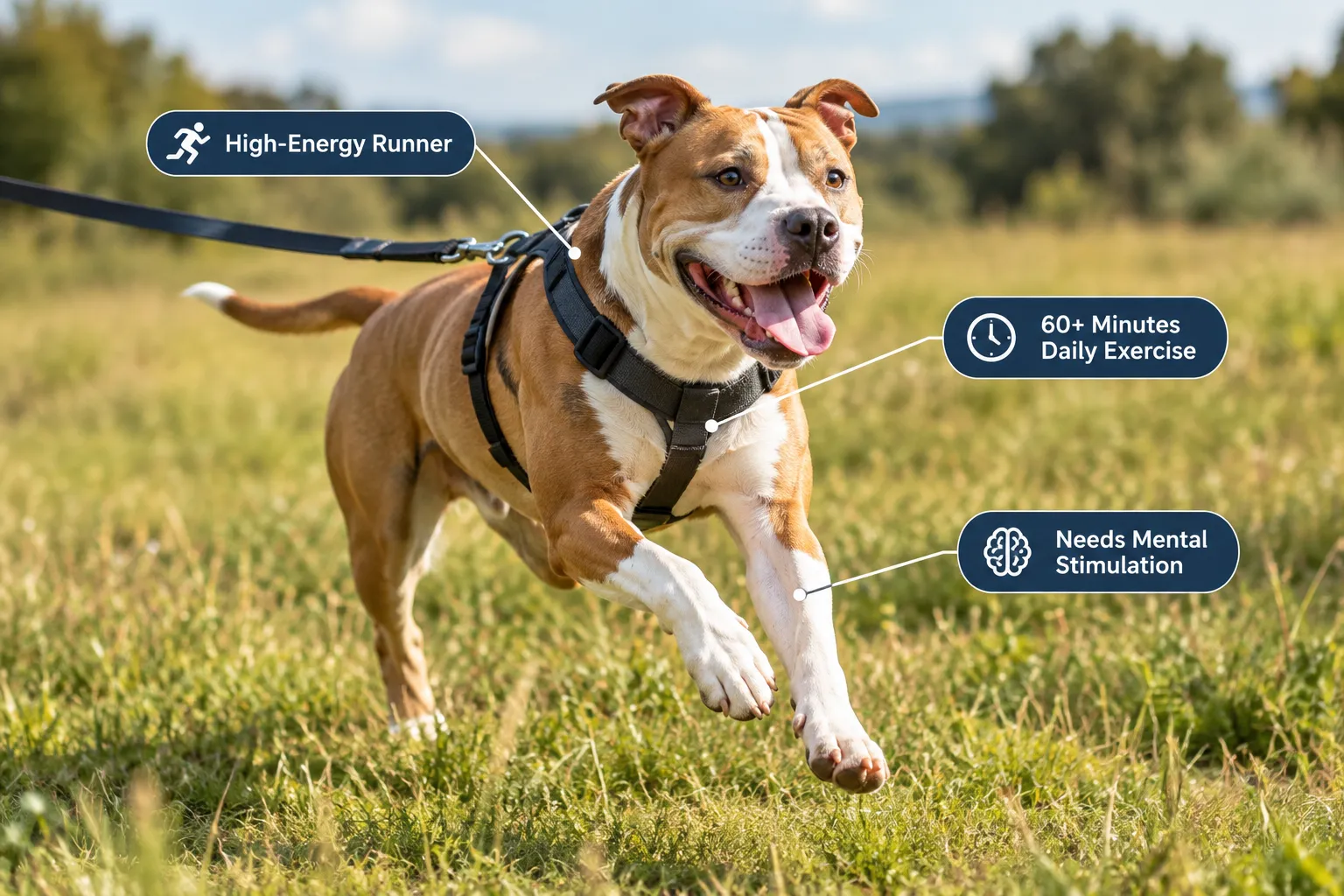
Neither of these dogs is a “set it and forget it” companion. Both AmStaffs and Pit Bulls are high-energy, athletic breeds that need serious daily movement, think an hour or more of vigorous exercise, not a quick stroll around the block.[1][3][6]
Here’s how the energy typically compares:
- AmStaff: Often slightly calmer and stockier in daily demeanor, but still needs structured daily activity and mental work.[3]
- Pit Bull (APBT): Frequently described as particularly athletic and high-drive, thriving on jogging, tug games, agility, or weight-pulling-style activities.[3][6]
Both breeds are smart and eager to please, which is genuinely great news for training.[1][3] Positive reinforcement, treats, praise, play, works far better than punishment-based methods for either type. Early obedience classes, consistent house rules, and daily mental enrichment (puzzle toys, scent games, training sessions) help channel all that strength and energy in a healthy direction.[1][3]
A quick daily structure that works well for both types:
- Morning: 20-30 minute walk or jog before breakfast.
- Midday: Short training session (5-10 minutes) practicing commands or tricks.
- Afternoon: Puzzle toy or chew session for mental stimulation.
- Evening: Second walk or active play session (fetch, tug, flirt pole).
Owners who skip this structure often end up with a bored, destructive, or anxious dog, not because the dog is “bad,” but because a powerful athlete with nothing to do will find its own job, and that job is rarely one the couch cushions survive.
For families comparing training difficulty across breeds before committing, it’s worth a look at the list of 7 dog breeds trainers avoid in 2026, context that helps set realistic expectations about handler experience and commitment level.
Housing and Family-Life Considerations
Can either of these dogs live happily in an apartment? Technically yes, if their exercise needs are met daily. But both do best with secure, fenced outdoor space where they can burn energy safely.[1][3]
A few practical housing notes:
- Secure fencing matters. Both breeds are athletic and can jump or push through weak barriers. A sturdy fence at least 5-6 feet tall is a smart investment.
- Apartment living is possible but requires a committed exercise routine, long walks, dog park visits, or canine sports like agility.
- Local laws vary widely. Because “Pit Bull” is an umbrella term, some cities and insurance providers apply breed-specific restrictions that can catch AmStaffs, APBTs, and even look-alike mixes in the same net.[10][5] Always check local ordinances and rental policies before bringing either dog home.
On the family front, both breeds can be wonderful with children when raised together and properly supervised.[1][3][7] Their people-focused nature often makes them gentle, patient companions for kids who understand how to interact respectfully with dogs. That said, any powerful breed benefits from early socialization with children and consistent adult supervision during play, not because the dog is dangerous, but because strength plus excitement can accidentally knock over a toddler.
Multi-pet households need a bit more planning. Given the documented tendency toward dog-reactivity in some Pit Bull-type dogs if undersocialized, introductions to other dogs should be slow, structured, and ideally guided by a trainer.[3] Cats and small animals may also need a careful, gradual introduction depending on the individual dog’s prey drive.
For households juggling other pets or sizing comparisons across breeds, the guide to dog breeds that stay puppy-sized forever offers useful contrast for families torn between a big, powerful dog and a smaller companion.
Health, Lifespan, and Care Profile
Good news here: both AmStaffs and Pit Bulls are generally sturdy, long-lived dogs when cared for well. Typical lifespan runs around 12-16 years for AmStaffs, with similar expectations reported for Pit Bull-type dogs.[3][1]
Care essentials for both types:
- Coat care: Short and low-maintenance. A weekly brush and occasional bath is usually enough.[3]
- Exercise: Moderate to high needs, daily vigorous activity is a must, not a nice-to-have.[3]
- Diet: Both are muscular, active dogs that benefit from quality protein-forward nutrition suited to their activity level. Families managing a powerful, high-energy dog’s meal plan may find the large breed dog diet resources helpful for building the right feeding routine.
- Training: Good trainability thanks to intelligence and eagerness to please, positive reinforcement is key.[1][3]
Like any breed, both types can experience joint issues, skin sensitivities, or weight gain if underexercised. Because dogs, especially stoic, tough-looking breeds, often hide discomfort well, it’s worth learning the 19 silent signs of pain in dogs every owner should know so health issues get caught early rather than after they’ve become serious.
Genetics, Misidentification, and Why Labels Get Complicated
Here’s something every shelter visitor should know: visual breed identification is notoriously unreliable. Because “Pit Bull” gets applied to multiple breeds and countless mixes, shelter statistics, bite reports, and breed-specific legislation often lump very different dogs into one category.[7][10]
DNA testing has started to clear some of this up. A major canine DNA-testing provider now treats American Staffordshire Terriers and American Pit Bull Terriers as separate, identifiable breeds in genetic panels, noting that AmStaffs can sometimes be registered as APBTs in certain registries, but not the reverse, reflecting their close relatedness but distinct breeding histories.[9]
Technology is advancing on the identification front too. In 2026, machine-learning tools are being tested that achieve roughly 86% accuracy when classifying Pit Bull-type dogs from available data, a promising but still imperfect step for shelters and policymakers trying to reduce guesswork.
The takeaway for everyday dog parents: don’t let a shelter label or a stranger’s guess at the dog park decide how a dog is judged. Individual assessment, temperament testing, behavior history, and getting to know the actual dog in front of you, beats assumptions based on appearance every time.[5][7]
Which Is the Right Fit? Pit Bull vs. American Staffordshire Terrier: Breed Differences, Temperament, and Ownership Fit Decision Guide
So, after all this, how should a family actually decide? Here’s a simple framework.
Choose an AmStaff-leaning dog if:
- A slightly more standardized size and build is appealing.
- A somewhat calmer daily demeanor fits the household’s pace.
- There’s interest in AKC conformation events or structured dog sports.
Choose a Pit Bull (APBT)-leaning dog if:
- An extra-athletic, high-drive companion sounds exciting for hiking, jogging, or weight-pull sports.
- There’s time and commitment for rigorous, consistent socialization around other dogs.
- A slightly taller, leaner build is the preferred look.
Choose either type if:
- There’s genuine commitment to daily exercise, training, and mental enrichment.
- The household has (or can secure) a fenced yard or reliable daily exercise routine.
- There’s willingness to check local breed-specific laws and housing policies before adopting.
Think twice about either type if:
- Daily schedules can’t accommodate an hour-plus of exercise.
- There’s no time or budget for ongoing training and socialization.
- Local laws or rental agreements restrict “Pit Bull-type” dogs in the area.
Whichever way a family leans, the single biggest predictor of success isn’t the label on the adoption paperwork, it’s the commitment to training, socialization, and daily structure that follows.[5] A well-raised AmStaff and a well-raised Pit Bull look remarkably similar in how they behave: loyal, playful, and devoted to their people.
And on the lighter side, once that training routine clicks into place, owners of both types tend to end up with the same kind of goofy, lovable moments every dog parent treasures, the kind documented in 25 funny dog moments every owner will recognize.
Conclusion
The Pit Bull vs. American Staffordshire Terrier: Breed Differences, Temperament, and Ownership Fit conversation really boils down to this: “Pit Bull” is a broad nickname, while American Staffordshire Terrier is a specific, recognized breed, and the two share far more overlap than difference.[1][5][10] Build, size, and dog-to-dog sociability lean slightly different between the two, but both are loyal, affectionate, high-energy dogs that need an active, committed household to truly thrive.[1][3]
Before bringing either dog home, take these next steps:
- Check local laws and housing rules for breed-specific restrictions.
- Meet the individual dog rather than relying on a shelter label alone.
- Commit to daily exercise, an hour or more, every single day.
- Start training and socialization early, using positive reinforcement.
- Budget for a secure fence and quality large-breed nutrition.
Get those pieces in place, and either breed can become exactly what most families are really looking for: a devoted, tail-wagging member of the family who’s ready for anything.
References
[1] American Staffordshire Terrier Vs Pit Bull – https://www.chewy.com/education/dog/general/american-staffordshire-terrier-vs-pit-bull [2] Americanstaffordshireterrier – https://images.akc.org/pdf/breeds/standards/AmericanStaffordshireTerrier.pdf [3] American Staffordshire Terrier Vs Pitbull – https://www.dogster.com/dog-breeds/american-staffordshire-terrier-vs-pitbull/ [4] American%20staffordshire%20terrier%20 %20akc%20%5b05 2003%5d – https://kusa.co.za/images/Gallery/TERRIER%20GROUP%202025/American%20Staffordshire%20Terrier%20-%20AKC%20%5B05-2003%5D.pdf [5] pbrc – https://www.pbrc.net/faq.html [6] Staffordshire Terrier Vs Pitbull – https://www.caninejournal.com/staffordshire-terrier-vs-pitbull/ [7] American Staffordshire Terrier – https://www.chewy.com/education/dog-breeds/american-staffordshire-terrier [8] Pit Bull – https://www.caninejournal.com/pit-bull/ [9] Detecting American Pit Bull Terrier – https://www.wisdompanel.com/en-us/blog/detecting-american-pit-bull-terrier [10] Staffordshire Bull Terrier – https://www.britannica.com/animal/Staffordshire-bull-terrier