
A greyhound can cover the length of a football field in about four seconds. Then it will nap for the next 18 hours straight. That’s not a joke. That’s just a normal Tuesday for this breed.

This Greyhound Breed Guide: Personality, Exercise Needs, Health, and Adoption Tips article covers everything a curious dog lover or future adopter needs to know. Greyhounds are strange in the best way. They’re built like race cars but act like gentle, sleepy roommates. Thousands of retired racers need loving homes every year, and they make surprisingly easy pets once their quirks are understood.
Whether considering adoption or just greyhound-curious, this guide breaks down the real story behind the breed’s personality, exercise needs, health risks, and what adoption actually looks like.
Key Takeaways
- Greyhounds are gentle, sensitive, and affectionate with their families, but often shy or reserved around strangers[2].
- Despite their racing speed, most pet greyhounds need only short bursts of exercise followed by long rest periods, earning the nickname “world’s fastest couch potato”[7][9].
- Common health concerns include heart disease, dental disease, and joint issues, with a typical lifespan in the low-to-mid teens[6].
- Many adoptable greyhounds are retired racers who need a gentle decompression period, secure fencing, and patient house-training[4].
- Greyhounds can make excellent first-time owner dogs thanks to their calm nature and low grooming needs, as long as owners respect their sensitivity[10].
Greyhound Breed Guide: Personality Traits That Define the Breed
Greyhounds have a reputation for speed. Their personality tells a completely different story. These dogs are soft-hearted, quiet, and deeply bonded to their people. Most greyhounds would rather curl up on a soft blanket than chase anything for very long.
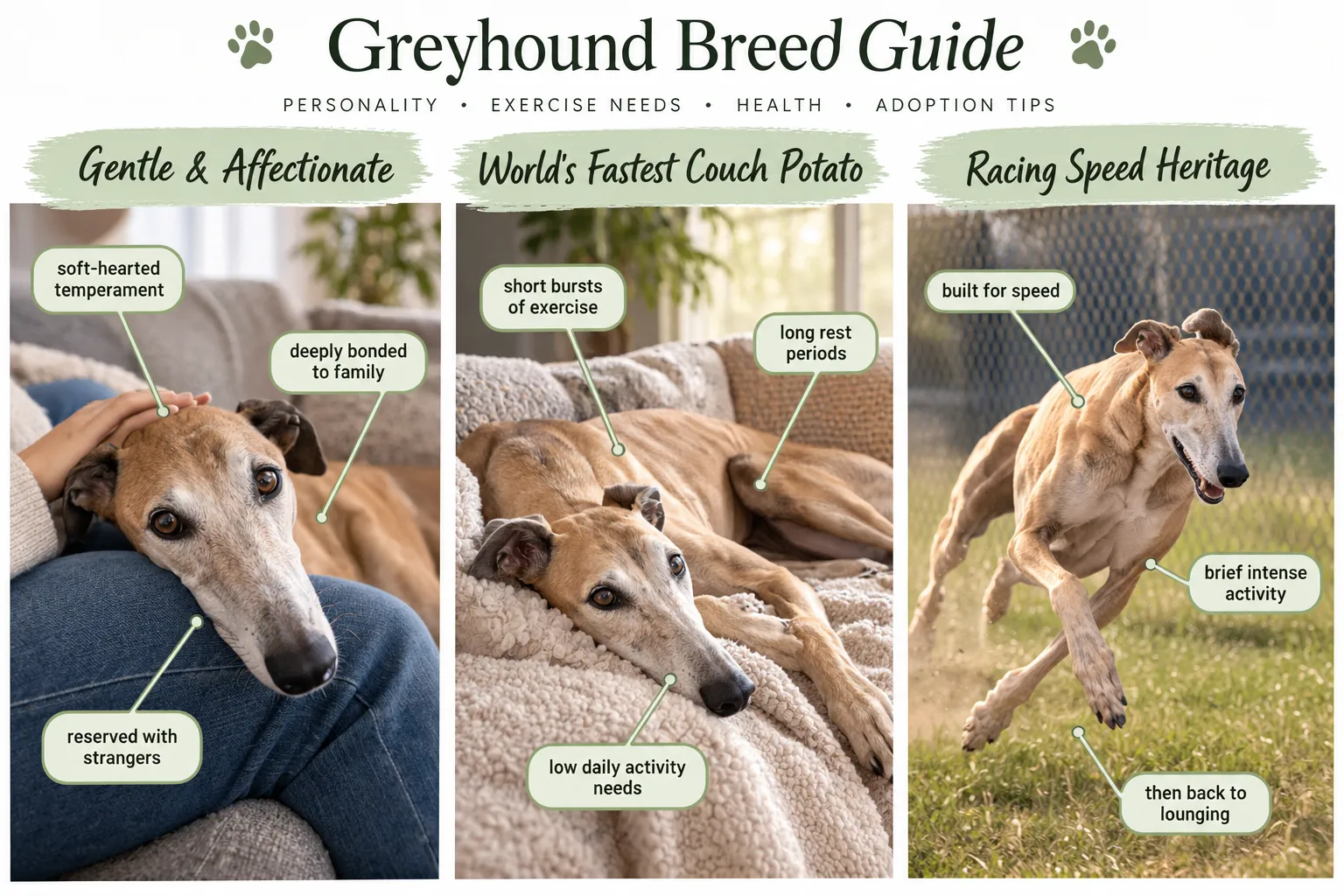
Here’s what makes the greyhound personality so unique:
- Gentle and sweet-natured. Greyhounds are known for their calm, kind demeanor around the people they love[2].
- Reserved with strangers. New faces often get a polite but cautious greeting. This isn’t aggression, it’s shyness[5].
- Independent thinkers. Bred for centuries to chase on their own instinct, greyhounds don’t always look to a human for every decision[5][8].
- Highly sensitive. Harsh tones or loud scolding can really shake a greyhound’s confidence. These dogs thrive on kindness[2].
- Surprisingly affectionate. Many greyhounds lean into their favorite humans, seeking closeness and quiet cuddle time[10].
A 2026 pet insurance breed guide rates greyhounds 4 out of 5 for being good with family, affectionate, and loyal. They score 3 out of 5 for playfulness and 4 out of 5 for independence[10]. Translation? Greyhounds love their people fiercely, but they won’t demand constant attention. They’re content with their own space, too.
This mix of loyalty and independence makes greyhounds wonderful companions for people who want closeness without clinginess. For a broader look at how different breeds compare on temperament and daily needs, check out this Dog Breed Guide resource.
“Greyhounds don’t bark for attention. They just lean in close and wait for a scratch behind the ears.”
Independence and Sensitivity: A Delicate Balance
Greyhounds were bred for coursing and racing, jobs that required quick, independent decision-making rather than constant handler direction[5][8]. This heritage shows up at home. A greyhound might not snap into “sit” the instant it’s asked. That’s not stubbornness. It’s thousands of years of instinct asking, “why?”
The flip side is a dog that’s easily hurt by harsh corrections. Positive reinforcement works far better than strict discipline[2]. Patience pays off here. Greyhounds want to please their people, they just need gentle guidance to get there.
Greyhound Breed Guide: Exercise Needs for the Fastest Couch Potato
Here’s the biggest surprise for new greyhound owners: these dogs don’t need hours of daily exercise. In fact, most greyhounds are happiest with short, intense activity followed by long stretches of lounging[4][9].
Think of a greyhound’s ideal day like this:
- A brisk morning walk or short sprint in a securely fenced area.
- Rest and recovery,often several hours of sleep.
- A second short walk in the afternoon or evening.
- Couch time. Lots and lots of couch time.
Greyhounds are true sprinters, not endurance athletes. They can hit speeds up to 45 miles per hour in short bursts, but they’re not built for long-distance jogging or all-day hiking[9][10]. Owners looking for a marathon training buddy should look elsewhere. For dogs built to go the distance, this list of energetic dog breeds for active owners is a better match.
Why Secure Fencing Matters
That sprinting instinct doesn’t disappear just because a greyhound retired from the track. A squirrel, a rabbit, or even a plastic bag blowing in the wind can trigger a full-speed chase[4][7]. A securely fenced yard is essential. Off-leash time in open, unfenced areas is risky, these dogs can be out of sight before an owner finishes calling their name.
Mental Enrichment Matters Just as Much
Modern greyhound care has shifted focus. It’s not just about physical exercise anymore. Mental enrichment, scent games, puzzle feeders, and short training sessions, keeps a greyhound’s clever brain satisfied[10]. This combination of body and brain workouts suits a sensitive, intelligent breed far better than piling on extra miles.
Quick enrichment ideas:
- 🐾 Snuffle mats for mealtime
- 🐾 Short “find it” scent games with treats
- 🐾 Gentle obedience practice in 5-minute sessions
- 🐾 Rotating chew toys to prevent boredom
Greyhound Breed Guide: Health Concerns and Lifespan
Greyhounds are generally a healthy breed, but every dog parent should know what to watch for. Lifespan typically falls in the low-to-mid teens, which is on the longer side for a large dog[6][8].
Here are the main health issues to keep on the radar:
| Health Concern | What to Watch For | Why It Matters |
|---|---|---|
| Heart disease | Including cardiomyopathy | Regular vet checkups can catch issues early[6] |
| Dental disease | Tartar buildup, bad breath | Greyhounds are prone to dental issues; brushing helps[6] |
| Orthopedic issues | Joint stiffness, limping | Low body fat means less cushioning for joints |
| Anesthesia sensitivity | Reaction to certain drugs | Always tell the vet it’s a greyhound before surgery[6] |
Why Greyhounds Need Extra Warmth
That lean, muscular frame comes with a tradeoff: very little body fat. Combined with a thin coat, greyhounds get cold fast[6][8]. A cozy sweater on chilly walks and a soft, padded bed indoors aren’t optional extras, they’re necessities. Thin skin also means greyhounds, especially lighter-colored ones, can be more sensitive to sun exposure. These sunscreen tips for white dogs with pink skin are worth a look for owners of fawn or white greyhounds.
Keeping a Greyhound Healthy Long-Term
- Weight management is key to protecting joints and the heart[6][8].
- Routine dental cleanings help prevent painful tooth decay[6].
- Soft bedding prevents pressure sores on bony joints and thin skin[6].
- Regular vet visits catch cardiac and orthopedic issues before they become serious[6].
The good news? There’s no major new greyhound-specific health crisis reported in recent years. Most current advice simply reinforces the basics: manage weight, protect the heart, and stay on top of dental care[6].
Greyhound Breed Guide: Adoption Tips for Retired Racers
Most pet greyhounds available today are retired racing dogs. This matters a lot for adopters, because these dogs often come with a very different life history than a typical puppy[4][7].
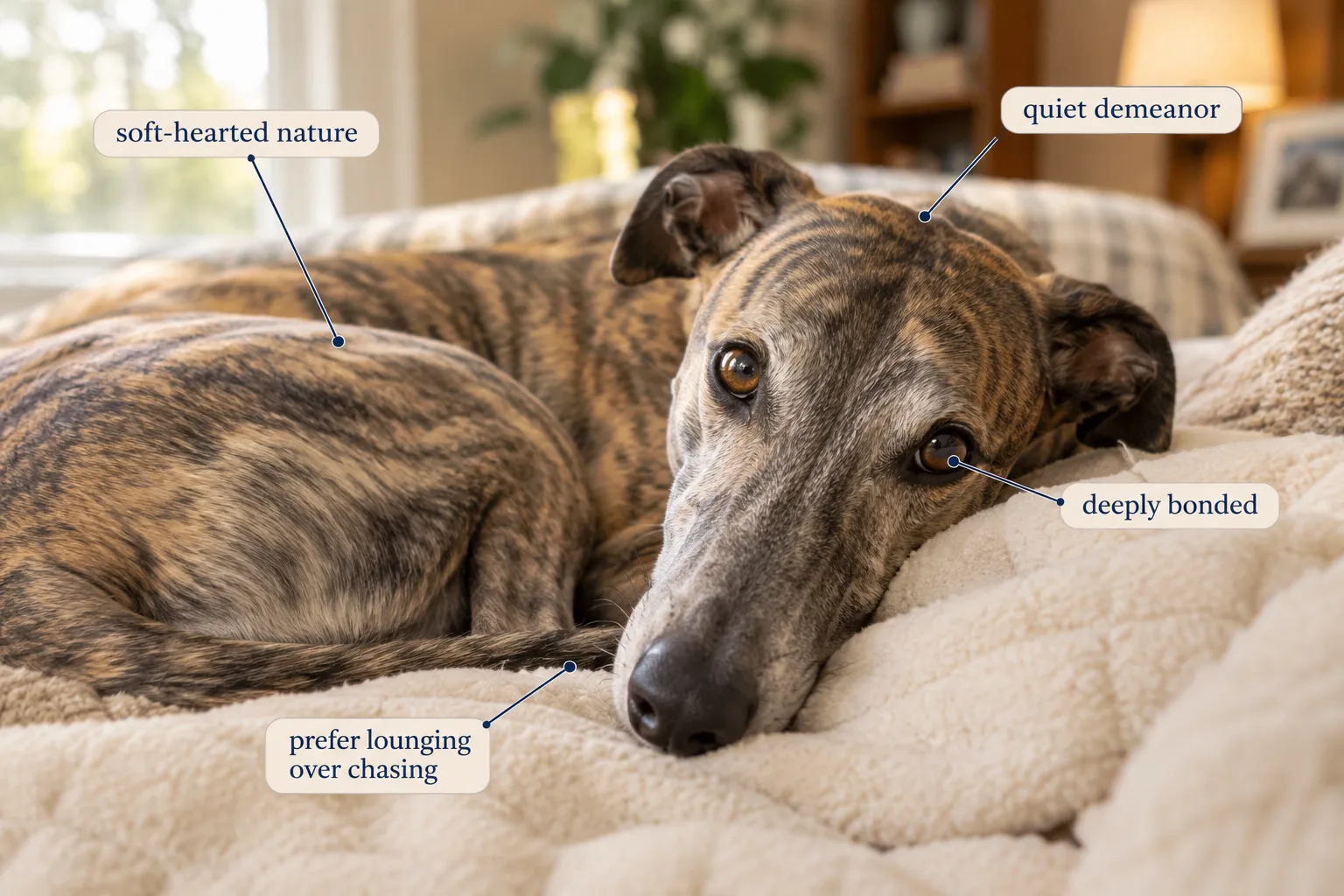
Many retired racers have never lived in a home before. Stairs, glass doors, slippery floors, and even televisions can be brand new and a little scary. Patience is everything during this transition period.
What to Expect When Adopting a Retired Greyhound
- A decompression period. Give the dog time, often several weeks, to settle in before expecting full comfort[4].
- House-training from scratch. Many racing greyhounds haven’t lived indoors and need basic house manners taught gently[4][7].
- Startle responses. Loud noises, new environments, and unfamiliar objects can cause a jumpy reaction at first[7].
- Secure fencing before day one. Set up a safe yard before bringing the dog home, sprinting instincts are strong and fast[4][7].
- Soft bedding ready to go. Thin coats and bony joints need comfort from the very first night[6].
Matching the Right Greyhound to the Right Home
Adoption groups increasingly focus on matching dogs to households based on temperament, not just appearance[4][7]. Some greyhounds are social butterflies who love other dogs. Others prefer a quieter, single-dog household. Some have a strong prey drive around cats and small animals; others live peacefully with them after slow, supervised introductions[1][7][8].
Honest conversations with rescue staff about lifestyle, other pets, and household energy level go a long way toward a successful match. For general adoption guidance that applies across breeds, this Dog Adoption resource is a solid starting point.
Living With a Greyhound: Family, Kids, and Other Pets
Well-socialized greyhounds tend to be gentle, patient, and good with children[1][7]. Their calm indoor energy actually suits family life better than many people expect from a dog built for racing.
That said, every greyhound is an individual. A few things to keep in mind:
- Supervise young kids. Greyhounds are gentle, but their tall, lean bodies can accidentally bump small children during play[7].
- Introduce small pets slowly. Strong prey drive means cats, rabbits, and small dogs need careful, gradual introductions[1][8].
- Watch for sensitivity. Chaotic, loud households can stress out a greyhound more than other breeds[7].
- Expect loyalty, not protection. Greyhounds are affectionate family dogs, but they’re rarely strong watchdogs despite their size[6][8].
Families weighing different breed options for a busy household with kids might also find it helpful to review which dog breeds are not good with kids for comparison, greyhounds, by contrast, generally score well here when properly socialized.
Training and Socialization Tips for Greyhounds
Training a greyhound looks a little different than training, say, a border collie. These dogs are smart, but their independent streak means obedience commands don’t always click instantly[5][8].
Tips That Actually Work for Greyhounds
- Keep sessions short. Five to ten minutes at a time holds a greyhound’s attention better than long drills[2].
- Use positive reinforcement only. Treats, praise, and gentle encouragement work far better than correction-based methods[2].
- Focus on confidence-building, not perfection. A confident greyhound is easier to train long-term than a stressed one.
- Socialize early and often. Positive exposure to new people, dogs, and situations reduces timidity and chase instincts over time[2][7].
- Celebrate small wins. A calm greeting of a stranger or a relaxed walk past a jogger counts as real progress.
Owners managing a particularly anxious or easily spooked greyhound may find extra value in this guide on how to calm an anxious dog, since sensitivity is such a defining trait of the breed.
Is a Greyhound Right for You? A Final Check
Greyhounds can be a fantastic choice for first-time dog owners who want a quiet, low-maintenance companion[4][10]. Their short coat means minimal grooming. Their calm indoor personality suits apartments and houses alike. And their moderate exercise needs fit busy schedules better than many high-energy breeds.
A greyhound might be the right match if:
- ✅ A calm, quiet companion sounds appealing
- ✅ Short exercise bursts fit the daily schedule better than long runs
- ✅ A secure, fenced yard is available (or can be set up)
- ✅ Gentle, patient training methods feel natural
- ✅ Minimal grooming and shedding is a priority
A greyhound might not be the best fit if:
- ❌ Daily off-leash hiking without fencing is the goal
- ❌ A highly vocal, protective watchdog is needed
- ❌ Small pets live in the home without supervision options
- ❌ A dog that responds instantly to every command is required
New or hesitant dog owners exploring other low-maintenance, beginner-friendly options can compare notes with this list of cute dog breeds for first-time owners to see how greyhounds stack up against other popular choices.
Conclusion
Greyhounds are living proof that speed and serenity can coexist in one furry package. These dogs sprint like lightning, then melt into the couch for the rest of the day. They’re gentle, sensitive, and deeply loyal to the people who earn their trust.
This Greyhound Breed Guide: Personality, Exercise Needs, Health, and Adoption Tips covered the essentials: a calm but sensitive personality, surprisingly low exercise demands, manageable health risks, and the special considerations that come with adopting a retired racer.
For anyone ready to open their home to one of these gentle giants, the next steps are simple: connect with a local greyhound rescue, prepare a secure yard and a soft bed, and bring plenty of patience for the first few weeks. The reward? A quiet, devoted, tail-wagging best friend who happens to be one of the fastest dogs on the planet, when the mood strikes.
References
[1] Greyhound Dog Breed Info – https://www.latimes.com/companion-animals/dogs/breeds/story/greyhound-dog-breed-info [2] Greyhound Right For You – https://www.akc.org/expert-advice/dog-breeds/greyhound-right-for-you/ [3] Greyhound – https://www.caninejournal.com/greyhound/ [4] All About Greyhounds – https://www.greyhoundtrust.org.uk/home-a-greyhound/all-about-greyhounds [5] Fun Facts Greyhound – https://www.akc.org/expert-advice/lifestyle/fun-facts-greyhound/ [6] Greyhound – https://www.vetstreet.com/dogs/greyhound [7] Greyhound – https://www.petfinder.com/dogs-and-puppies/breeds/greyhound/ [8] Greyhound Dog – https://www.britannica.com/animal/greyhound-dog [9] Greyhound Dog Breed Profile 848308 – https://www.horseandhound.co.uk/dogs/greyhound-dog-breed-profile-848308 [10] Greyhound – https://www.lemonade.com/pet/dog-breeds/greyhound/