
Seventy-one percent of dog owners let their pup sleep in the bedroom. That is not an accident. That is a message. If your dog sleeps with you, they’re trying to tell you this: you are safe, you are home, and you are their whole world. 🐾

That warm little body curled against your leg every night is not just seeking a soft blanket. Your dog is choosing you. And science backs it up.
This guide breaks down exactly what it means, what vets say, and how to decide what’s best for your sleep and your dog’s happiness.
If Your Dog Sleeps With You, They’re Trying to Tell You This About Their Instincts
Dogs are pack animals. That has not changed in thousands of years of living in our homes. Sleeping in a group kept their wild ancestors safe from danger. It kept them warm. It kept the pack together. [1][2]
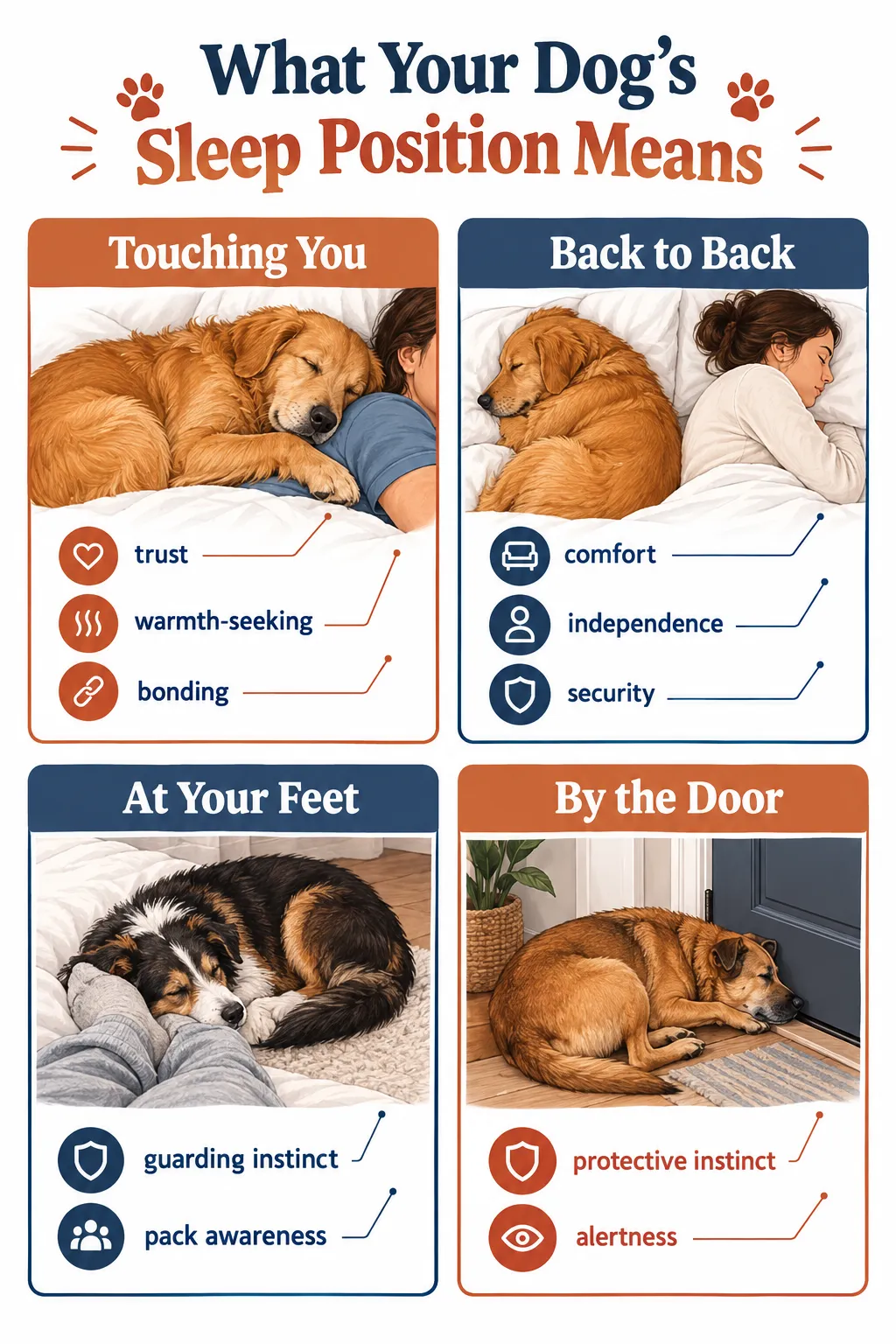
Your dog still carries that instinct today. When your dog snuggles up at night, they are doing what their brain tells them is smart and safe. Being close to you at night is your dog’s way of saying, “I feel safe with my pack.” And you are the leader of that pack. [3]
“Your dog isn’t just cozy. They’re choosing their person over every other spot in the house.” 🐶
Here’s what’s really going on in that furry brain of theirs:
- You smell like safety. Your scent calms your dog’s nervous system.
- Your heartbeat and breathing are soothing. Dogs often sync their rest to yours.
- Nighttime is when dogs feel most vulnerable. Being near you eases that worry.
- Routine matters. If bedtime cuddles are a habit, your dog expects and craves it.
Touching or Leaning While Sleeping Means Something Special
Does your dog press their back against you? Do they rest their head on your arm? That is not an accident, and it is not just about warmth. [9]
Experts say body contact during sleep is one of the clearest signs of trust a dog can show. A dog who feels unsafe will not relax enough to fall into deep sleep pressed against another body. Leaning in means your dog has zero worries with you around. [9]
Old-school trainers used to say a dog sleeping on your bed was trying to “dominate” you. That idea is outdated and just plain wrong. Modern behaviorists agree dominance theory does not explain normal dog behavior like sleeping close to you. It is about comfort and connection, not control. [3][9]
So next time your dog wedges themselves between you and your pillow, know this: it is affection talking, not a power move.
The Science Behind If Your Dog Sleeps With You: What Happens to Your Sleep
Here is a question a lot of dog parents ask: does sleeping with a dog wreck a good night’s rest? The surprising answer is often no.
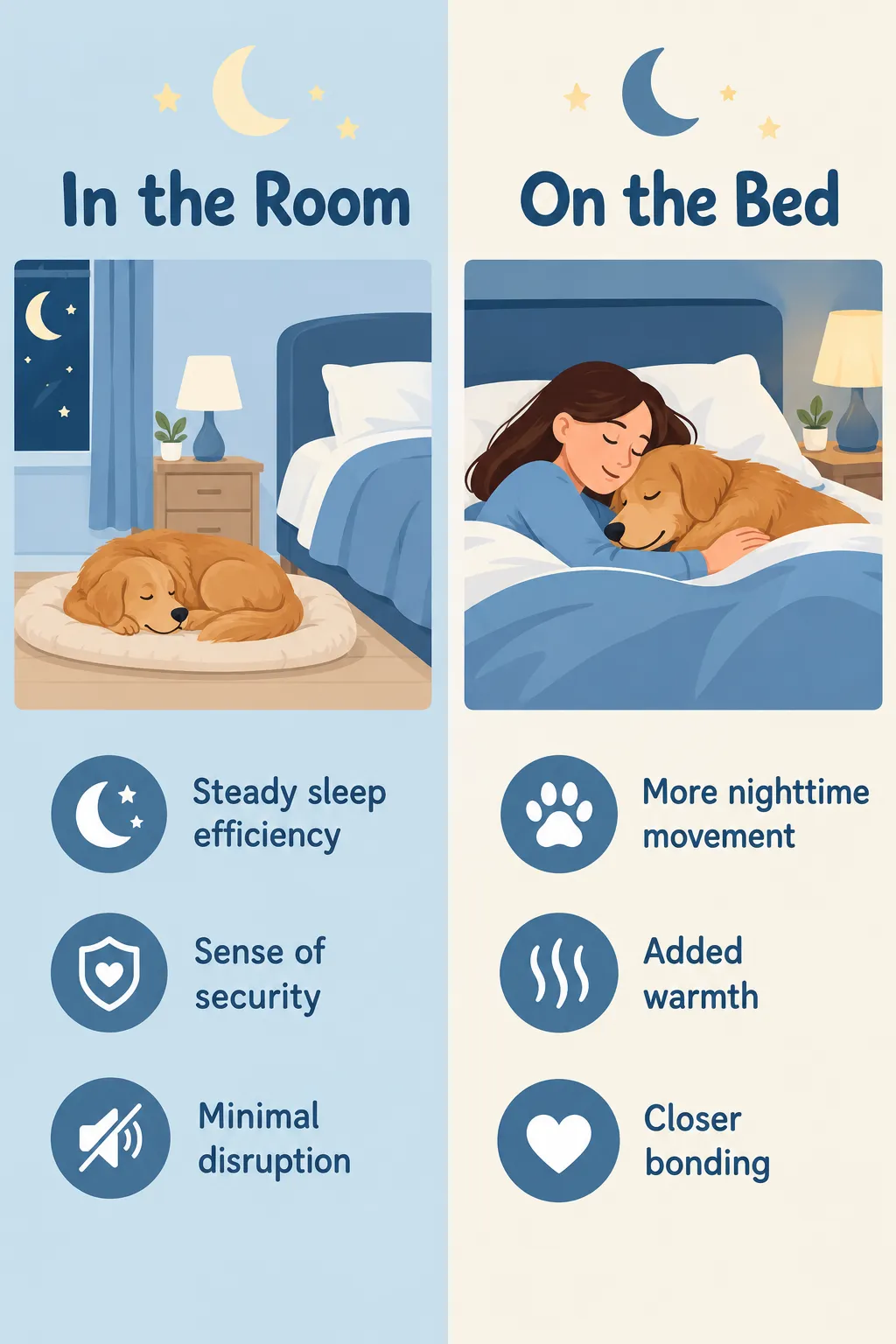
A well-known Mayo Clinic study looked closely at this. Researchers found that having a dog in the bedroom did not hurt sleep quality much at all. Most people slept just fine with their dog nearby. [7]
Where it gets more interesting is the bed itself. Dogs on the bed move around more during the night than dogs sleeping in the room but off the bed. That movement can nudge you awake, even if you do not fully remember it. [7][10]
But here’s the twist: many owners say they feel less tired in the morning when their dog is close, even with a bit more nighttime movement. Comfort and emotional calm seem to matter just as much as pure hours of sleep. [8]
Dog vs. Human Bed Partner: A Fair Comparison
Studies comparing sleep disruption often find dogs are not the worst roommates. In fact, some research suggests dogs disturb sleep less than a human partner who snores, shifts a lot, or steals the blankets. [7][8]
Take a look at how the numbers usually shake out:
| Sleep Setup | Common Effect on Sleep |
|---|---|
| Dog in a bed nearby (same room) | Little to no disruption for most people [7] |
| Dog sharing the bed | More movement at night, but often still restful [7][10] |
| Human partner sharing the bed | Can cause similar or more disruption than a dog [8] |
| No pet in the room | Most “efficient” sleep on paper, but less emotional comfort reported [8][10] |
The takeaway? Co-sleeping with your dog is often more comforting than disruptive. It is not the sleep-wrecker some people assume. [7][8]
If Your Dog Sleeps With You, They’re Trying to Tell You This, So Should You Let Them Stay?
This is the big question. And the honest answer from vets is: it depends on you and your dog. There is no universal rule that fits every home. [3][10]
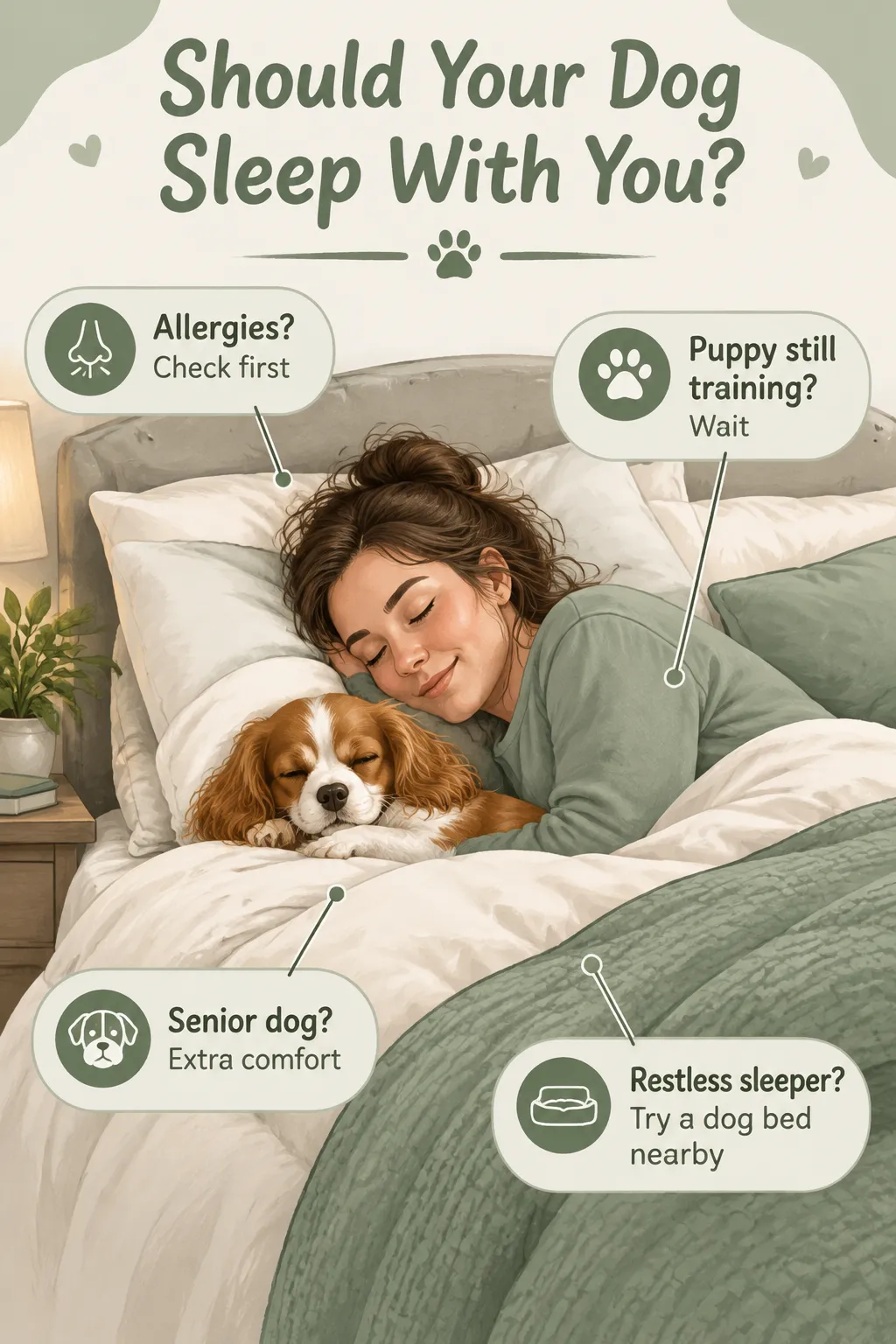
Vets generally agree on a few things:
- A dog sleeping in your room is almost always fine for both of you. [7][10]
- A dog sleeping on your bed is a personal trade-off. Some people love the closeness. Others need their space back. [7]
- Allergies, asthma, or skin sensitivities may make bedroom sharing tougher for some owners. [10]
- Puppies still learning house training may do better in a crate or dog bed at first.
- Senior dogs or anxious dogs often benefit hugely from being close to their favorite person at night. [3][9]
Signs Your Dog Truly Needs the Closeness
Watch for these signals. They are strong hints your dog leans on nighttime closeness for comfort:
- Follows you to bed every single night without fail
- Whines or paces if the bedroom door is shut
- Presses their body fully against you once settled
- Sighs and relaxes noticeably once you lie down
- Wakes briefly if you get up, then settles once you return
If you see these, your dog is telling you loud and clear: being near you at night is not a want, it’s an emotional need. [3][9]
Making the Right Call for Your House
Try this simple approach:
- Start with a trial week. Let your dog sleep in the room, not on the bed, and see how you both feel.
- Track your energy. Do you wake up rested? Cranky? Write it down for a few nights.
- Watch your dog’s behavior. Are they calmer? More clingy? Less anxious?
- Adjust from there. Move them onto the bed, or keep them nearby on their own bed, based on what actually works.
There is no wrong answer here, as long as it works for your household. Experts increasingly agree: this should be an individual decision, not a strict rule handed down by a trainer or a stranger online. [3][10]
Conclusion
If your dog sleeps with you, they’re trying to tell you this: you matter more than anything else in their world. That closeness at night comes from deep pack instincts, real trust, and a bond that took time to build. It is not clingy. It is not dominance. It is love, plain and simple. 🐕❤️
Sleep science backs this up too. Most dog owners do not lose much sleep quality with a dog nearby, and many actually feel more rested and calm because of it.
Here is your next step: pay attention tonight. Notice how your dog settles in next to you. Notice the sigh, the lean, the little snuggle. Then decide, based on your comfort and theirs, what nighttime setup works best for your home. Whatever you choose, know your dog loves you either way.
References
[1] Watch – https://www.youtube.com/watch?v=AOwks-GhXfI
[2] Watch – https://www.youtube.com/watch?v=eUC0nPP8VrQ
[3] If Your Dog Sleeps With You Heres What It Really Means – https://www.bunko.pet/en/news/if-your-dog-sleeps-with-you-heres-what-it-really-means-20260318-0003.html
[4] Watch – https://www.youtube.com/watch?v=nqi0Yf1rQfQ
[5] Watch – https://www.youtube.com/watch?v=-cTtm1Yc_R0
[6] Watch – https://www.youtube.com/watch?v=bcqoZFkLLjA
[7] Mayo Clinic Dog Study Sleep Bedroom Bed – https://www.cnet.com/science/mayo-clinic-dog-study-sleep-bedroom-bed/
[8] Article – https://journals.plos.org/plosone/article?id=10.1371/journal.pone.0346895
[9] What It Means When Your Dog Sleeps Touching You – https://creators.yahoo.com/lifestyle/story/what-it-means-when-your-dog-sleeps-touching-you-195000364.html
[10] Do Pets In The Bedroom Impact Sleep Quality – https://www.empr.com/home/news/do-pets-in-the-bedroom-impact-sleep-quality/