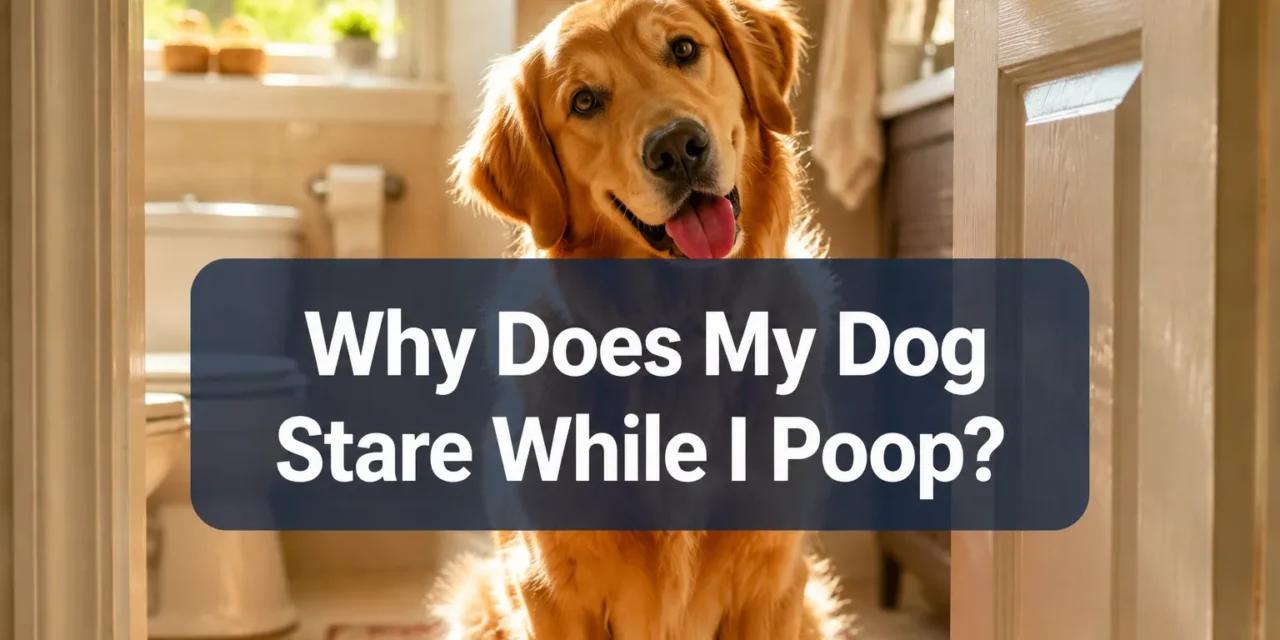
A survey by the American Pet Products Association found that nearly 67% of U.S. households own a pet, and almost every dog owner has experienced the same baffling moment: sitting on the toilet, only to look up and find two big eyes staring right back at them. 🐶

So why does my dog stare at me while I poop? The truth about bathroom supervisors is stranger, and sweeter, than most people expect. It turns out this quirky habit is deeply rooted in dog biology, pack instincts, and a whole lot of love. Far from being weird, your dog’s bathroom surveillance is actually a sign of a strong bond between the two of you.
This article breaks down the real science behind why dogs follow their humans to the bathroom, what it means, and when (if ever) it might be something to watch out for.
Key Takeaways
- 🐾 Dogs are pack animals. They follow you everywhere, including the bathroom, because they see you as their pack leader.
- 👁️ Staring is a sign of love. Eye contact from your dog releases oxytocin, the “love hormone,” in both of you.
- 🛡️ Your dog may be protecting you. In the wild, going to the bathroom alone is a vulnerable moment, your dog wants to keep you safe.
- 😰 Constant following can sometimes signal separation anxiety. There’s a difference between a curious companion and a stressed dog.
- ✅ This behavior is almost always normal. But there are simple steps to manage it if it becomes too much.
The Real Reason Behind “Why Does My Dog Stare at Me While I Poop? The Truth About Bathroom Supervisors”
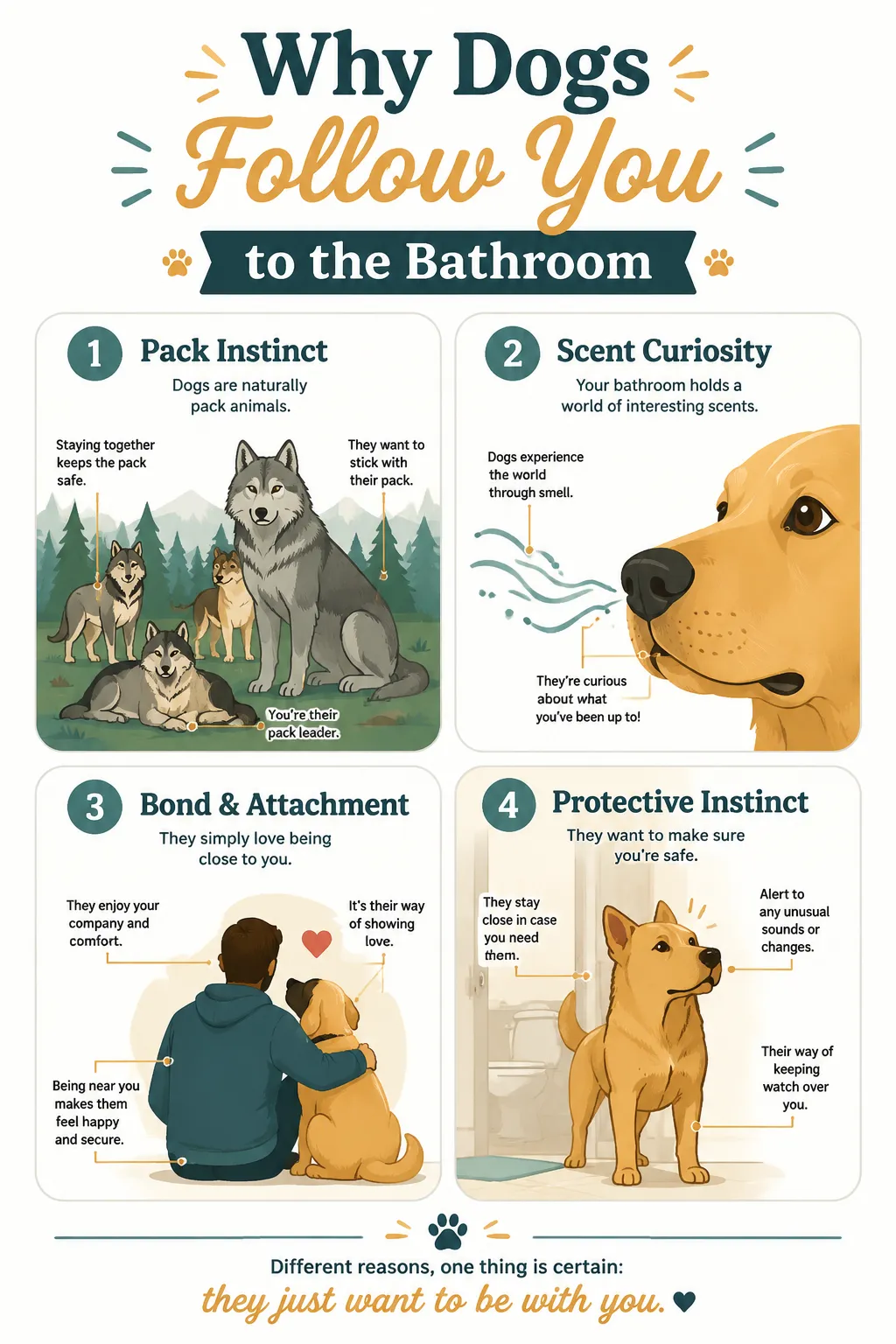
Dogs are not trying to embarrass anyone. They genuinely cannot understand why humans close doors and disappear. To a dog, a closed door is a mystery, and mysteries must be investigated.
Here are the top reasons your dog turns into a bathroom supervisor every single time:
1. 🐺 Pack Instinct Is Hardwired Into Their DNA
Dogs are descended from wolves. Wolves live in tight-knit packs where members stay close to each other at all times. When one wolf wanders off, the others follow. It is a survival strategy.
Your dog sees your family as their pack. When you get up and walk to the bathroom, your dog’s ancient brain sends one clear message: “The pack is moving. Follow the pack.”
It is not about the bathroom at all. It is about staying with the group.
2. 👃 Curiosity About Smells (Yes, Really)
Dogs experience the world through their noses. A dog’s sense of smell is 10,000 to 100,000 times more powerful than a human’s, according to research from the University of California.
The bathroom is a treasure chest of interesting smells. Soap, shampoo, cleaning products, and yes, human waste. To a dog, all of these are fascinating sources of information. Your dog is not judging. They are just reading the newspaper, so to speak.
3. 💕 Pure, Unconditional Love
This is the big one. Dogs bond deeply with their humans. They want to be near you as much as possible.
“Dogs are not our whole life, but they make our lives whole.”, Roger Caras
When your dog stares at you in the bathroom, they are not being nosy. They are saying, “I love you so much that I cannot stand to be in a different room.” That is actually pretty sweet, even if the timing is awkward.
4. 🛡️ Your Dog Thinks You Need Protection
In the wild, going to the bathroom is one of the most vulnerable moments for any animal. You are distracted, crouched down, and not paying attention to your surroundings. Predators know this.
Your dog’s protective instinct kicks in. They want to stand guard and make sure nothing sneaks up on you. Your loyal bathroom supervisor is literally trying to keep you safe from imaginary threats.
5. 🔄 Routine and Habit
Dogs are creatures of habit. If your dog followed you to the bathroom once and got pets or attention for it, they learned something important: “Going to the bathroom with my human = good things happen.”
Positive reinforcement, even unintentional, can turn a one-time curiosity into a daily ritual.
Understanding the Pack Mentality: Why Bathroom Supervision Makes Perfect Sense
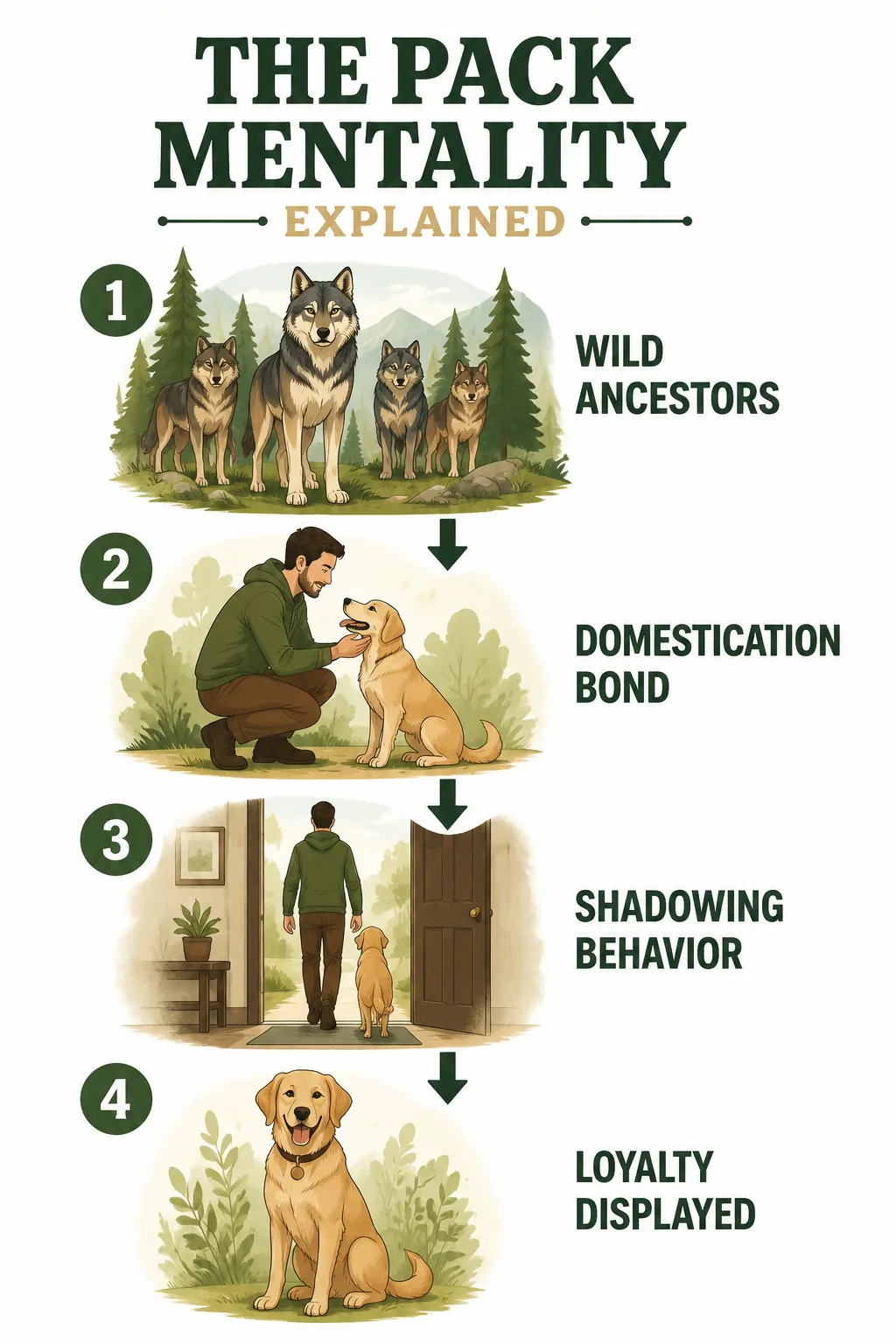
To really understand why dogs follow humans everywhere, it helps to think about where dogs came from.
From Wolves to Couch Companions
Thousands of years ago, the ancestors of modern dogs began living alongside humans. Over generations, they became domesticated. But their pack instincts never fully disappeared.
Here is a simple breakdown of how pack mentality shapes bathroom behavior:
| Wolf Pack Behavior | What Your Dog Does |
|---|---|
| Never leave a pack member alone | Follows you to the bathroom |
| Alert the group to danger | Stares at the door while you’re inside |
| Stay close to the alpha | Sits right next to your feet |
| Reunite after separation | Goes wild when you come back out |
The bottom line: Your dog is not being clingy. They are being a loyal pack member. It is what they were born to do.
The Oxytocin Connection 🧪
Here is something amazing. When your dog stares into your eyes, both of you release oxytocin, the same hormone that bonds mothers to their babies.
A landmark study published in Science found that mutual gazing between dogs and their owners significantly increased oxytocin levels in both species. This means that when your dog stares at you (yes, even in the bathroom), it is literally a bonding experience.
So the next time your dog locks eyes with you while you’re on the toilet, just know, science says you are both feeling the love. 💖
When “Bathroom Supervisor” Behavior Might Signal a Problem
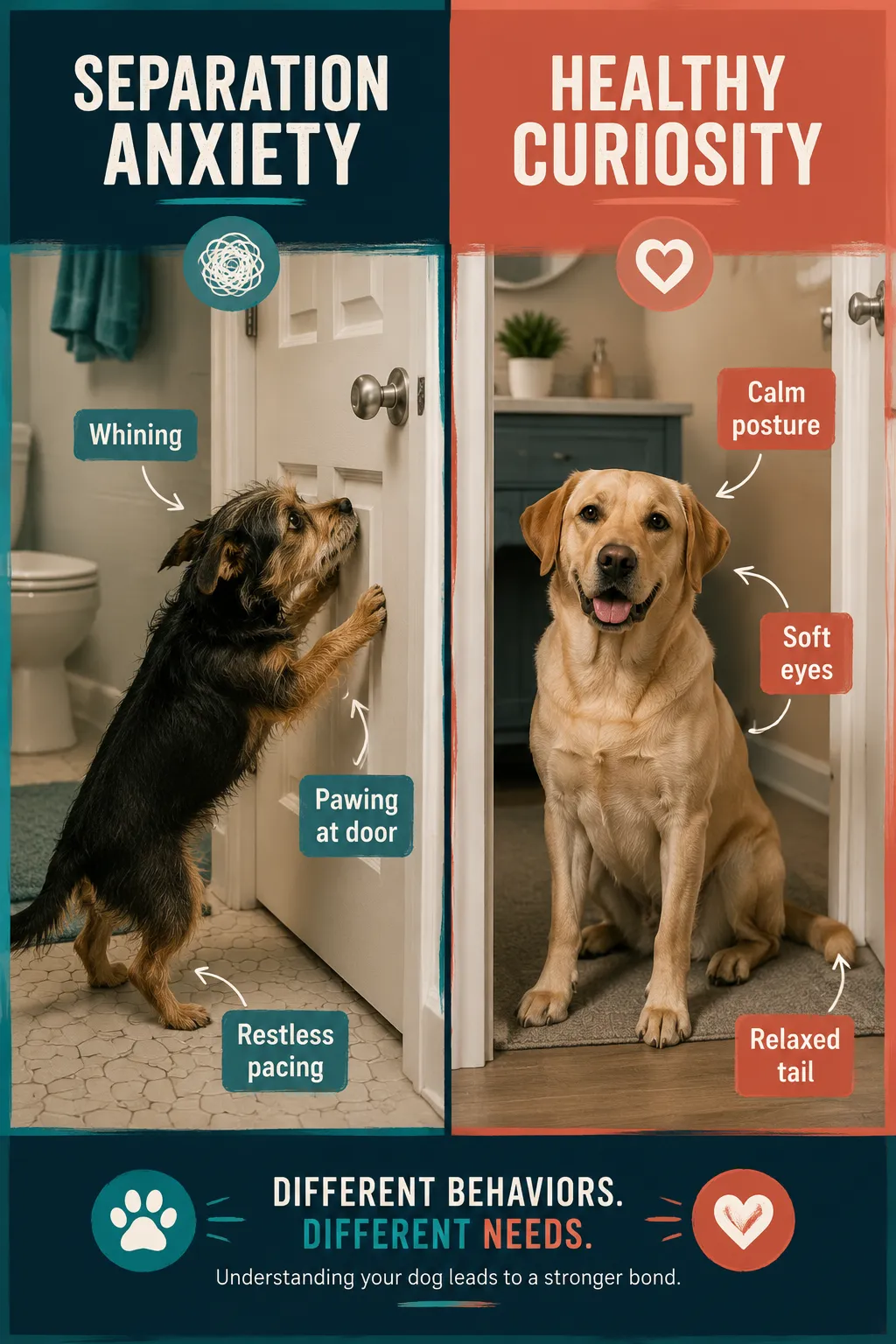
Most of the time, a dog following you to the bathroom is completely harmless and even adorable. But sometimes, it can be a sign of something that needs attention.
The Difference Between Normal and Anxious
There is a big difference between a dog who casually follows you to the bathroom and a dog who panics when you close the door.
Signs of normal, healthy behavior:
- ✅ Dog follows you but stays calm
- ✅ Dog lies down and waits quietly
- ✅ Dog is happy to stay outside if the door is closed
- ✅ Dog does not show distress when you return
Signs that might indicate separation anxiety:
- ⚠️ Dog whines, barks, or scratches at the door
- ⚠️ Dog paces or cannot settle
- ⚠️ Dog seems panicked when separated even for a minute
- ⚠️ Destructive behavior when left alone in any room
What Is Separation Anxiety?
Separation anxiety is a real condition in dogs. It happens when a dog becomes extremely stressed when separated from their owner, even for short periods.
According to the American Veterinary Medical Association, separation anxiety affects an estimated 14% of dogs in the United States. It is one of the most common behavioral issues that vets see.
If your dog shows signs of separation anxiety, it is worth talking to a veterinarian or a certified animal behaviorist. There are effective treatments, including:
- Behavioral training (gradual desensitization to being alone)
- Environmental enrichment (puzzle toys, chews, calming music)
- Medication (in more severe cases, as prescribed by a vet)
Velcro Dogs: A Special Case 🧲
Some breeds are known as “velcro dogs” because they stick to their humans like glue. These breeds were often bred to work closely with humans, so their need for closeness is even stronger.
Common velcro dog breeds include:
- 🐕 Labrador Retrievers
- 🐩 Vizslas
- 🦮 Border Collies
- 🐶 Boxers
- 🐾 Shetland Sheepdogs
If you own one of these breeds, bathroom supervision is practically in their job description.
What to Do About Your Canine Bathroom Supervisor
So now that the mystery of “why does my dog stare at me while I poop, the truth about bathroom supervisors” is solved, what can actually be done about it?
The good news: there are options. Whether someone wants to embrace their furry audience or gently teach their dog to wait outside, there is a path forward.
Option 1: Embrace It 🐾
Honestly? Most dogs who follow their owners to the bathroom are just being loving companions. If it does not bother anyone, there is zero reason to change it.
Many dog owners find it endearing. Some even say it is one of their favorite quirky things about their dog.
Option 2: Teach a “Wait” Command
If privacy is preferred, training a dog to wait outside the bathroom door is very doable. Here is a simple approach:
Step-by-step training guide:
- Start small. Close the bathroom door for just 10 seconds. Open it before the dog gets anxious.
- Reward calm behavior. Give a treat or praise when the dog waits quietly.
- Gradually increase time. Add 10-20 seconds each session.
- Use a cue word. Say “wait” or “stay” before closing the door.
- Be consistent. Practice every day for best results.
With patience, most dogs can learn to wait calmly outside the bathroom within a few weeks.
Option 3: Give Them Something Better to Do
Redirect the dog’s attention before heading to the bathroom. Try:
- 🦴 Giving a long-lasting chew or treat
- 🧩 Offering a puzzle toy
- 🎾 Tossing a toy in another room first
If the dog is busy with something exciting, they are less likely to follow.
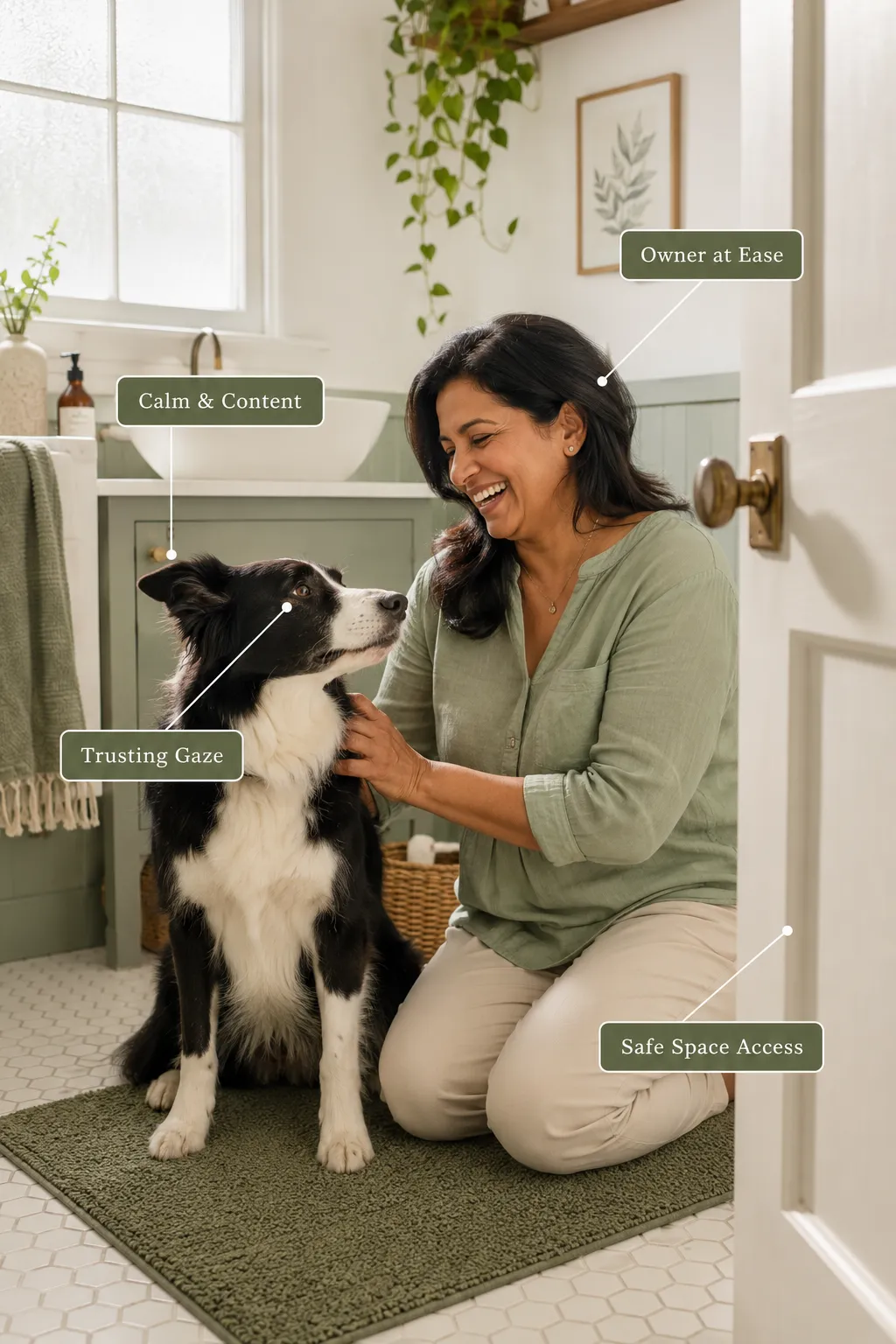
Option 4: Create a Cozy “Stay” Spot
Teach the dog to go to a specific bed or mat when told. This gives them a clear job, “go to your spot”, instead of following everywhere.
This works especially well for dogs who are anxious, because having a designated safe space can actually reduce stress.
Fun Facts About Dogs and Their Bathroom Habits 🐕
Here are some extra fun facts that shed even more light on this hilarious behavior:
- Dogs do not understand privacy. The concept of “alone time” is completely foreign to them. In their world, being together is always better.
- Your dog can smell your emotions. When humans are on the toilet, they sometimes feel a bit stressed or rushed. Dogs pick up on this and may come to offer comfort.
- Some dogs bring gifts. A few dogs will trot in with a toy while their human is on the toilet. This is a sign of affection, they want to share something special.
- Puppies do it more. Young dogs are especially prone to following their humans everywhere because they are still learning the rules of the household.
- It goes both ways. Dogs also like to have their humans present when they go to the bathroom outside. The bond works both ways!
A Quick Word on Eye Contact and What That Stare Really Means 👁️
That intense, unblinking stare your dog gives while you sit on the toilet is not creepy, it is communication.
Dogs use eye contact to express many things:
| Type of Stare | What It Means |
|---|---|
| Soft, relaxed eyes | “I love you and feel safe with you” |
| Alert, focused stare | “I am paying attention to you” |
| Stare + tail wag | “I am happy and want your attention” |
| Hard, stiff stare | “I am uncomfortable” (rare in this context) |
In the bathroom context, that soft, steady gaze almost always means one thing: pure adoration. The dog is watching their favorite person in the world and feeling completely content.
Conclusion
The truth about bathroom supervisors is simple: dogs follow their humans to the bathroom because they love them, feel protective of them, and genuinely cannot imagine why anyone would want to be alone.
This behavior is rooted in thousands of years of evolution, pack instincts, and the deep bond between dogs and humans. For the vast majority of dogs, it is a completely normal, and honestly quite sweet, expression of loyalty.
Here are the key next steps to take:
- Observe the behavior. Is the dog calm and relaxed, or anxious and distressed? This tells you whether it is normal curiosity or something to address.
- Decide what works best. If the bathroom audience is fine, enjoy the company! If privacy is needed, start gentle training.
- Talk to a vet if needed. If the dog shows signs of separation anxiety, do not wait, get professional help early.
- Appreciate the bond. That stare from the bathroom doorway is one of the purest forms of love a dog can show.
So the next time those big eyes appear while sitting on the toilet, just remember, that dog is not judging. They are guarding, loving, and refusing to let their favorite human face the bathroom alone. 🐾❤️
References
- American Pet Products Association. (2023). APPA National Pet Owners Survey 2023-2024. Greenwich, CT: APPA.
- Nagasawa, M., Mitsui, S., En, S., Ohtani, N., Ohta, M., Sakuma, Y., … & Kikusui, T. (2015). Oxytocin-gaze positive loop and the coevolution of human-dog bonds. Science, 348(6232), 333-336.
- American Veterinary Medical Association. (2022). Separation anxiety in dogs. AVMA.
- Alexandra Horowitz. (2009). Inside of a Dog: What Dogs See, Smell, and Know. Scribner.
- Tyson, P. (2012). Dogs’ dazzling sense of smell. NOVA/PBS. Retrieved from pbs.org.
- Serpell, J. (Ed.). (1995). The Domestic Dog: Its Evolution, Behaviour and Interactions with People. Cambridge University Press.