Forty percent of dogs show signs of panic within minutes of their owner leaving the house. That’s not a guess. That’s what veterinary behaviorists see in home videos every single day. Your pup isn’t just “being dramatic.” Dogs are pack animals. Being left alone can feel scary to them.

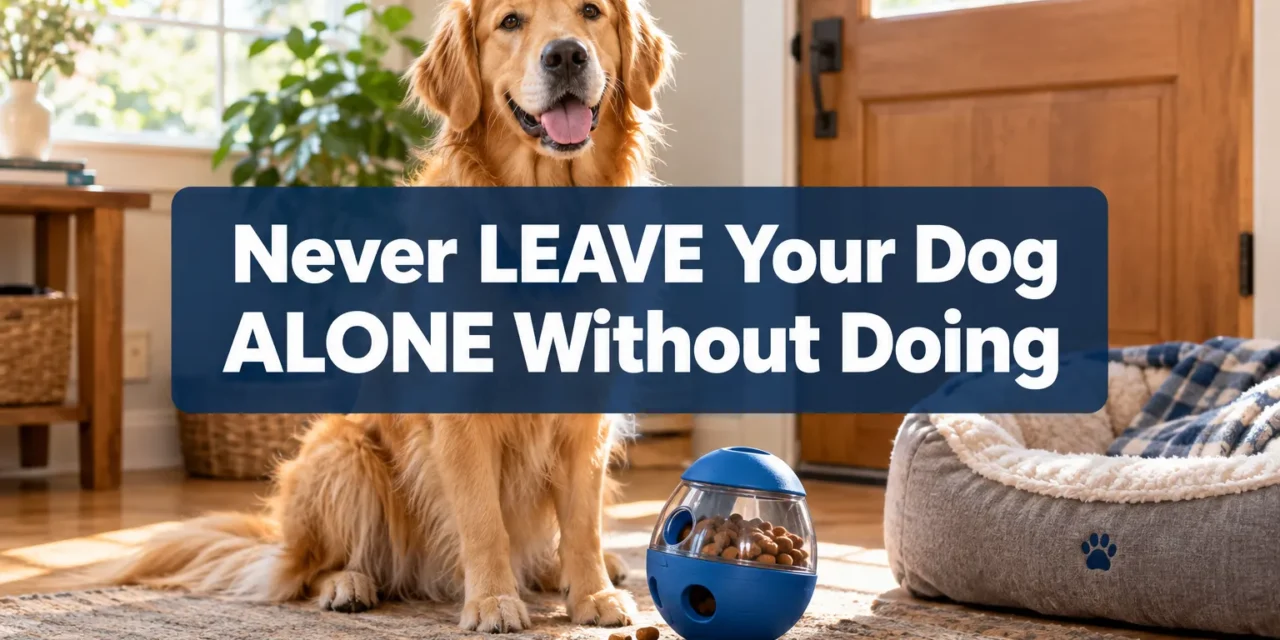
Here’s the good news: a few small steps can change everything. Never leave your dog alone without doing THIS,a simple pre-departure routine that keeps your furry best friend calm, safe, and happy until you walk back through the door.
This guide breaks it all down. No fluff. No jargon. Just real tips from real dog lovers who want your pup to feel safe every time you step out.
Why Your Dog Panics When You Leave
Dogs don’t understand “I’ll be back by 5pm.” They only know you’re gone. That’s a big deal for an animal built to stay close to its pack.
Think about it from your pup’s point of view. One second, their favorite human is right there. The next second, gone. No warning. No explanation. Just silence.
This is why so many dogs bark, whine, or chew things up when left alone. They’re not trying to be bad. They’re scared. Some dogs even go into full panic mode, a condition vets call separation anxiety.
“Dogs don’t misbehave out of spite. They act out because they’re overwhelmed.”, Common advice from certified dog trainers
The fix isn’t ignoring the problem. The fix is never leaving your dog alone without doing THIS first: a short routine that tells your dog, “Hey, you’ve got this. I’ll be home soon.”
Never LEAVE Your Dog ALONE Without Doing THIS: The Pre-Departure Checklist
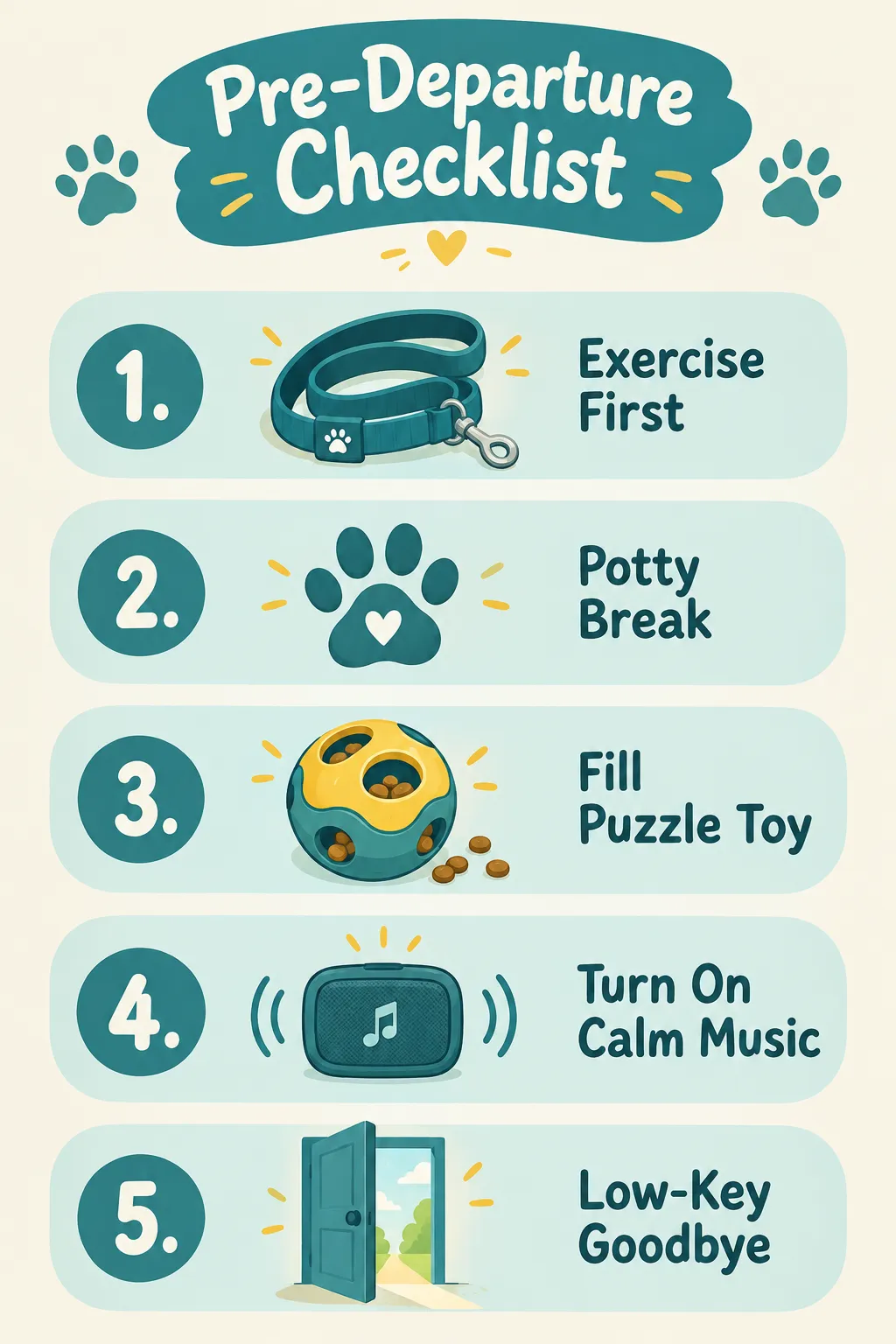
This is the heart of it all. Before you grab your keys, run through this quick checklist. It takes less than 15 minutes but makes a huge difference.
1. Burn Off That Energy
A tired dog is a calm dog. Take your pup for a walk or play a quick game of fetch before you leave.
- 15-20 minutes of exercise lowers stress hormones
- Tired dogs sleep instead of pace
- Mental games (like “find the treat”) tire out the brain, too
2. Potty Break, No Exceptions
Nothing makes alone time worse than a full bladder. Always let your dog go outside right before you leave.
3. Set Up a Safe Space
Pick one dog-proofed room or a crate your dog actually likes. Remove anything chewable, breakable, or dangerous.
- Close off access to trash cans
- Hide shoes, cords, and small objects
- Leave fresh water in a spill-proof bowl
4. Give Them Something to Do
Boredom leads to trouble. A busy dog is a happy dog.
- Stuff a frozen Kong with peanut butter
- Hide treats in a snuffle mat
- Leave a chew toy they only get during alone time
5. Keep the Goodbye Boring
This one surprises people. Skip the long, emotional goodbye hug. Dogs feed off your energy. A big dramatic goodbye tells your dog something scary is about to happen.
- Say a short, cheerful “bye!”
- Don’t make eye contact for too long
- Walk out like it’s no big deal, because it isn’t
Signs Your Dog Might Have Separation Anxiety
Some dogs need more than the basic checklist. If your dog shows these signs, it might be time for extra support.
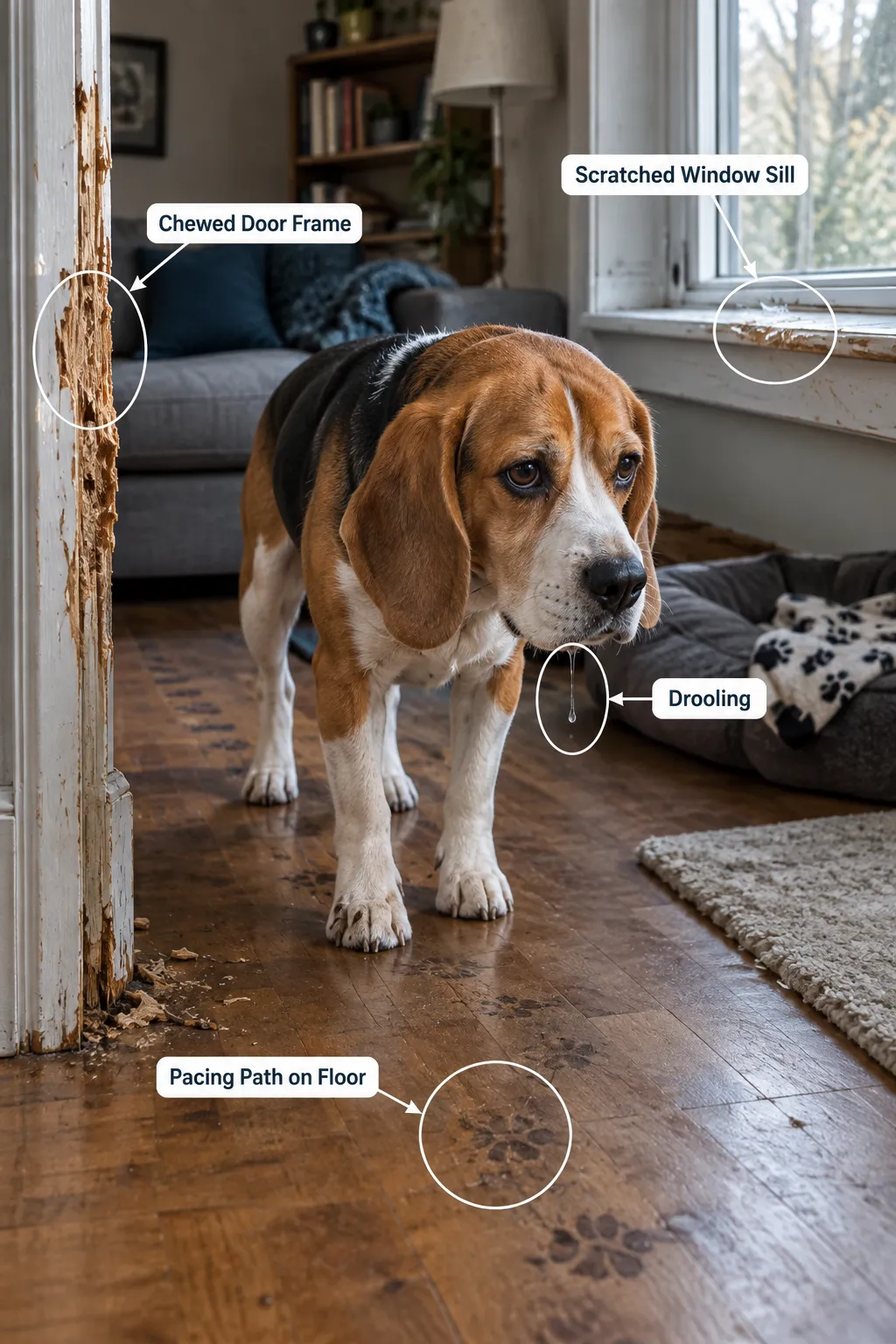
Watch for these common red flags:
| Sign | What It Looks Like |
|---|---|
| 🪑 Destructive chewing | Torn furniture, chewed doors or baseboards |
| 🐾 Pacing | Walking the same path over and over |
| 🔊 Nonstop barking | Howling or whining that neighbors complain about |
| 💦 Accidents | Potty accidents even in a house-trained dog |
| 😢 Drooling | Excess drool or wet spots near the door |
| 🏃 Escape attempts | Scratched doors, bent crate bars, torn screens |
If you spot two or more of these signs, don’t panic. Many dogs improve with training, more exercise, or help from a professional trainer. Some dogs need a slow “practice” process where you leave for just a few minutes at a time and build up.
Never leave your dog alone without doing THIS extra step if anxiety is severe: talk to your vet. Sometimes anxiety needs more than toys and walks. It might need a real treatment plan.
How Long Can You Really Leave a Dog Alone?
This question comes up all the time. The answer depends on your dog’s age, health, and training.
Here’s a simple breakdown:
- Puppies (under 6 months): 1-2 hours max. Their bladders are tiny.
- Adult dogs (1-7 years): 4-6 hours, with proper exercise and setup.
- Senior dogs (8+ years): 2-4 hours. Joints and bladders slow down with age.
- Dogs with health issues: Ask your vet for a specific time limit.
No dog should go longer than 8 hours without a bathroom break, food, or water. If your workday runs long, think about a dog walker, a doggy daycare, or a trusted neighbor.
Never LEAVE Your Dog ALONE Without Doing THIS Again: Build a Routine
Dogs love patterns. The more predictable your leaving routine is, the less scary it becomes. Over time, your dog learns: “This happens every time, and my human always comes back.”
Try this simple weekly habit:
- Same cues every time, grab keys, say “bye,” turn on music
- Same safe space, don’t switch rooms or crates often
- Same treat toy, save one special toy only for alone time
- Same calm energy, no sad faces, no long hugs
- Same reward on return, a quick walk or calm praise when you’re home
This routine doesn’t just help your dog relax. It helps you feel confident, too. You’ll know your pup is safe, busy, and waiting for you with a wagging tail.
What NOT to Do When Leaving Your Dog Alone
Just as important as what to do, is what to avoid. These common mistakes can make alone time harder for your dog.
- ❌ Don’t punish your dog for anxiety behaviors. Fear isn’t fixed with fear.
- ❌ Don’t leave the TV or radio blasting loud sounds. Soft, steady background noise is better.
- ❌ Don’t skip exercise “just this once.” A hyper dog alone is a recipe for trouble.
- ❌ Don’t leave choke hazards like small toys or wrappers within reach.
- ❌ Don’t ignore repeated destructive behavior. It’s a cry for help, not bad manners.
Quick FAQ: Leaving Your Dog Home Alone
Should I leave a light on for my dog?
It’s not necessary during the day. At night, a soft nightlight can help some anxious dogs feel safer.
Is crate training cruel?
No. A crate your dog actually enjoys is like a cozy den. Never use it as punishment, and your dog will love it.
Can calming music really help?
Yes! Studies on shelter dogs show classical or reggae music can lower stress and barking.
What age can puppies be left alone?
Most puppies can’t be left more than 1-2 hours until they’re about 6 months old.
Conclusion: Make Alone Time Paw-sitive
Your dog doesn’t need a perfect house or expensive toys. They just need to feel safe, tired, and loved before you walk out that door.
Remember this simple rule: never leave your dog alone without doing THIS,exercise, a potty break, a safe space, a fun toy, and a calm goodbye. These five small steps build trust every single time you leave.
Start today. Try the checklist before your next trip out the door. Watch your dog’s stress melt away, one wagging tail at a time. Your furry family member is counting on you, and now, you’ve got this.